
· 11 min read · ▶ 15 min video
How Did Tesla's Roadster Do a Kickflip Over Five Cars?
In October 2026, the new Tesla Roadster jumped over five Teslas and spun all the way round in mid-air, without burning a drop of fuel. Tesla calls it the kickflip. Here's how fans and two tanks of air make that possible.
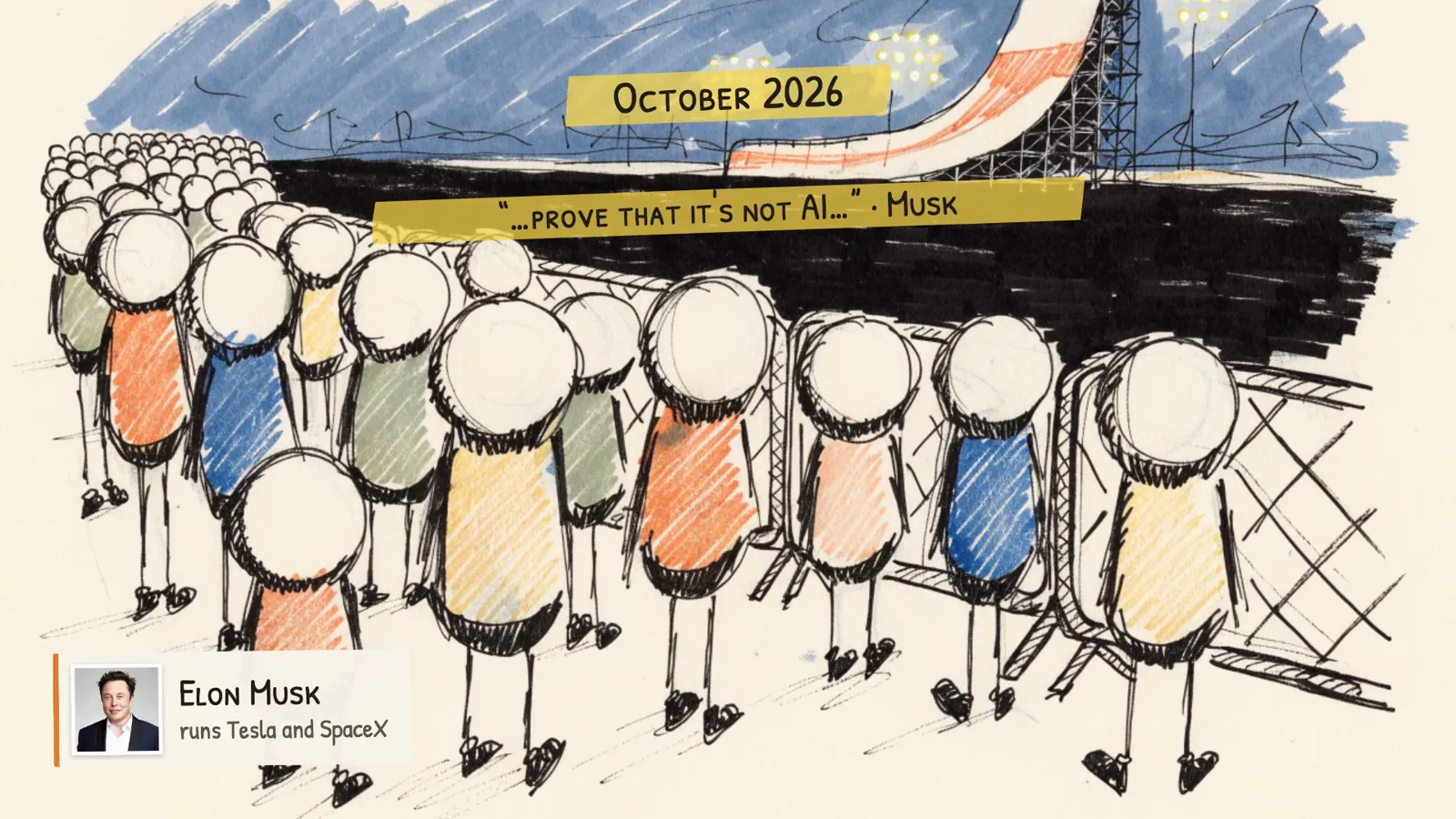

When Tesla unveiled its new Roadster in October 2026, Elon Musk said they needed a crowd there, to prove it wasn't AI. Then a low white sports car drove at five parked Teslas.
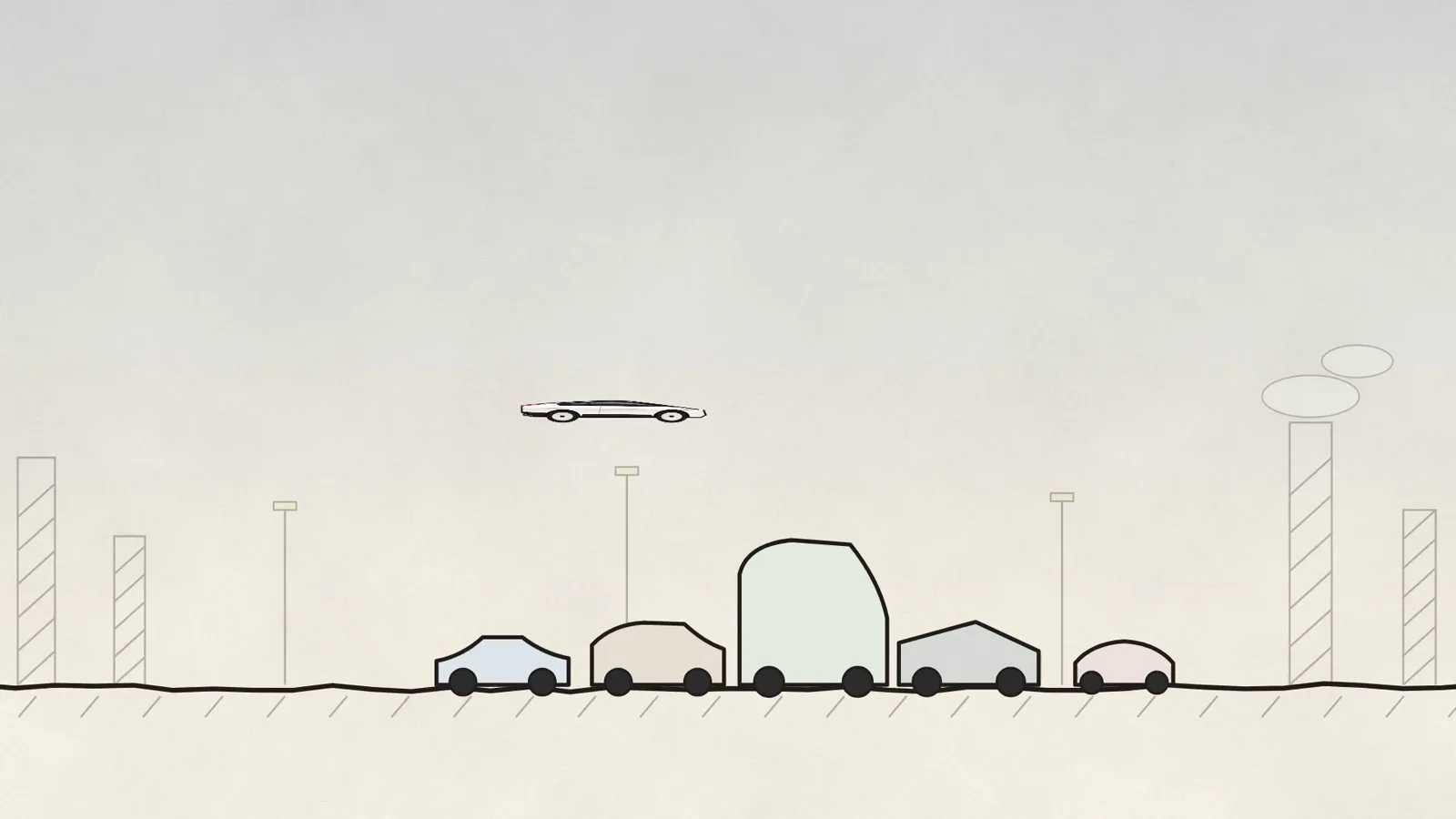
It threw itself about seven metres into the air, spun all the way round, and landed on its wheels on the other side. Tesla calls it the kickflip.
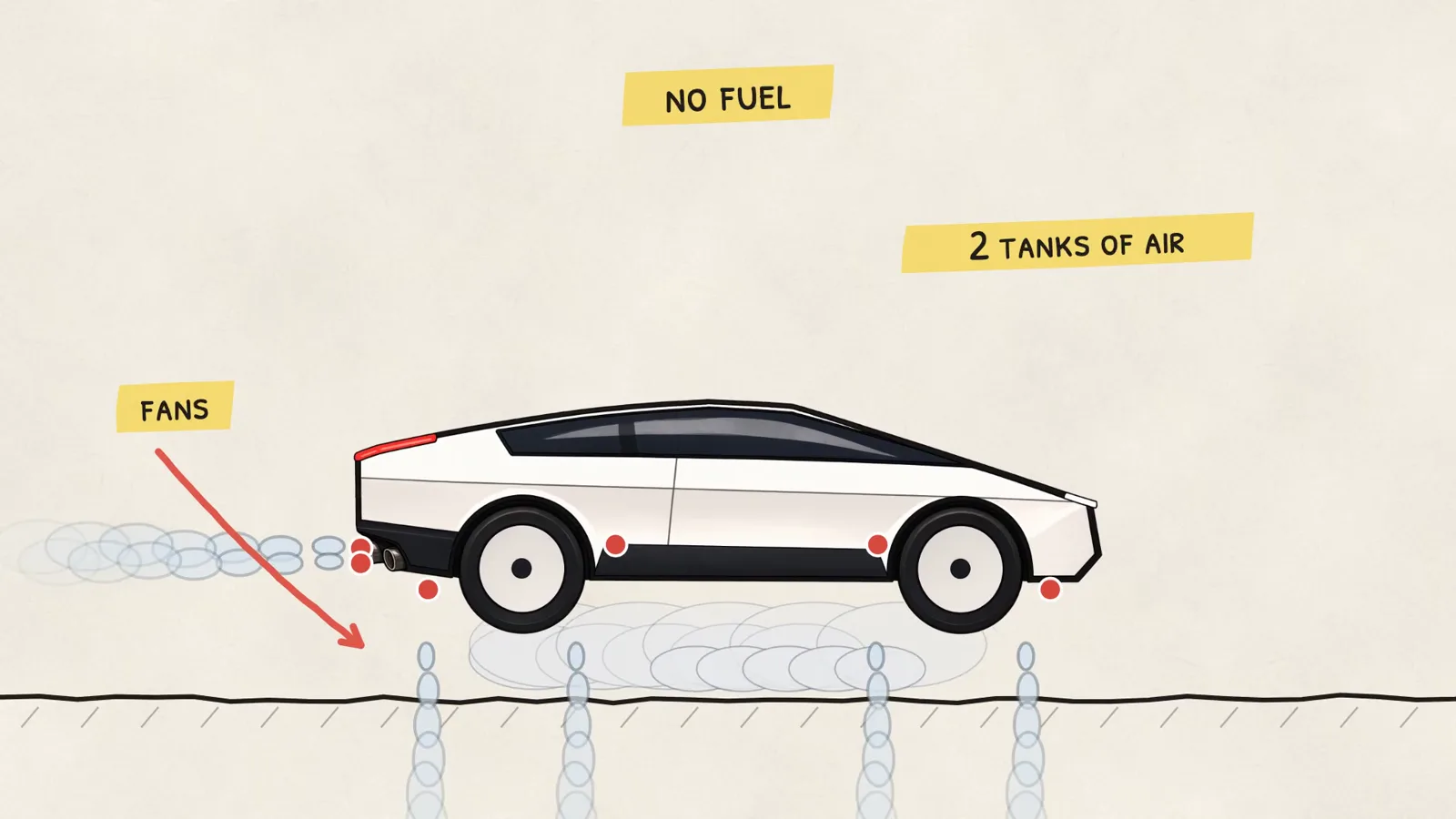
It didn't burn a drop of fuel to do it: the whole trick comes down to a set of fans and two tanks of air. So how can air throw a car over a truck, and is that really flying?
The night in Texas ▶ 0:39
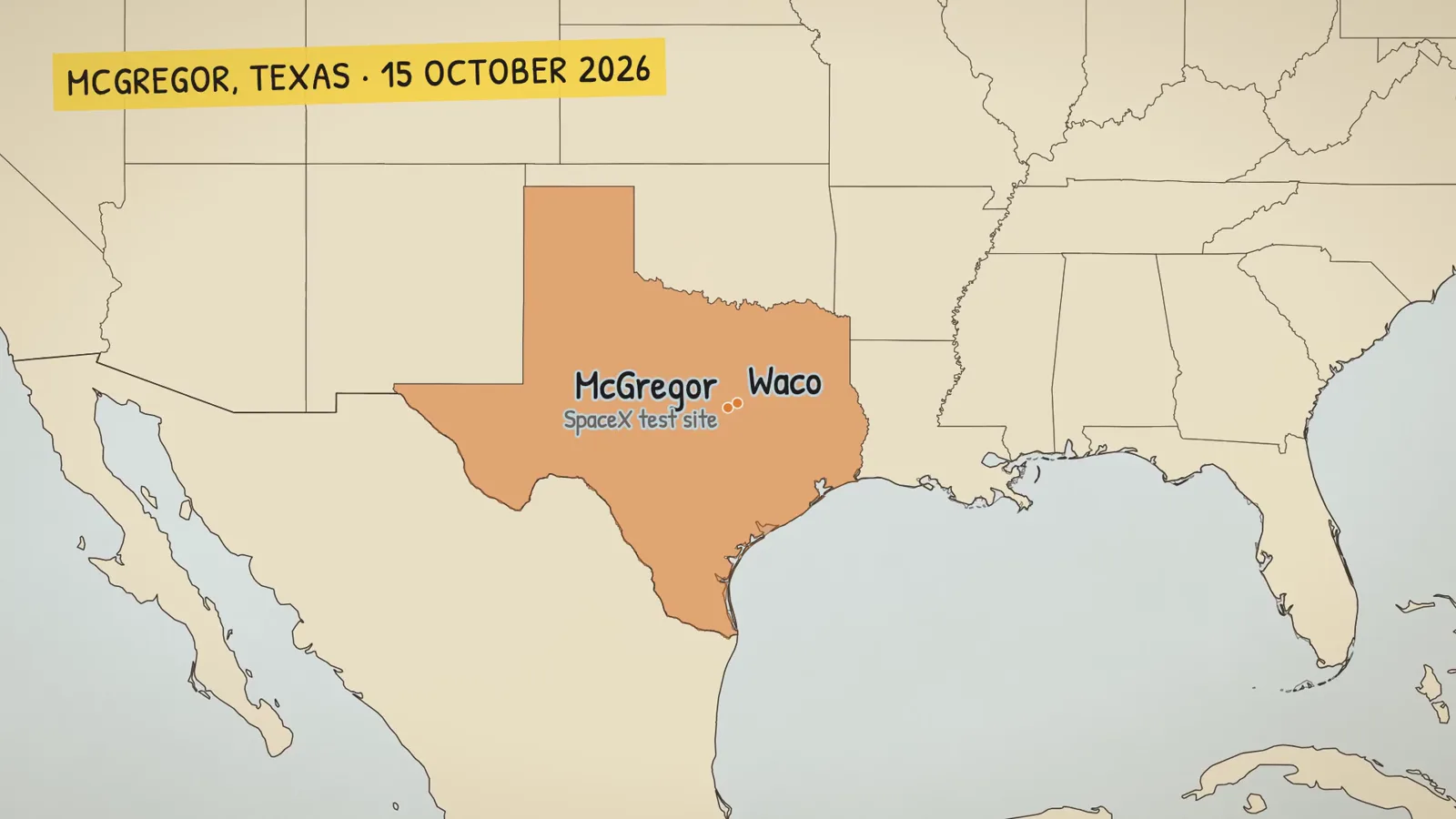
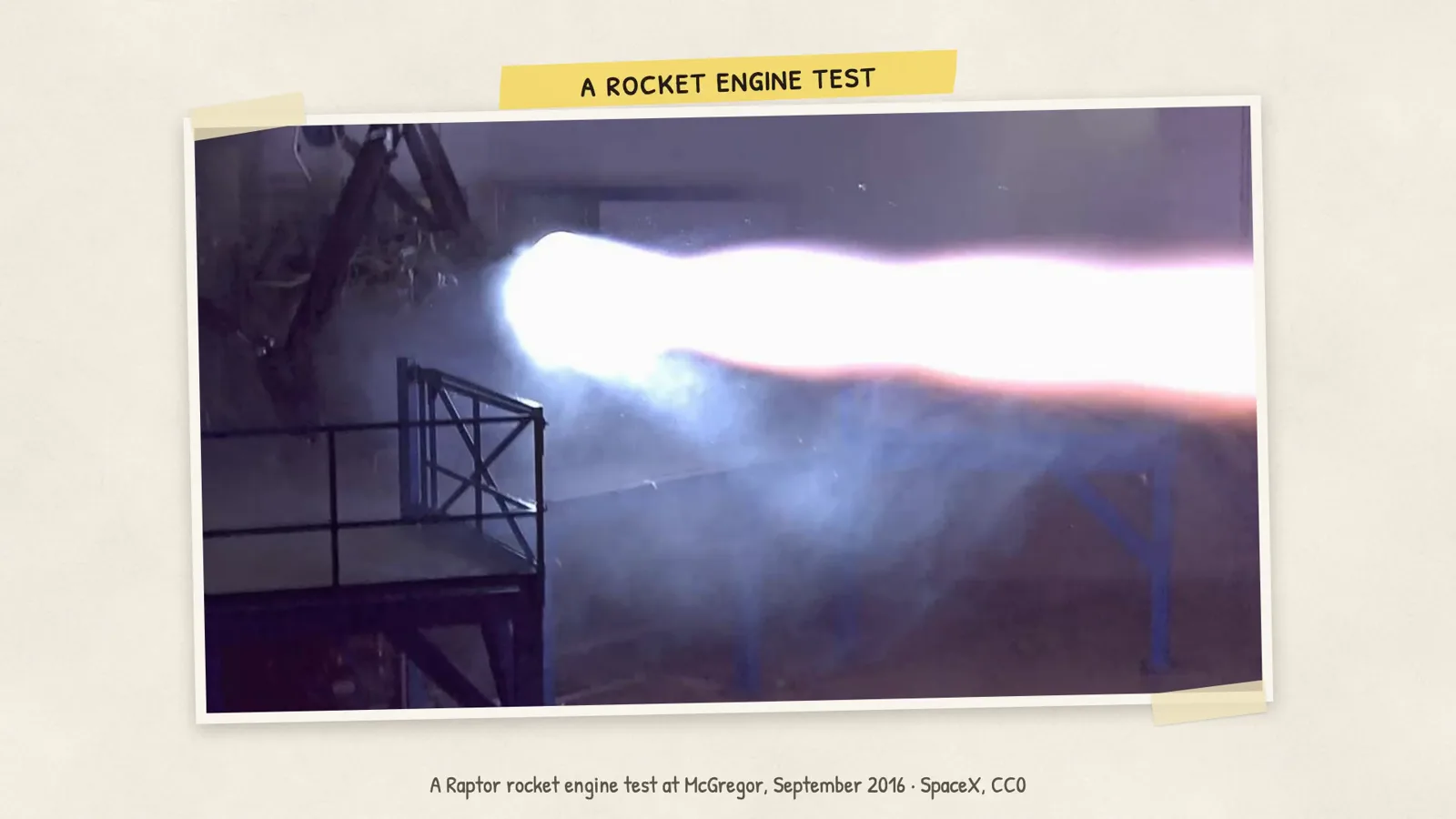

The show took place on 15 October, at McGregor, near Waco. It's where SpaceX, Elon Musk's rocket company, tests its engines. Before the show, the crowd watched one being fired. That's a strange place to show a car, unless the car is partly built by a rocket company. Musk presented the new Roadster as a joint effort of Tesla and SpaceX.
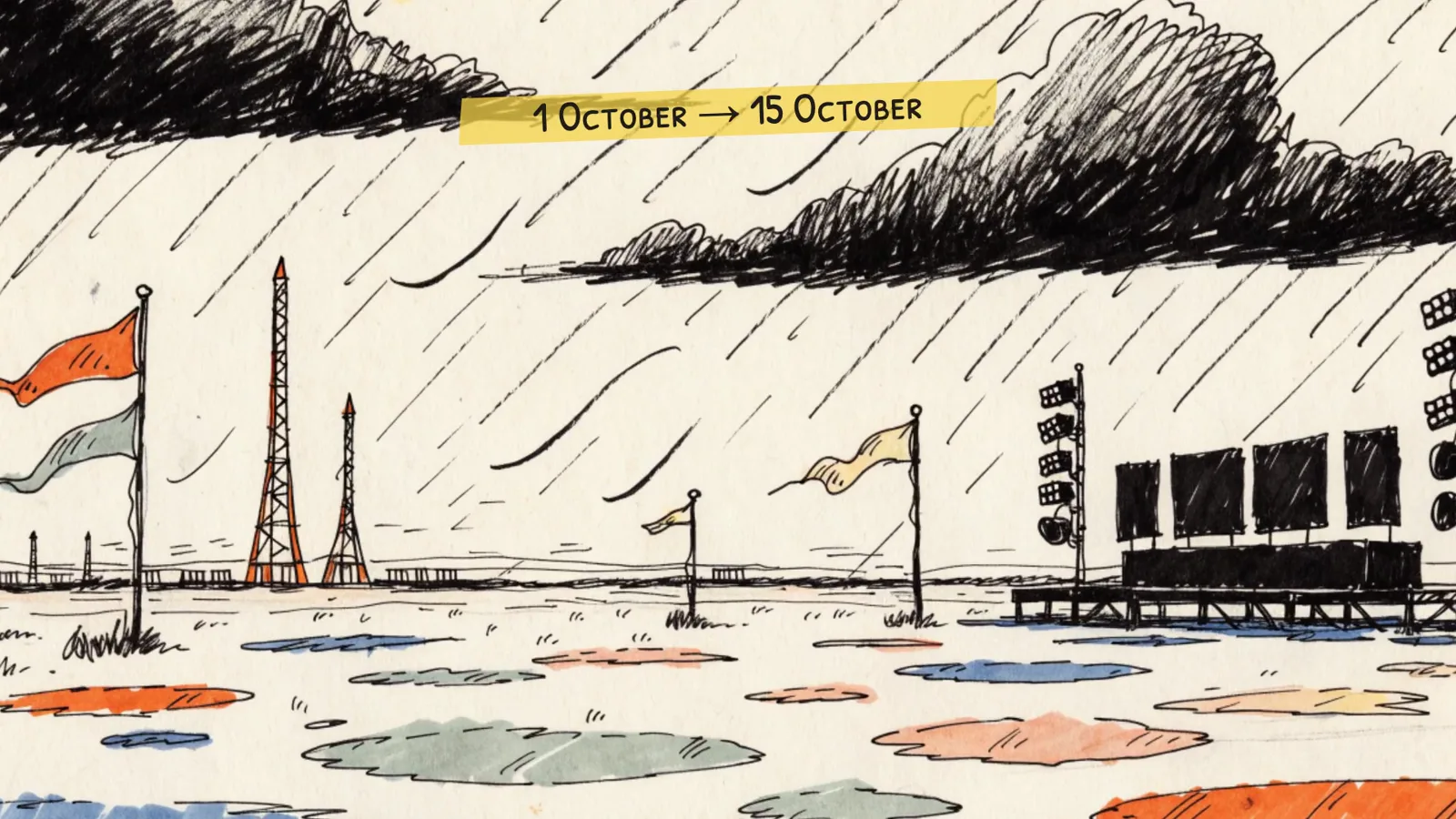
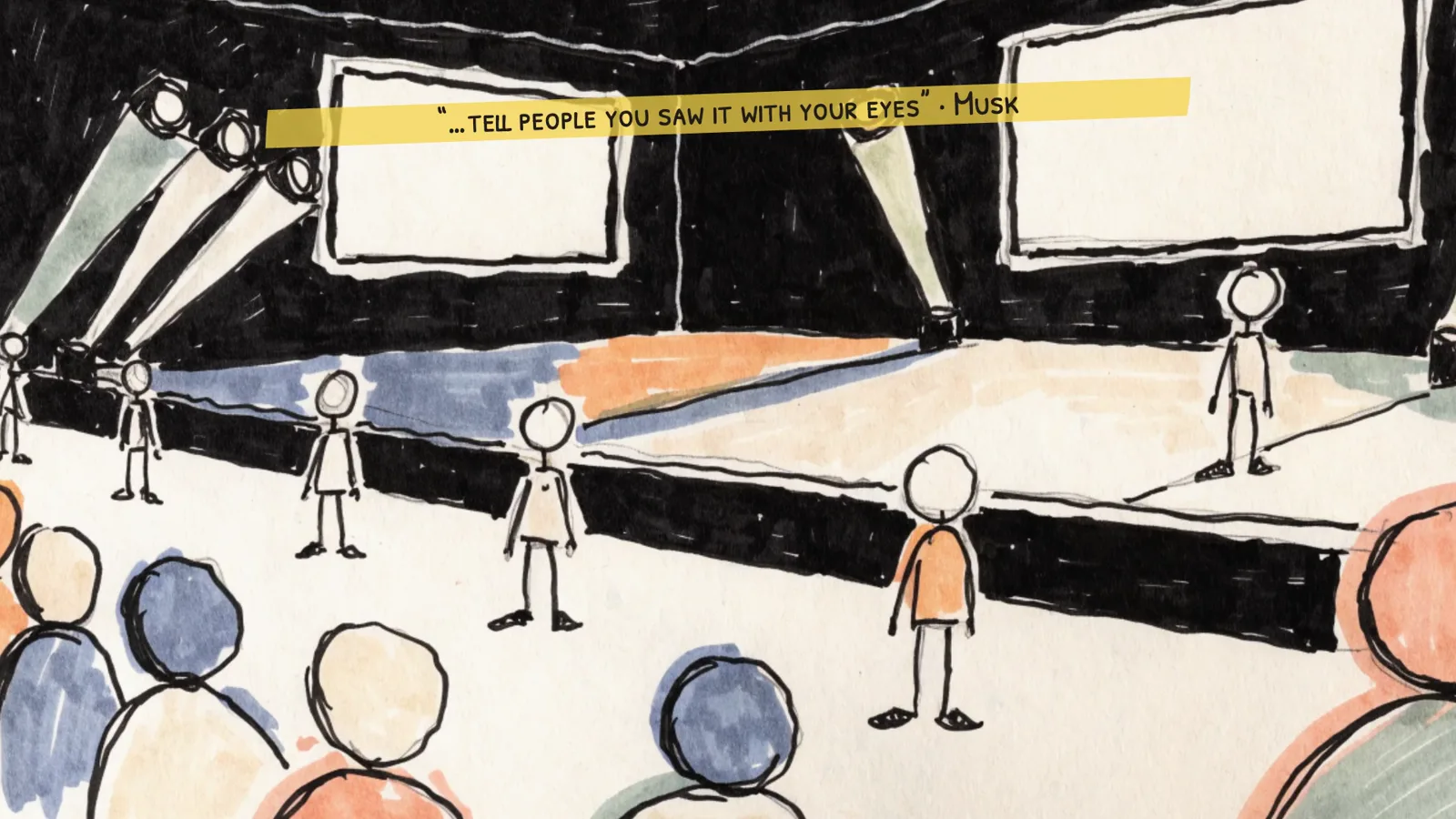
The show was meant to happen two weeks earlier, but the weather got in the way, and Tesla said it could only be held outdoors. When it finally began, the audience was kept well away from the stunts. As Musk put it, they were there "so you guys can tell people you saw it with your eyes".
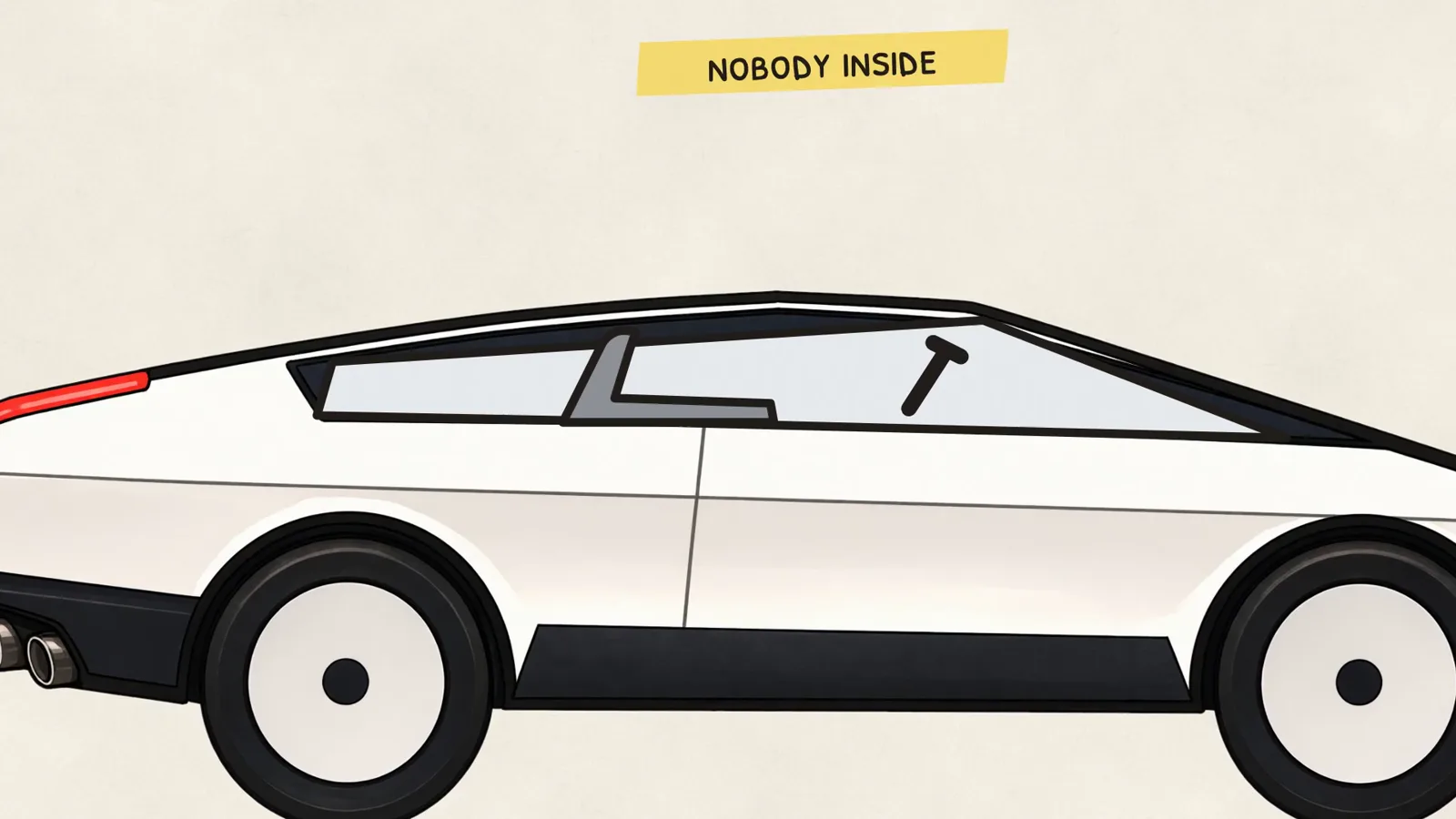
Nobody drove the Roadster during the stunts. As Musk put it, the car was "technically autonomous for this demo to make sure we don't kill anyone".
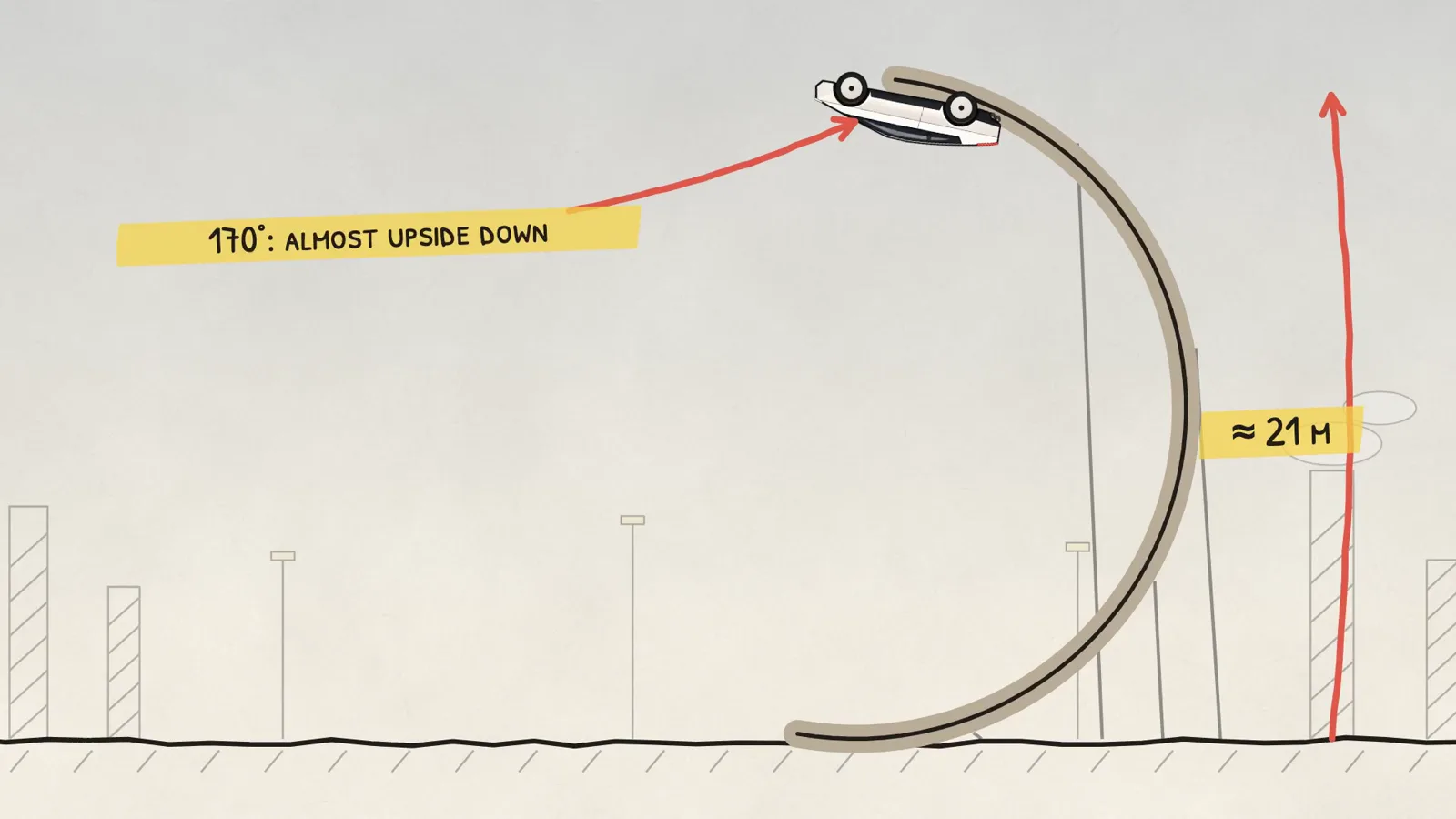
The first stunt was a climb. A tall curved ramp rose behind the stage, like the side of a giant half-pipe. The car drove up it, and kept going, until it was almost upside down. Tesla's own on-screen readout showed it about 21 metres up, tipped back at 170 degrees.
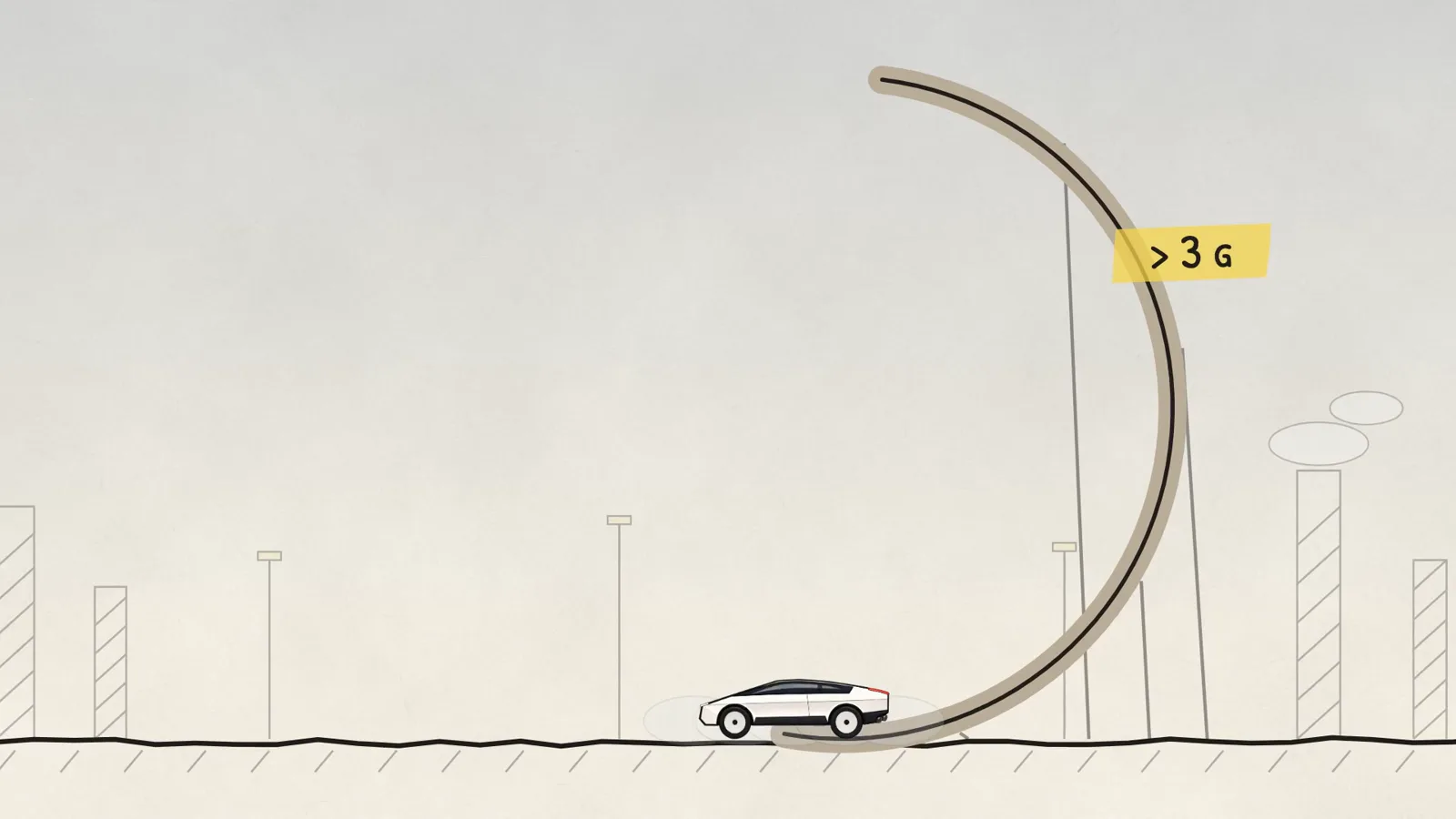
At the top, it let go. The car fell away from the ramp, and jets of air fired from its body, rolling it upright and braking its fall. As it slowed down, the readout went past 3 g. It landed in a cloud of smoke.
Musk's reaction was short:
“Well, it worked.” — Elon Musk, 15 October 2026
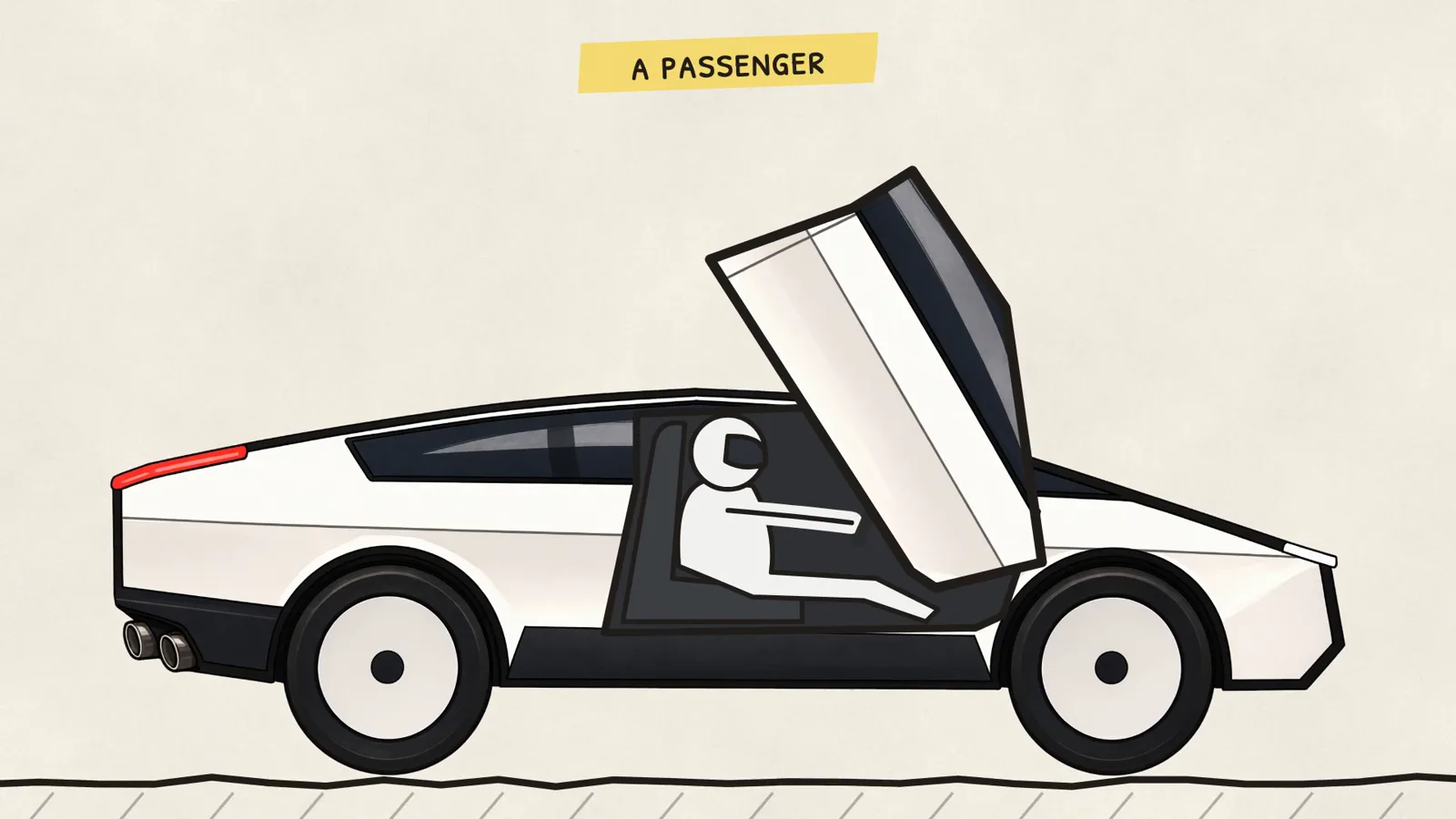
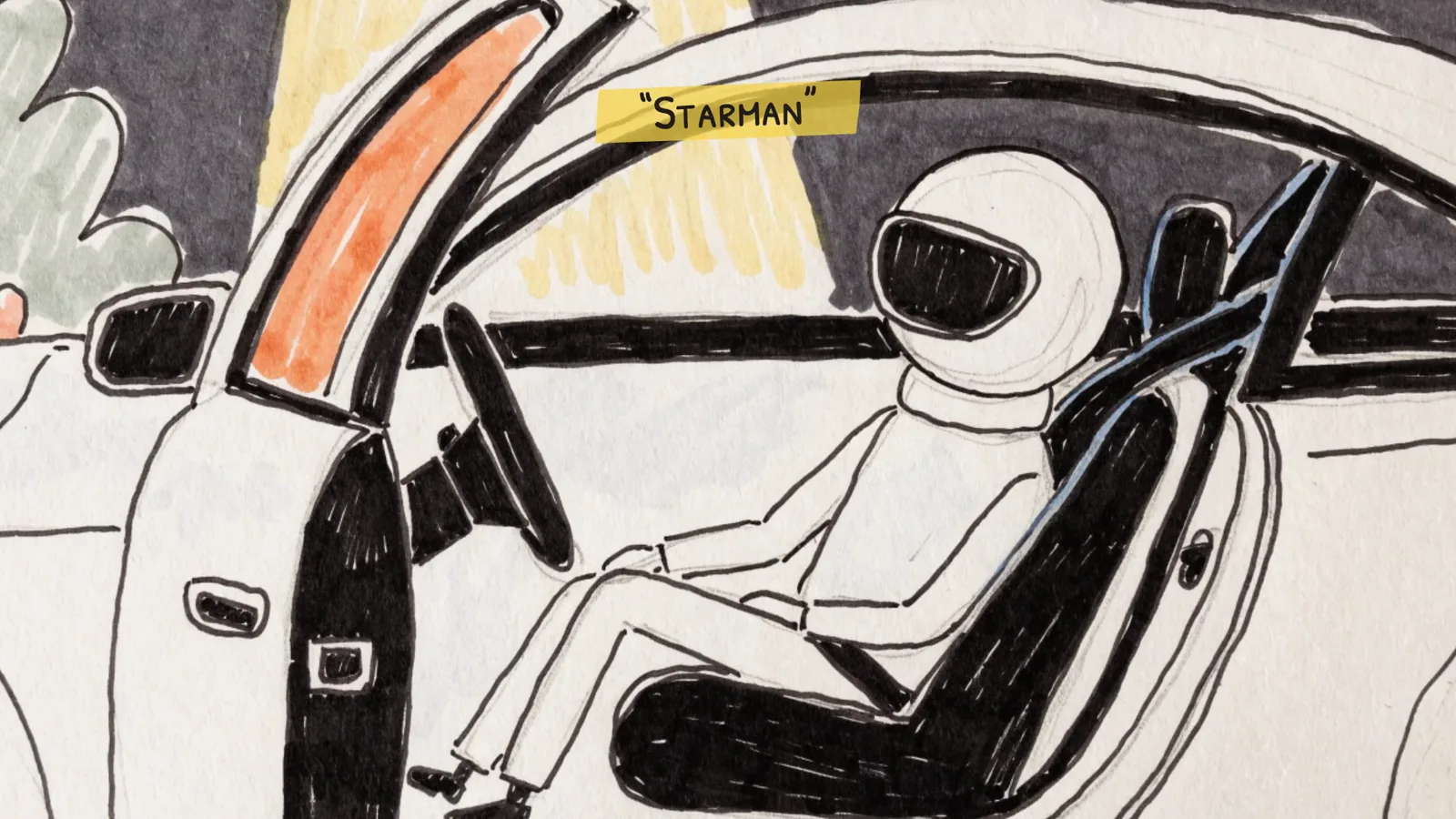
When the car's door swung up, the crowd saw that it had a passenger: a dummy in a white spacesuit. The presenters called him Starman. He had ridden in a Roadster once before, somewhere much further away.

The second stunt was the jump over five cars. Right after it landed, one of the Tesla executives on stage gave it a name. He had Tony Hawk, the world's most famous skateboarder, in mind.
“Tony Hawk would be proud. We call that the kickflip.” — a Tesla executive on stage, 15 October 2026
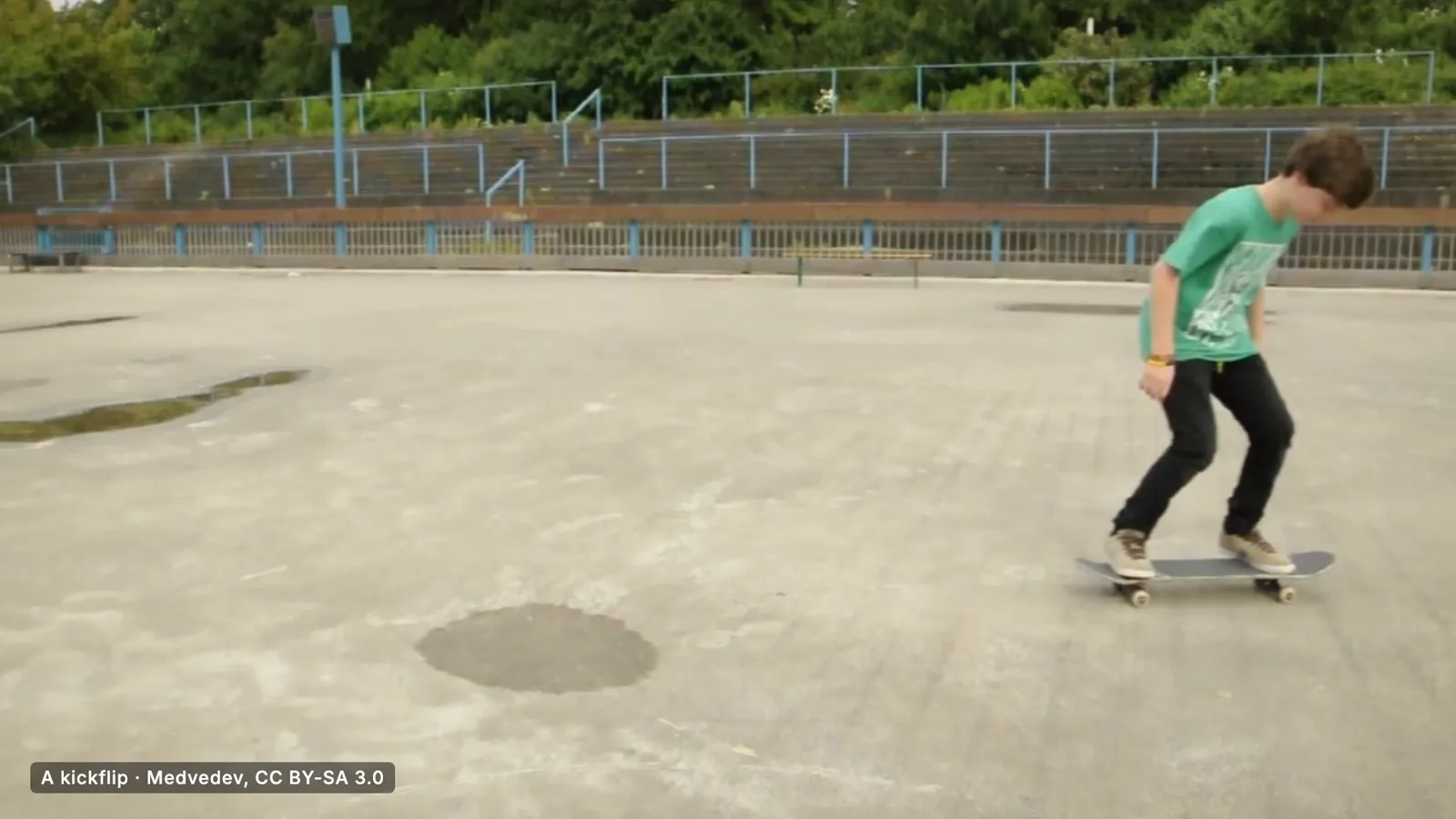
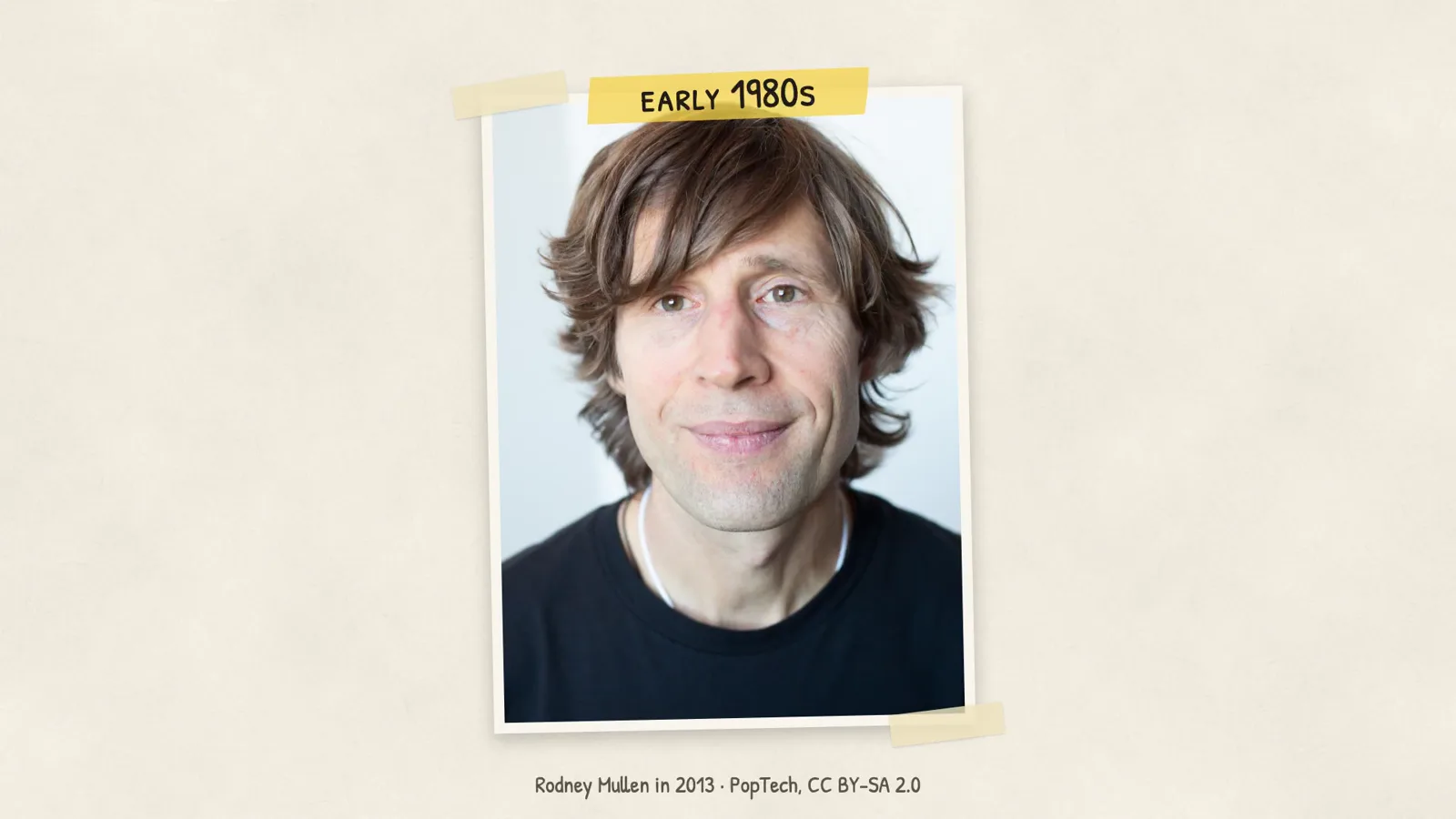
The name fits. In a kickflip, the skater kicks the board so it spins around its length, then lands back on it. Rodney Mullen, a freestyle skater, worked out the modern version in the early 1980s.
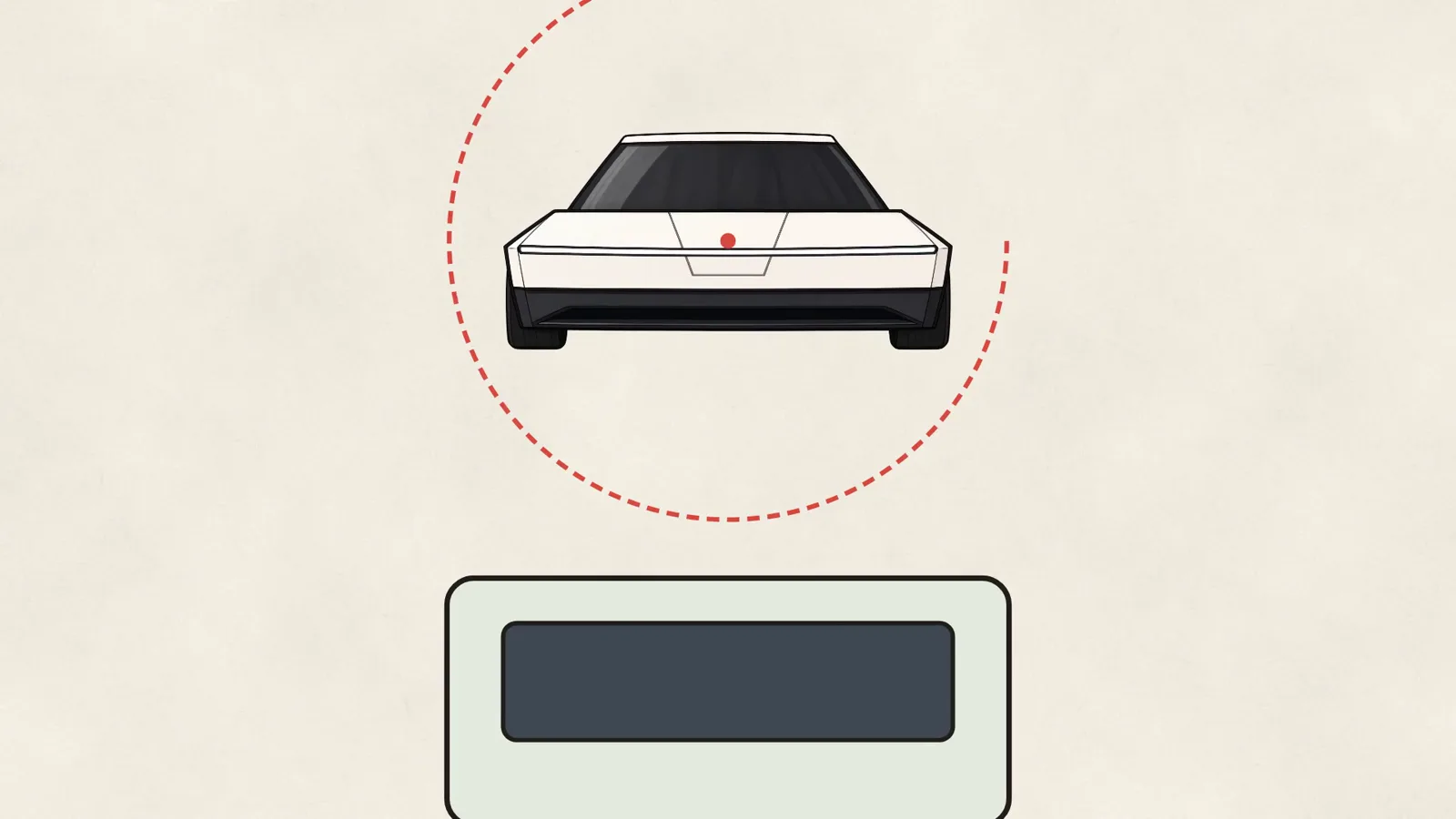
The Roadster did the same spin, around its own length, with nothing holding it. And it did it seven metres up, over the roof of a Semi truck.
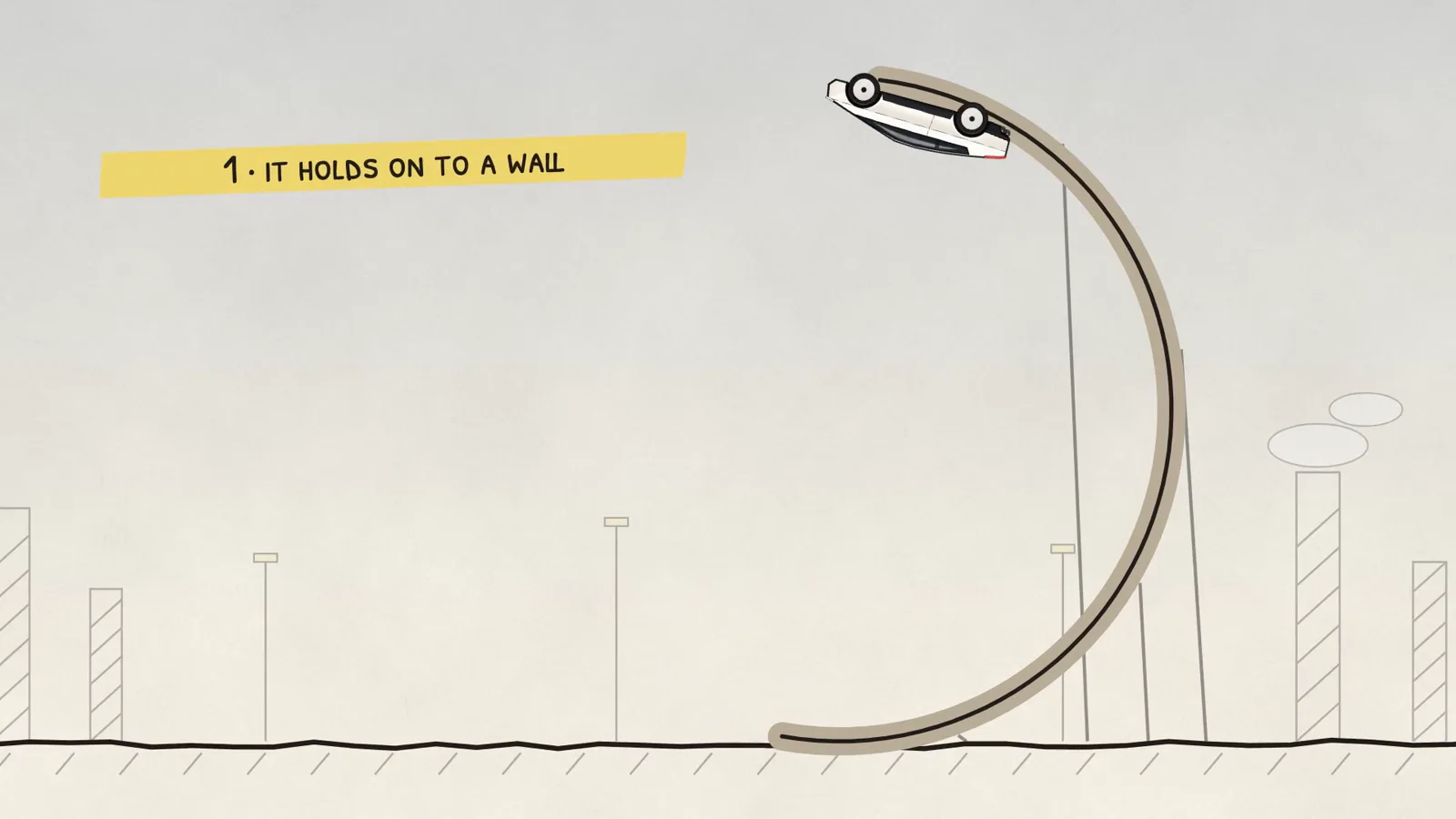
That night, the Roadster did two things a car shouldn't be able to do. It held on to a wall, and it threw itself into the air. Each trick needs its own machine. The first one is hidden under the car.
The fans under the car ▶ 3:22
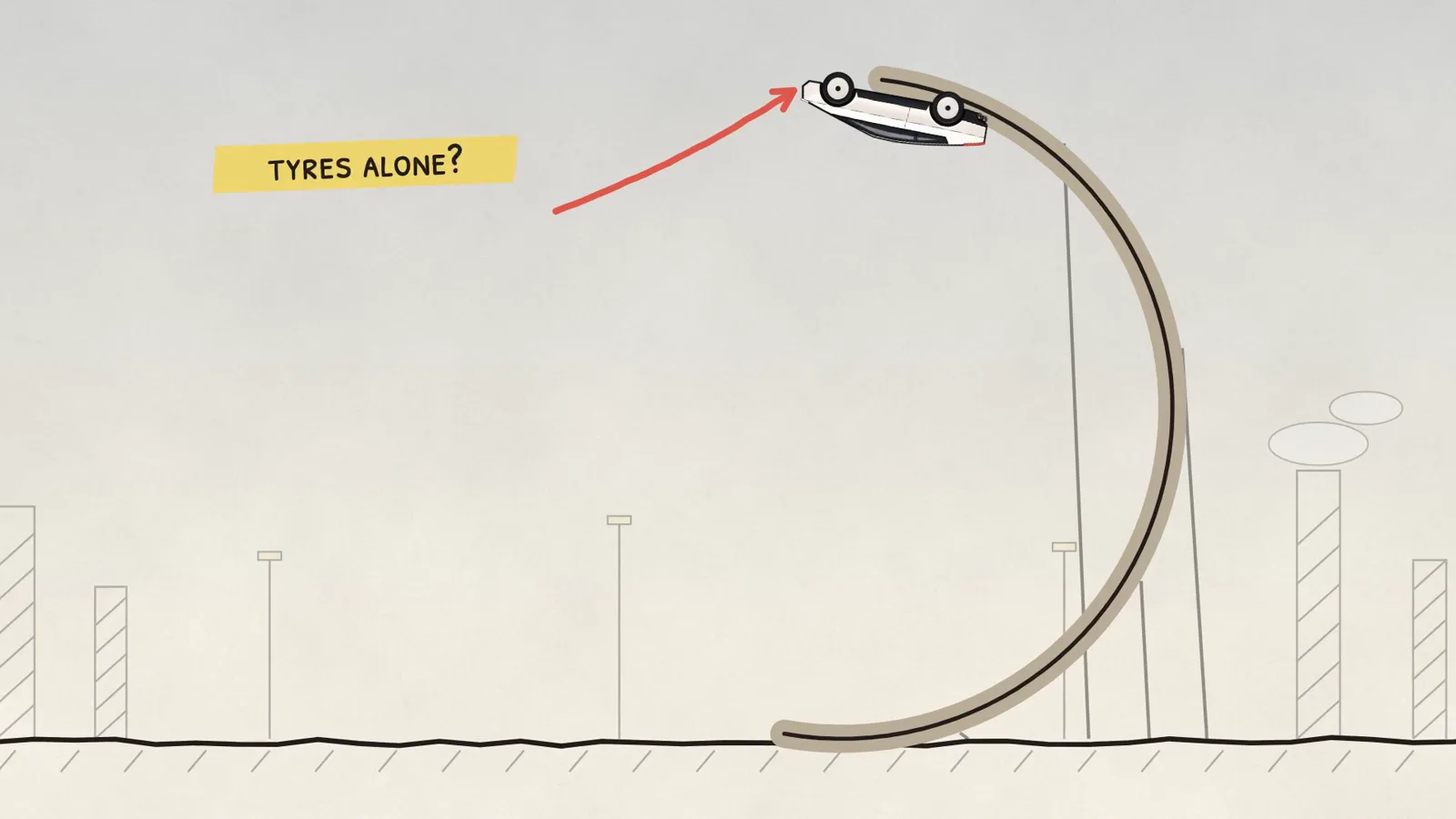
Many of the first reports said the Roadster drove upside down. It came close: it stopped at 170 degrees, ten short of fully upside down. Even that should be impossible. Tyres alone can't hold a car on a ceiling. What held it there?
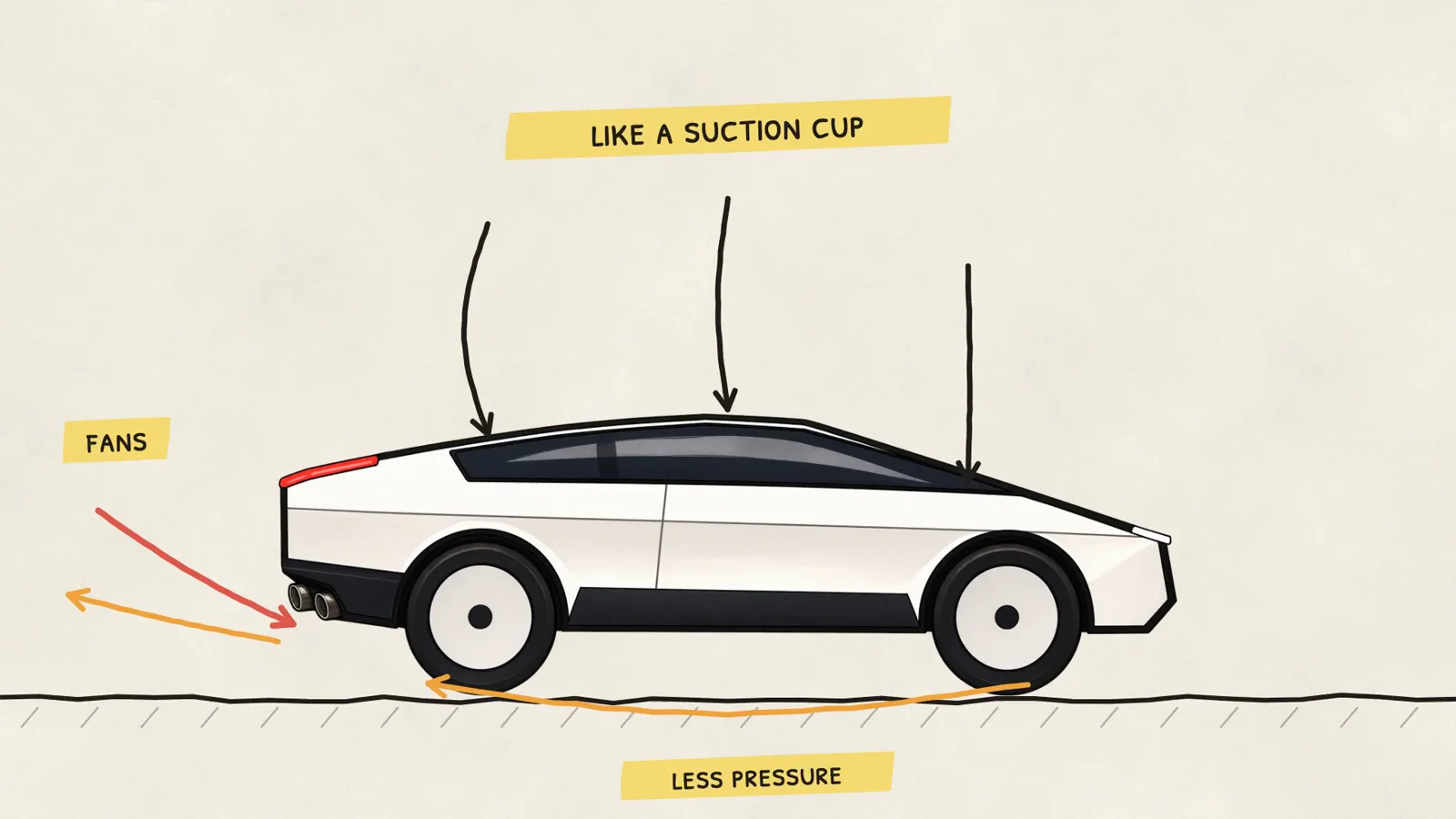
The answer is a set of fans in the back of the car, under the bodywork. They pull air out from underneath. That leaves less air pressure under the car than above it, so the air all around presses it onto the road, like a suction cup.
Lars Moravy, Tesla's vice president of vehicle engineering, explained how strong it is:
“We have a fan suction system on the bottom of the car that can pull up to 2 G's.” — Lars Moravy, 15 October 2026
Musk put it more bluntly. "This car really sucks," he said. "It could suck a tennis ball through a hose pipe."
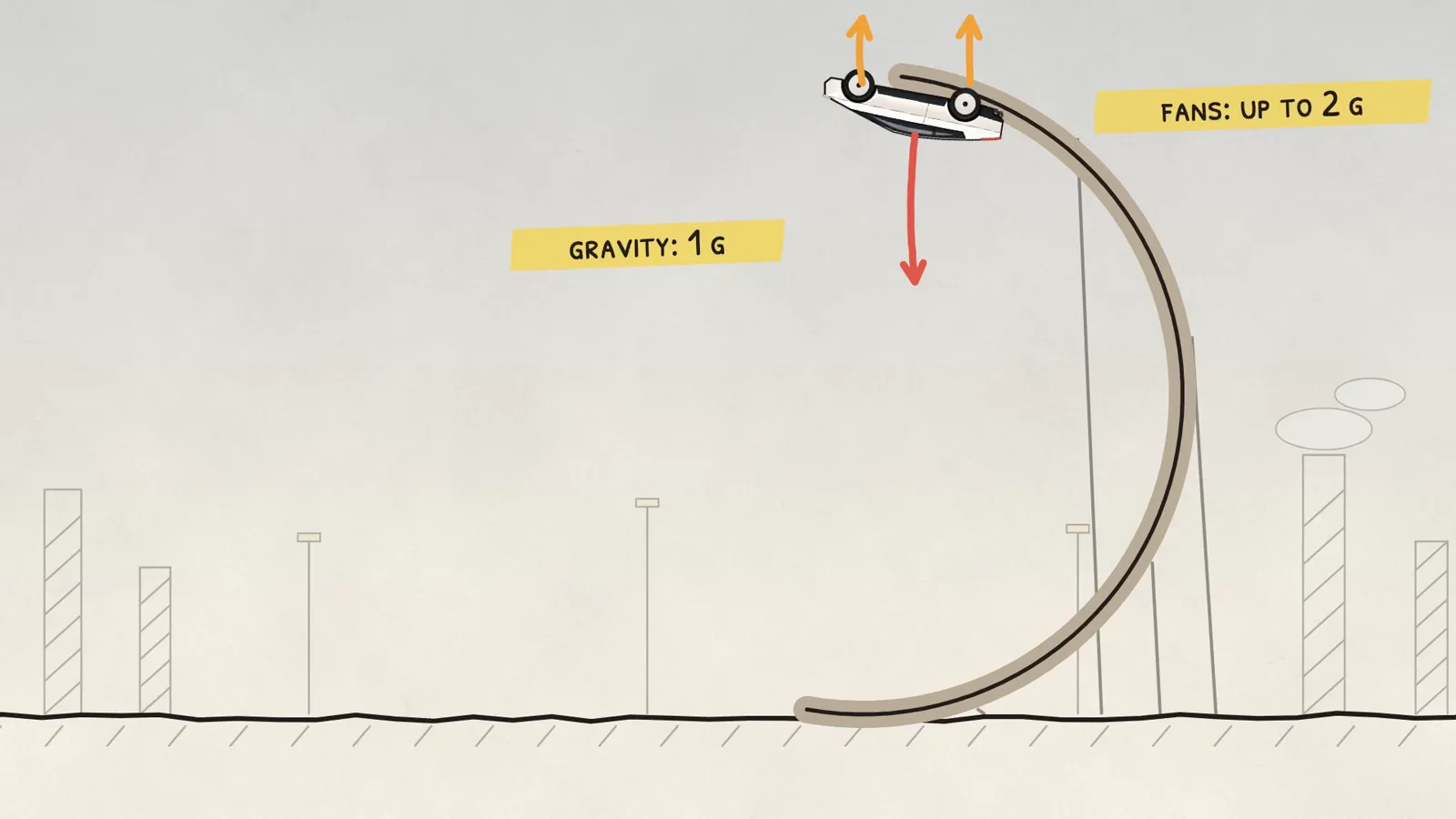
2 g means the fans can pull with up to twice the car's own weight. On the ramp, almost upside down, gravity pulls the car away with one g. The fans pull it back with up to two. So the fans win.
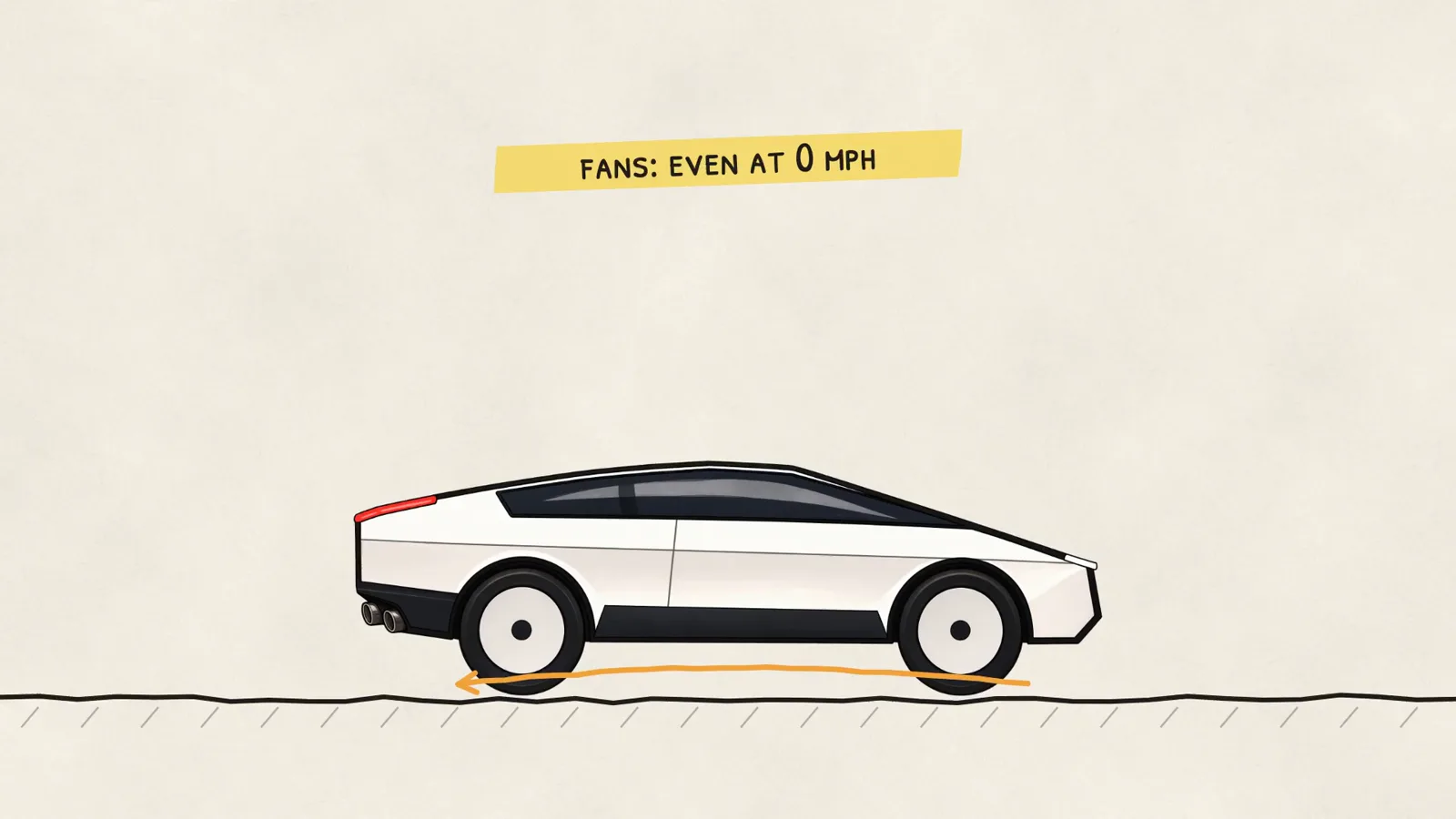
And unlike a wing, which only presses a car down at speed, the fans work even when the car is standing still. That's why the Roadster doesn't need to be going fast to stay stuck.
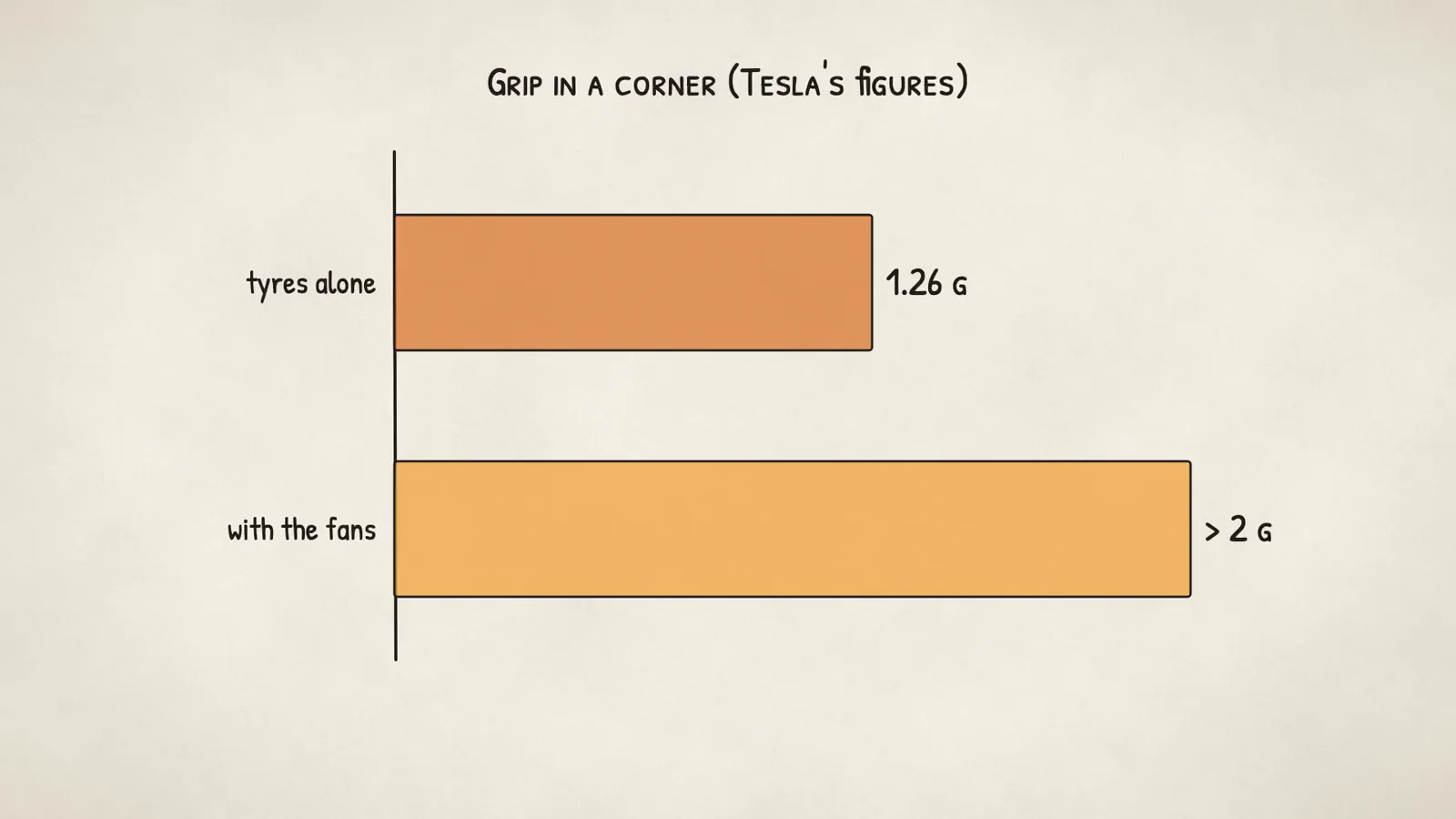
On a normal road, the same suction is about grip. Tesla says tyres alone give a car about 1.26 g in a corner. With its fans, it says, the Roadster can corner at more than two.
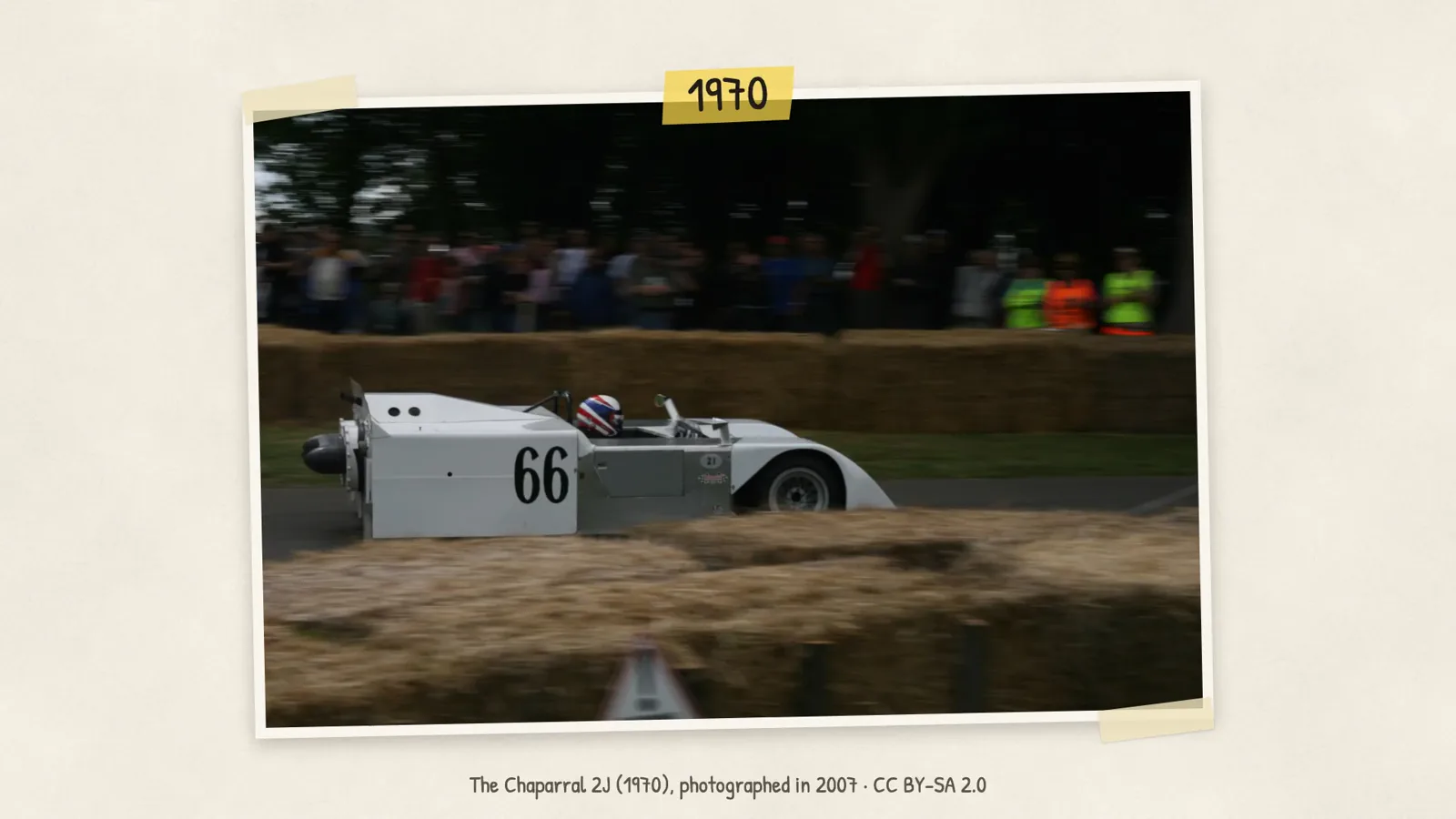

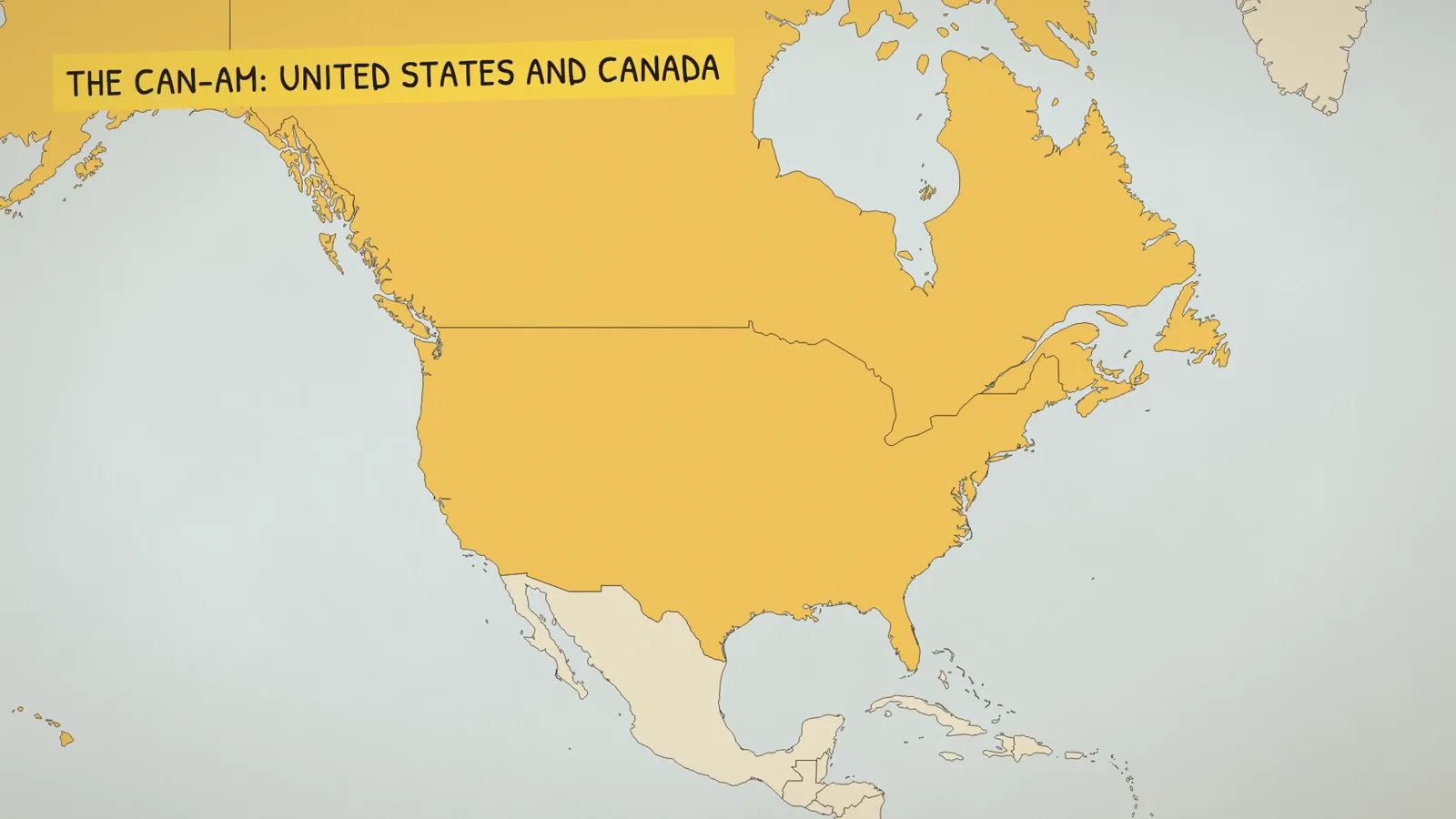
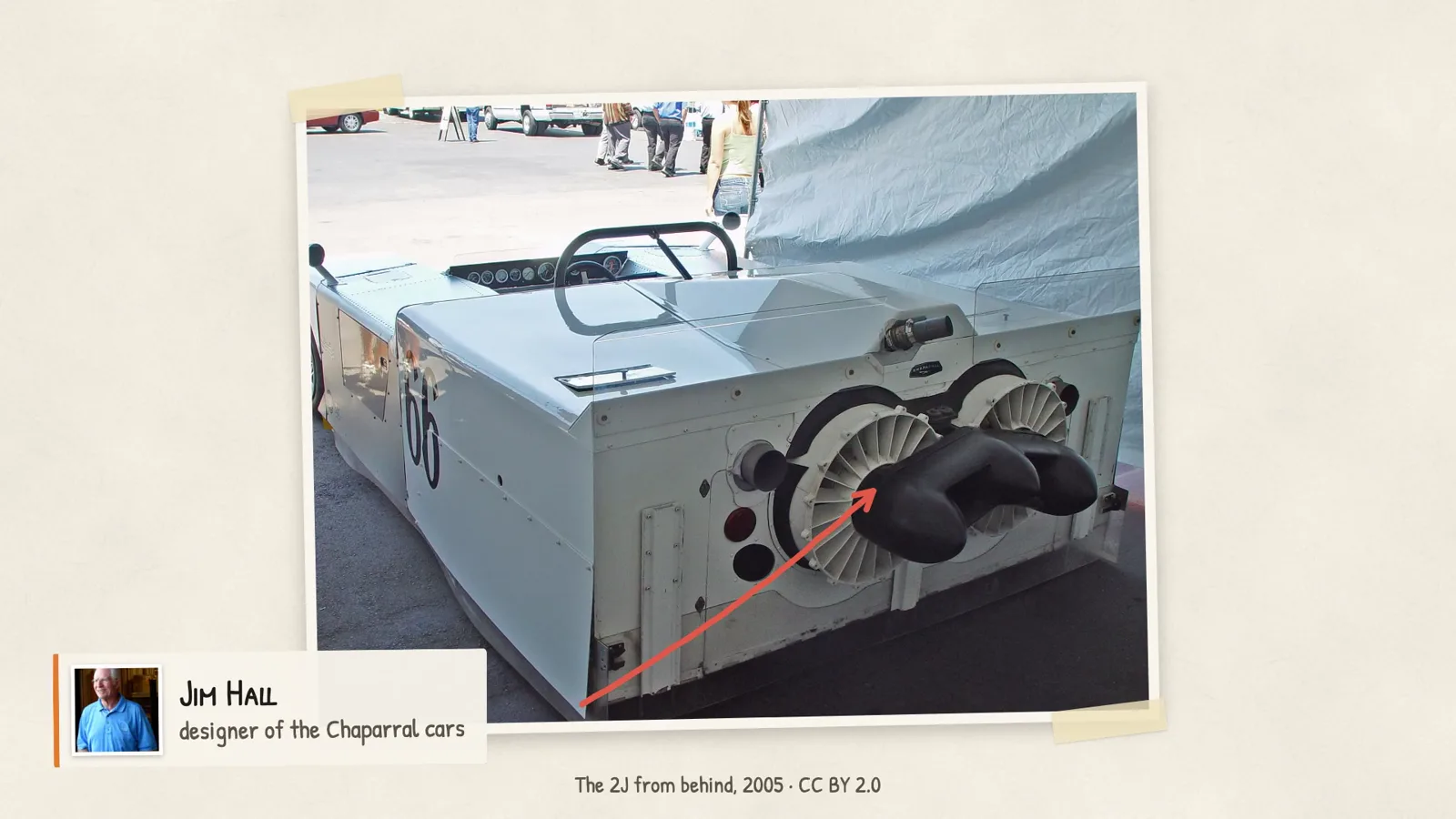


The idea is more than 50 years old. In 1970, an American team built a race car called the Chaparral 2J. It raced in the Can-Am, a sports-car series in the United States and Canada. Its designer, Jim Hall, gave it fans at the back that sucked it onto the track.
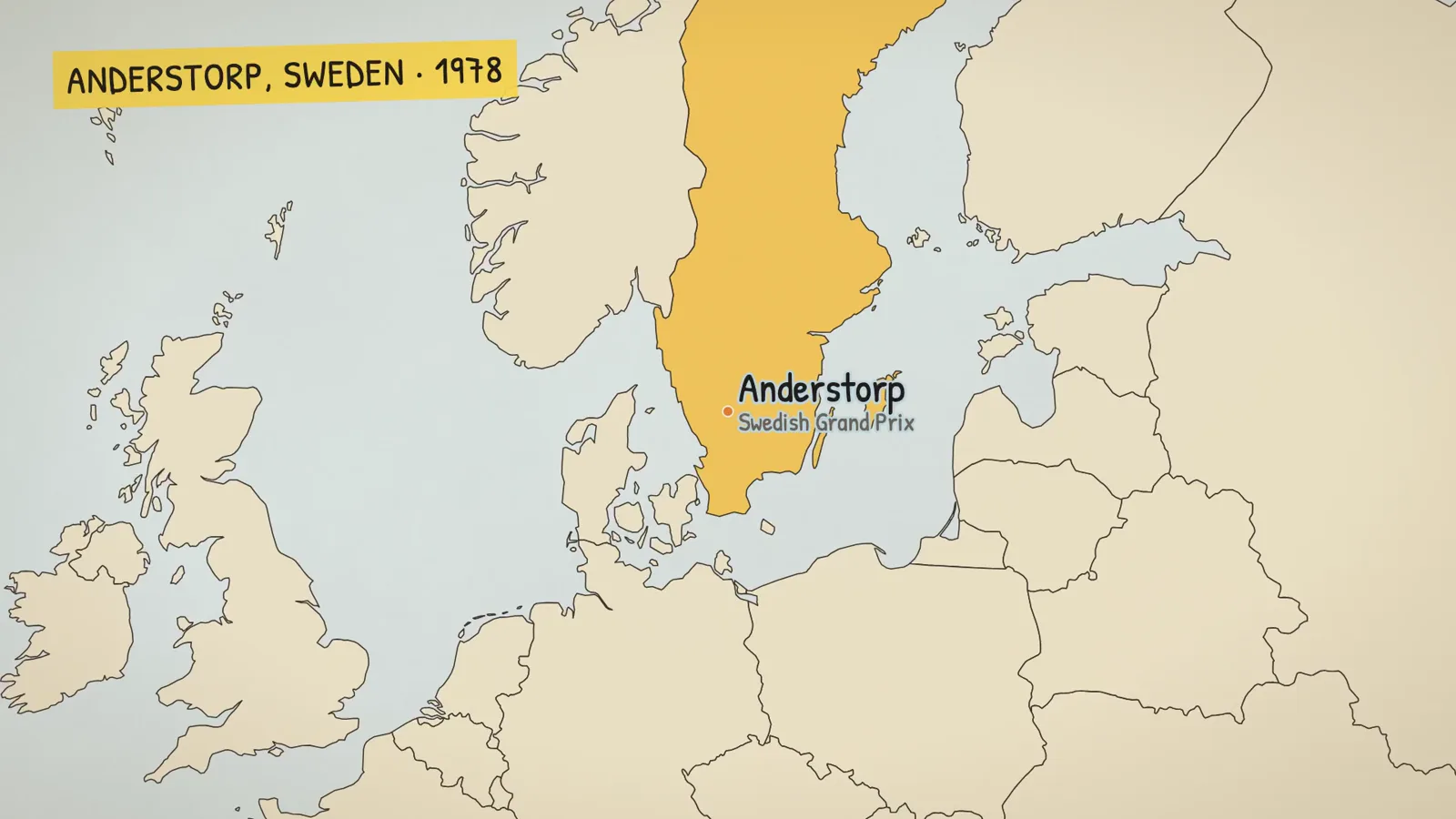
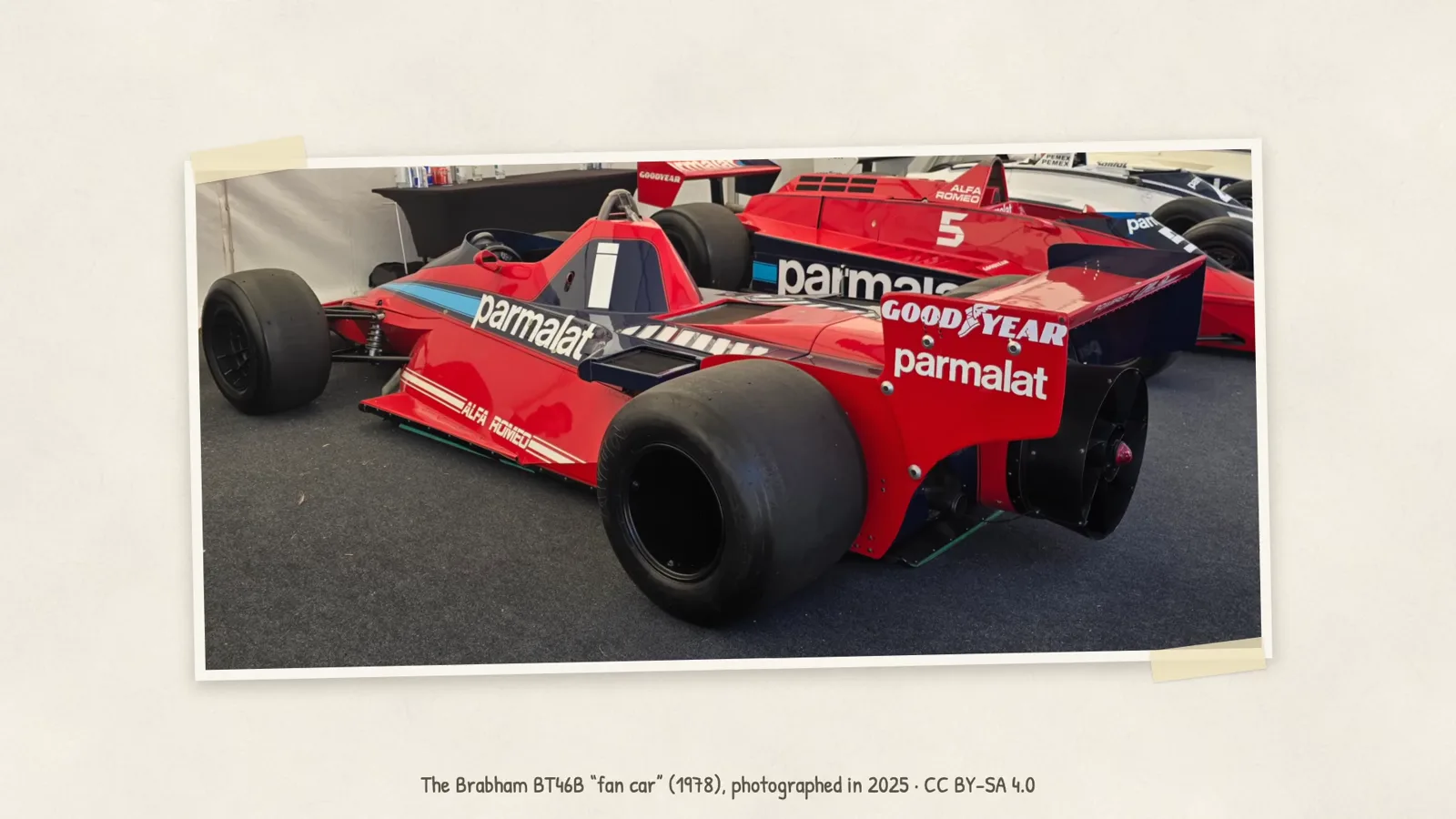

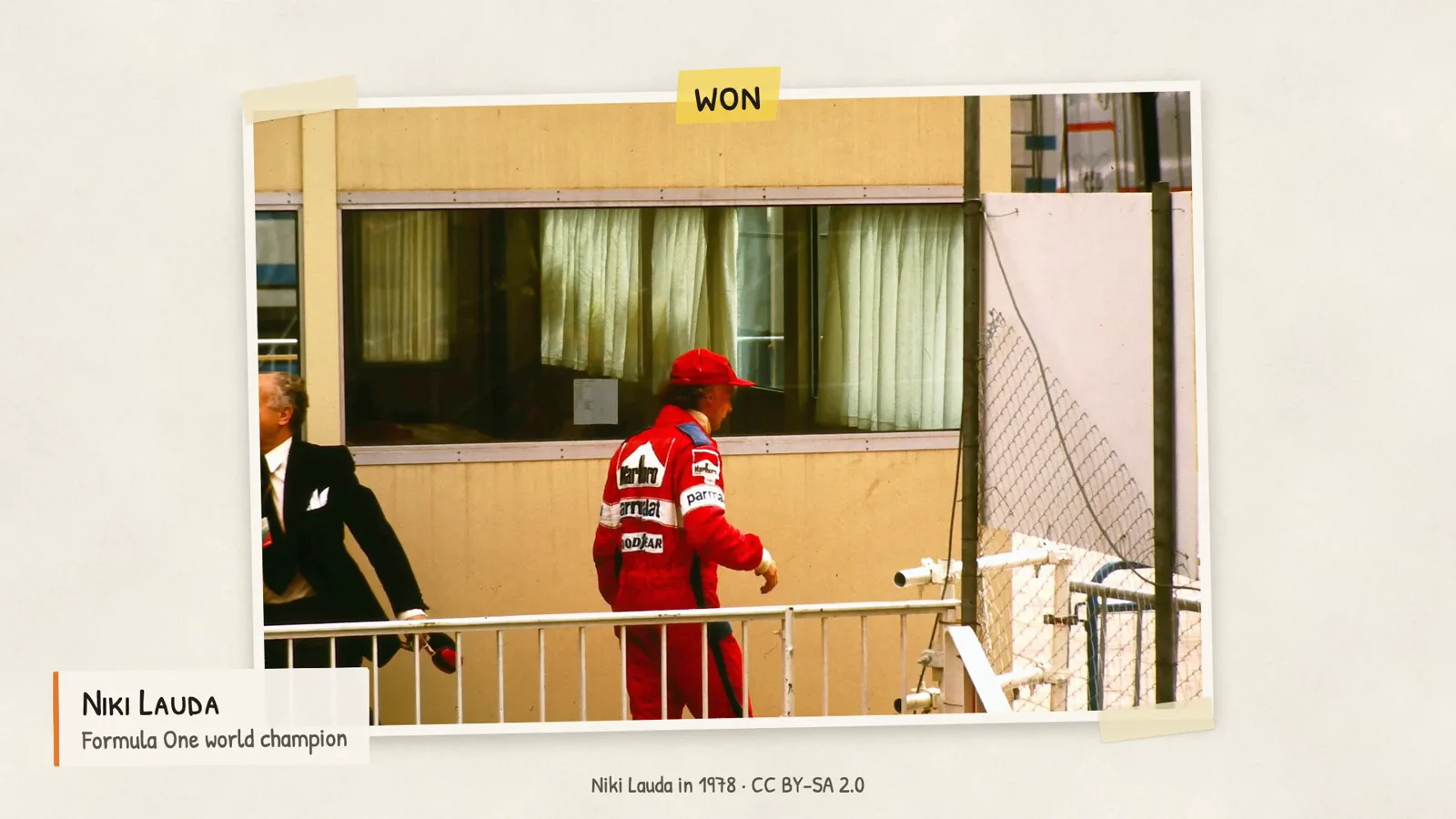

Eight years later, the idea reached Formula One. At the 1978 Swedish Grand Prix, the Brabham team arrived with a car that had a large fan at the back. Niki Lauda drove it, and won.
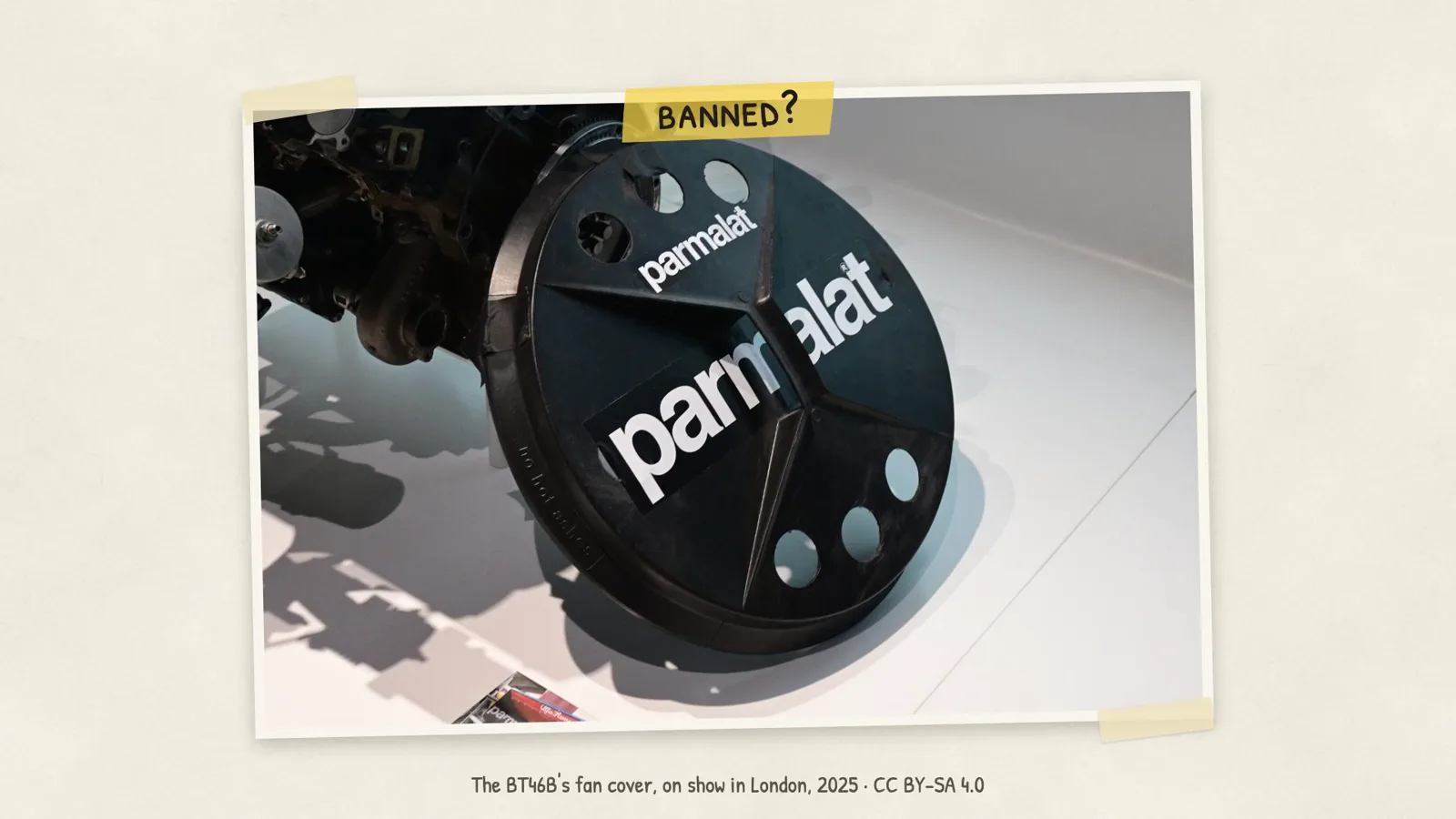

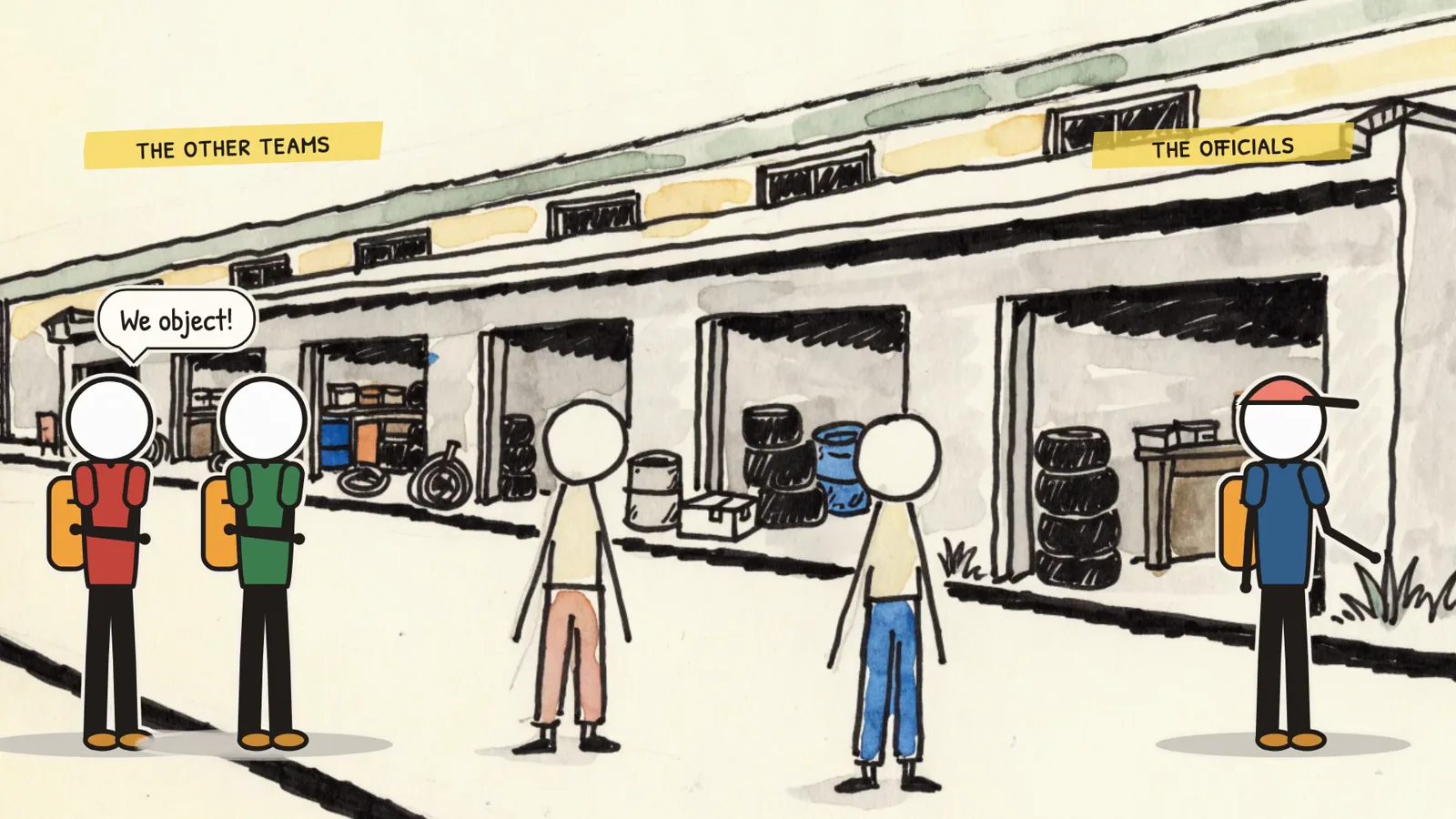
You'll often read that the fan car was then banned, but the sport's officials actually said it could keep racing. The other teams objected, though, so Brabham's boss, Bernie Ecclestone, withdrew it to keep the peace. It never raced again.
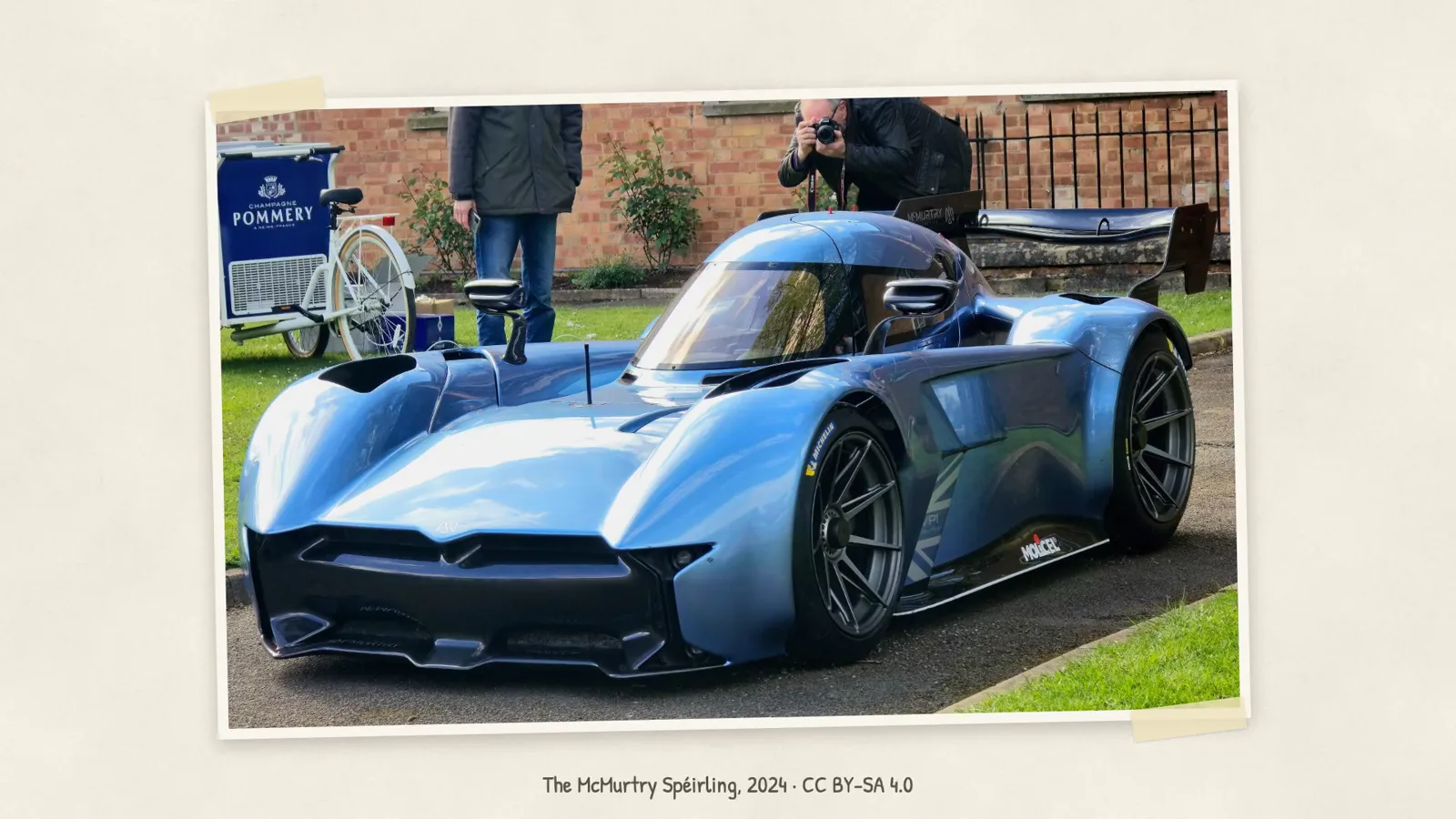

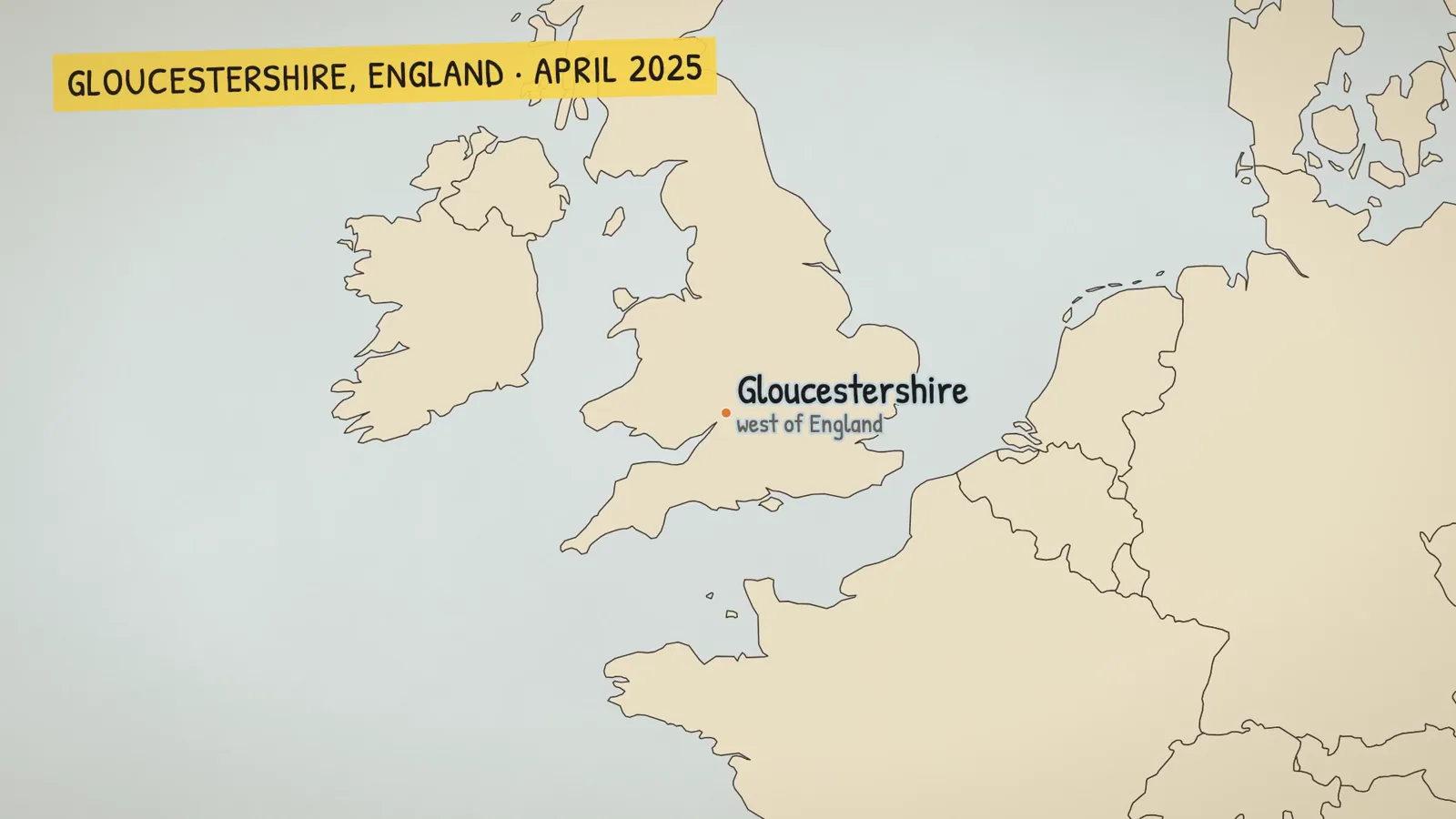
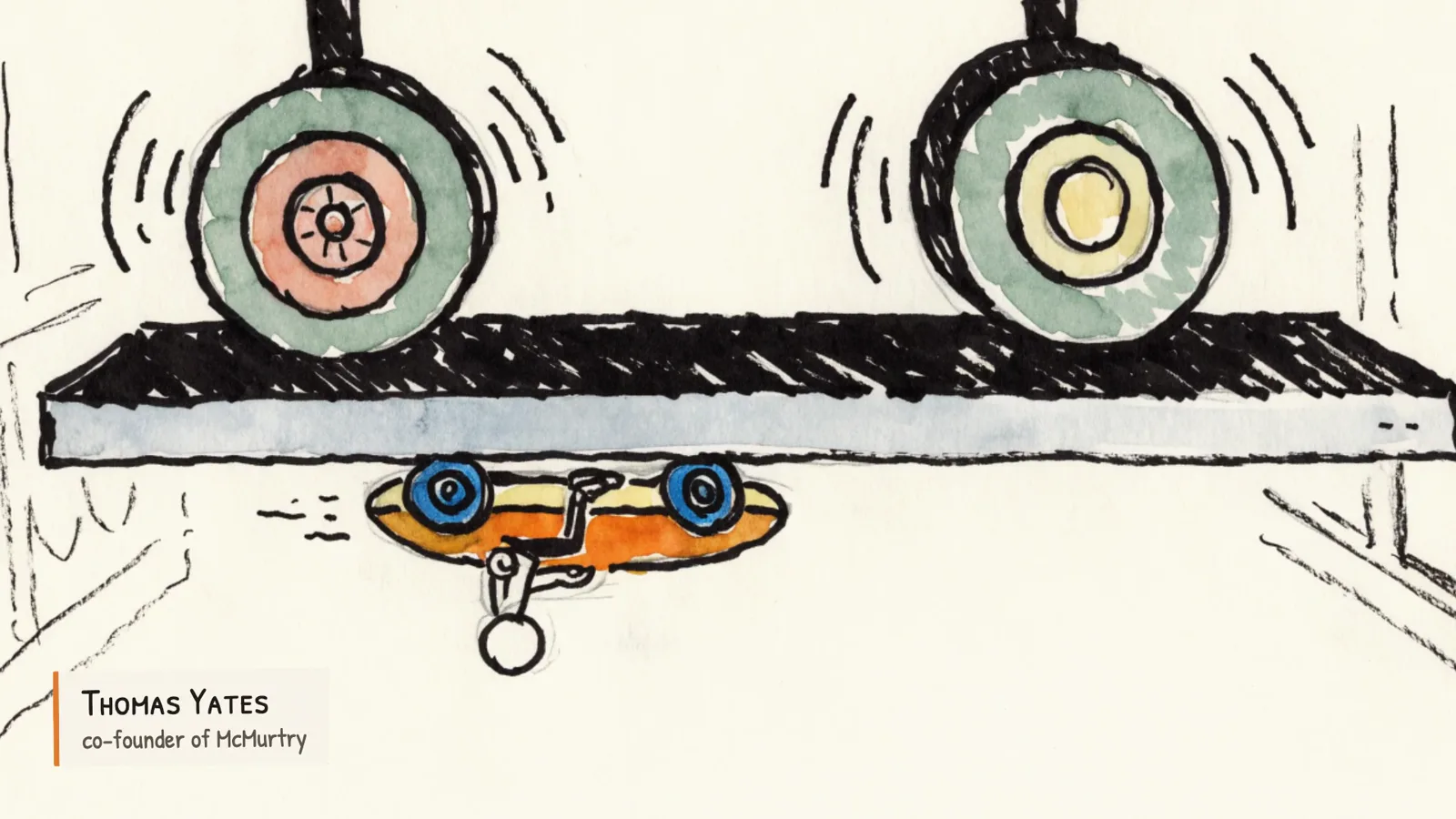
The idea came back with a small British company called McMurtry. In April 2025, it put its fan car on a rotating rig in Gloucestershire, in the west of England. The rig turned the car upside down, and the company's co-founder, Thomas Yates, drove it forward a short distance.
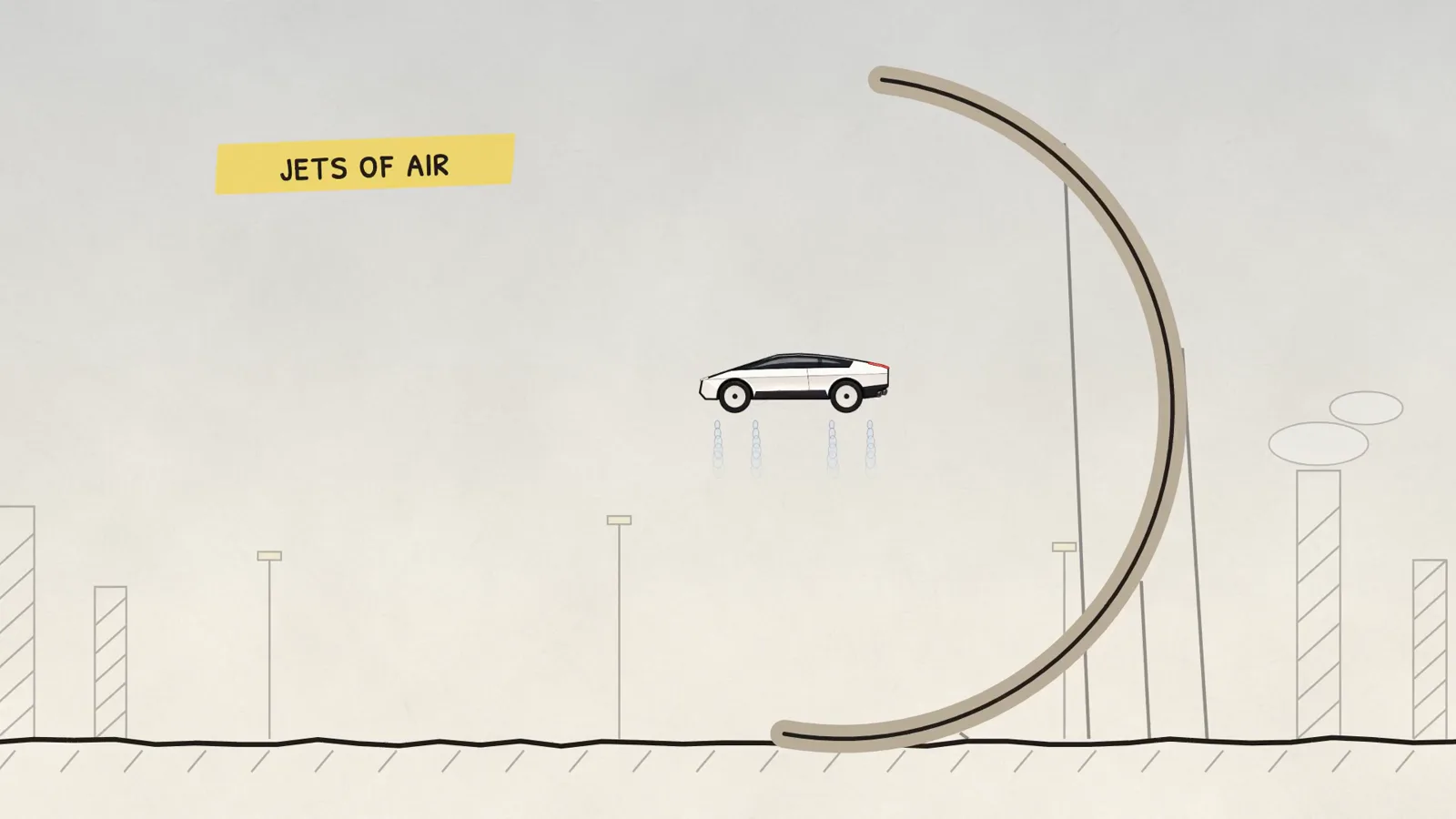
So McMurtry got there first with the fans. What Tesla added was the moment the Roadster let go of the wall. For that, it needed something else: jets of air.
Ten jets of air ▶ 6:09
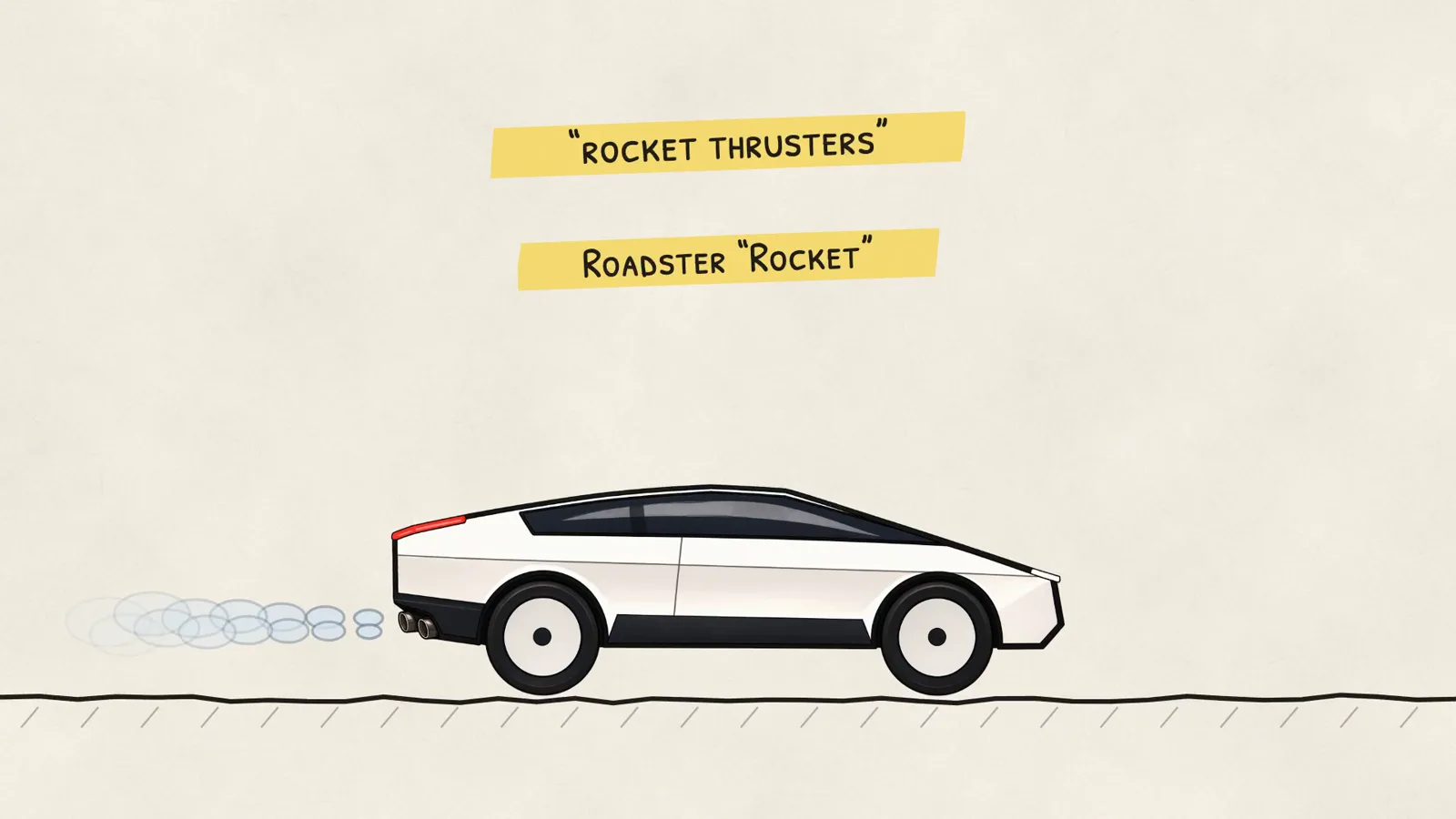
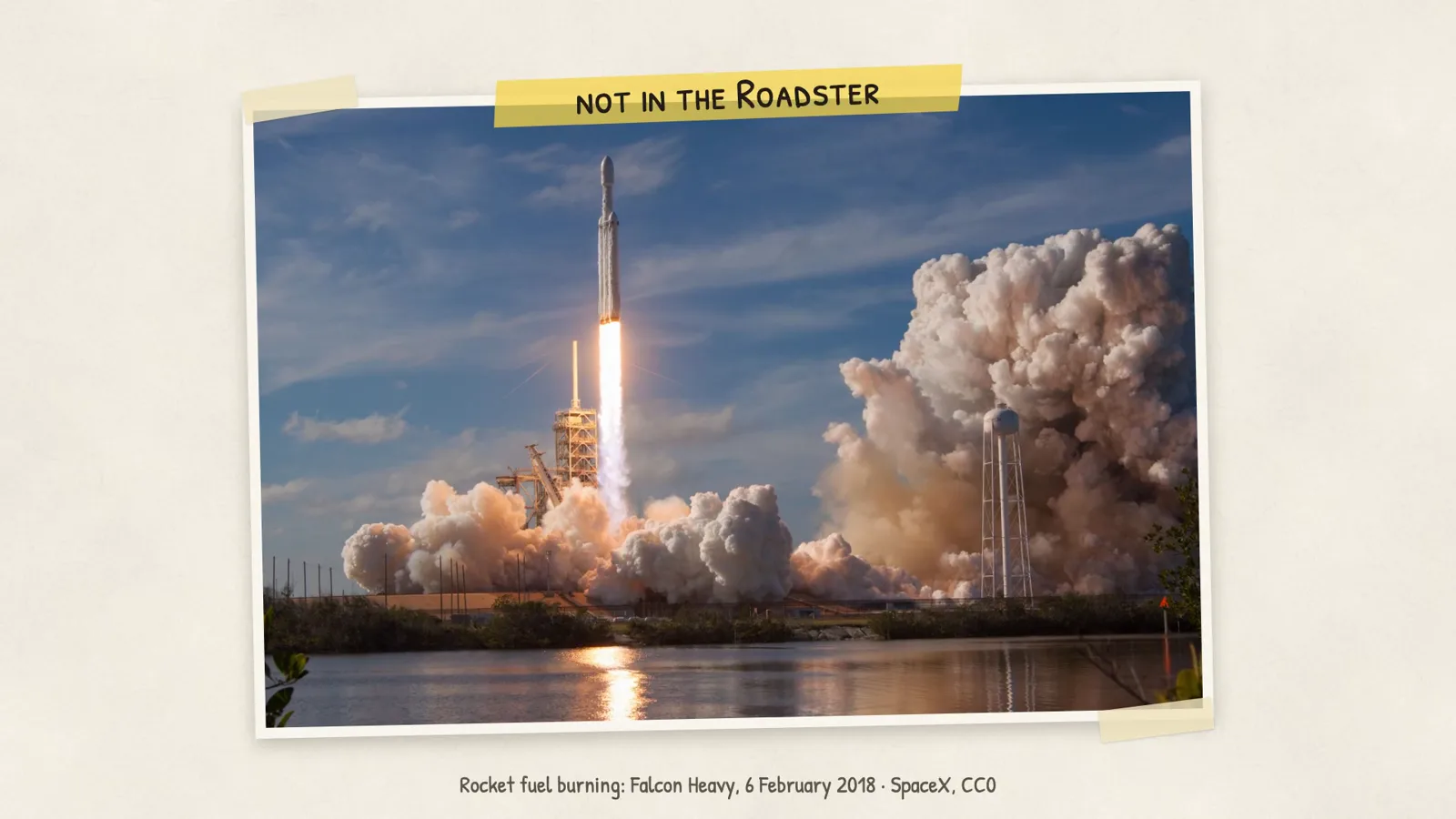

Moravy put it simply. The team, he said, "borrowed some technology from SpaceX to do the rest". Much of the coverage called the result rocket thrusters, and the most expensive version of the car is even called the Rocket. So it would be easy to think the car burns rocket fuel, but nothing burns at all.
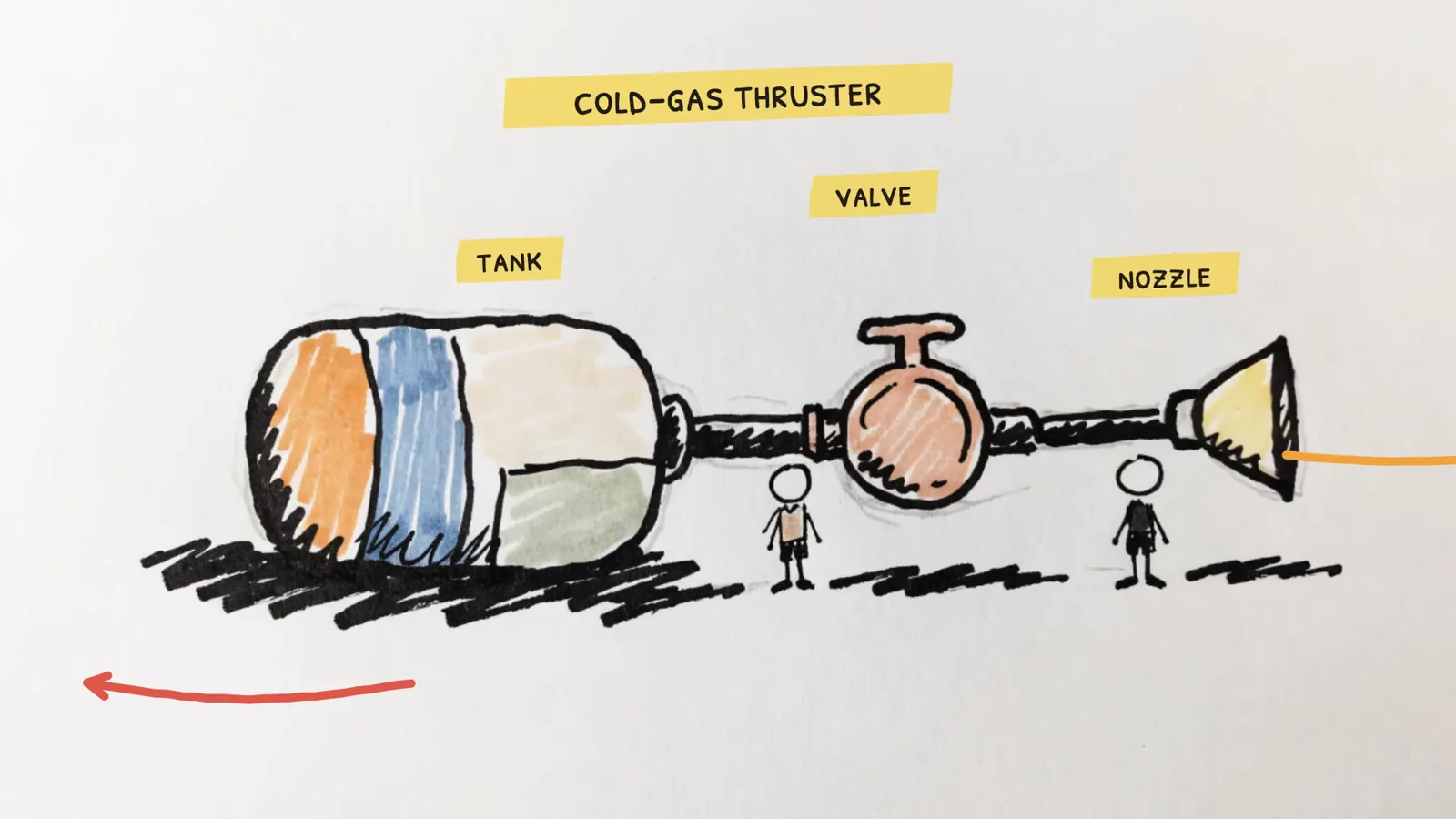
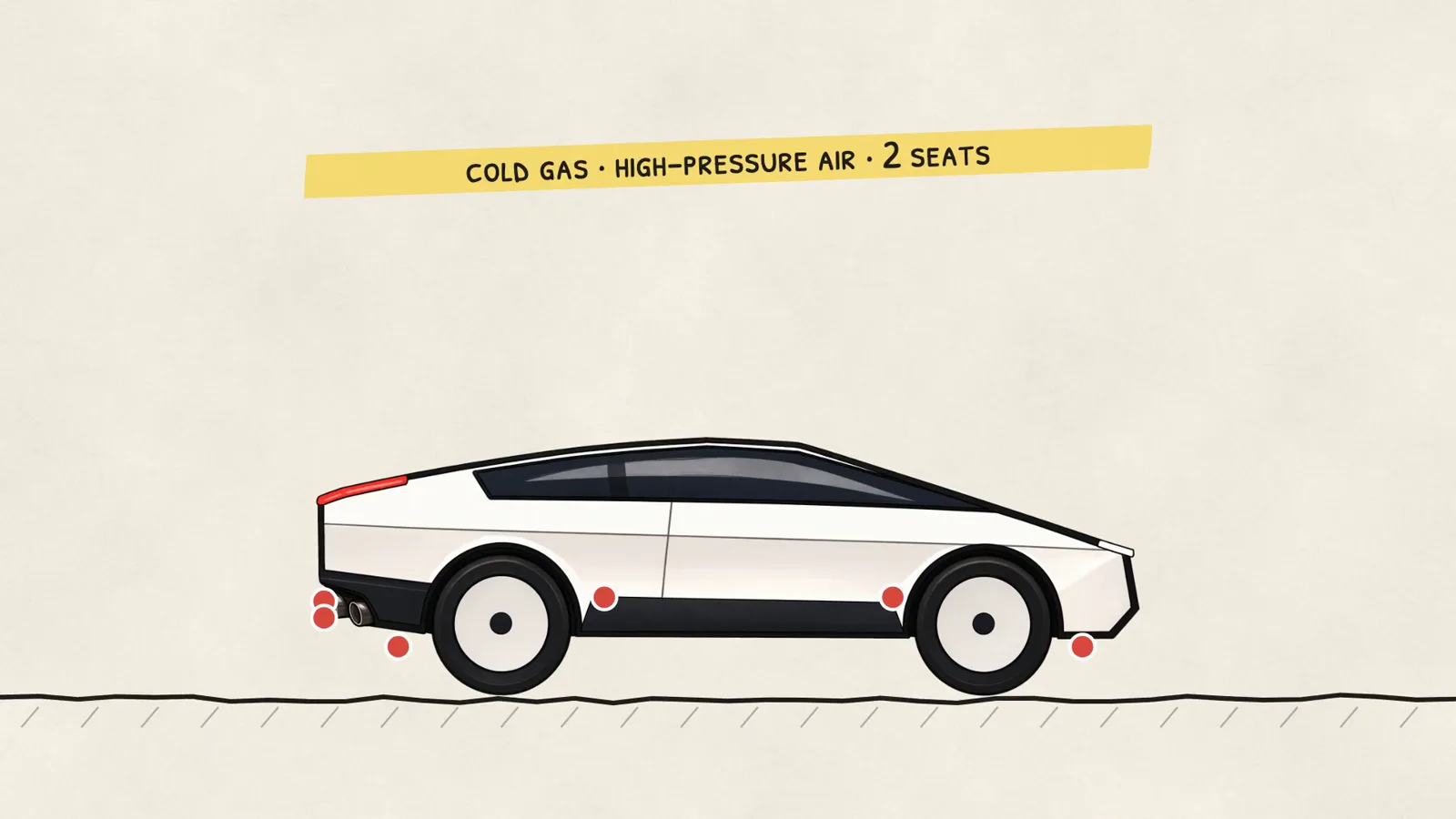
The Roadster's jets are what engineers call cold-gas thrusters. It's the simplest rocket there is: a tank of gas under high pressure, a valve, and a nozzle. Open the valve, and the gas rushes out one way, so the car is pushed the other way. SpaceX uses the same idea to steer its rockets.
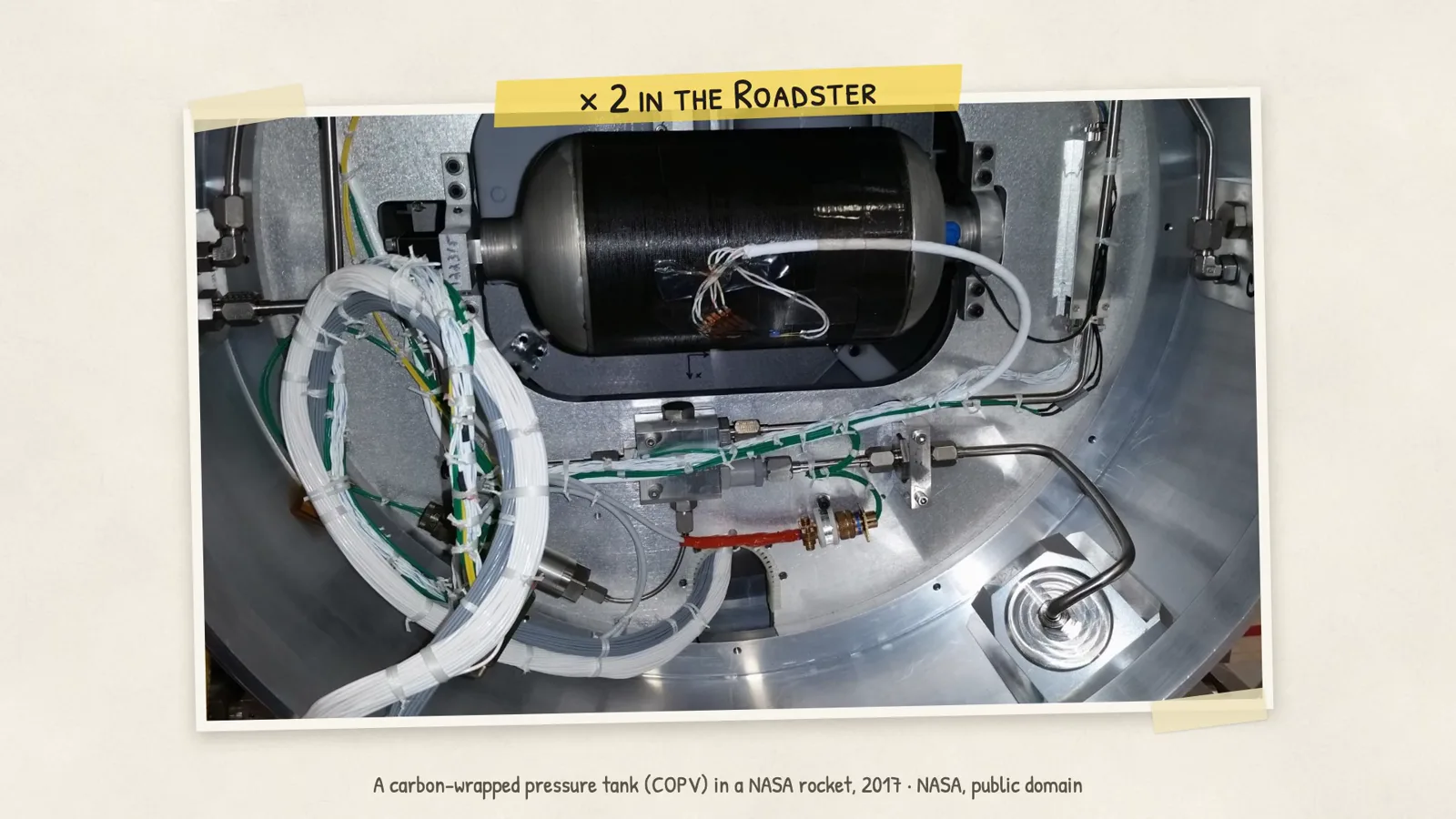

In the Roadster, the gas is plain air. Moravy said it's stored in two tanks wrapped in carbon fibre, the kind of tank SpaceX flies on its rockets. Together they hold about 600 litres, packed with about 250 kilos of air. That's roughly the weight of three adults, in air.
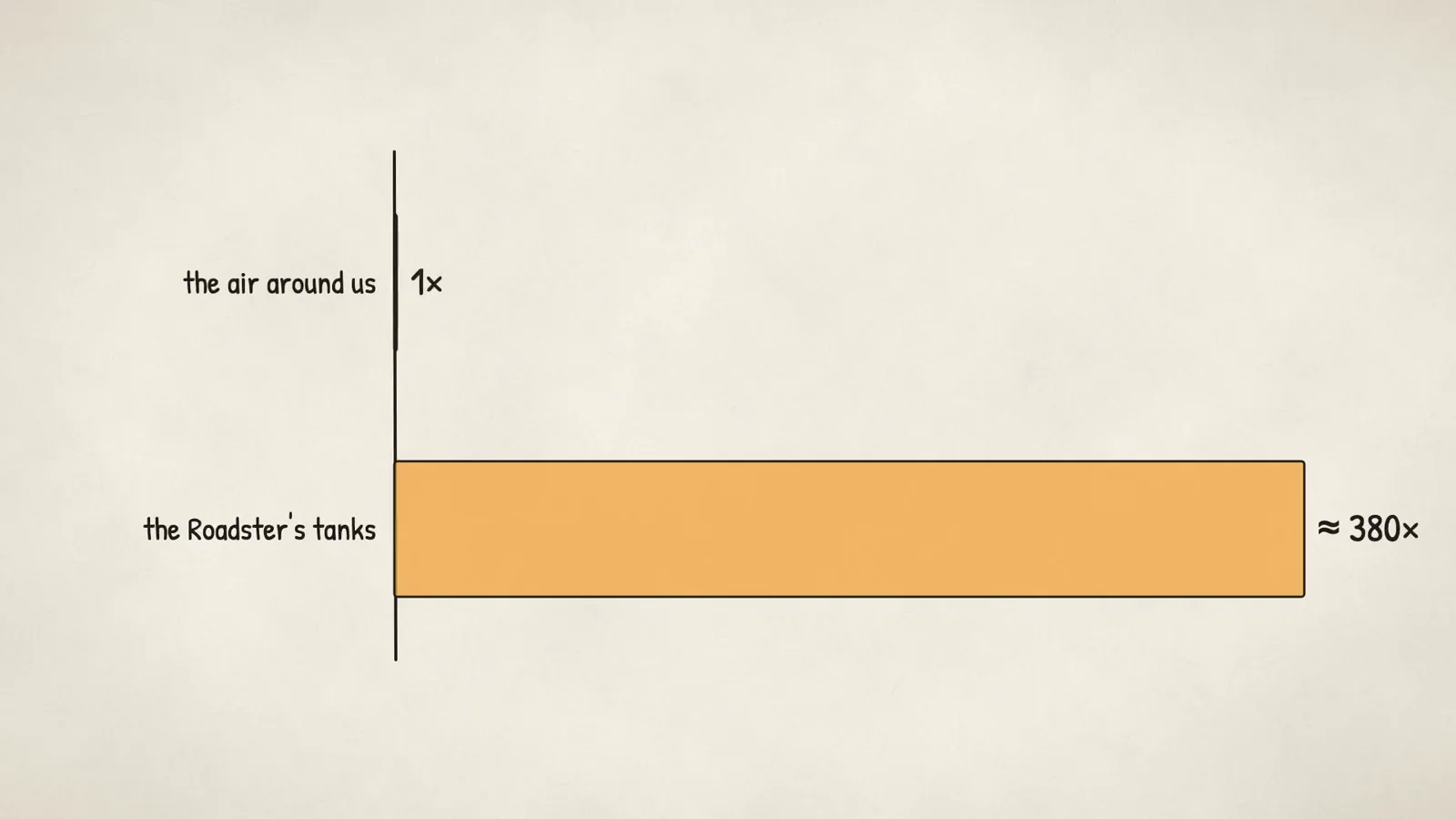
Squeezing that much air into that little space takes enormous pressure. A gauge in Tesla's own photos of the cockpit reads 5,500 psi (about 380 bar). That's nearly 400 times the pressure of the air around us. I checked: 250 kilos in 600 litres is just what air weighs at that pressure. The numbers fit.
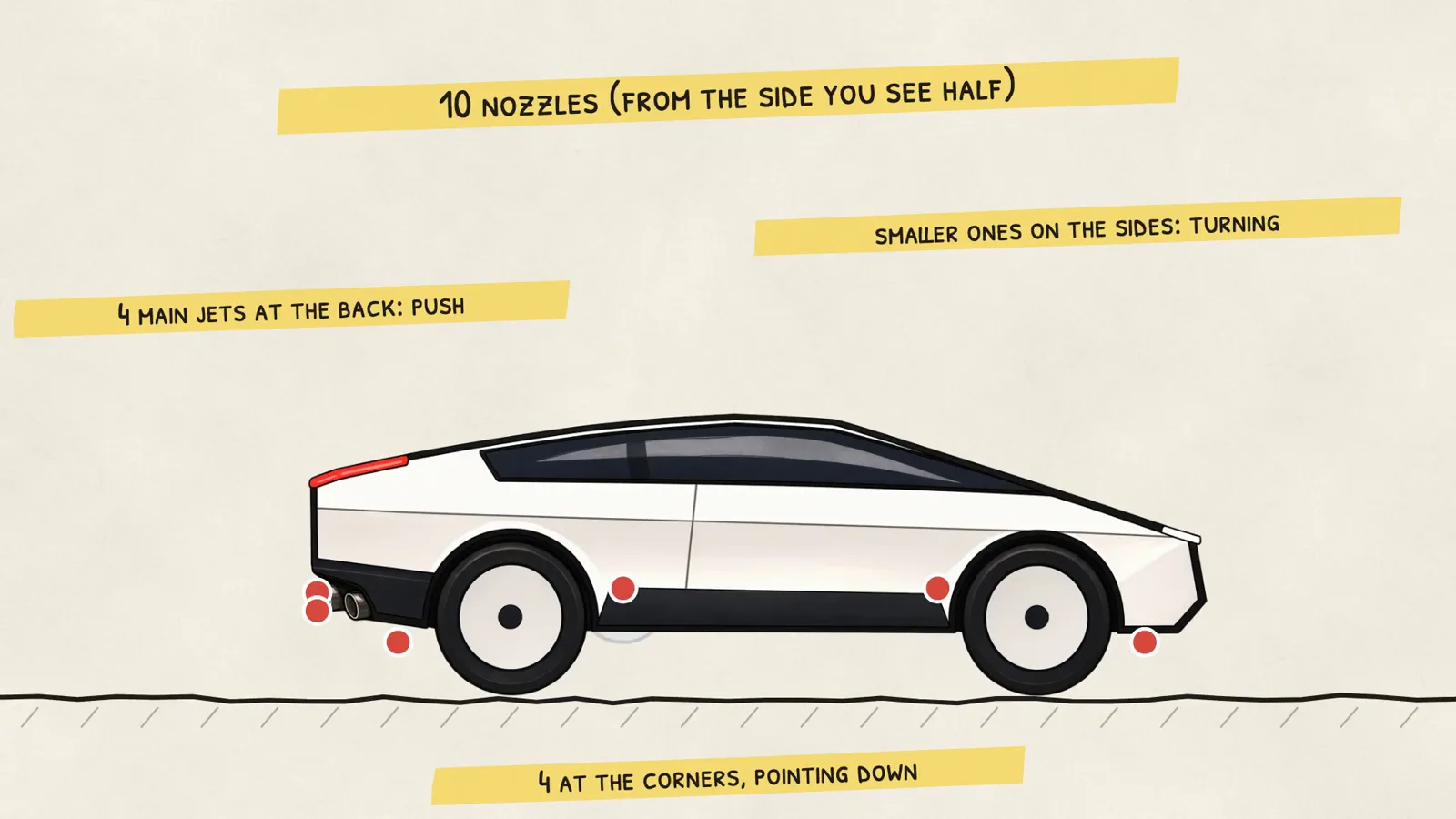
The air leaves through ten nozzles. The main ones point backwards, to push the car forward. Others point down, at the corners, for taking off and landing. And smaller ones on the sides turn the car in the air. Musk called those "attitude control thrusters", the rocket word for the jets that point a spacecraft. Musk said it "can basically fly like a rocket".
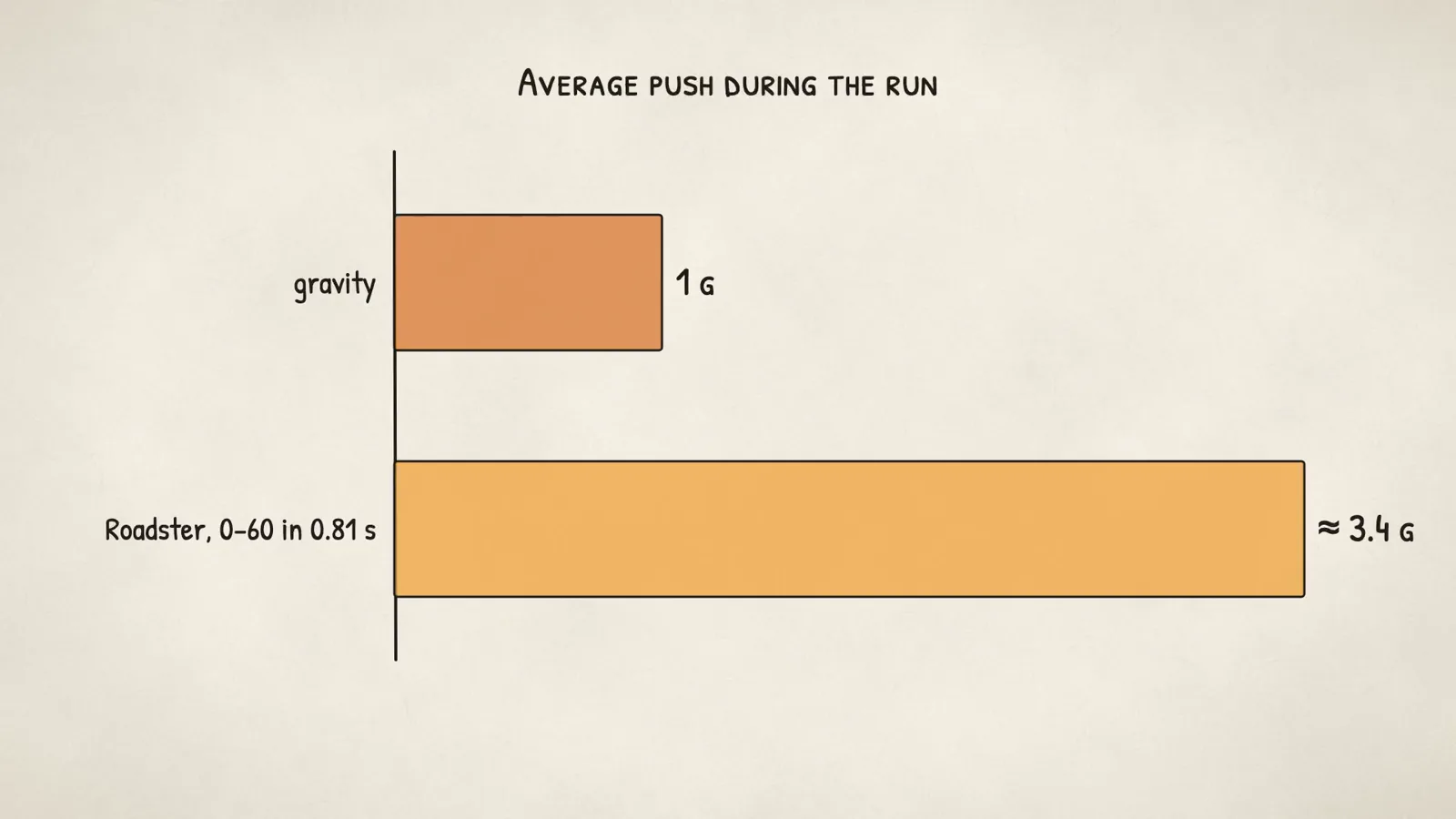
The rear jets also make the car fast. With them firing, the Roadster went from 0 to 60 miles an hour in 0.81 seconds, on Tesla's own clock. That's an average push of more than three times the pull of gravity. The team said the run was even cut short, for lack of space.
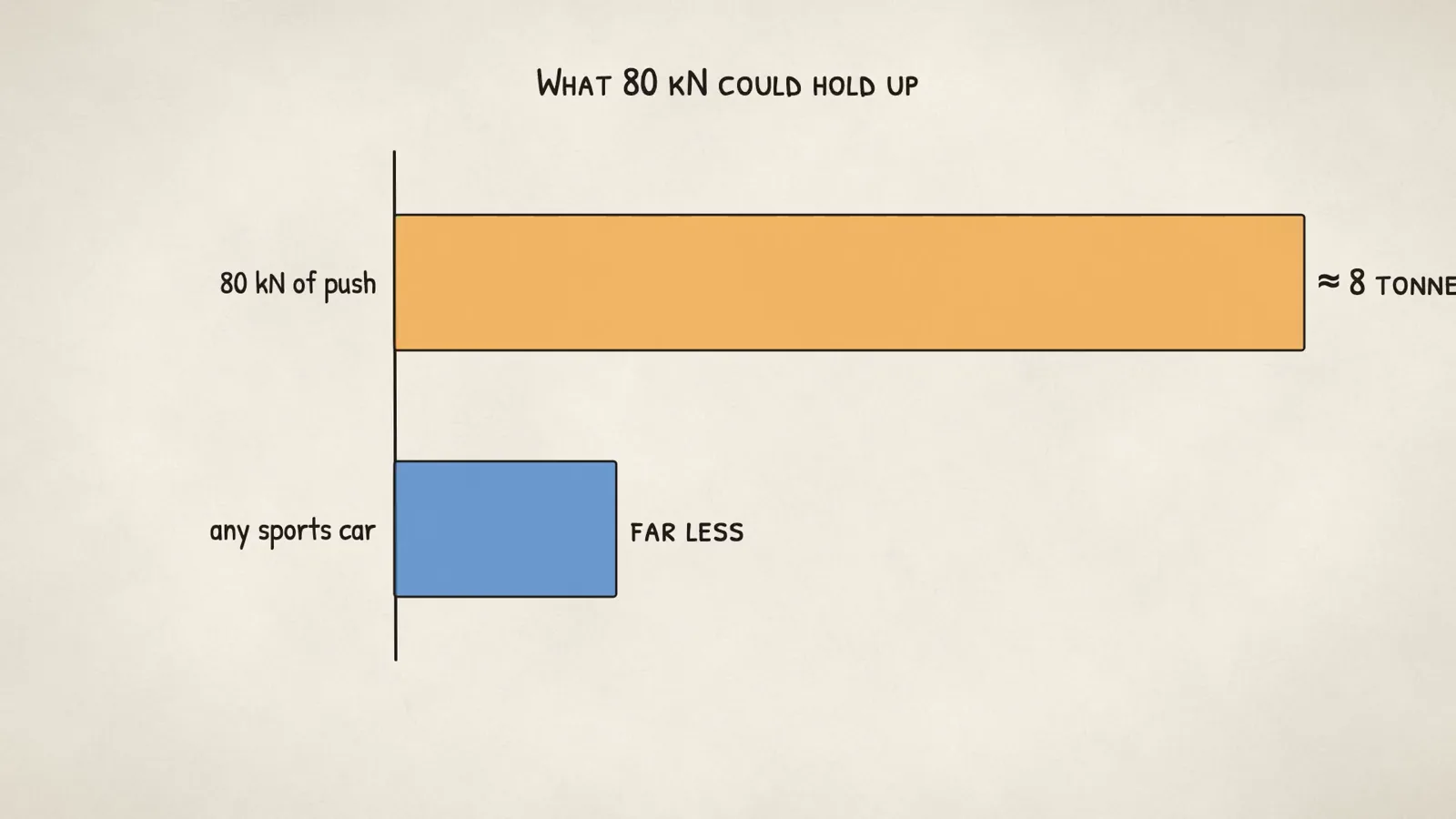
On stage, Tesla said the four main jets at the back push with more than 80 kilonewtons. The air leaves them faster than the speed of sound. That's enough force to hold up about 8 tonnes. Eight tonnes is far more than any sports car weighs. So why did the Roadster come back down after a few seconds?
Does it really fly? ▶ 8:24
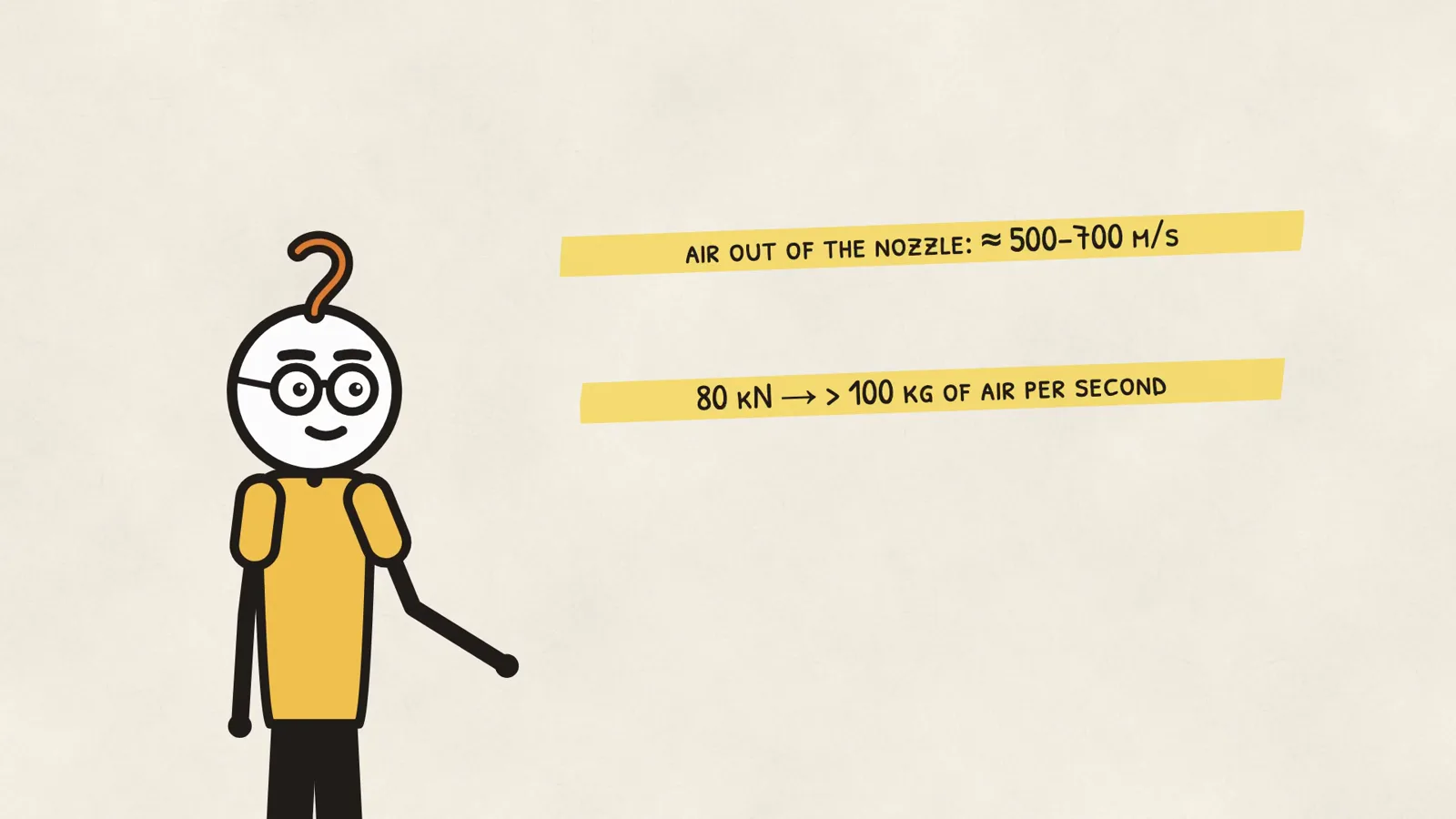
Tesla didn't say how long a full tank lasts, so I did a rough calculation. Air leaving a nozzle like this moves at roughly 500 to 700 metres per second. To push with 80 kilonewtons, the car has to throw out more than 100 kilos of air every second.
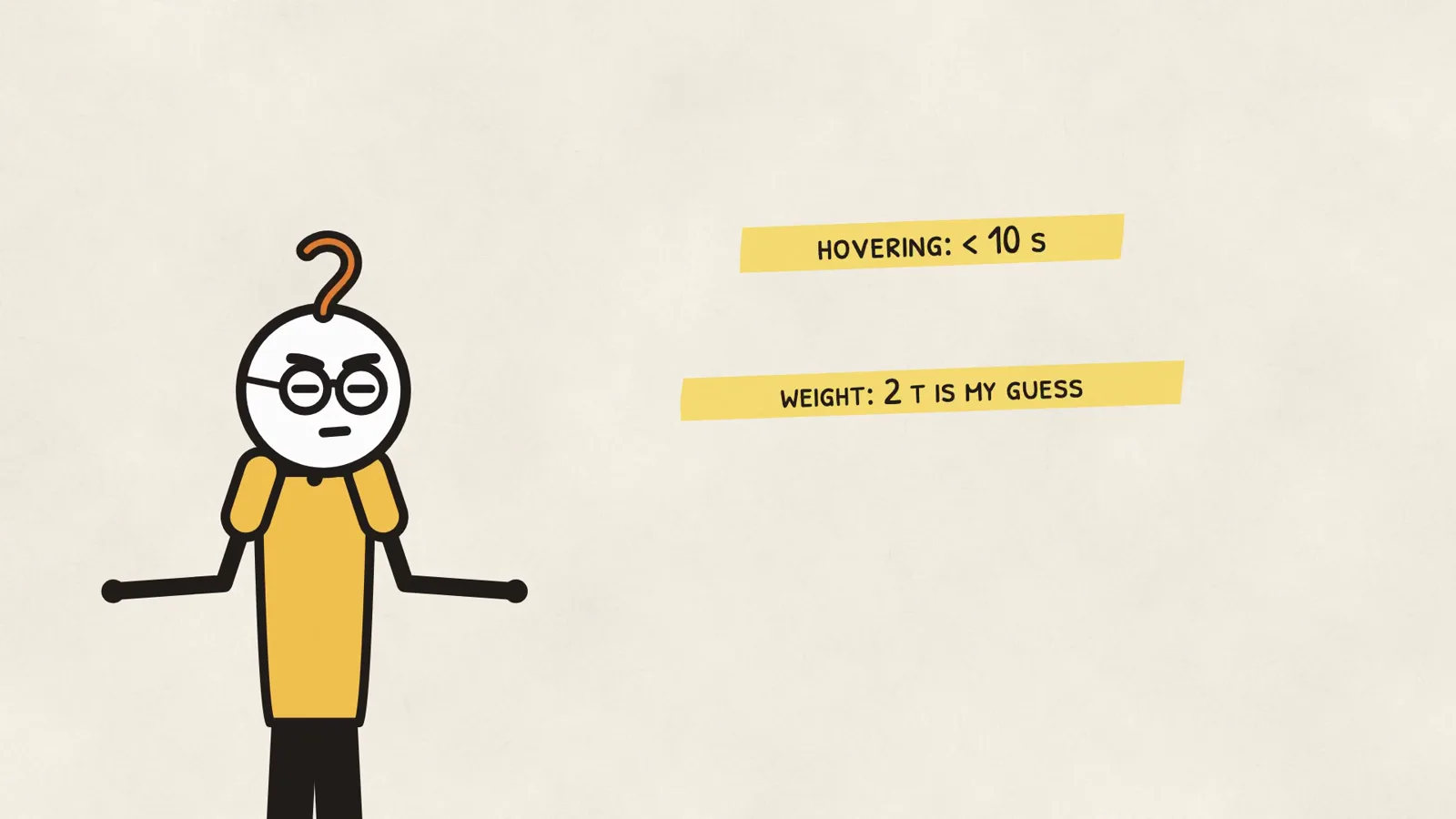
With 250 kilos on board, the main jets would empty the tank in about two seconds. Even just hovering, a car of about 2 tonnes would run out of air in less than 10 seconds. Tesla hasn't published the car's weight, so 2 tonnes is my assumption.
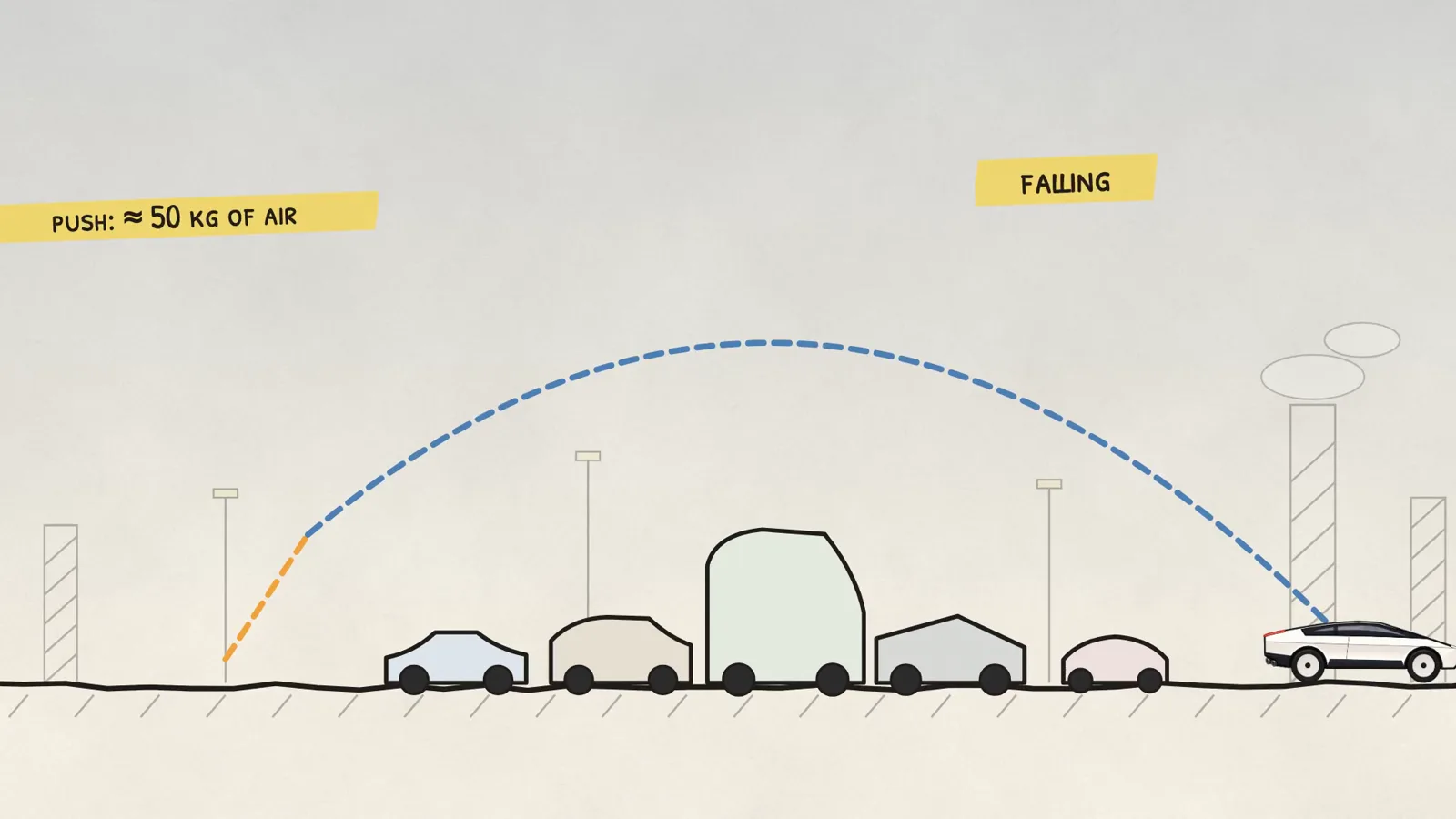
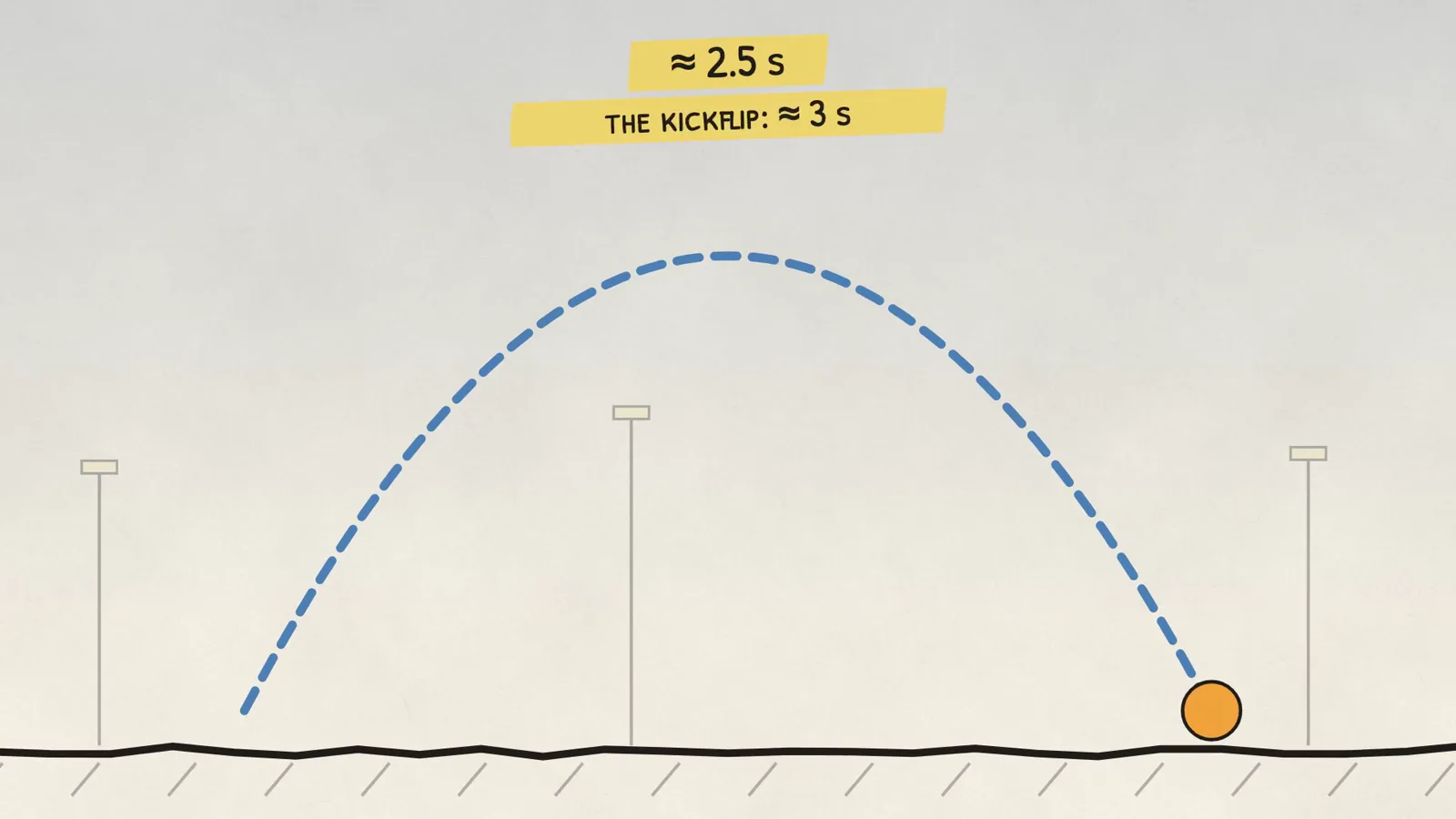
But the kickflip doesn't need much air. To reach seven metres, the car only needs one short, hard push, using roughly 50 kilos of air. After that, it's simply falling, like a ball thrown in the air. A ball thrown seven metres up stays in the air for about 2.5 seconds. The Roadster's kickflip took about three.
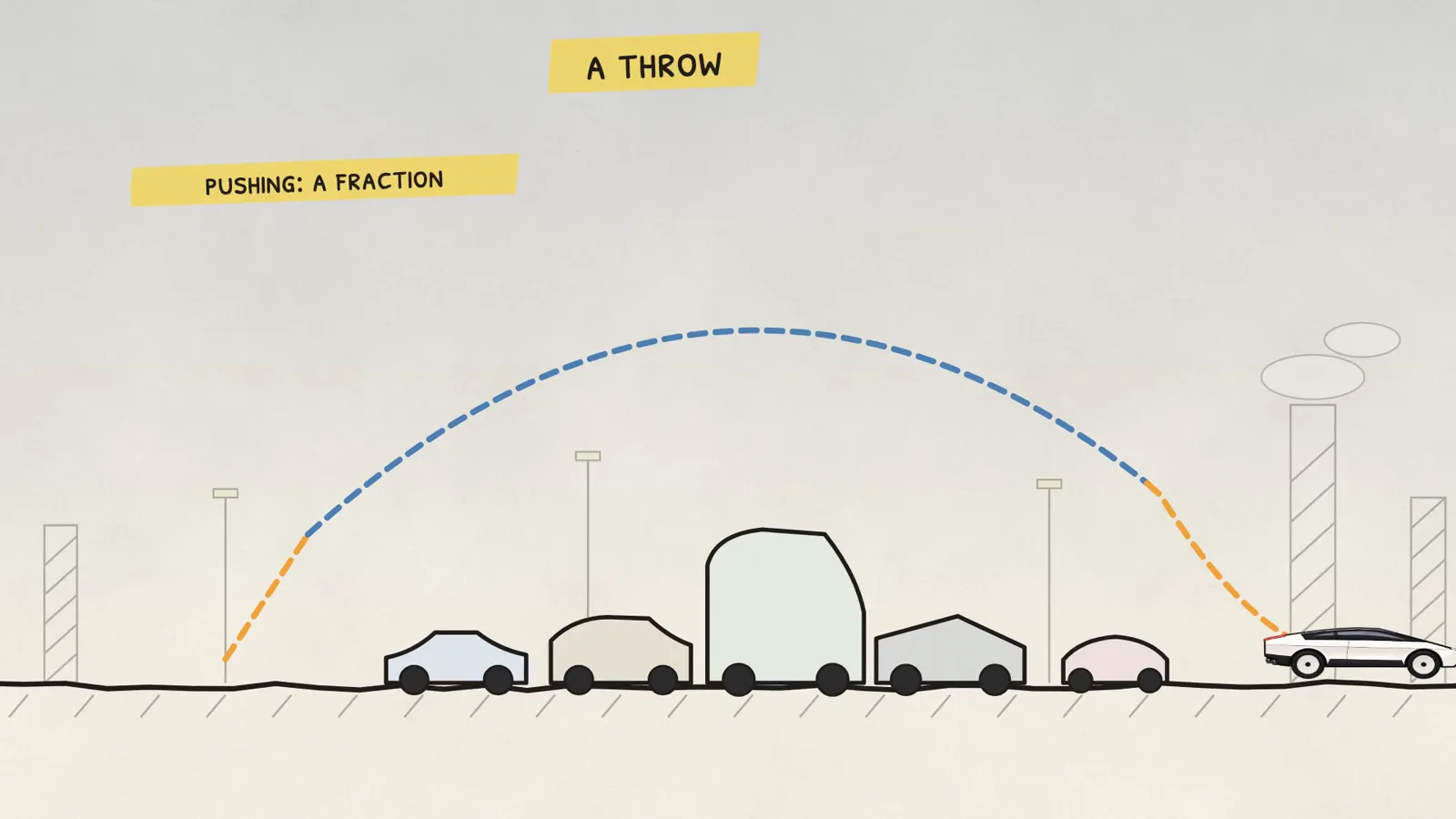
In other words, the kickflip is really a throw. The big jets throw the car up, the small side jets spin it, and the corner jets soften the landing. The car is in the air for three seconds, but it's only pushing for a fraction of that.
When the tank is empty, Musk said, the car can refill it by itself, so it never needs special fuel. How long that takes, Tesla didn't say.
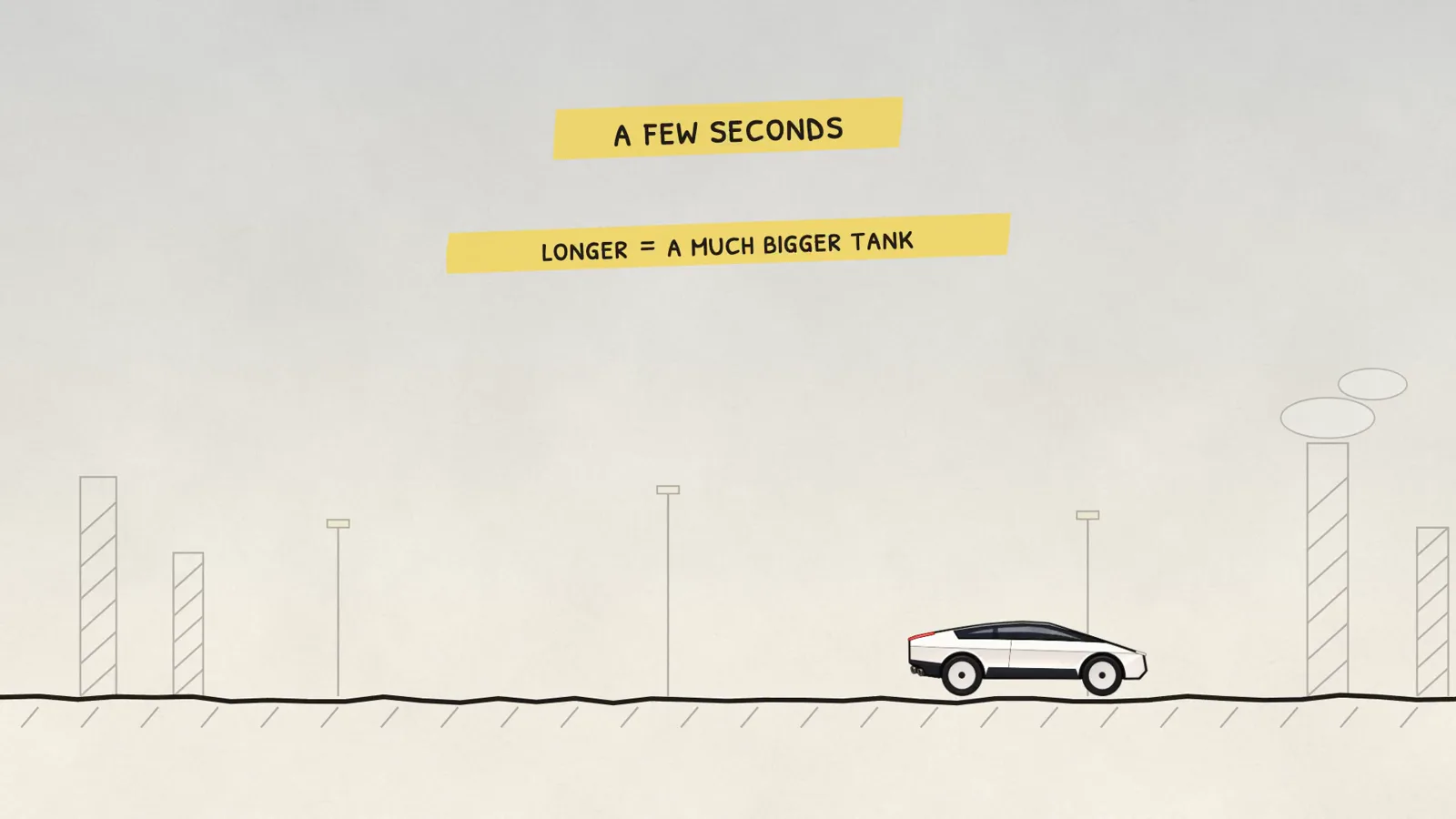
Is the Roadster a flying car, then? It can leave the ground for a few seconds, and steer itself while it's up there. For anything longer, it would need a much bigger tank.
A promise from 2017 ▶ 9:49
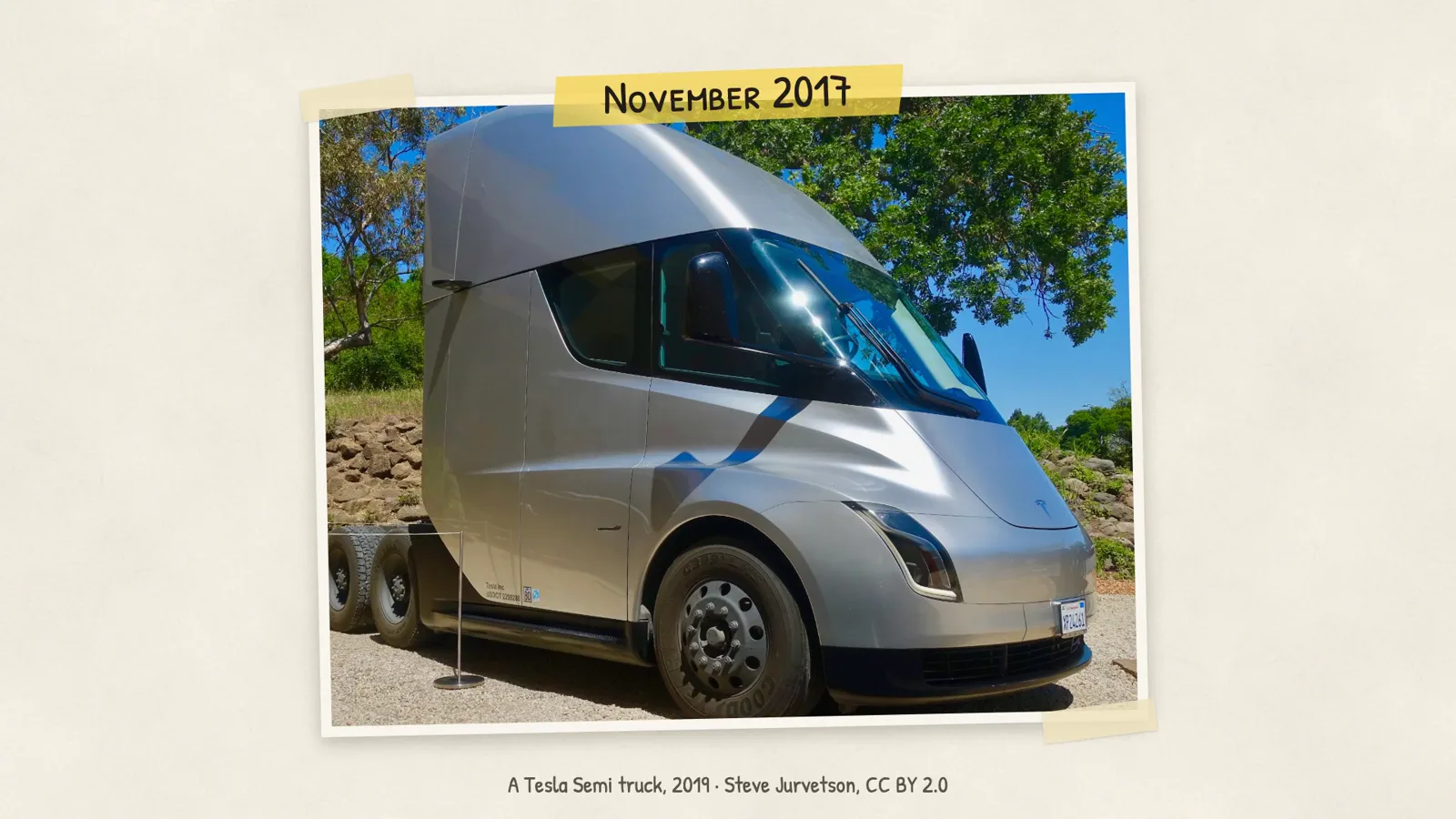

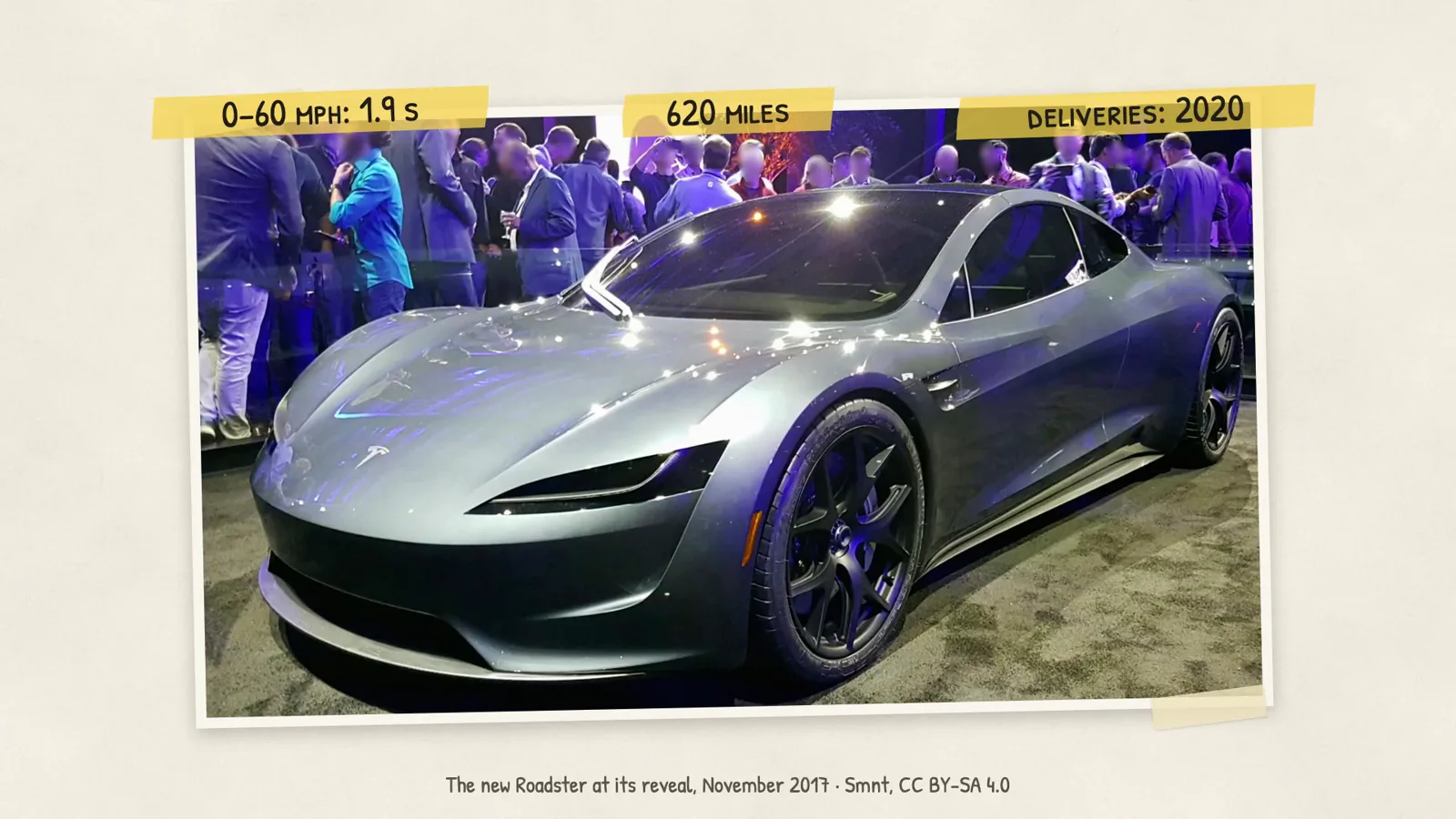

Those jets had been promised for eight years. In November 2017, at the launch of its Semi truck, Tesla surprised its audience with a second vehicle: a new Roadster. It promised 0 to 60 in 1.9 seconds, a range of 620 miles, and deliveries in 2020.
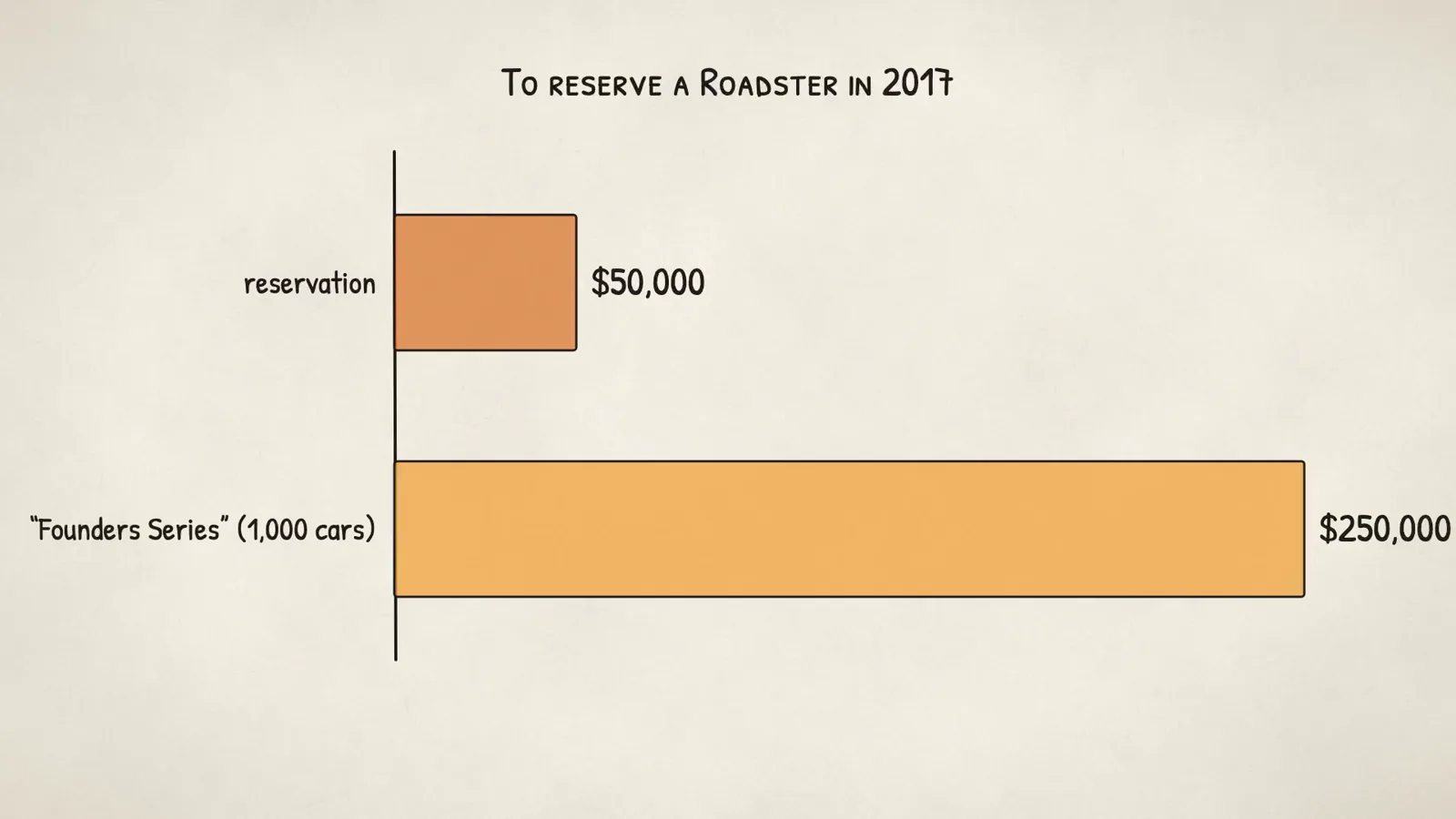
Buyers could reserve one for $50,000. Or they could pay $250,000 up front, for one of a thousand "Founders Series" cars.
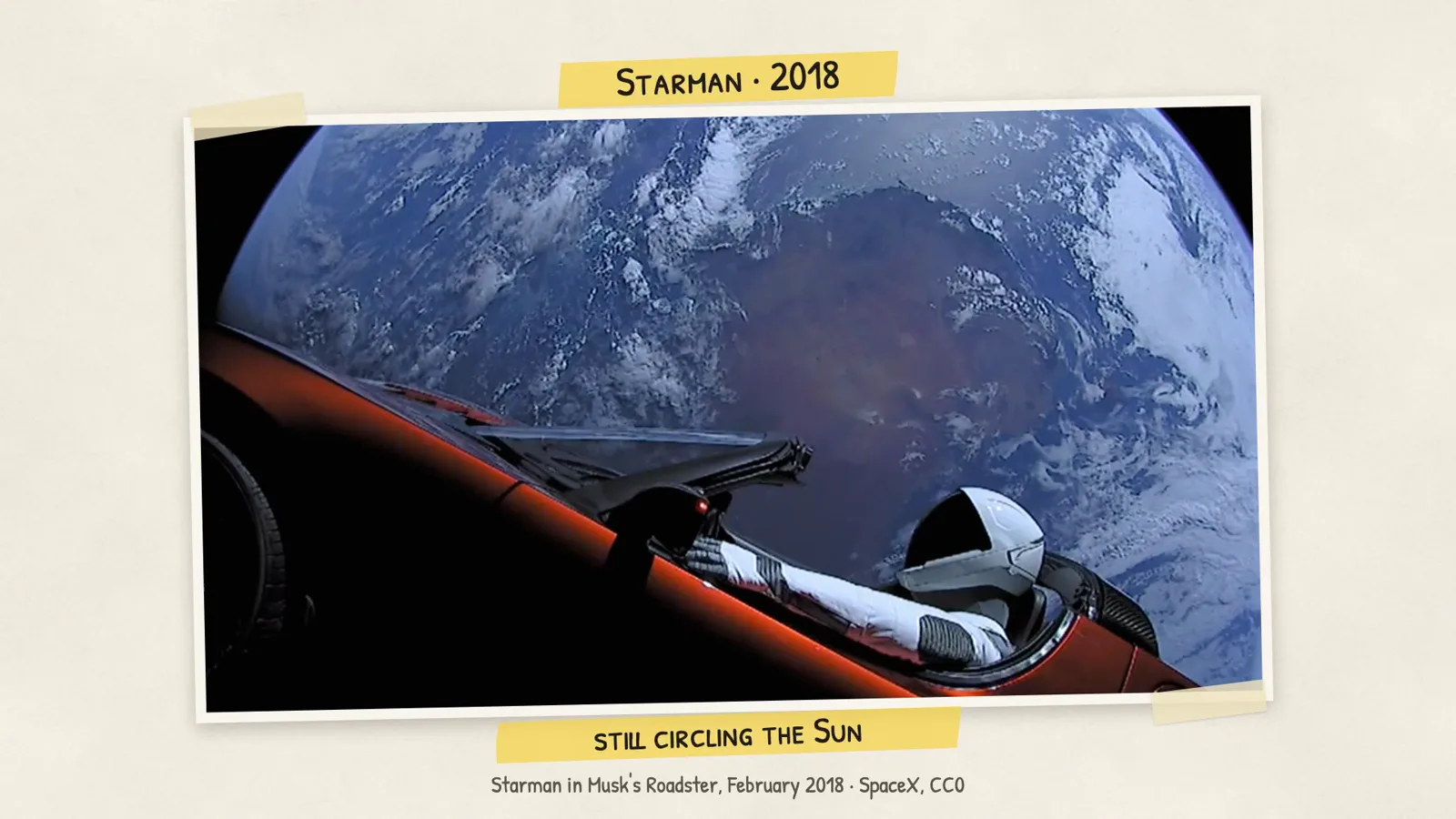

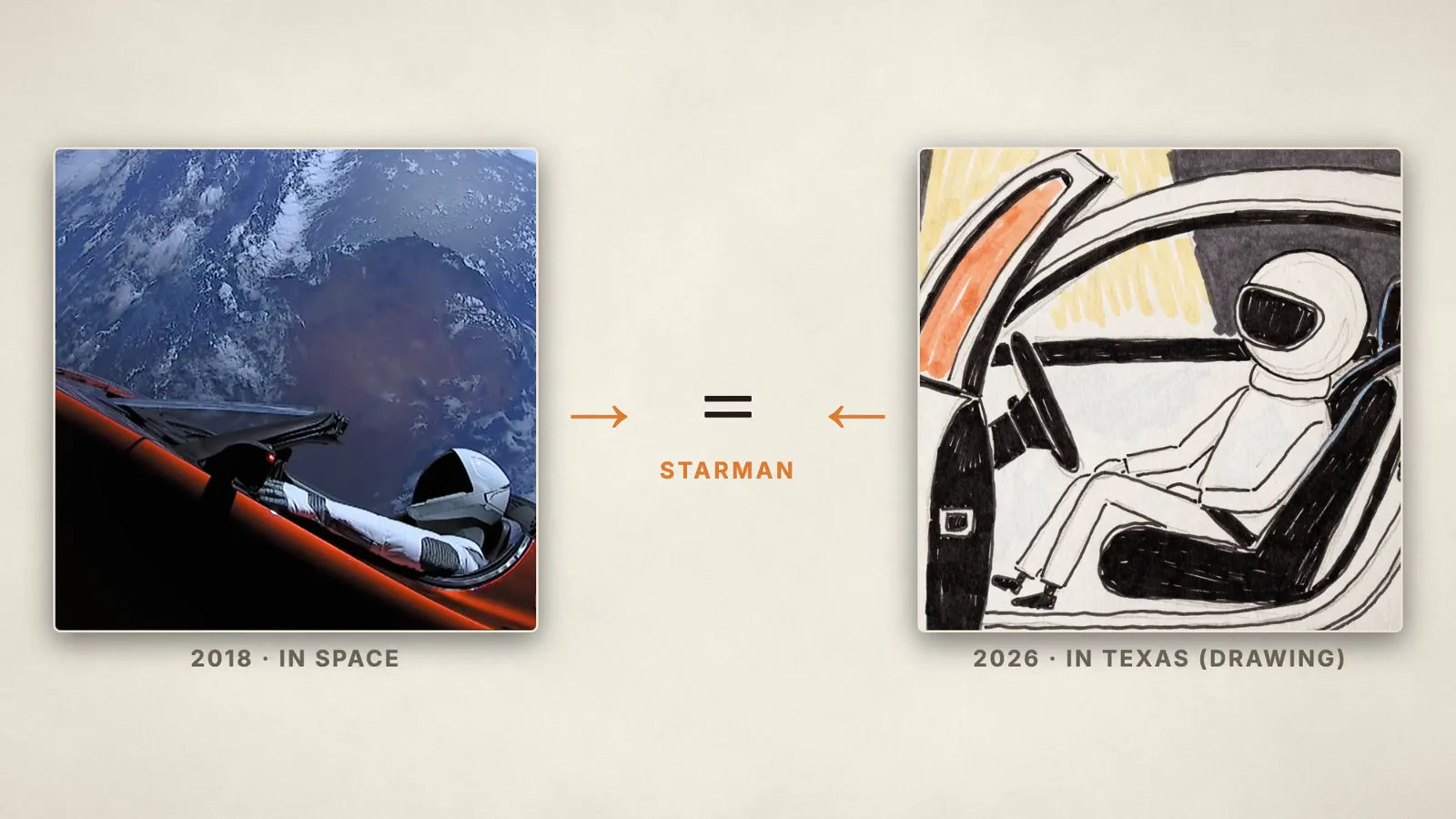
Three months later, a different Roadster left the ground. SpaceX launched its first Falcon Heavy rocket. On board was Musk's own Roadster, the original Tesla model, with a dummy in a spacesuit at the wheel. That dummy was the first Starman, and he's still out there, circling the Sun. So the passenger in Texas was a callback.
Four months after that, Musk made a promise on Twitter:
“SpaceX option package for new Tesla Roadster will include ~10 small rocket thrusters arranged seamlessly around car.” — Elon Musk on Twitter, 9 June 2018
The next January, he spelled it out:
“SpaceX cold gas thruster system with ultra high pressure air in a composite over-wrapped pressure vessel in place of the 2 rear seats.” — Elon Musk on Twitter, 9 January 2019 That's very close to the car Tesla showed in Texas. And the new Roadster has only two seats.
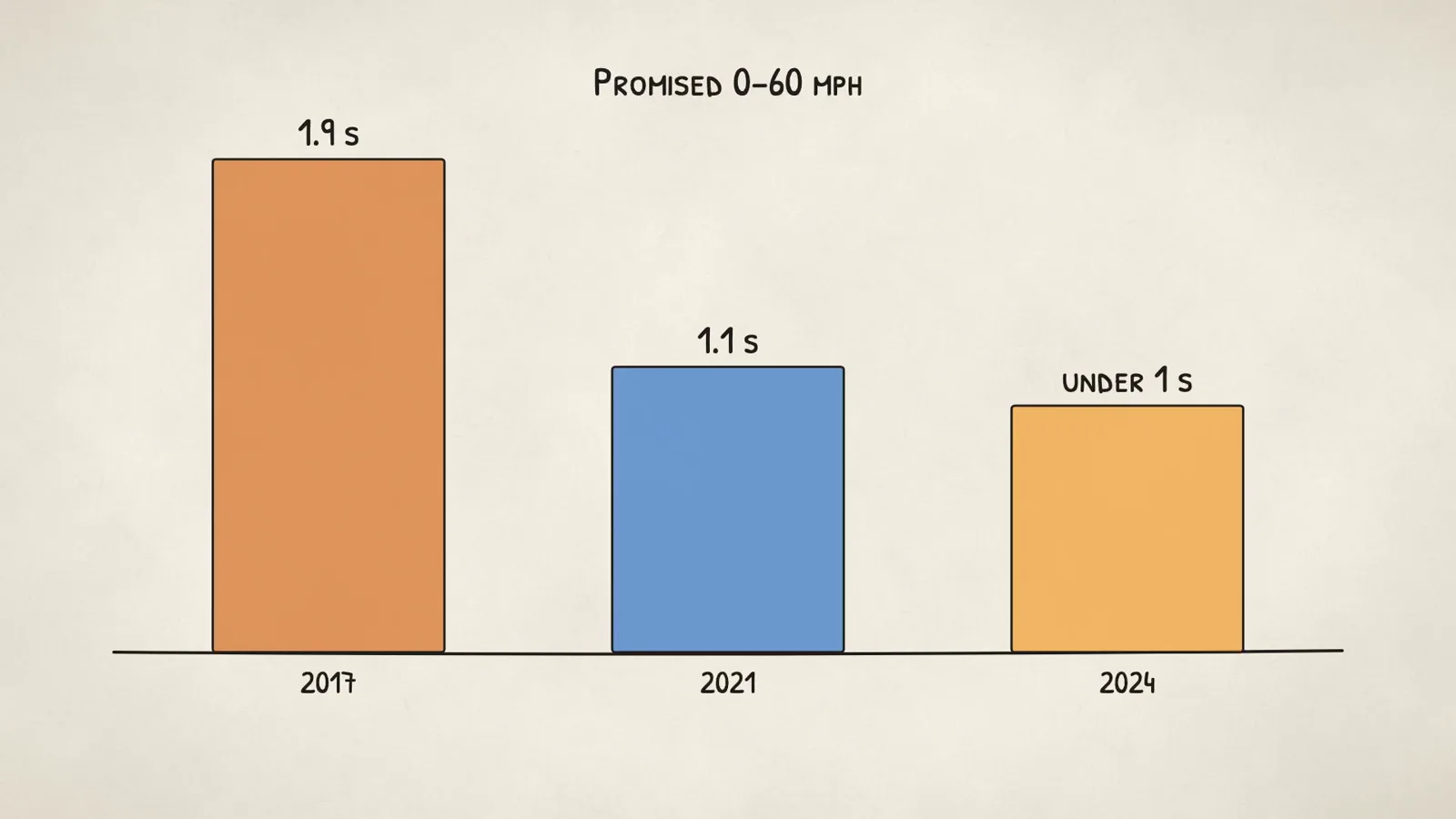
The car itself took much longer. Tesla pushed the date back again and again, at least four times. Meanwhile, the promised zero to sixty kept shrinking, from 1.9 seconds to 1.1, and then to under one.
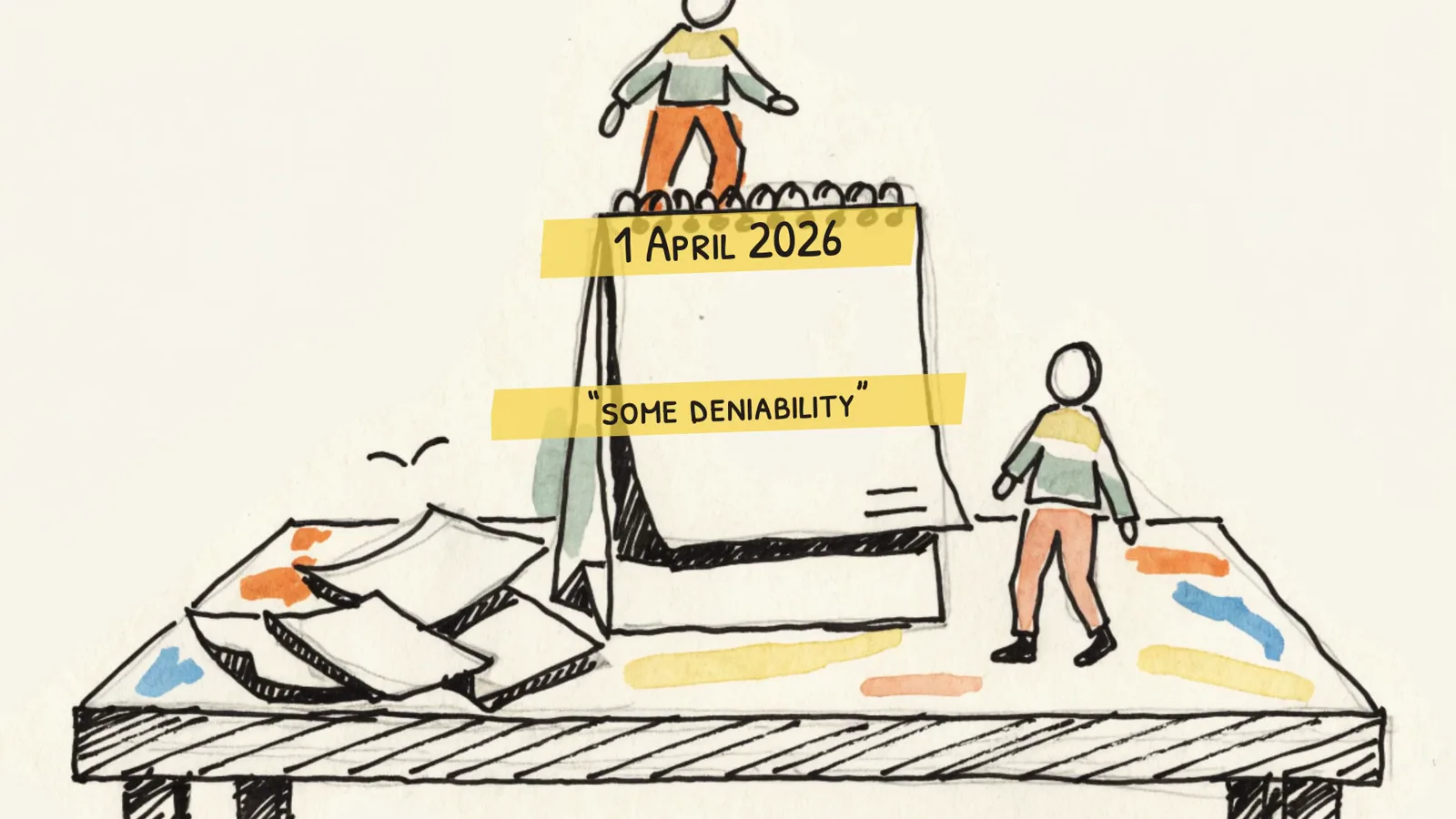
In late 2025, Musk set the reveal for 1 April 2026. He said the April Fools' date gave him "some deniability".
April came and went. The show was then set for 1 October, until the weather pushed it back again. When the Roadster finally appeared, almost nine years after it was first shown, the jets were there, much as he had tweeted.
Who it's for ▶ 11:50
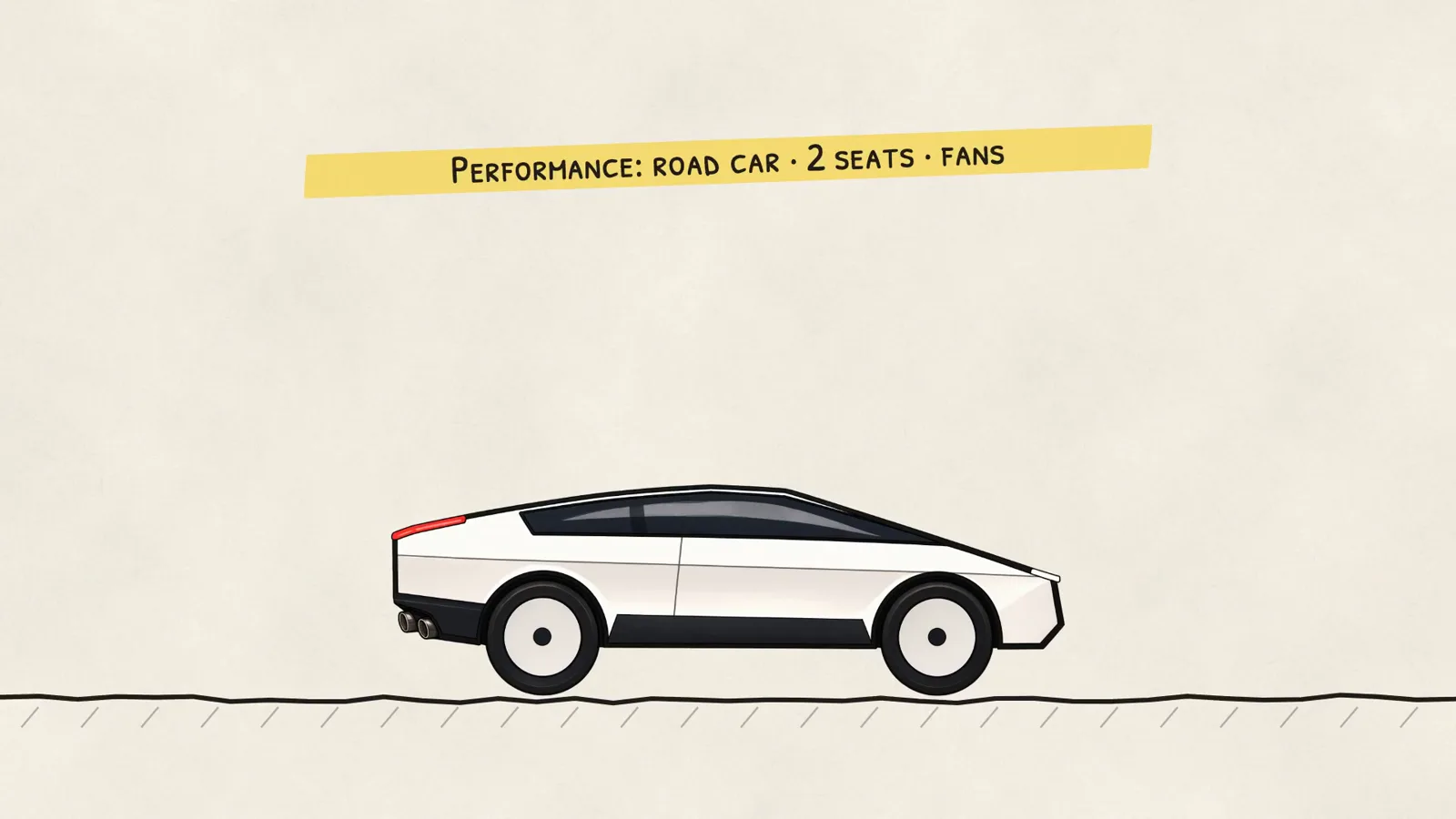
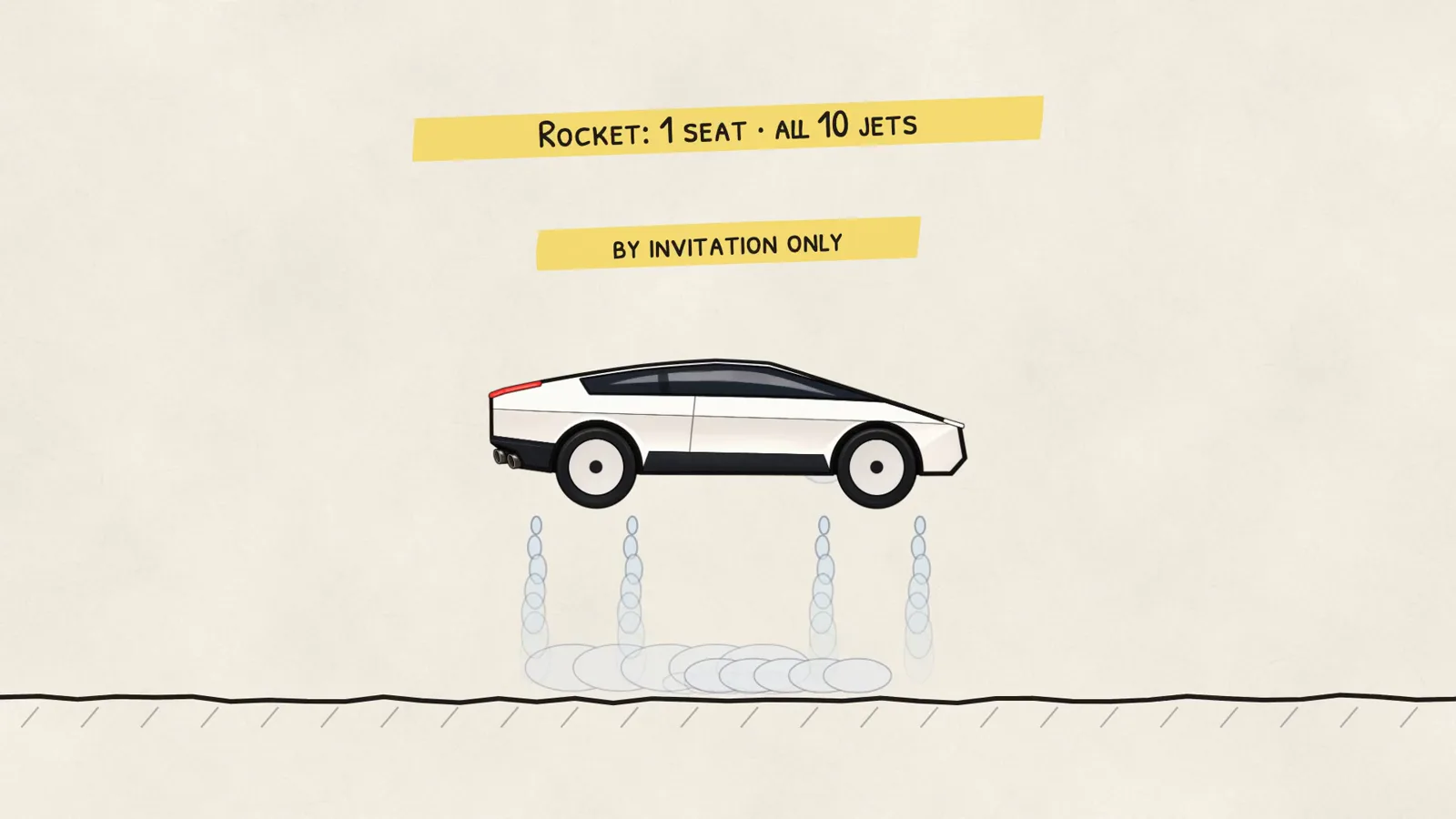
Tesla will sell the Roadster in three versions. The Performance is the road car, with two seats and the fan suction. The Thrust adds the rear jets, for a launch under one second. And the Rocket has one seat and the full flight system, with all ten jets. It's by invitation only.
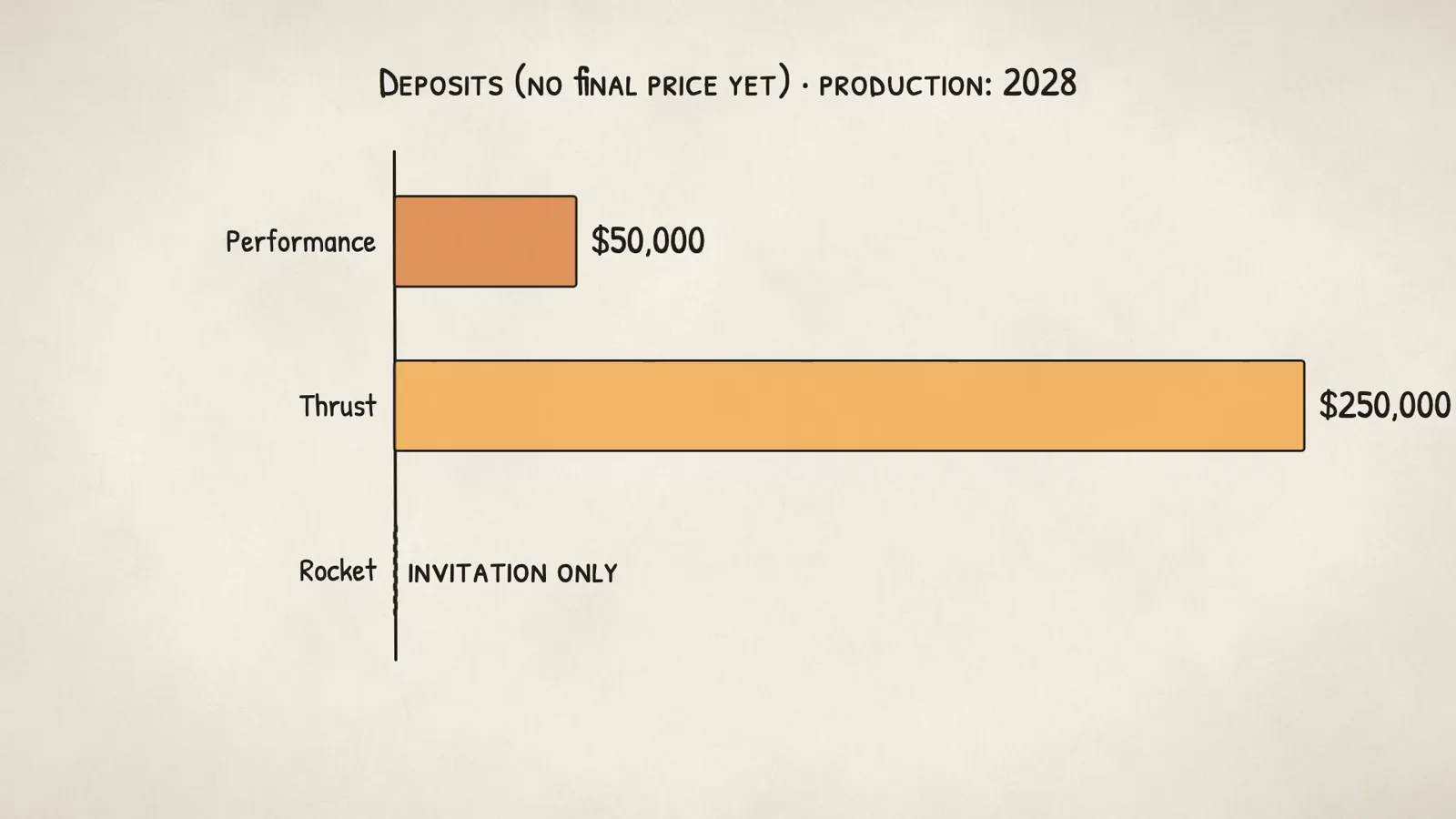
There's no final price yet. To reserve a Performance, buyers pay $50,000. A Thrust takes a deposit of $250,000. Tesla says production starts in 2028.
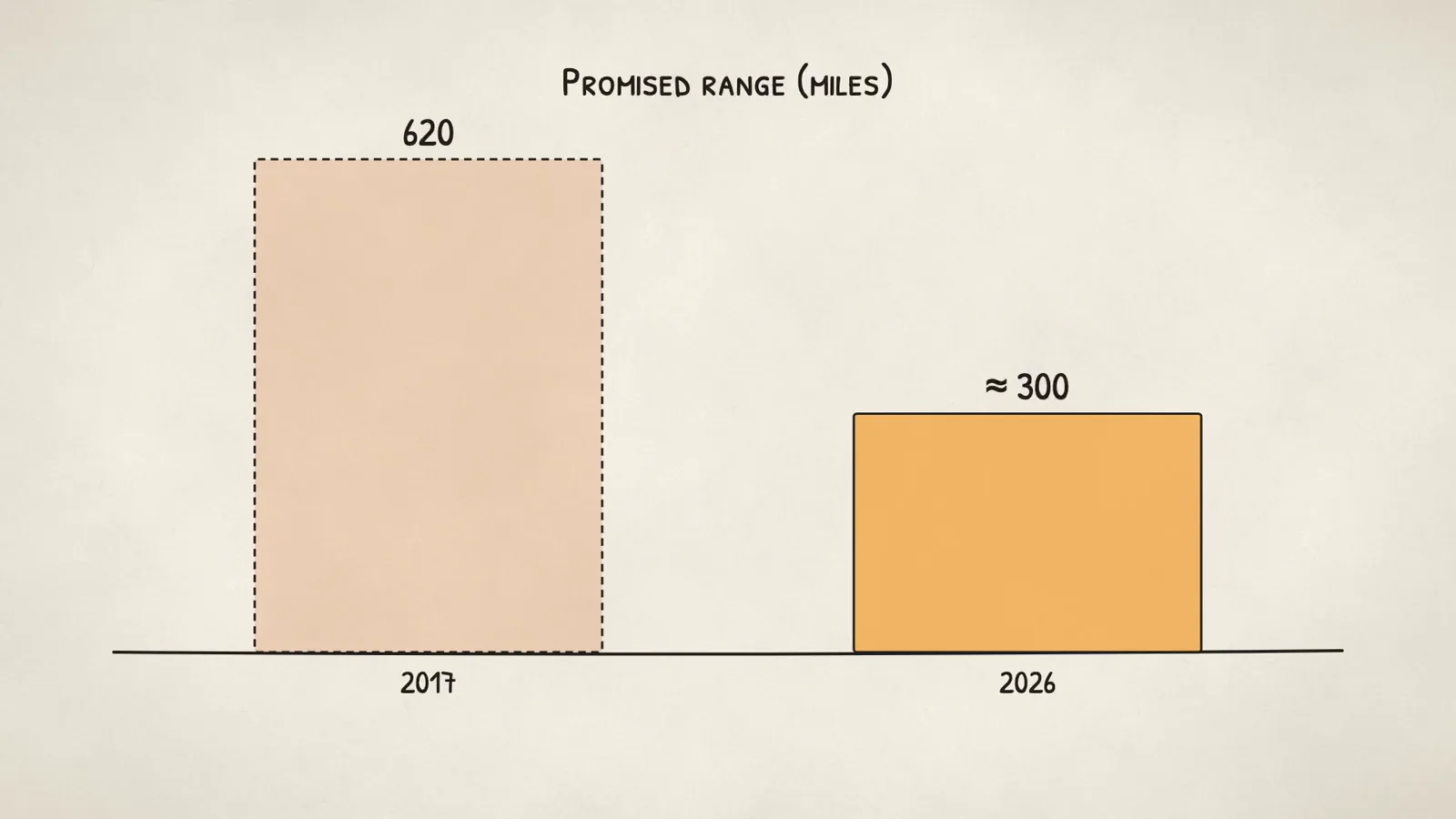
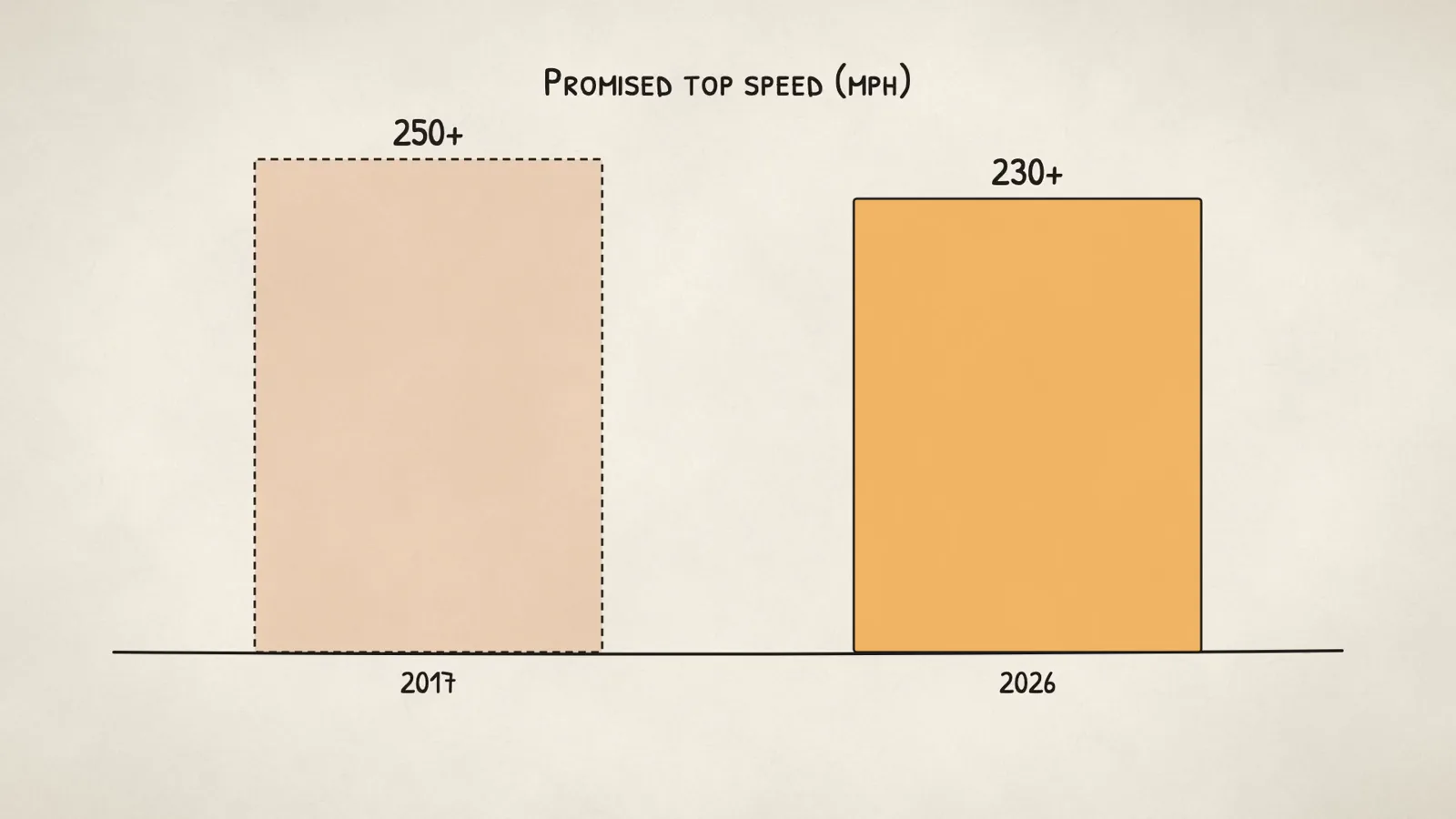
Some numbers have gone the other way since 2017. The promised range is now about 300 miles, less than half the original 620. And the top speed is now "over 230 miles an hour", down from over 250.
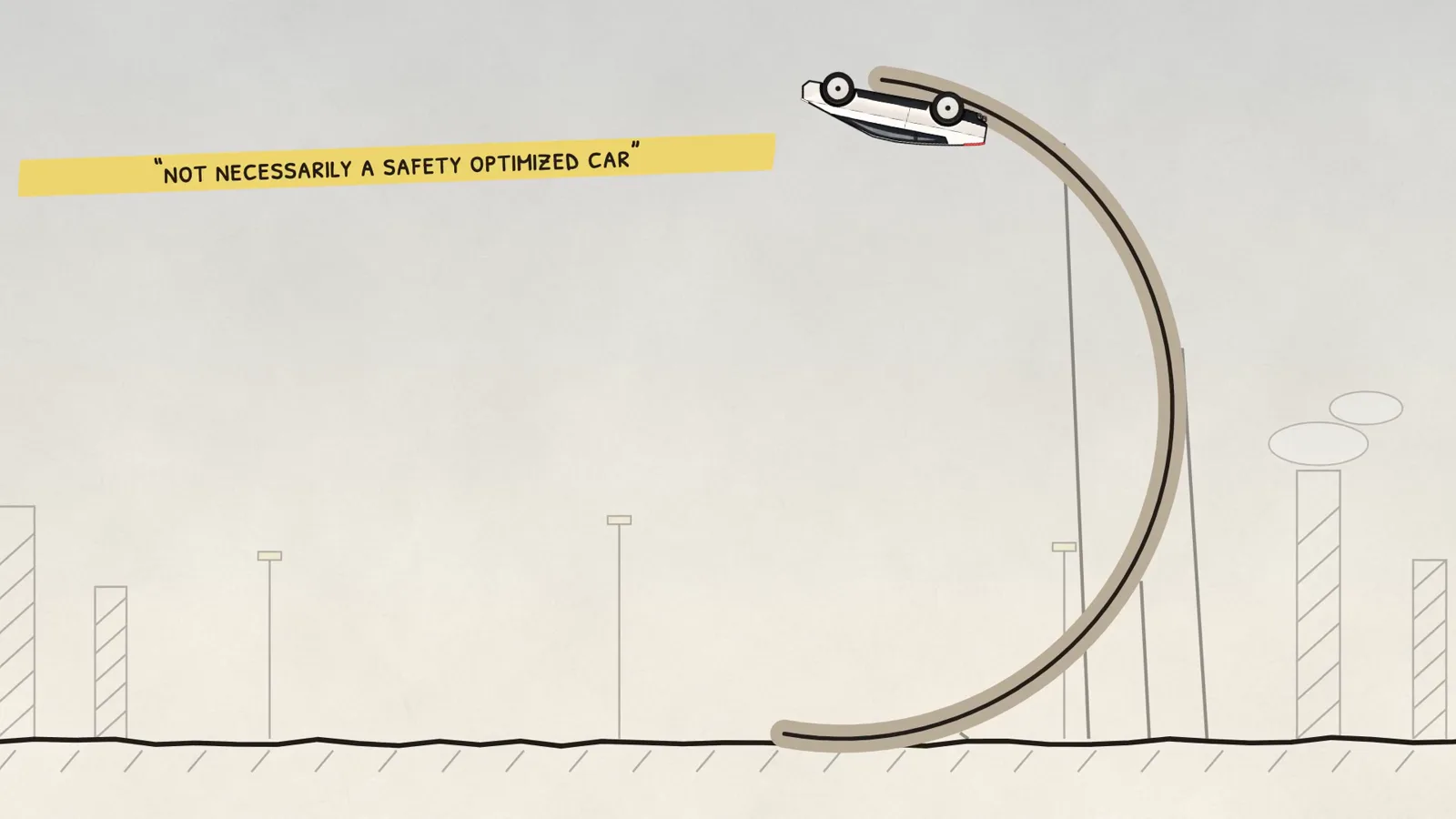
Musk is open about what kind of car this is. On a podcast earlier in 2026, he said that with this car, "safety is not the main goal". At the show, he called it "not necessarily a safety optimized car". He also said he's "not sure it's necessarily legal in all jurisdictions".
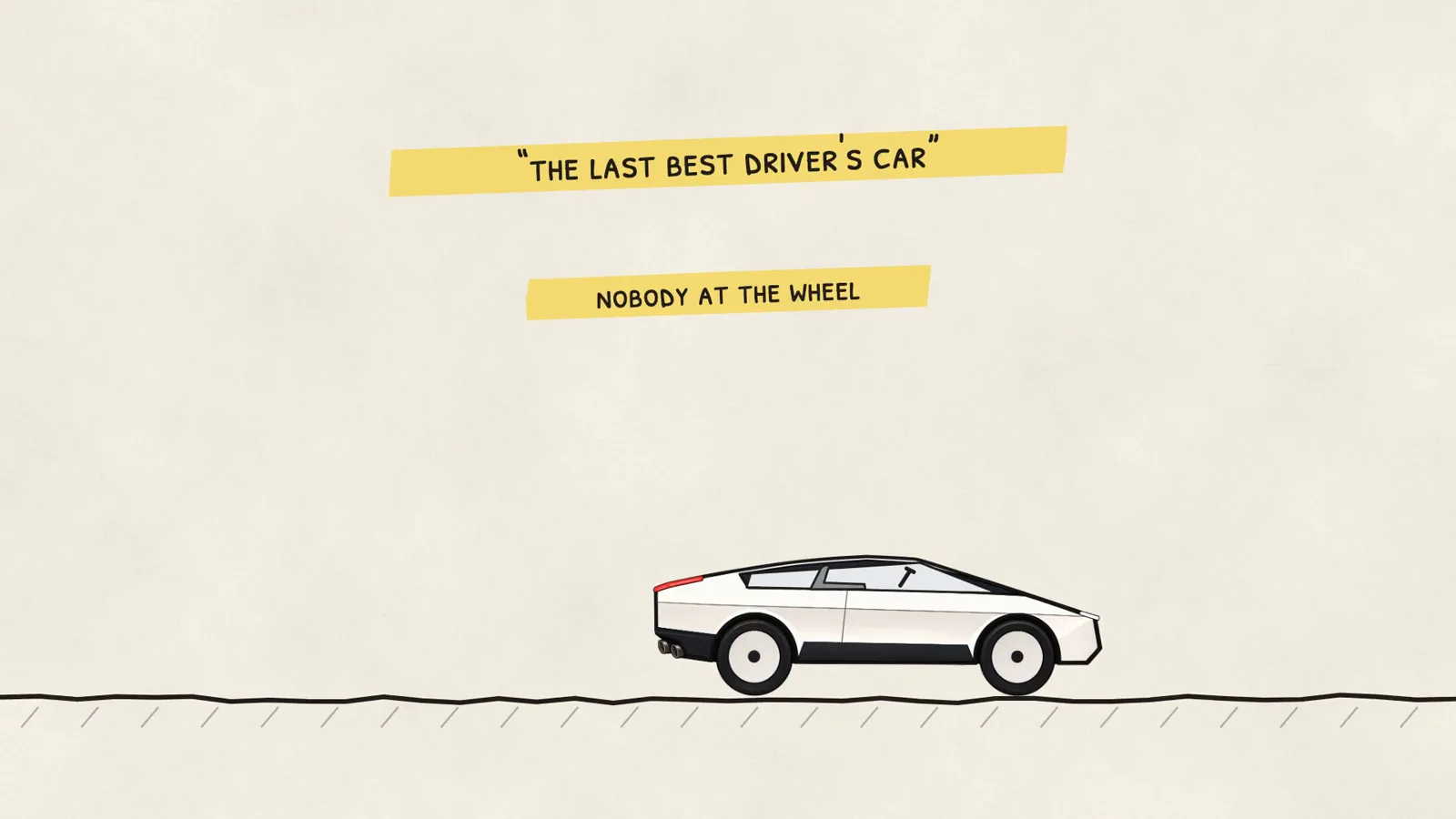
Musk also said that, in the long term, the Roadster will be "the only manually driven car that Tesla makes". Tesla calls it "the last best driver's car". Yet at the show, nobody was at its wheel at all.
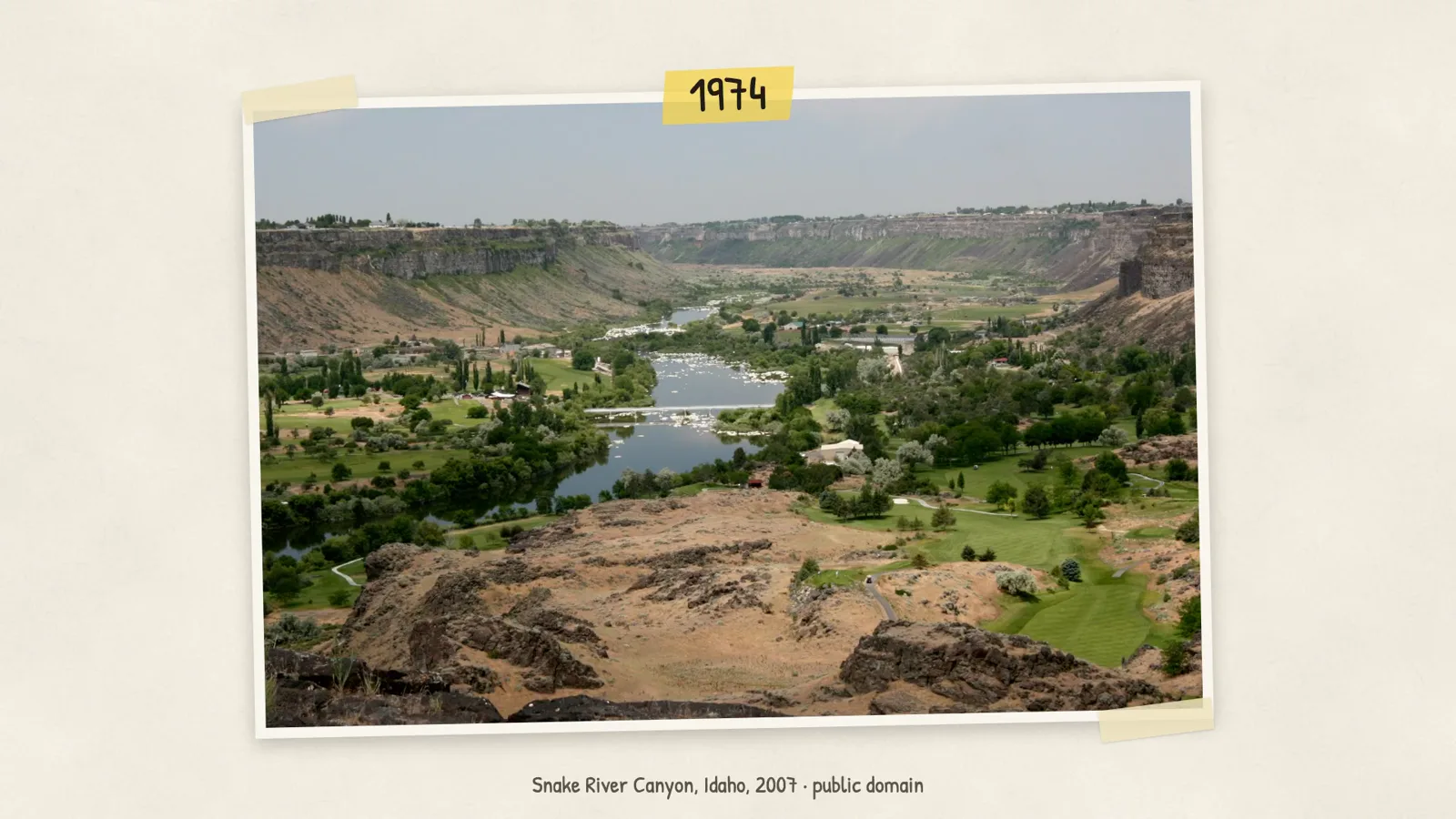

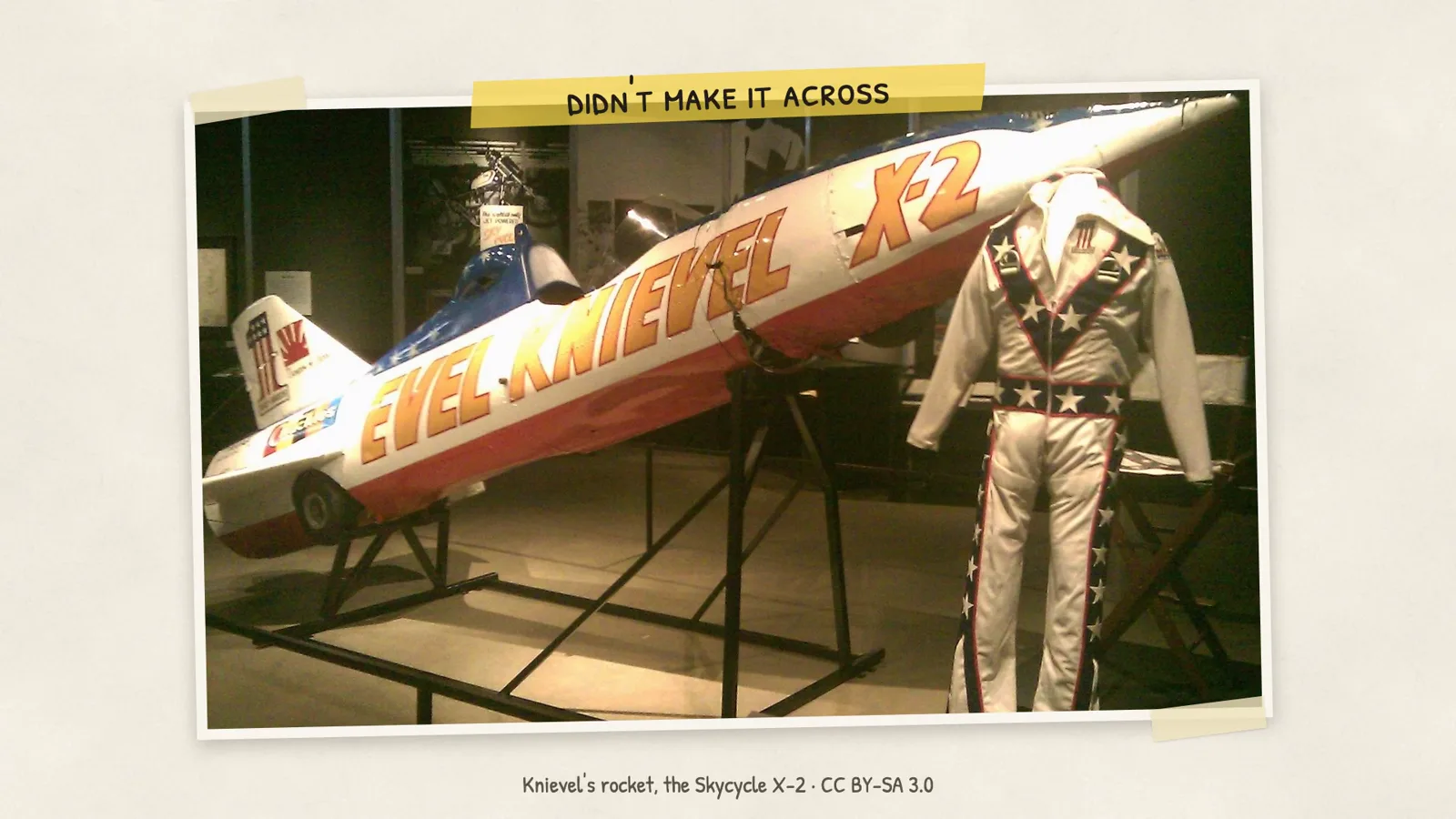

Musk already has the next stunt in mind. In 1974, Evel Knievel, the American stunt rider, tried to jump Snake River Canyon in Idaho, in a rocket. He didn't make it across. On stage, Musk suggested the Roadster should "give it another shot".
So, is it a flying car? ▶ 13:23
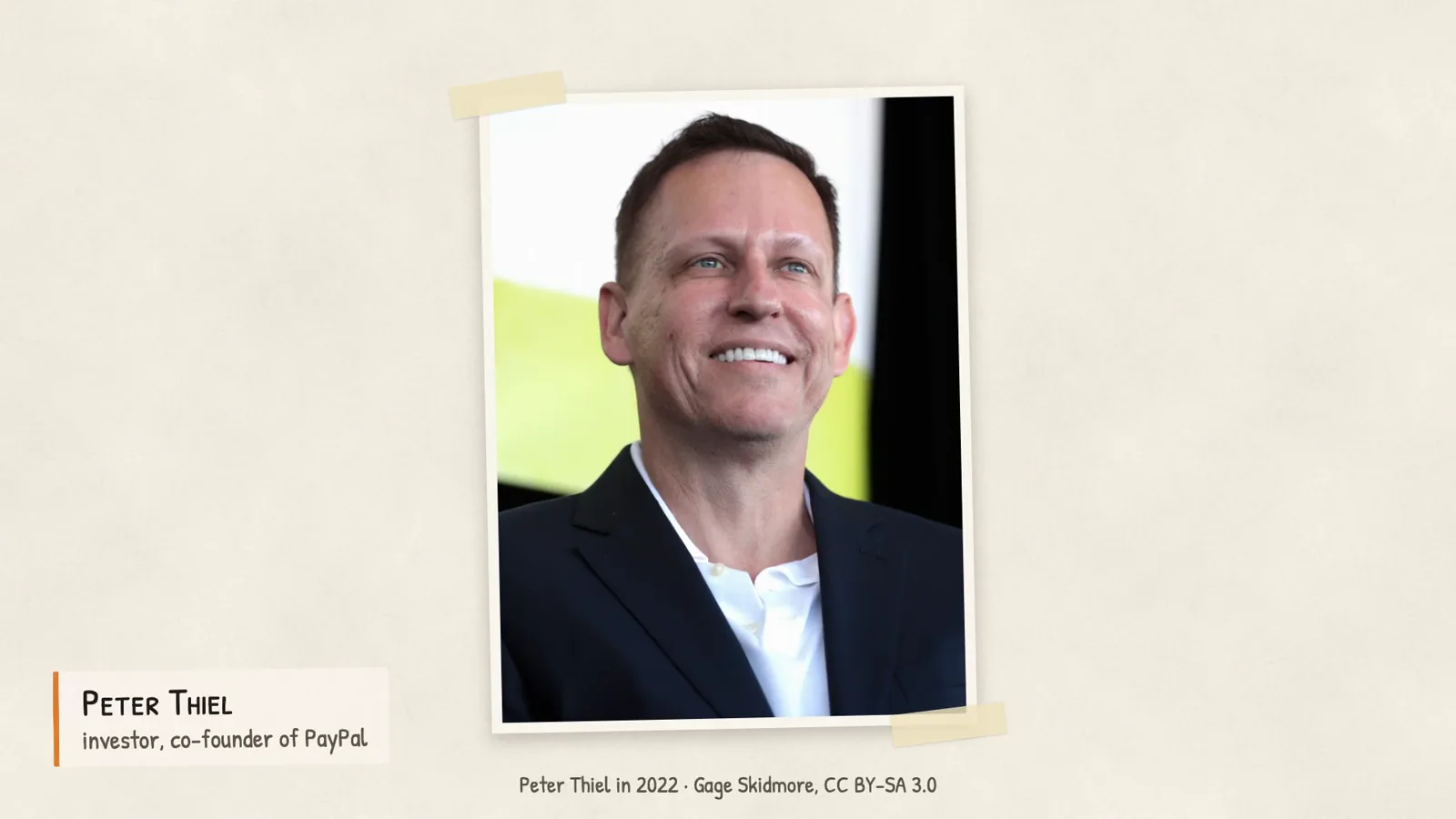

Right after the first stunt, Musk brought up Peter Thiel, the investor who was his partner at PayPal:
“A friend of mine, Peter Thiel, once said that the future promised us flying cars, but instead we got 140 characters. Well, not anymore.” — Elon Musk, 15 October 2026
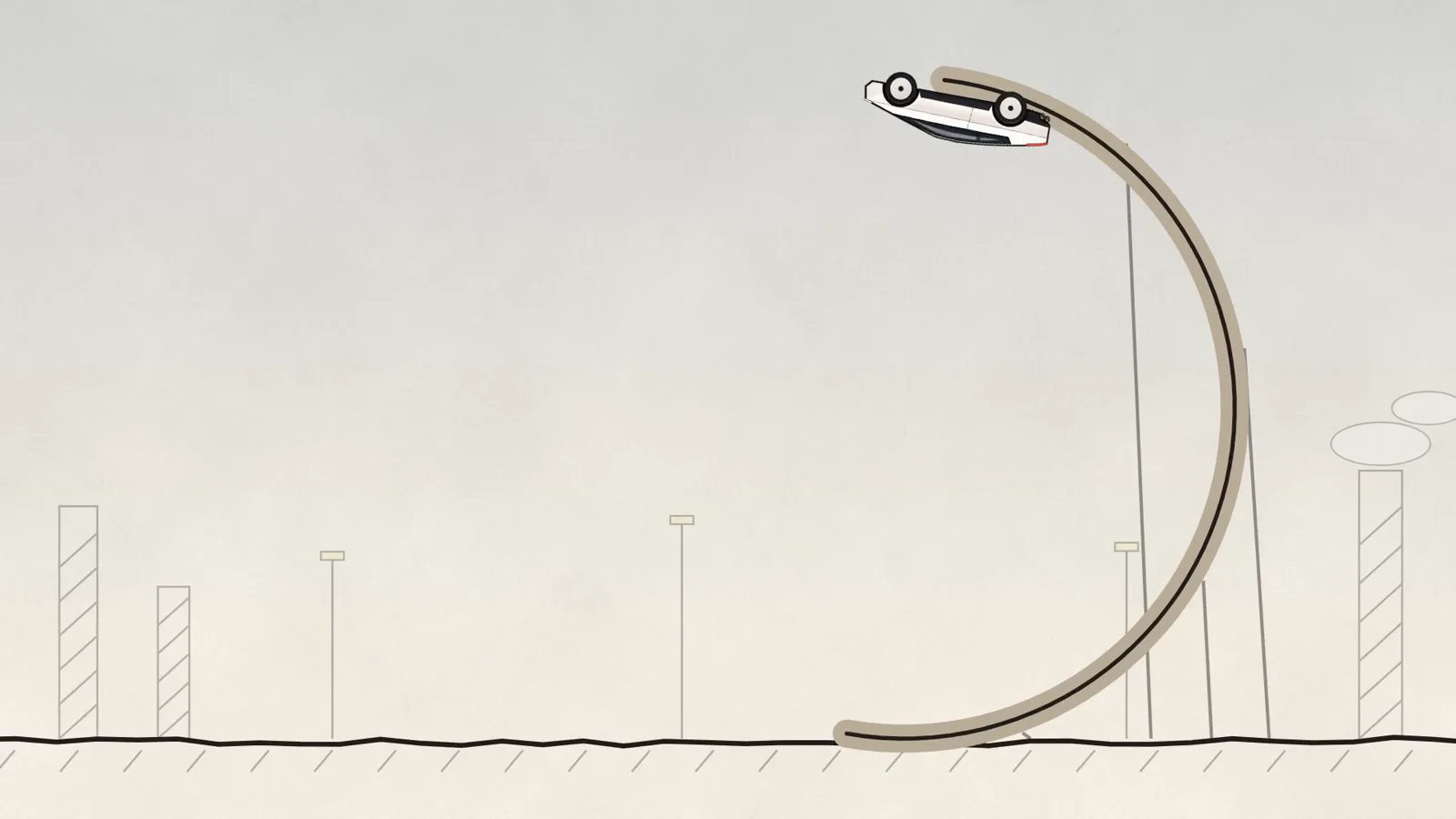
I'll admit, I loved watching this. Seeing a car hold on to a wall with fans, then throw itself over a truck with a blast of air, is pretty crazy.
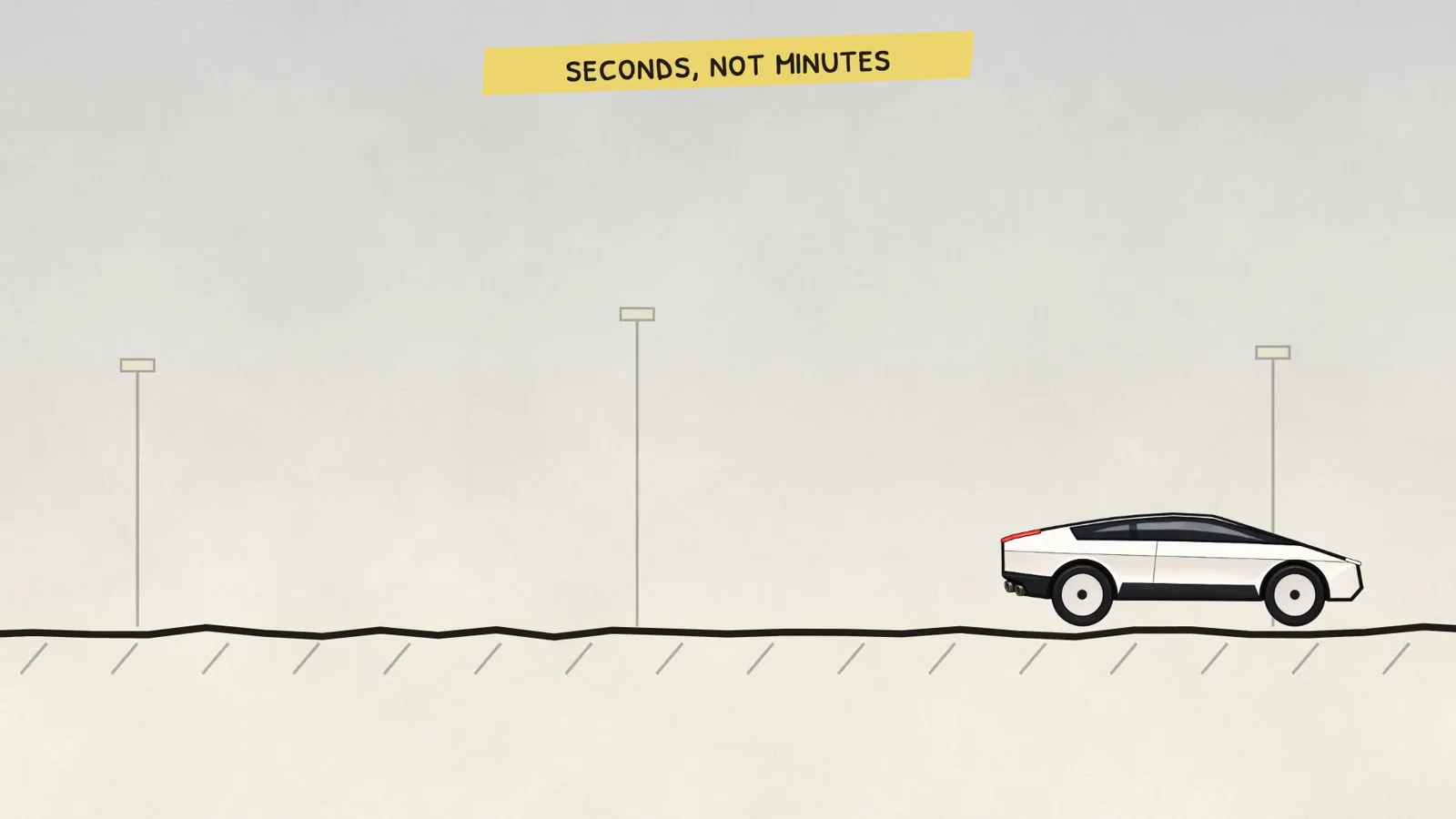
But it's worth keeping our feet on the ground. Everything we saw happened on Tesla's own test site, with nobody at the wheel. Every number came from Tesla itself. The air lasts seconds, not minutes, so this is a jump, not a flight. There's still no price. The car was first promised for 2020, and production is now set for 2028. And even Musk isn't sure the version that jumps will be legal everywhere.
So I'm excited about what this car can do. I'll be more excited when someone outside Tesla gets to try it.