
· 10 min read · ▶ 16 min video
Why Was Thailand Called “Siam”?
For centuries the world called Thailand “Siam”, a name the Siamese themselves didn't use. Here is where Siam (สยาม) came from, what it may mean, and why the country dropped it in 1939.
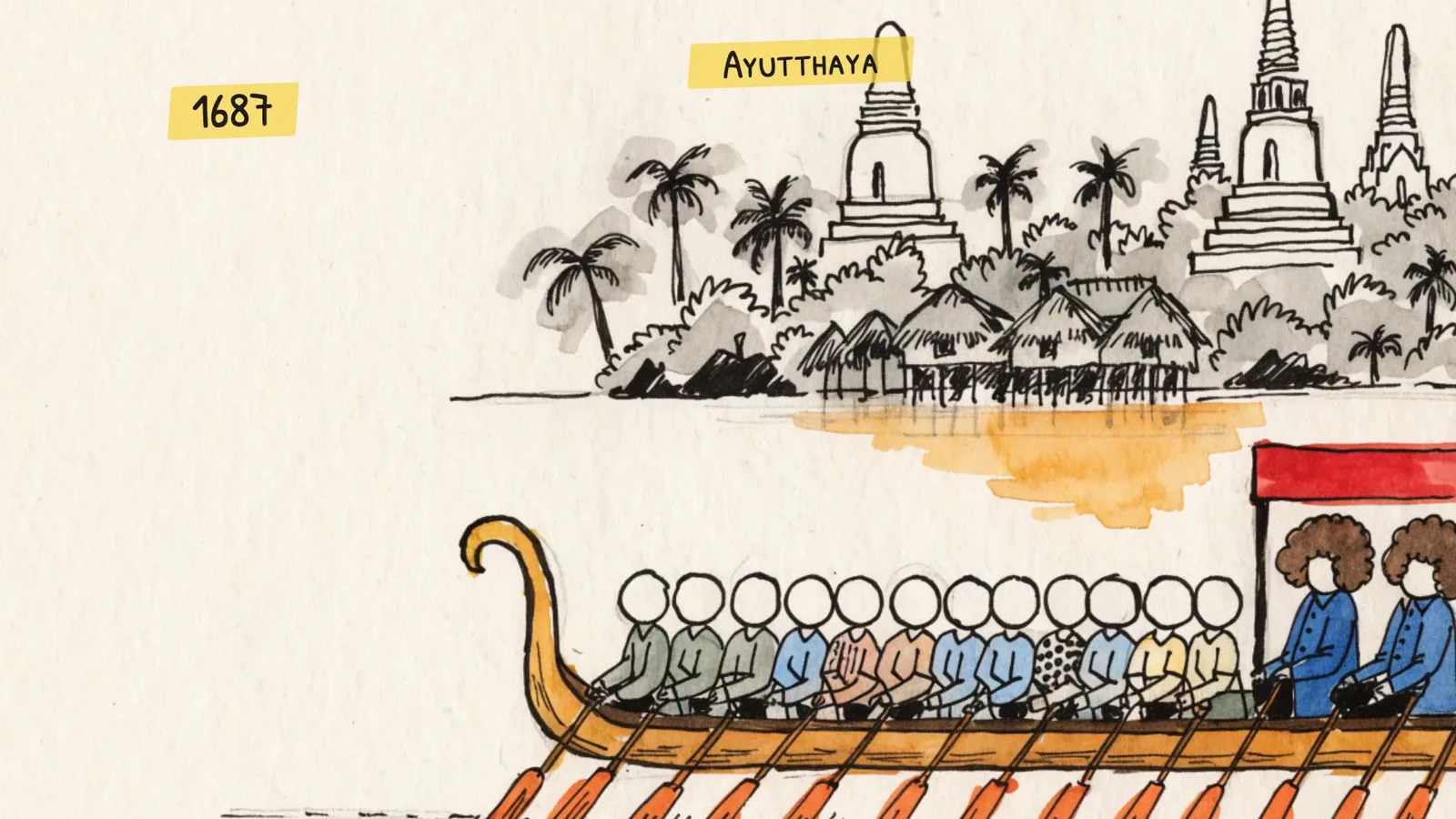
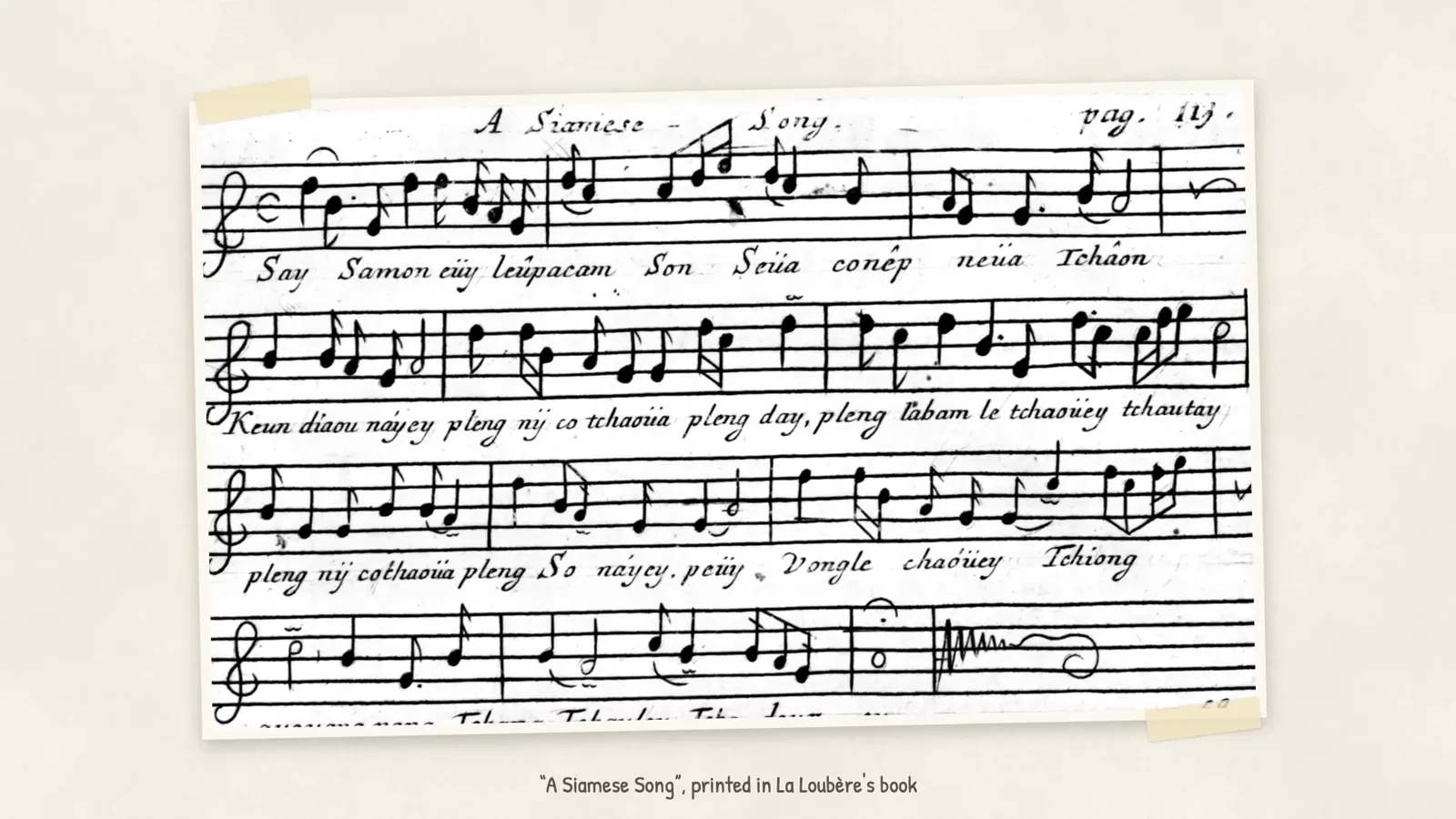
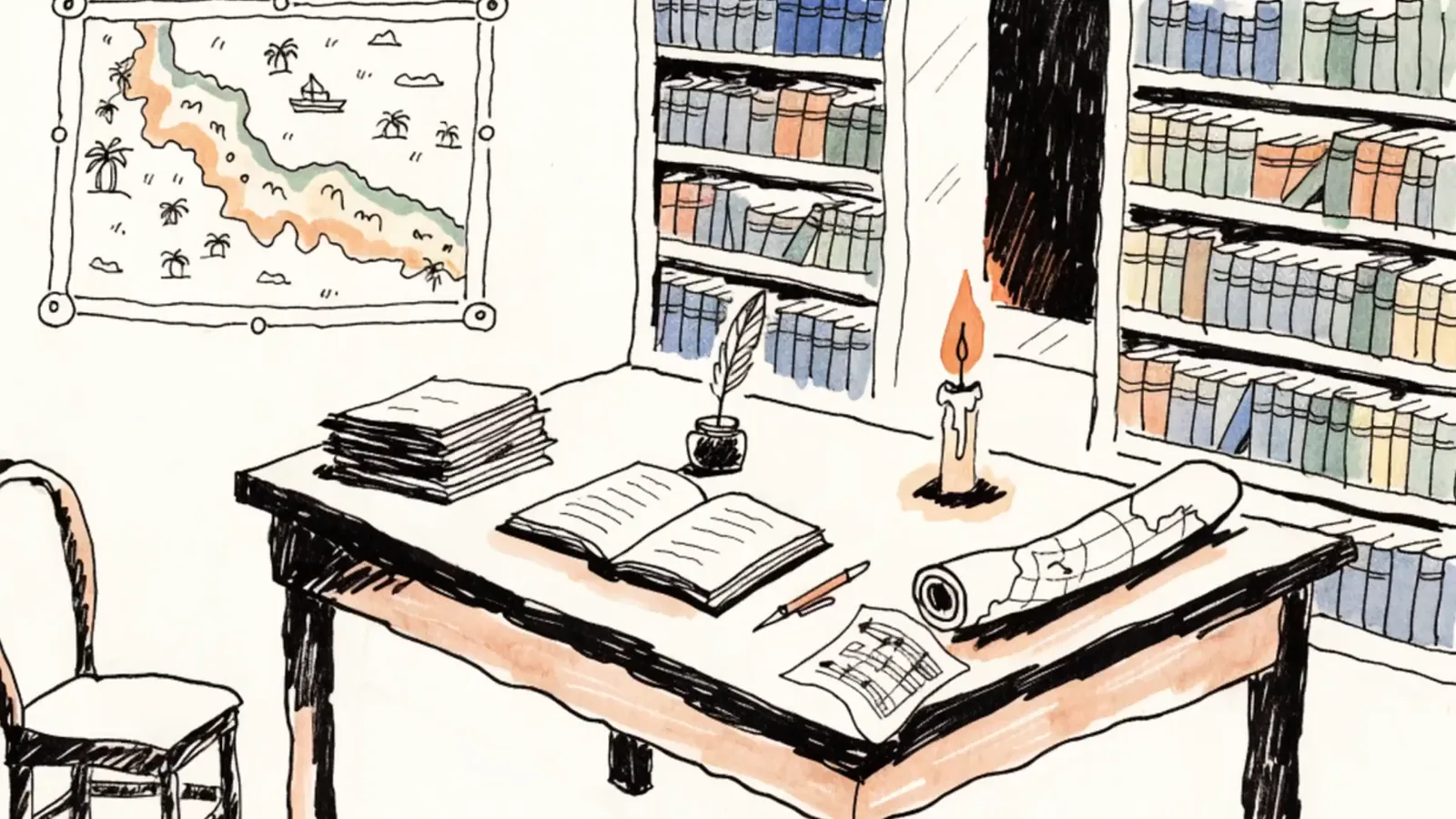
In the autumn of 1687, a French diplomat named Simon de La Loubère travelled up the river to Ayutthaya. It was the capital of a kingdom Europeans had been calling Siam (สยาม) for almost two centuries. He spent about three months there, and he seems to have asked about everything: the laws, the language, even the music. And when he wrote it all down, one of the first things he had to explain was the name itself.
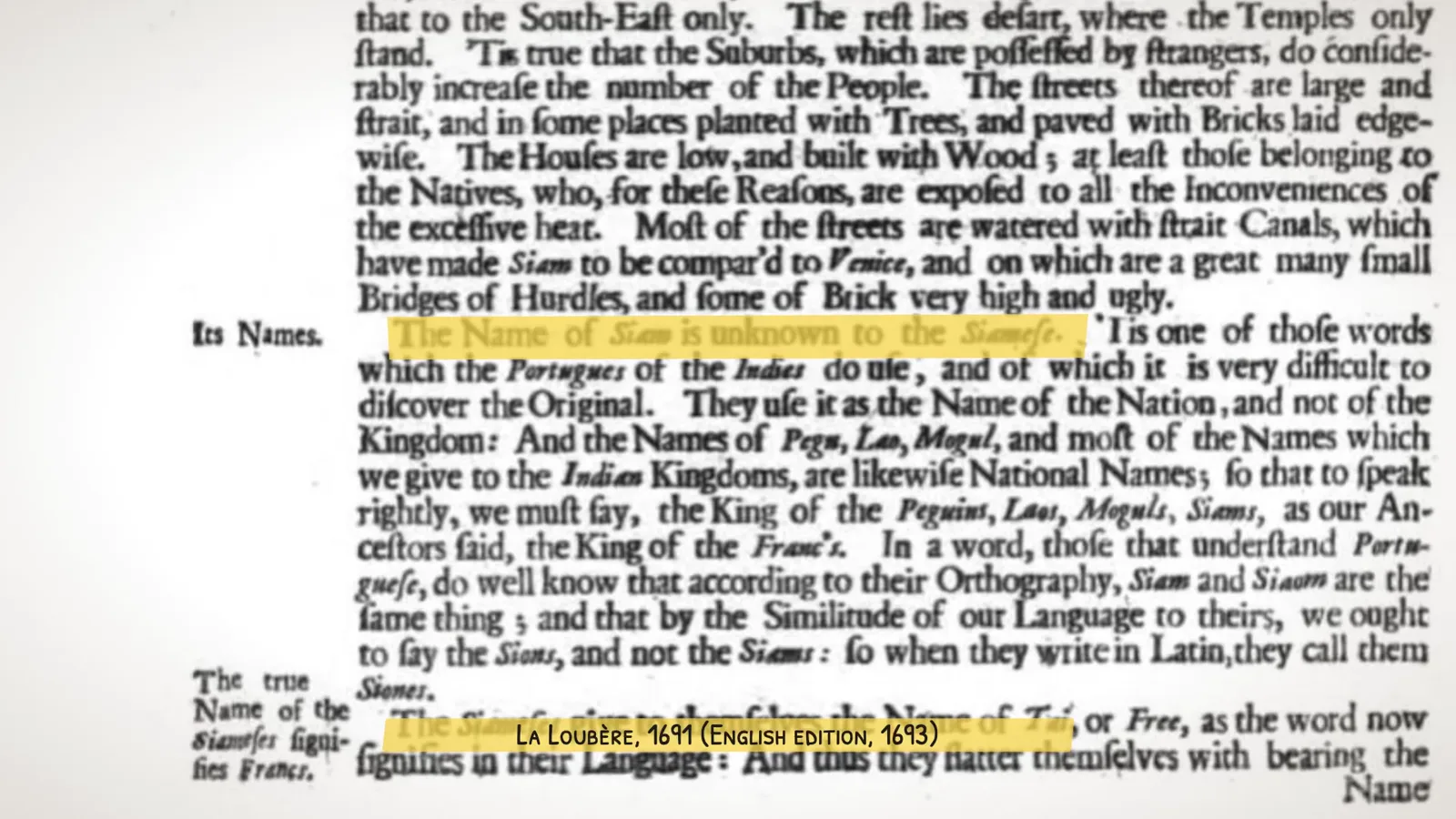
He wrote:
“The Name of Siam is unknown to the Siamese.” — Simon de La Loubère, A New Historical Relation of the Kingdom of Siam (1693)
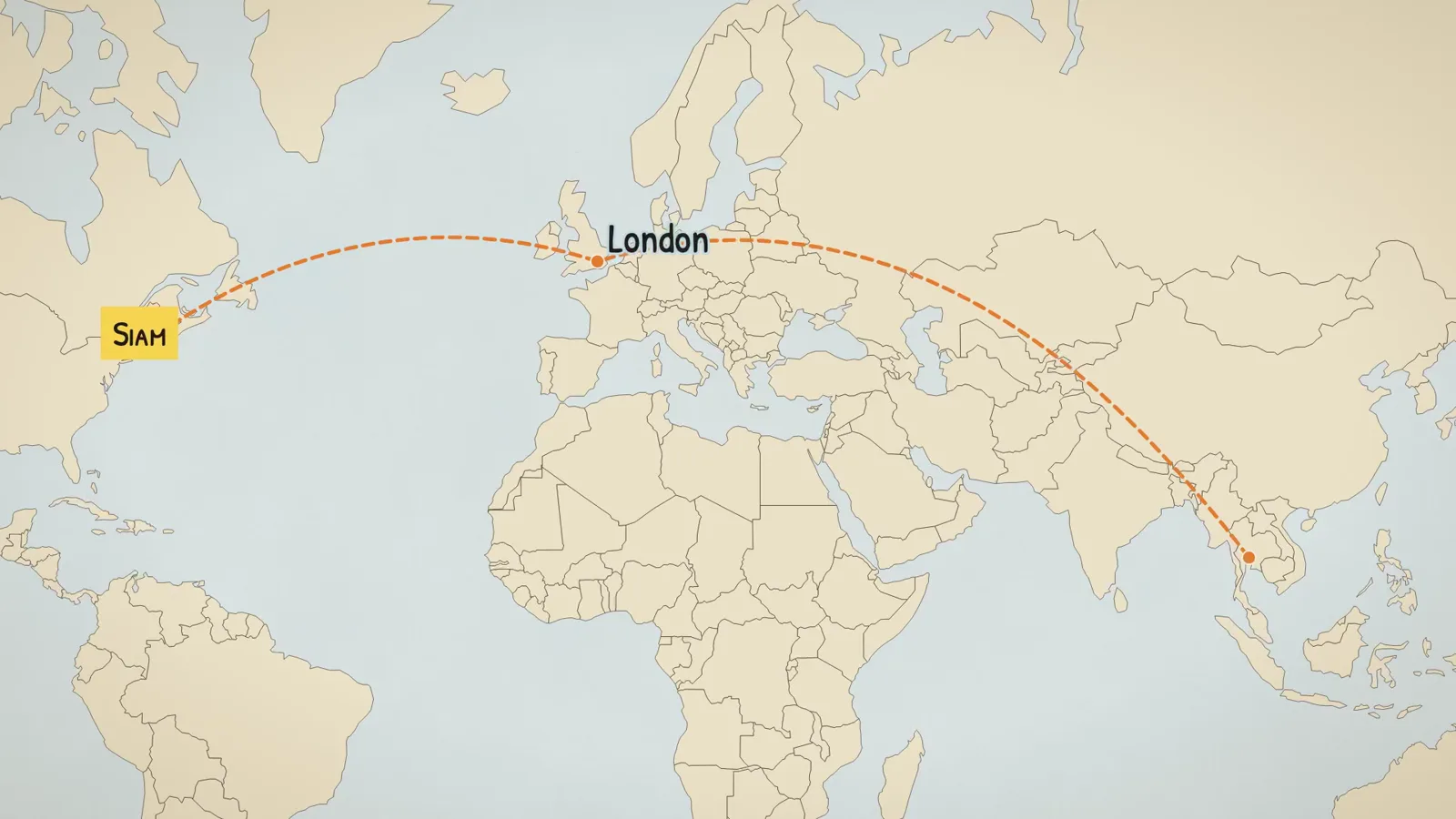
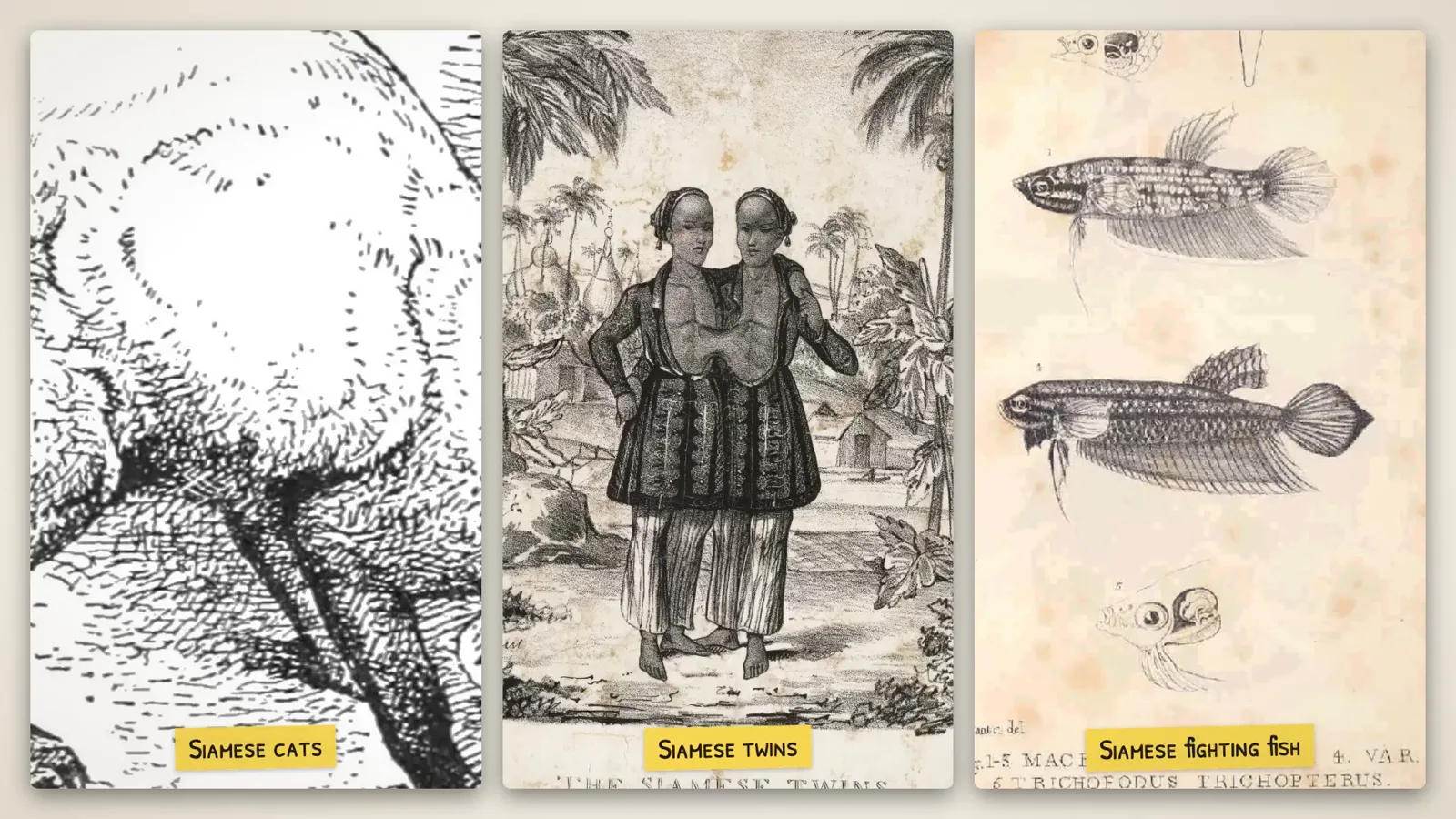
That's a strange thing to find out about a country you've just visited. Stranger still, the name went on to travel the world without them. English still has Siamese cats, Siamese twins and Siamese fighting fish. But in 1939, the country itself let the name go, and became Thailand.
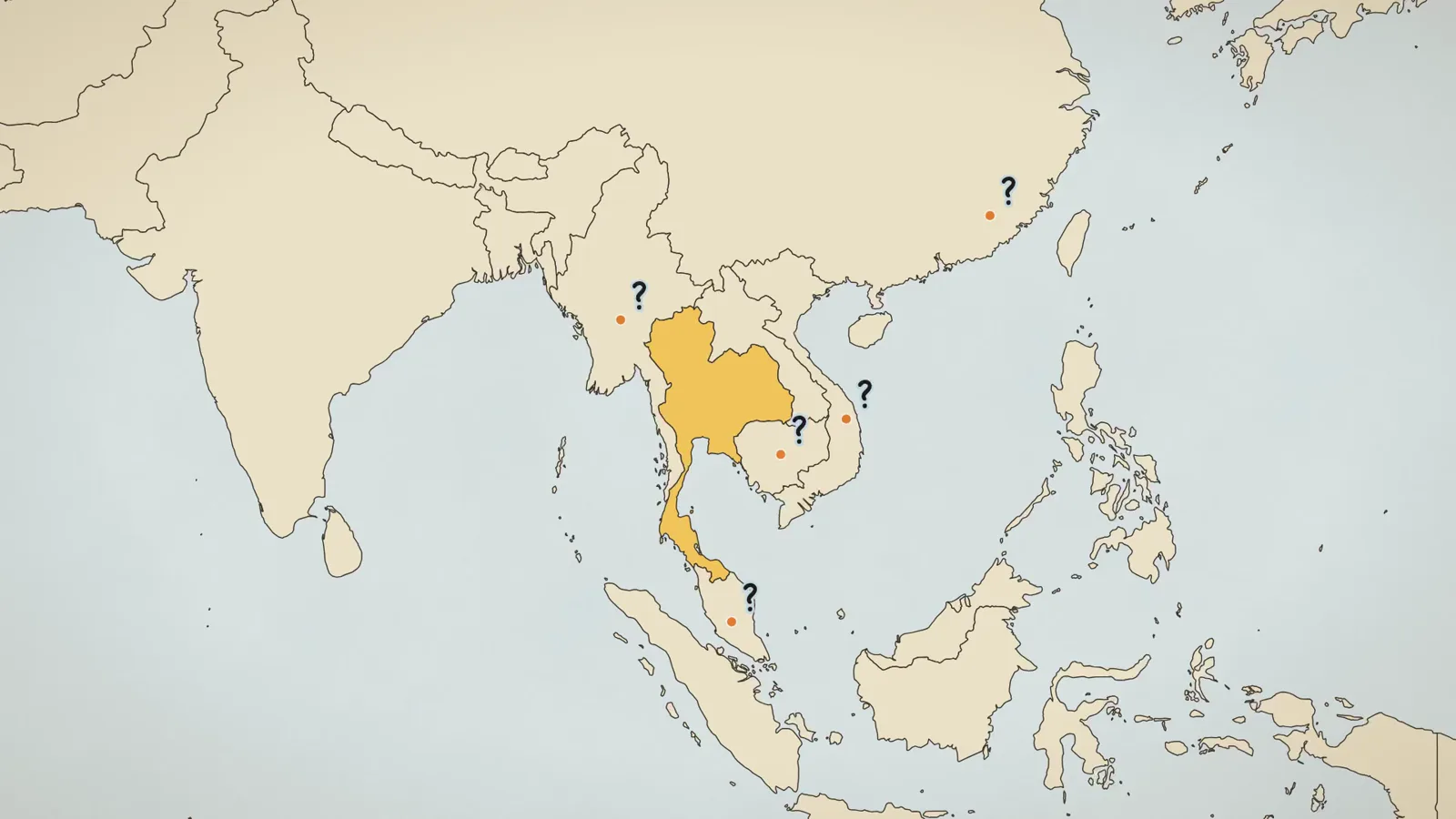
So if the Siamese didn't call themselves Siamese, somebody else did. The question is who, and how their name stuck so well that it took a government decree to get rid of it.
This is the story of a name. Siam.
The name the Siamese didn't use ▶ 1:10
La Loubère wasn't confused. He knew exactly what the Siamese called themselves, because they'd told him.
“The Siameses give to themselves the Name of Tai, or Free.” — Simon de La Loubère, 1693
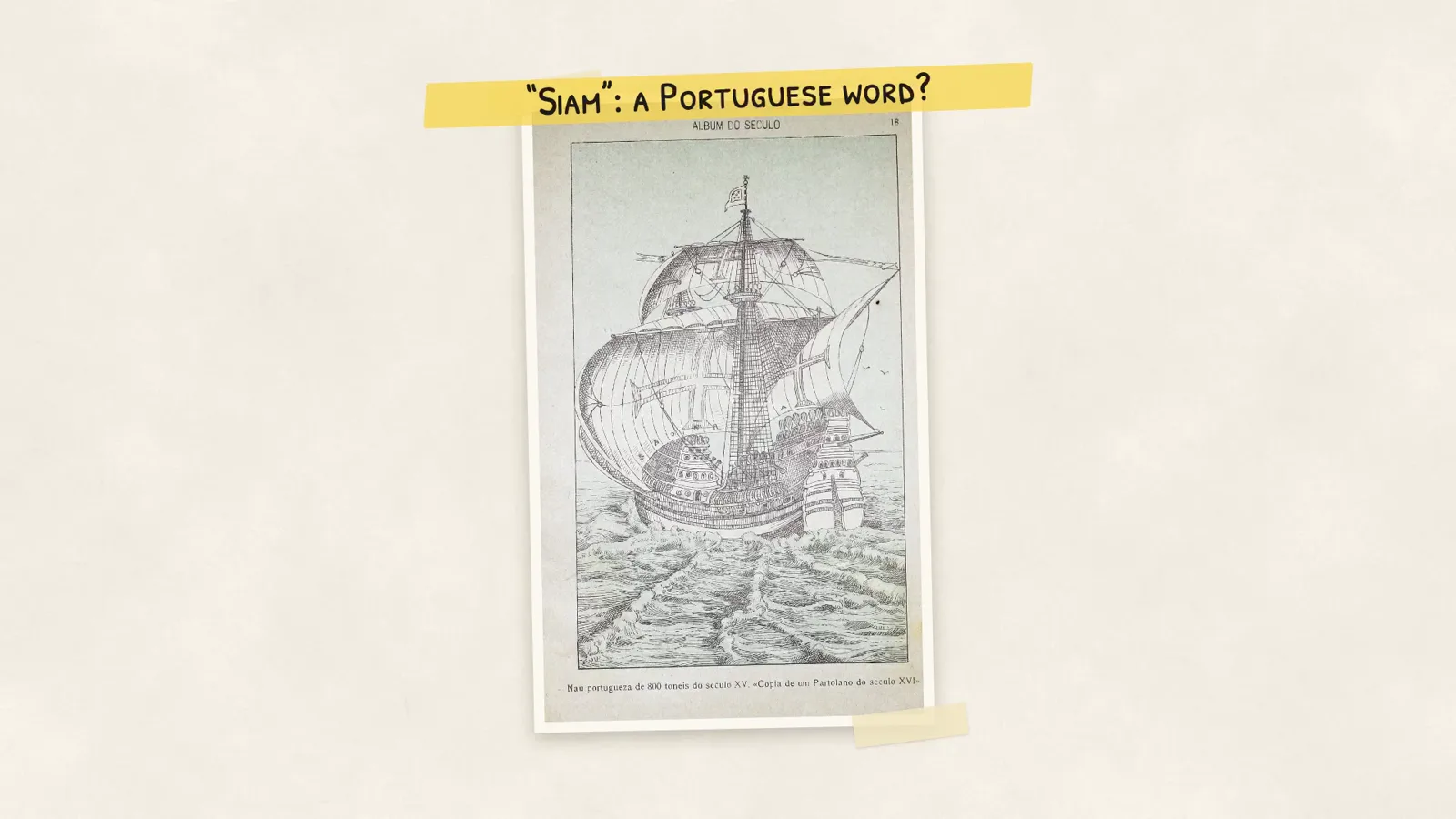
As for Siam, he blamed the Portuguese. It was one of their words, he said, and nobody could really tell where it came from.
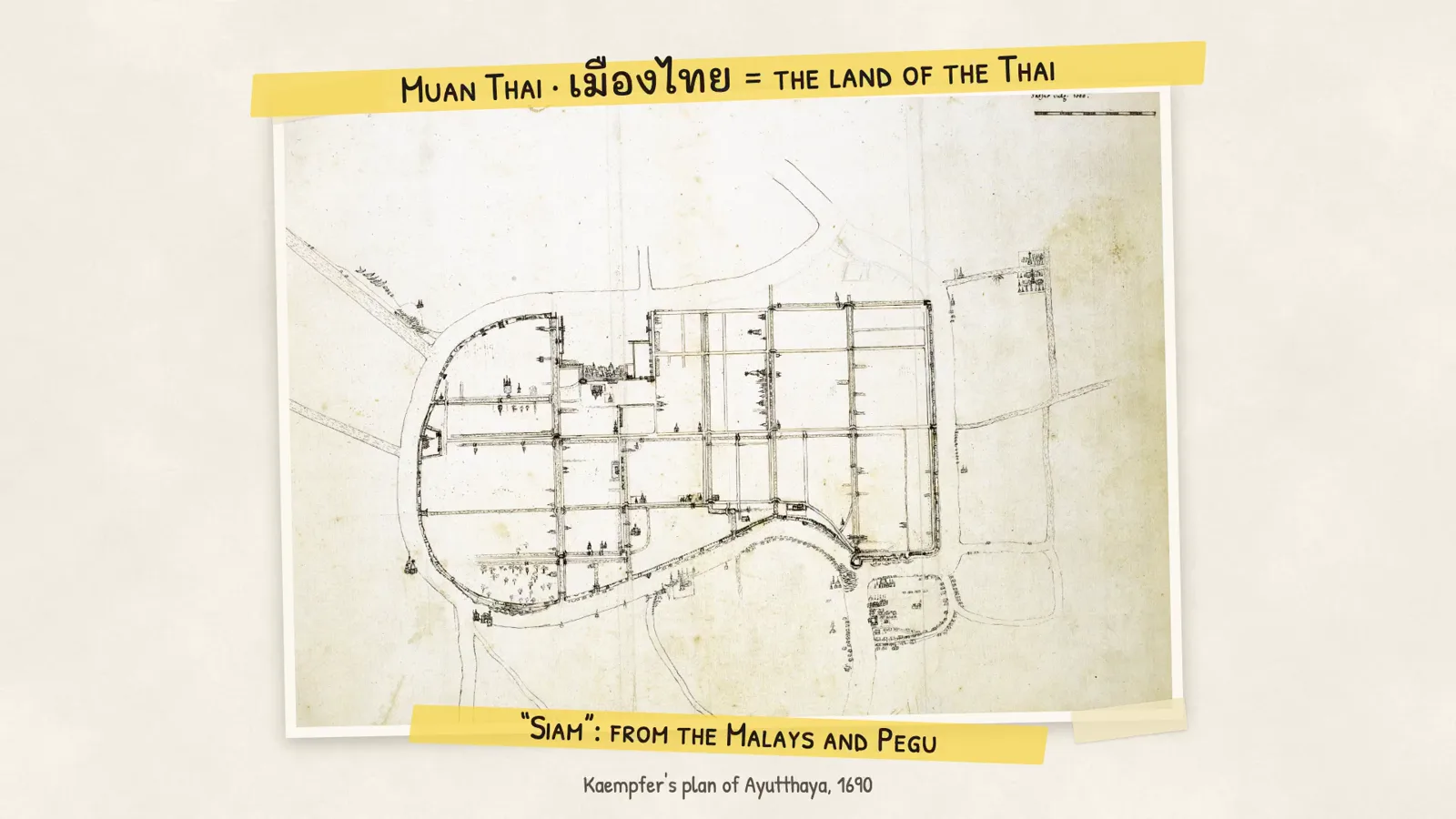
He wasn't the only visitor to notice. Three years later, a German doctor named Engelbert Kaempfer reached Ayutthaya with the Dutch East India Company, and he heard the same thing. The locals, he wrote, called their kingdom Muan Thai, the land of the Thai. But he had a different suspect for the word Siam: the Malays, and the people of Pegu, in what is now Myanmar.

Two visitors, two suspects, and one thing in common. Siam was a name that came from outside. Other peoples used it for the Thai. To find out which peoples, and how far back it goes, we have to cross the border into Cambodia.
Carved in stone at Angkor Wat ▶ 2:12
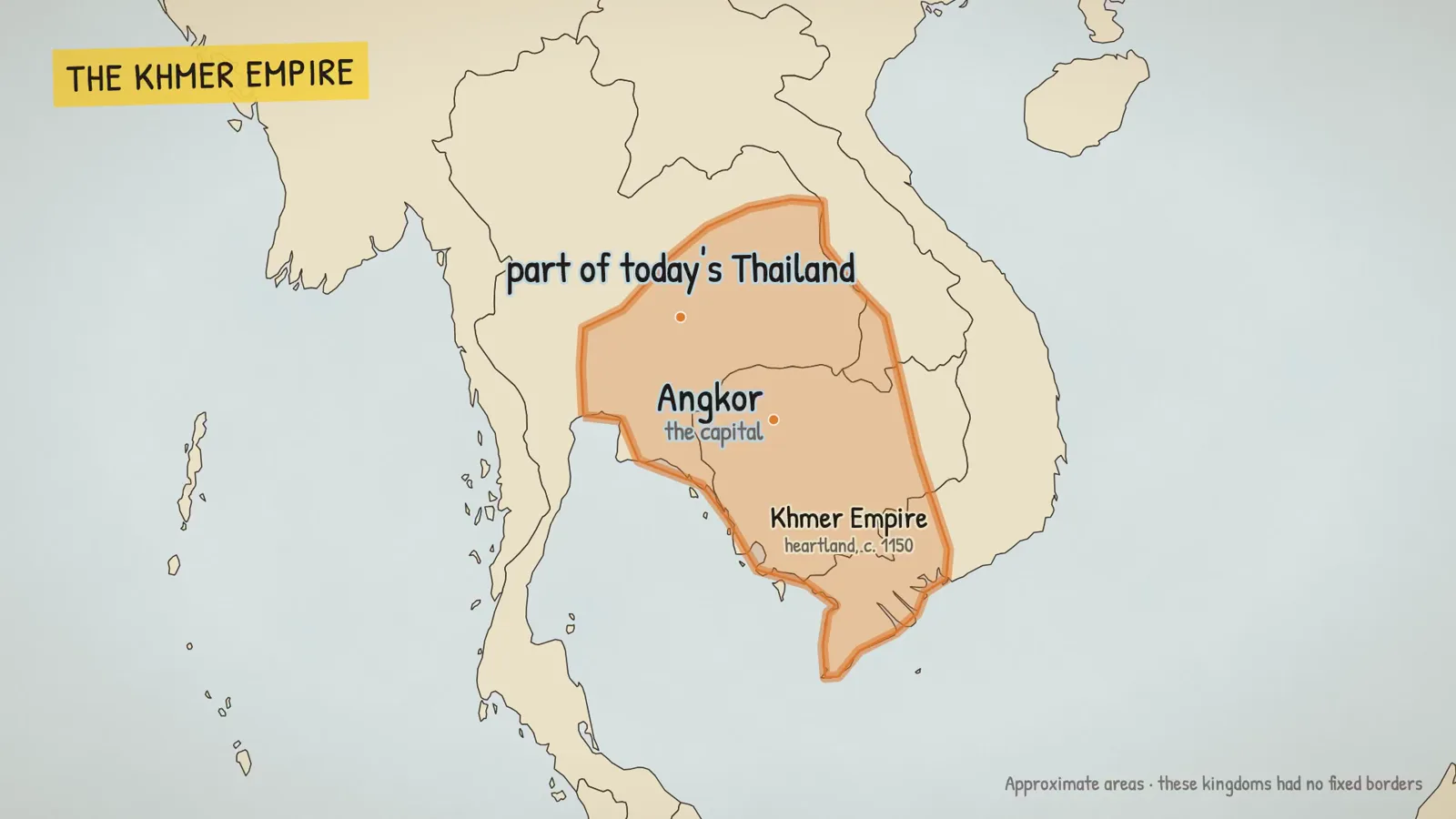
Long before there was a Thailand, the most powerful state in this part of the world was the Khmer Empire. The Khmer are the ancestors of today's Cambodians. From its capital at Angkor, it ruled much of mainland Southeast Asia for about six centuries. That included a large part of what is now Thailand.
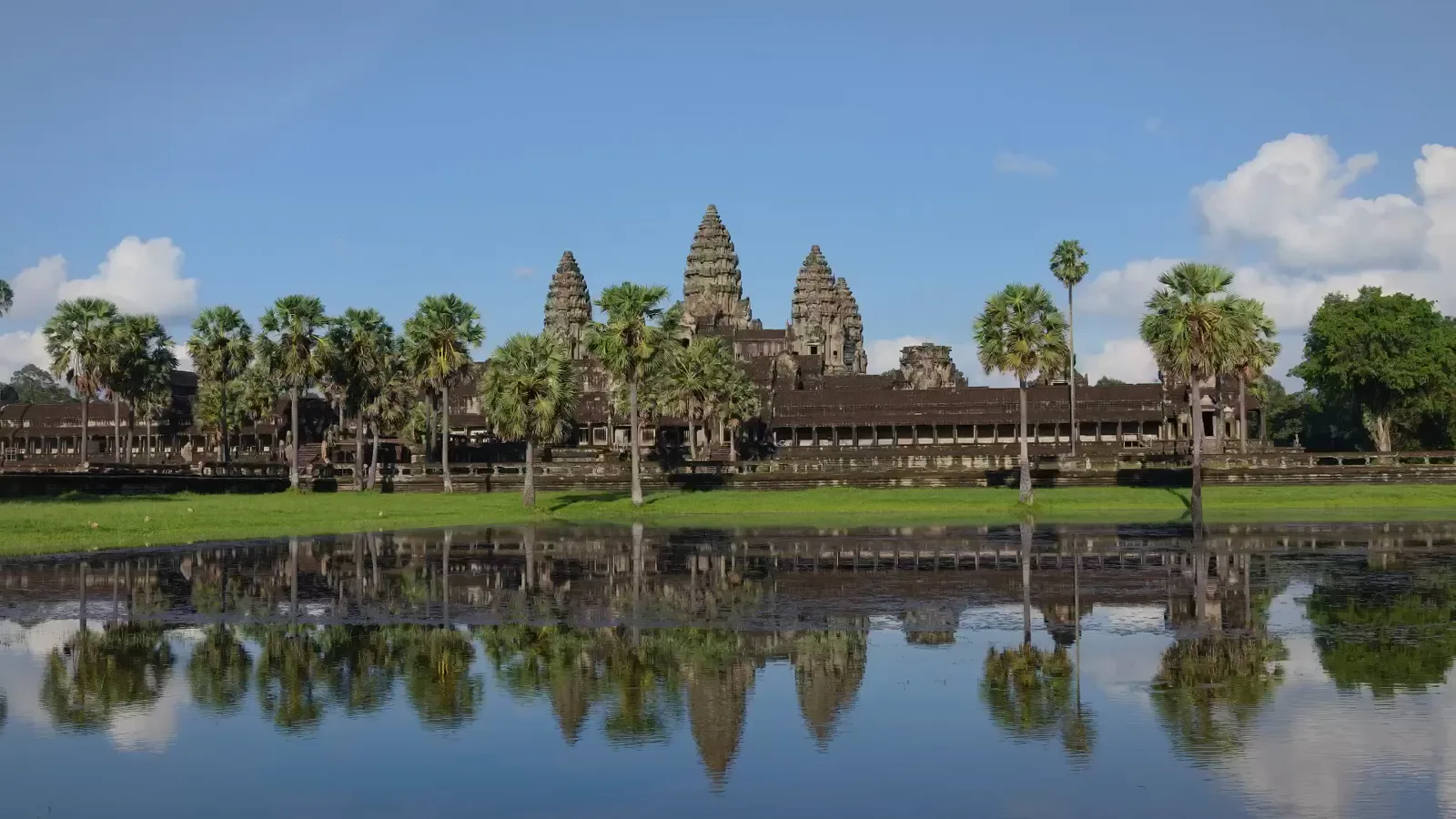
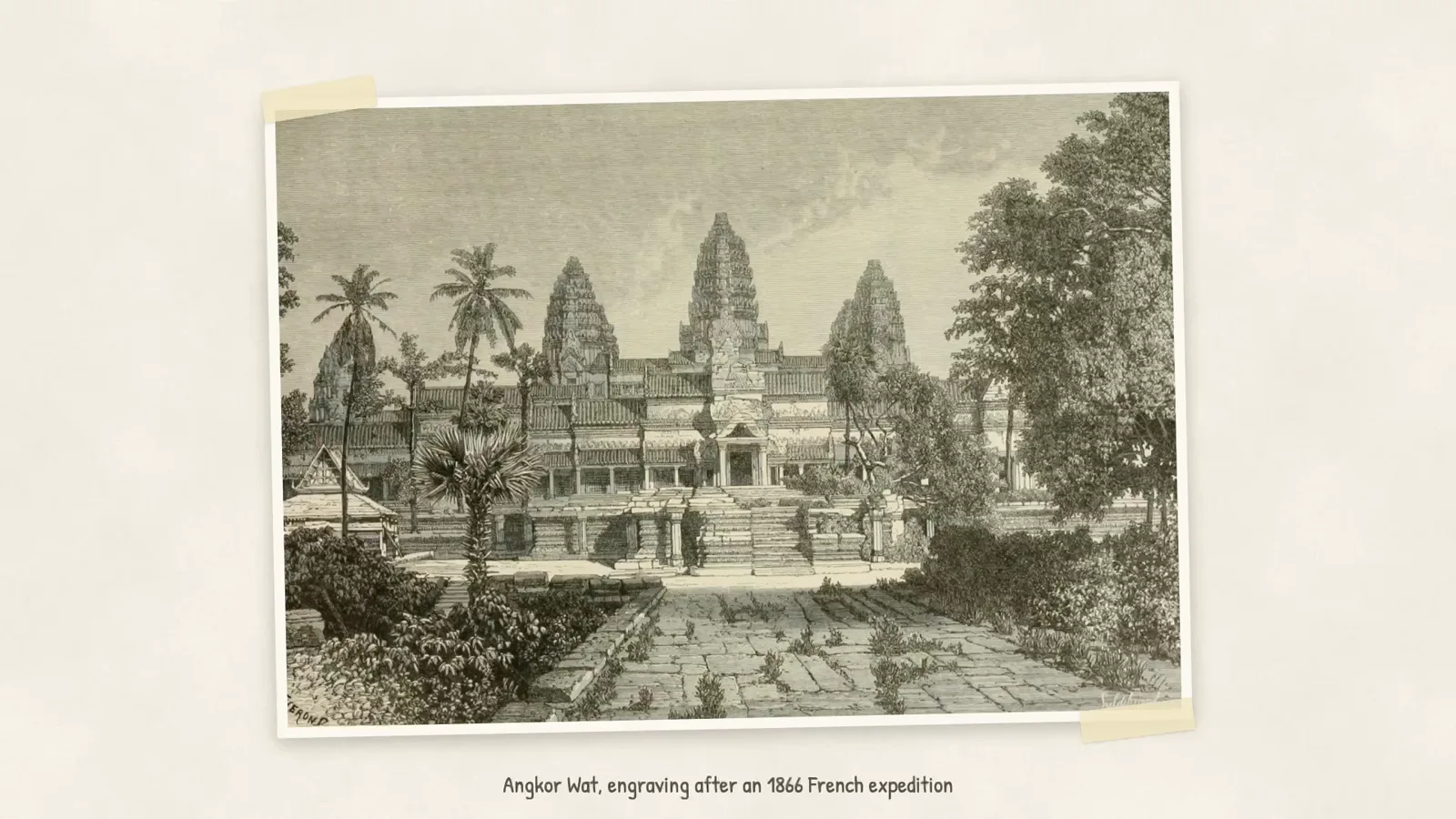
In the twelfth century, one of its kings, Suryavarman the Second, built the greatest temple of them all: Angkor Wat. Its long stone galleries are covered in carvings. And on one of them, he had his own army carved into the wall, marching past him in a great parade.
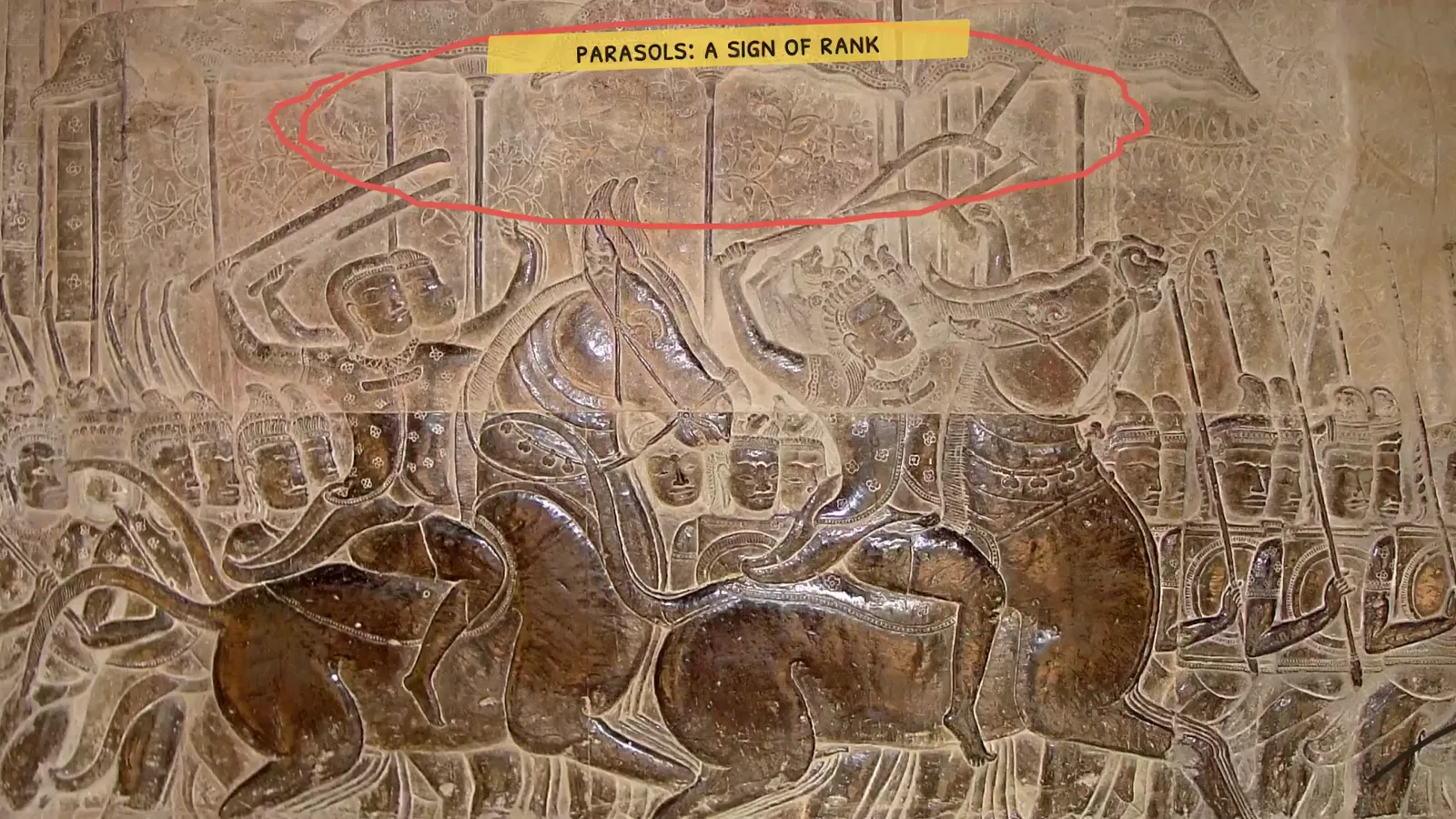
In the stone, his commanders ride elephants and horses, shaded by parasols. Rows of soldiers march behind them. And at the head of the procession comes a troop that doesn't look like the rest.
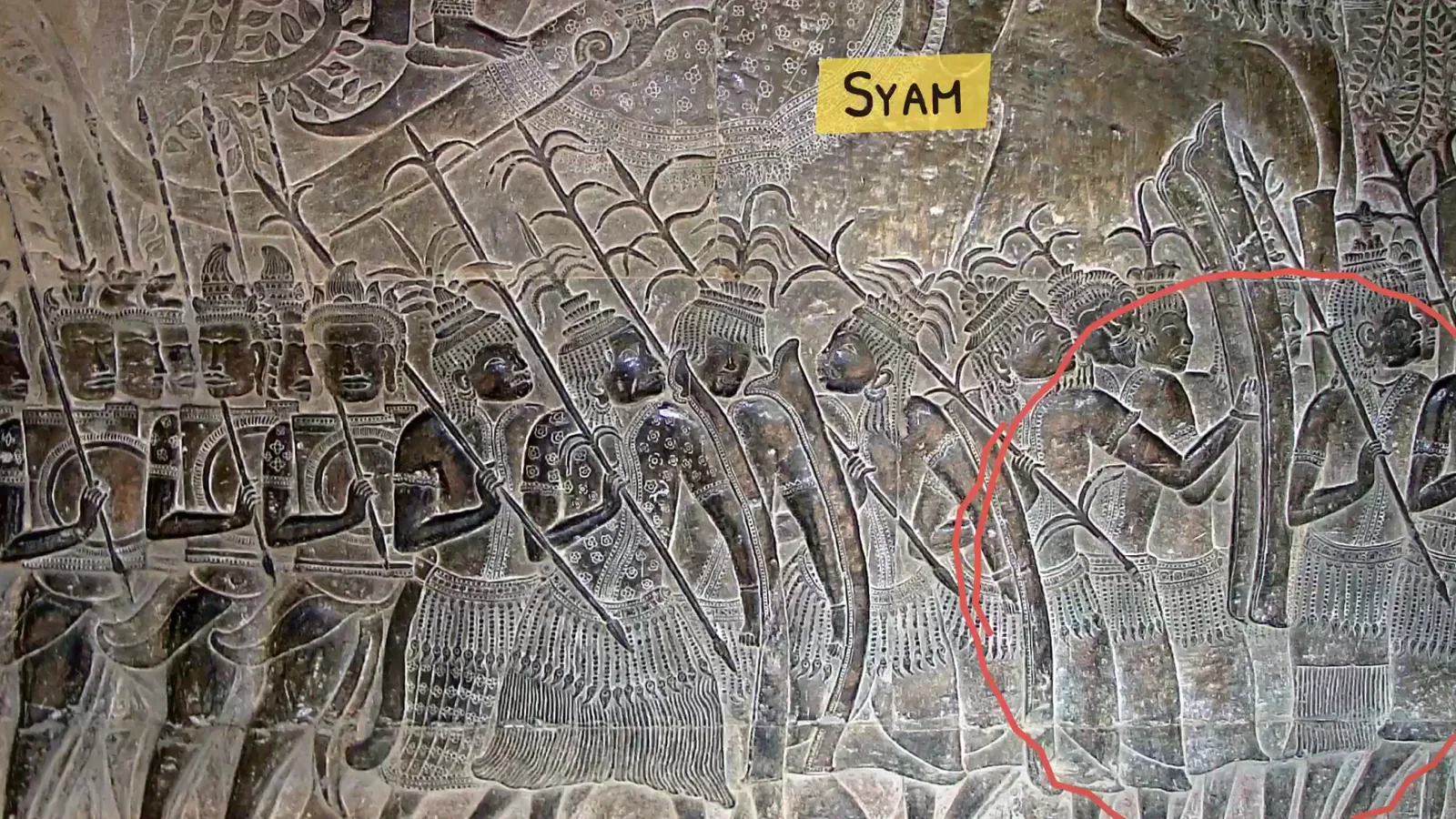
Their skirts are long and shaped like bells. They wear feathers in their hair. Next to them, the sculptors carved two short labels, and the labels give these soldiers a name: Syam.
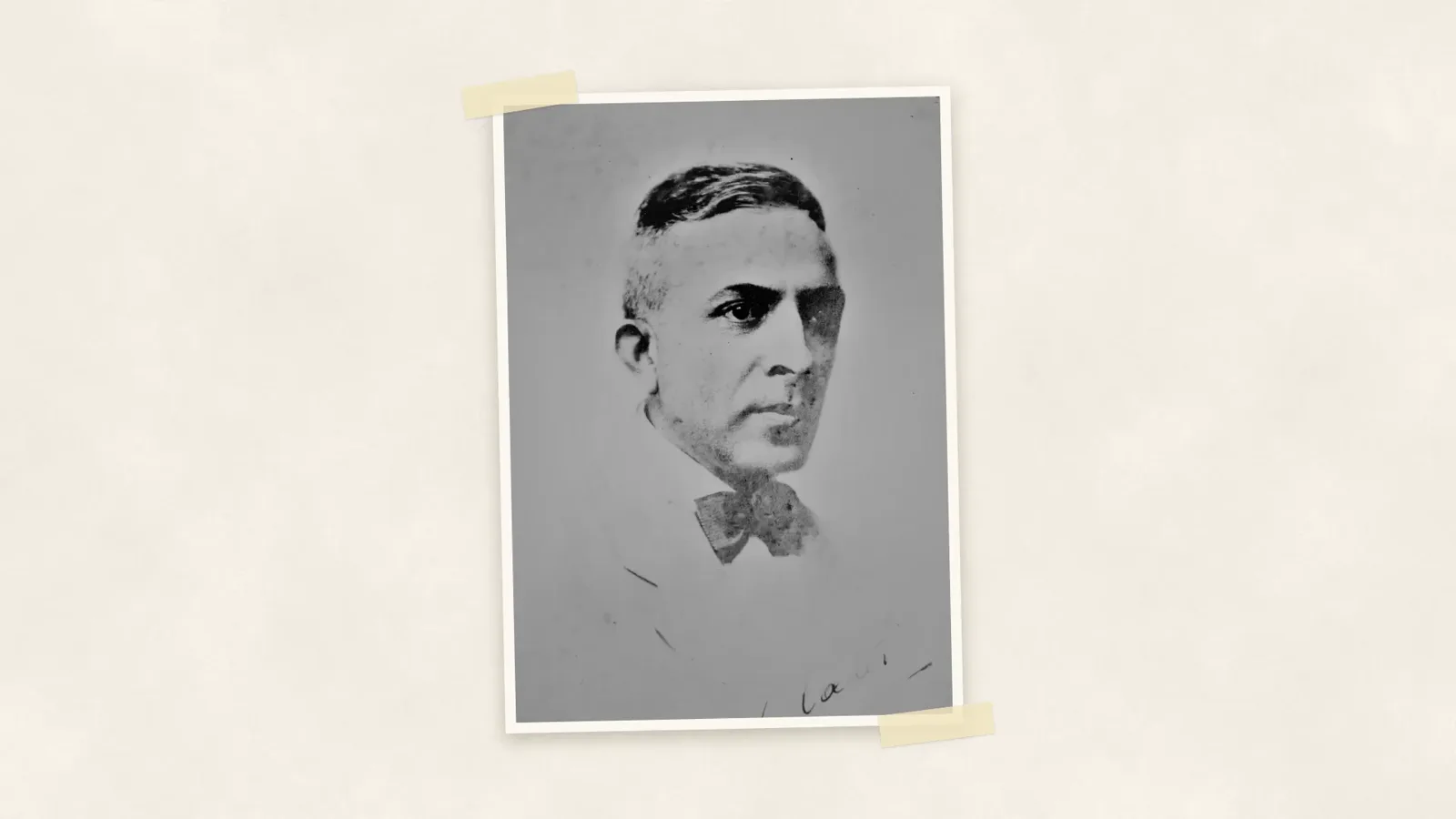
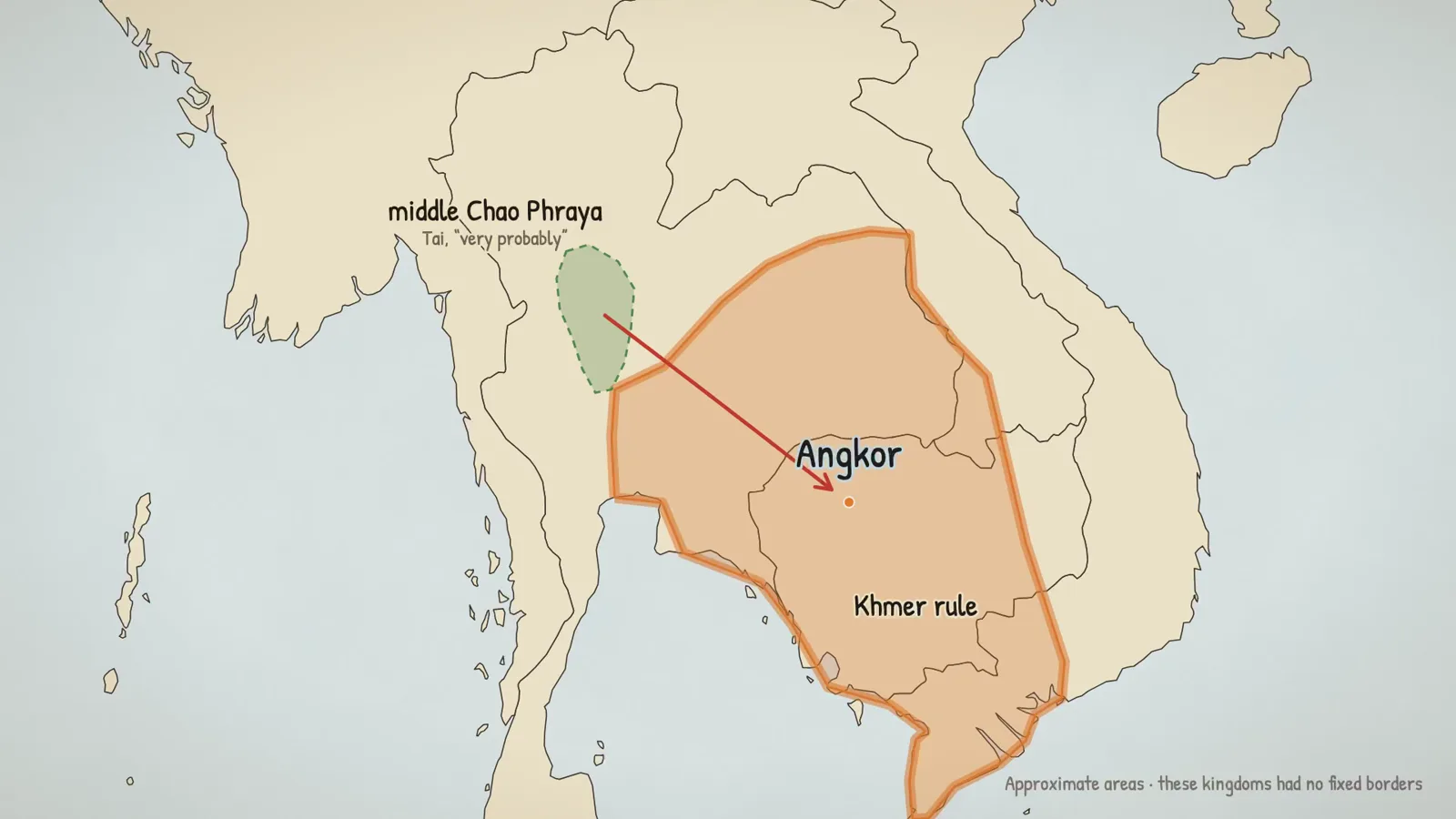
So what were they doing in a Khmer army? George Coedès was a French historian who spent his life studying the ancient kingdoms of Southeast Asia. He thought these soldiers were very probably Tai from the valley of the Chao Phraya, the great river of central Thailand. At the time, that land was under Khmer rule. So its people marched for the Khmer king, as one more contingent in his army.
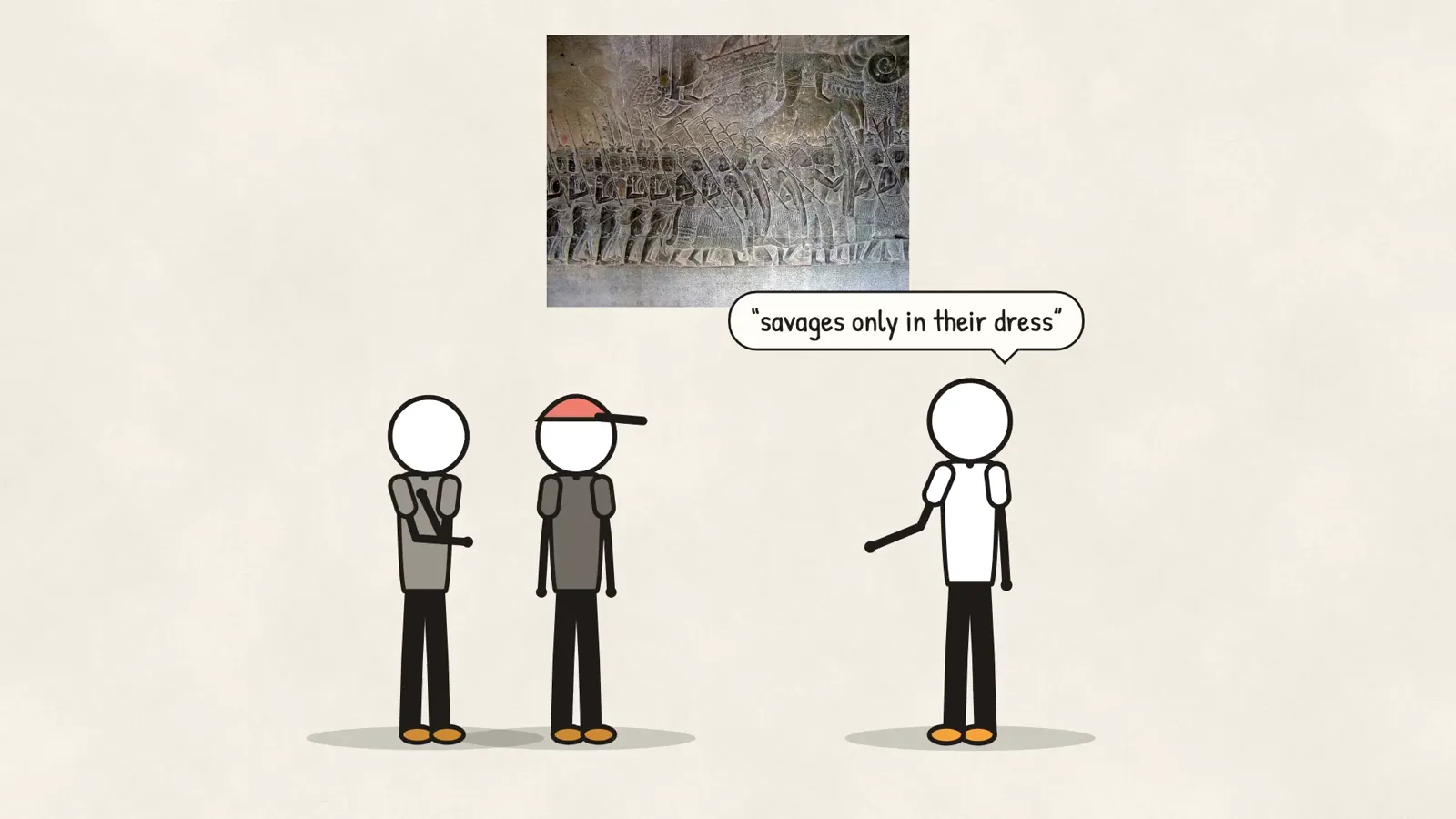
For a long time, scholars took these soldiers for barbarians, and called them "savages". Coedès disagreed. They were, he wrote, "savages only in their dress."
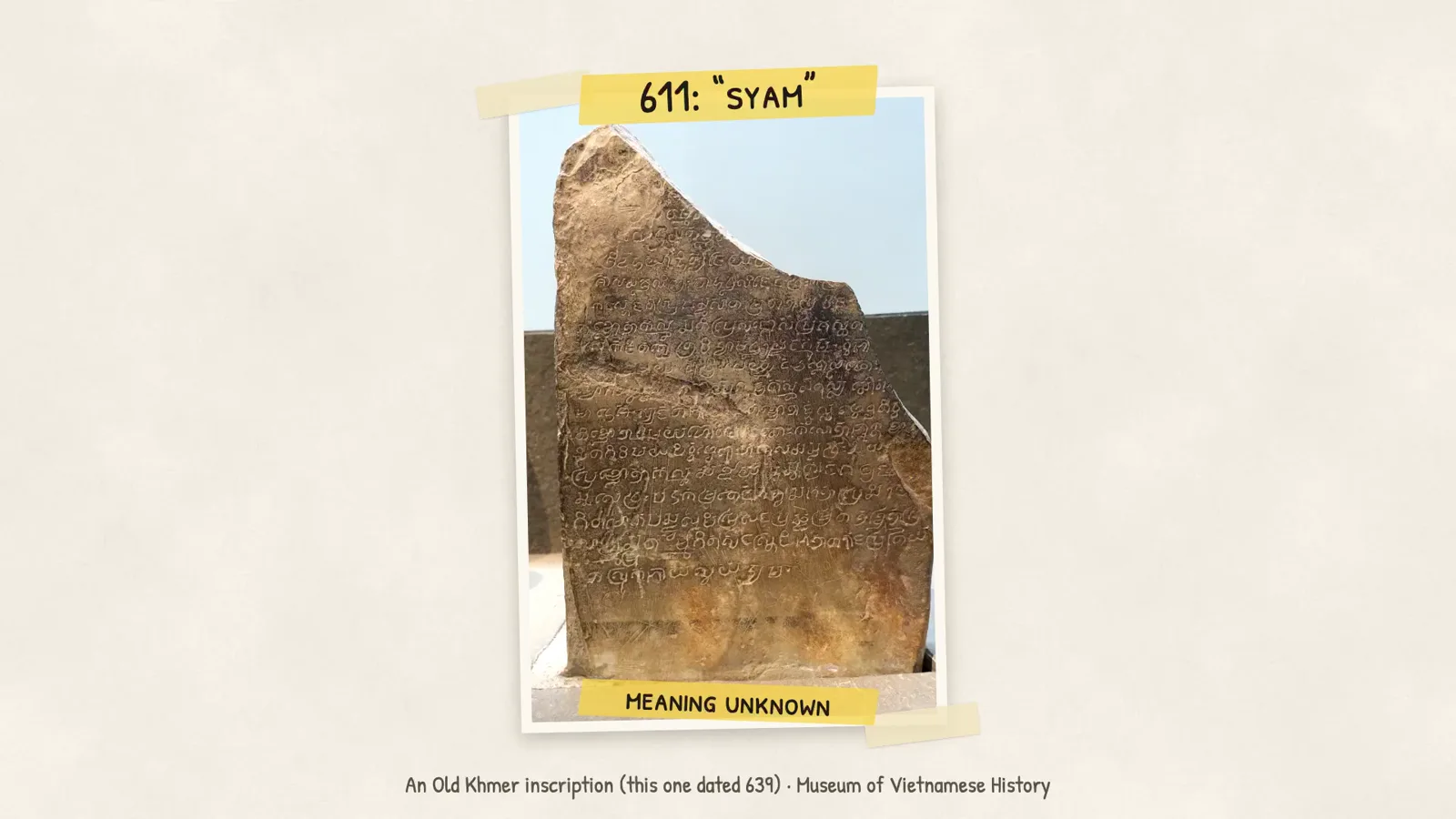
But this carving isn't where the name begins. By then, it was already old. Five centuries before Angkor Wat was built, a Khmer scribe had written the word syam in an inscription, in the year 611. Nobody is sure what it meant there.
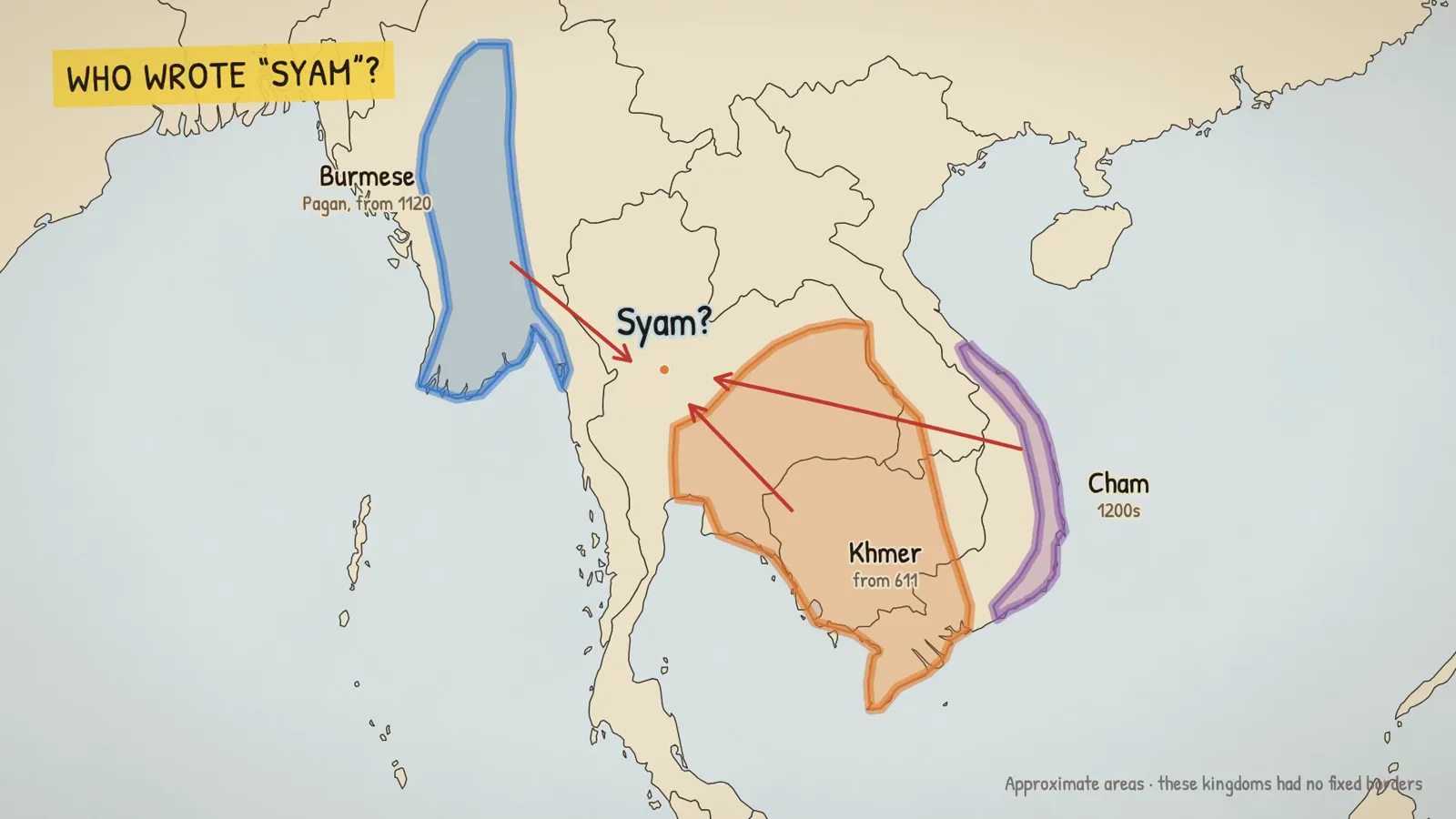
And the Khmer weren't the only ones to use it. Around the time the temple was built, the word turns up in Burmese temple lists, to the west. Less than a century later, it appears in the inscriptions of the Cham. They were a seafaring people, whose kingdom, Champa, ran along the coast of what is now Vietnam. Khmer, Burmese, Cham. Every early trace of the name was written by the peoples around the Thai, never by the Thai themselves.
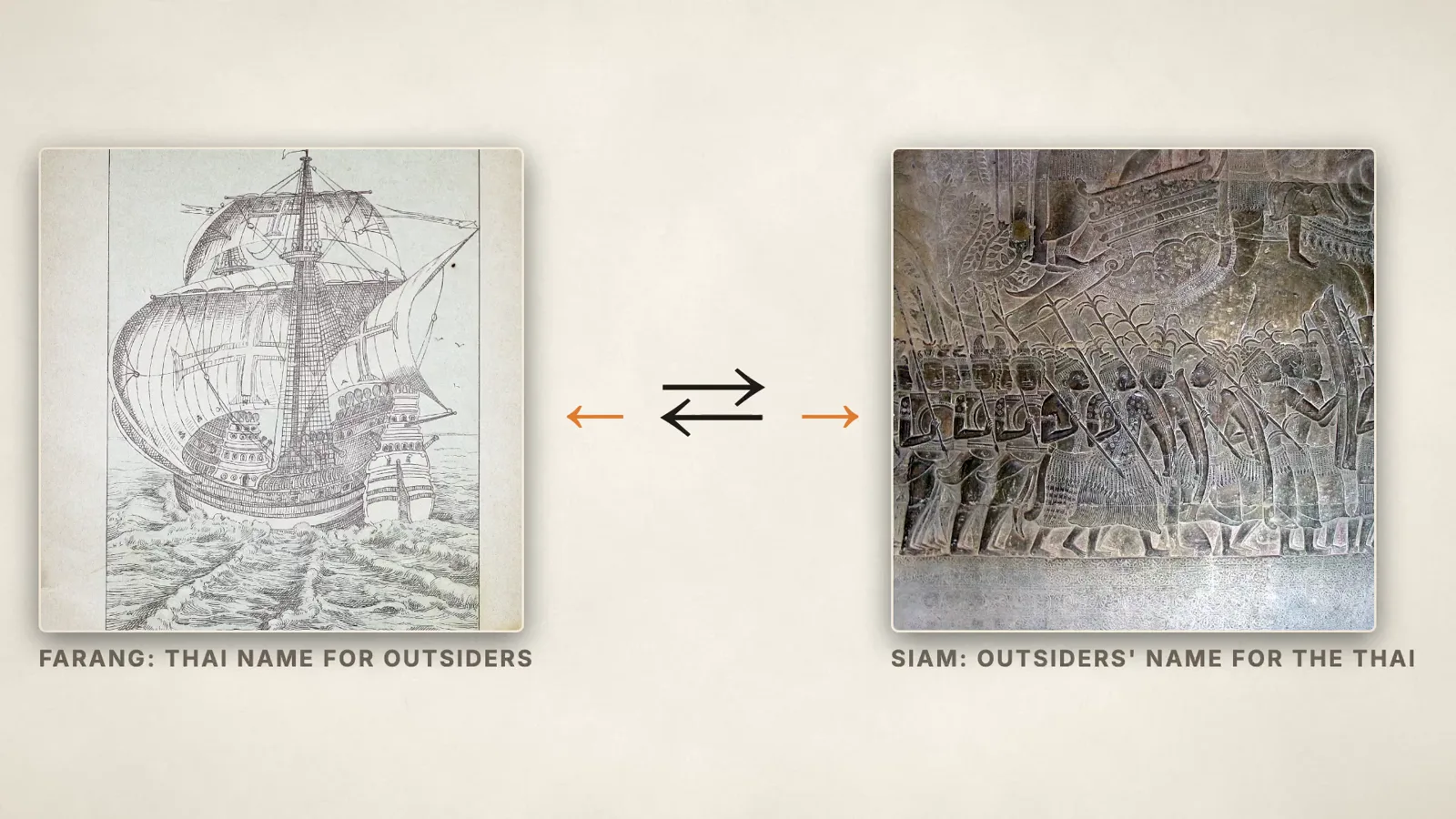
If you read our story of farang, this will sound familiar. There, we followed farang (ฝรั่ง), the name the Thai gave to outsiders. Siam is the same kind of story, told from the other side. It's the name outsiders gave the Thai.
What does Siam mean? ▶ 4:55
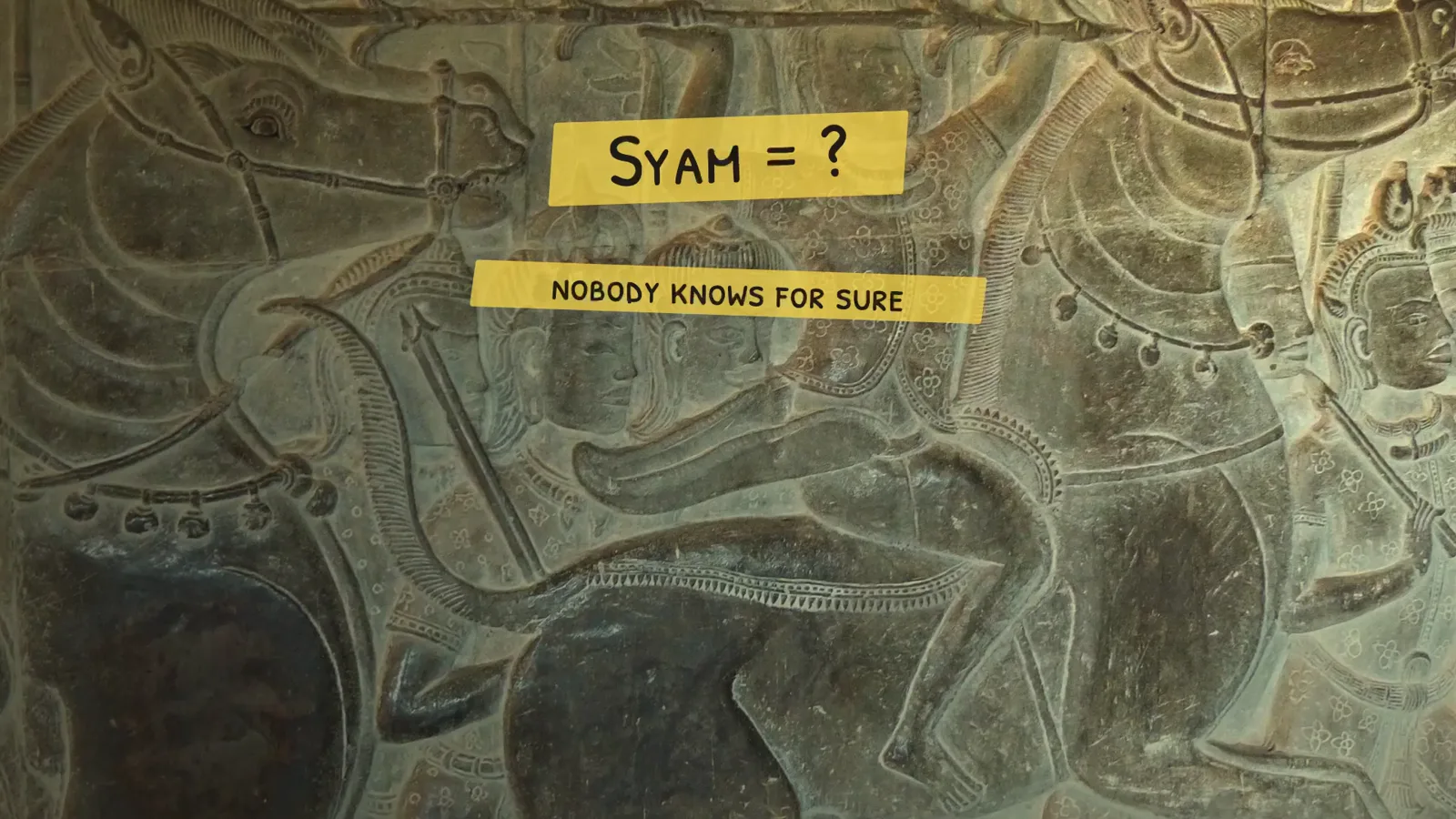
So what did the Khmer, the Burmese and the Cham mean by Syam? I'll be honest: nobody knows for sure. But there are suspects, and the most famous one is a lot shakier than its fame suggests.
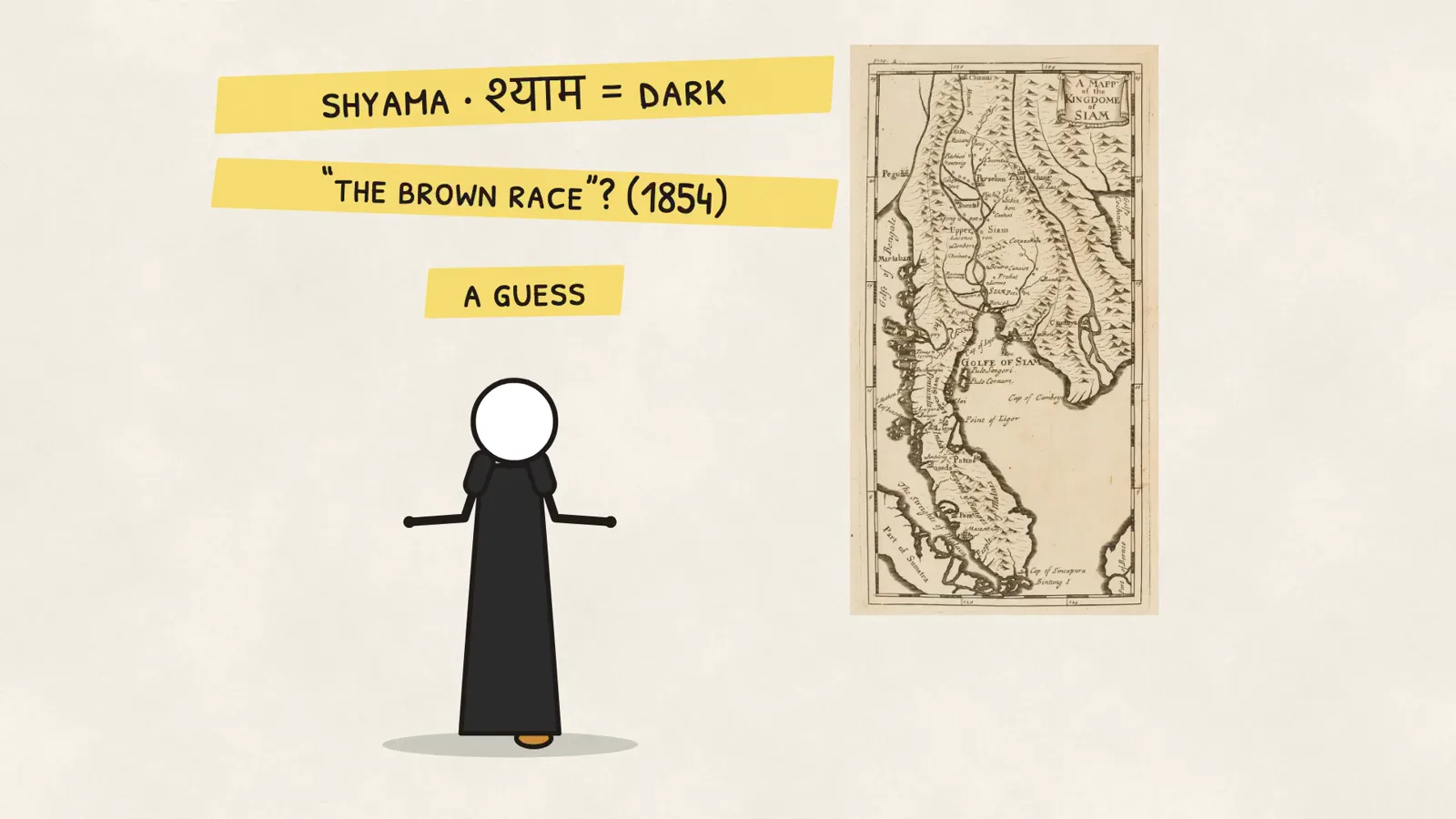
It comes from Sanskrit, the classical language of India, where shyama means dark. In 1854, a French bishop living in Bangkok wrote that Siam's old name meant the brown race. The idea caught on, and it's been repeated ever since. But it was a guess. Nobody has ever proved it.
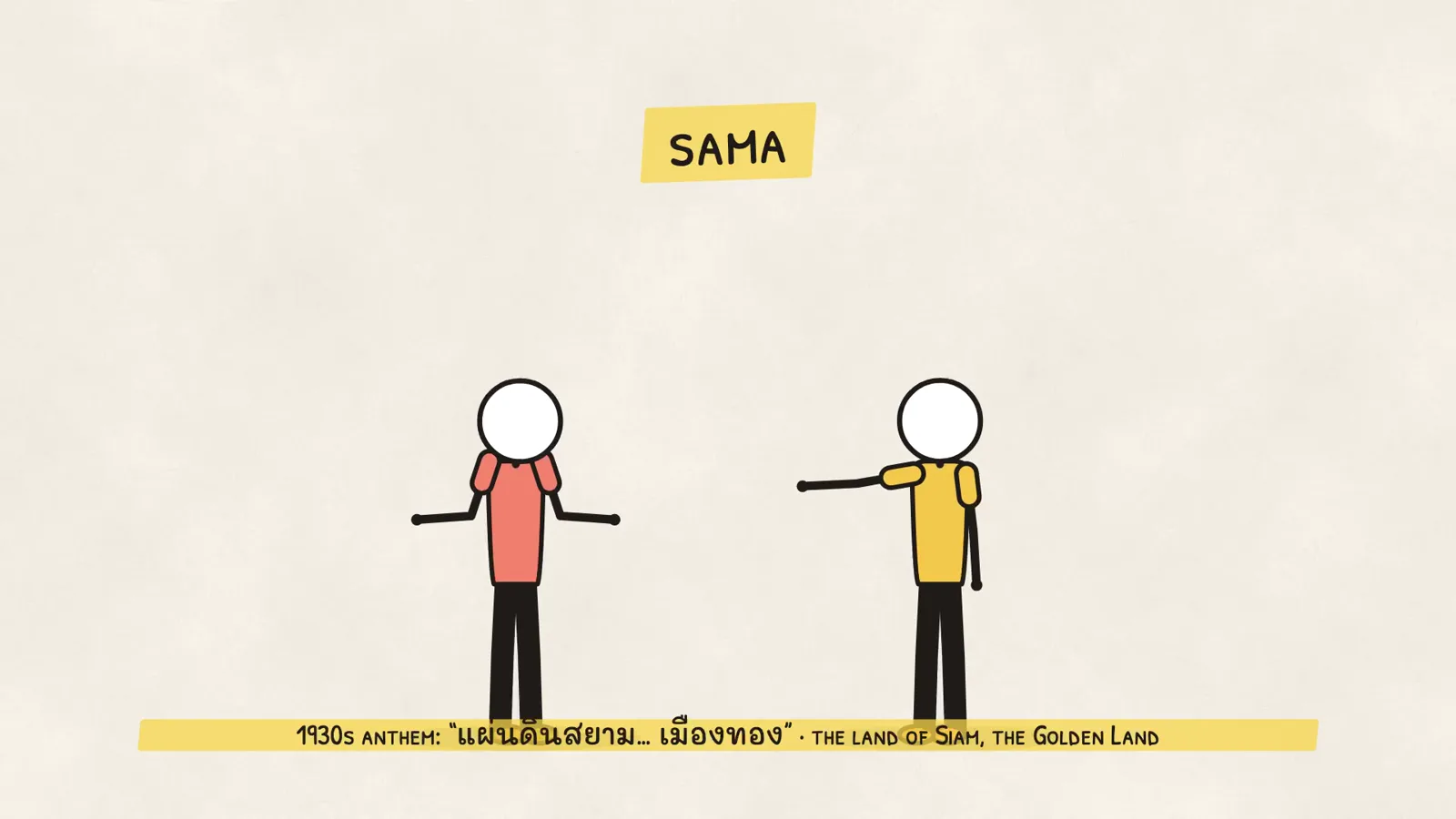
And the guess has a problem. In Pali, the sacred language of Thai Buddhism, the same word, sama, can mean dark. But it can also mean golden. In the 1930s, the Thai national anthem went with golden. Its very first line called the land of Siam the Golden Land. Keep that anthem in mind. It comes back later.
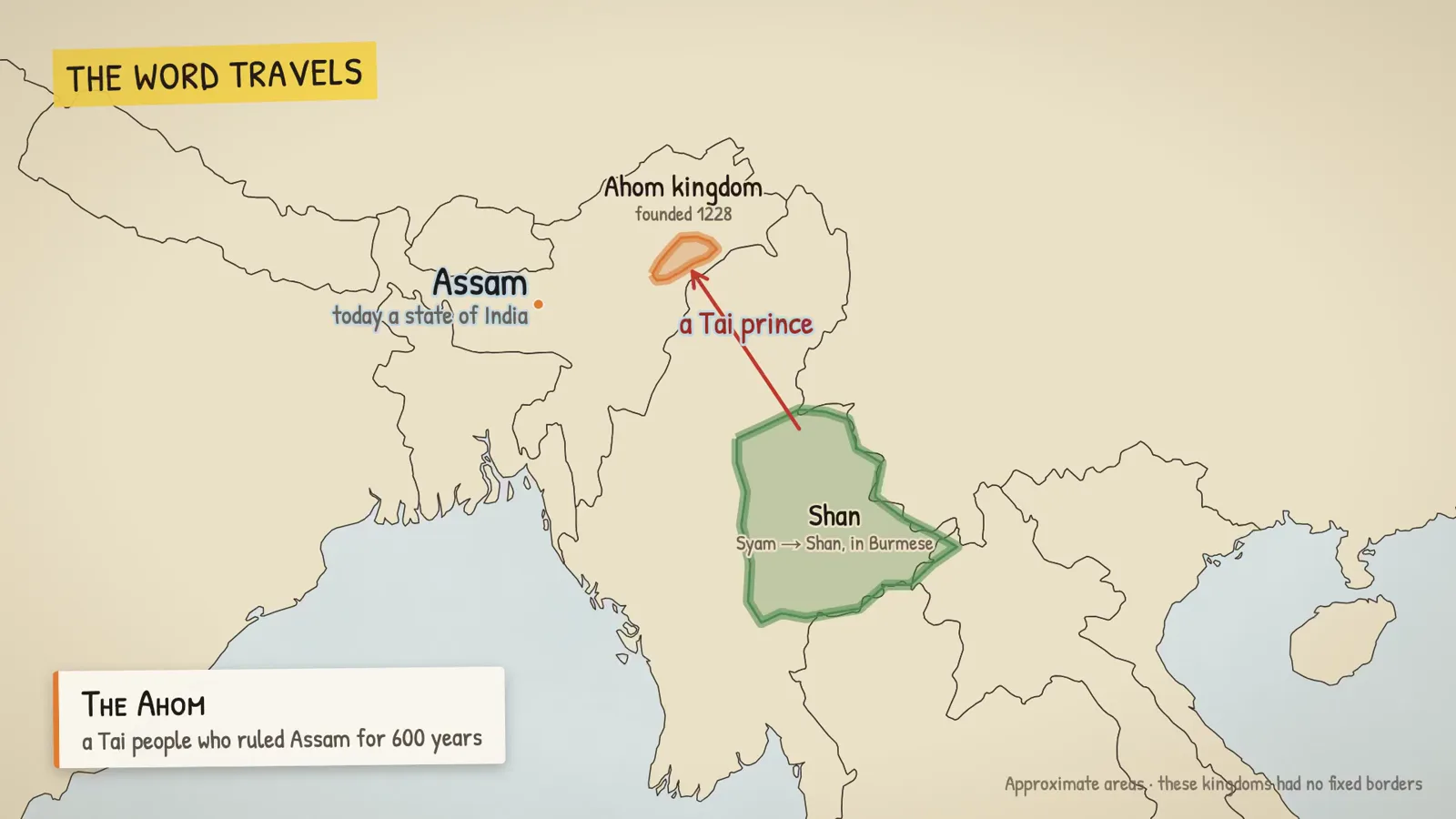
What linguists do agree on is that the word travelled. In Burmese, Syam became Shan, and that's why the Tai people of eastern Myanmar are still called the Shan today. It may even have reached India. Assam, a state in the far northeast of India, could carry the same root. In the thirteenth century, a Tai prince crossed the mountains into its valley. He founded the kingdom of the Ahom, which ruled there for six hundred years.
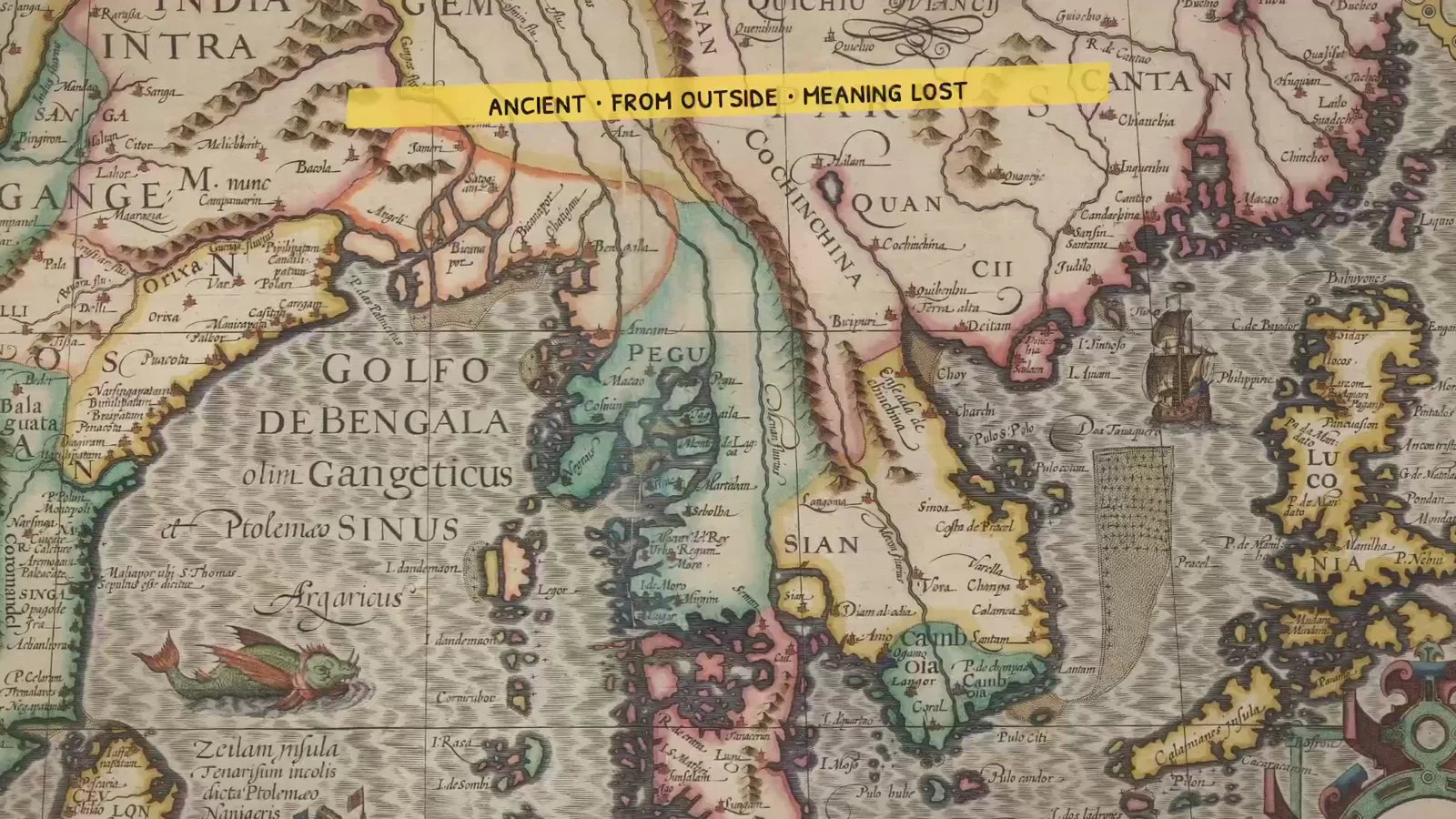
So the name is ancient, it came from outside, and its first meaning is lost. That leaves a different puzzle: how a word carved in Khmer and Burmese stone ended up on every map in Europe.
How the name travelled the world ▶ 6:34
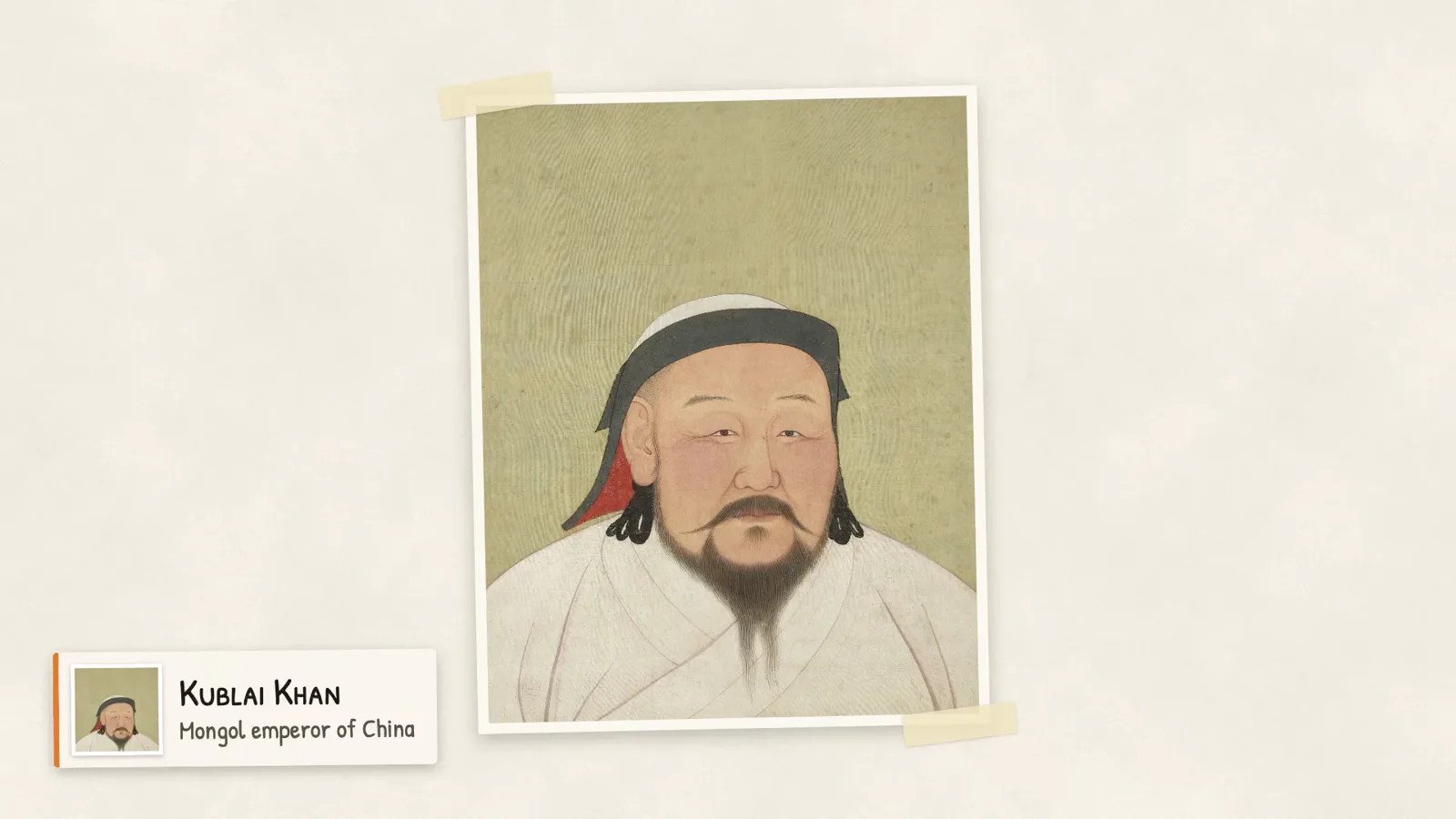
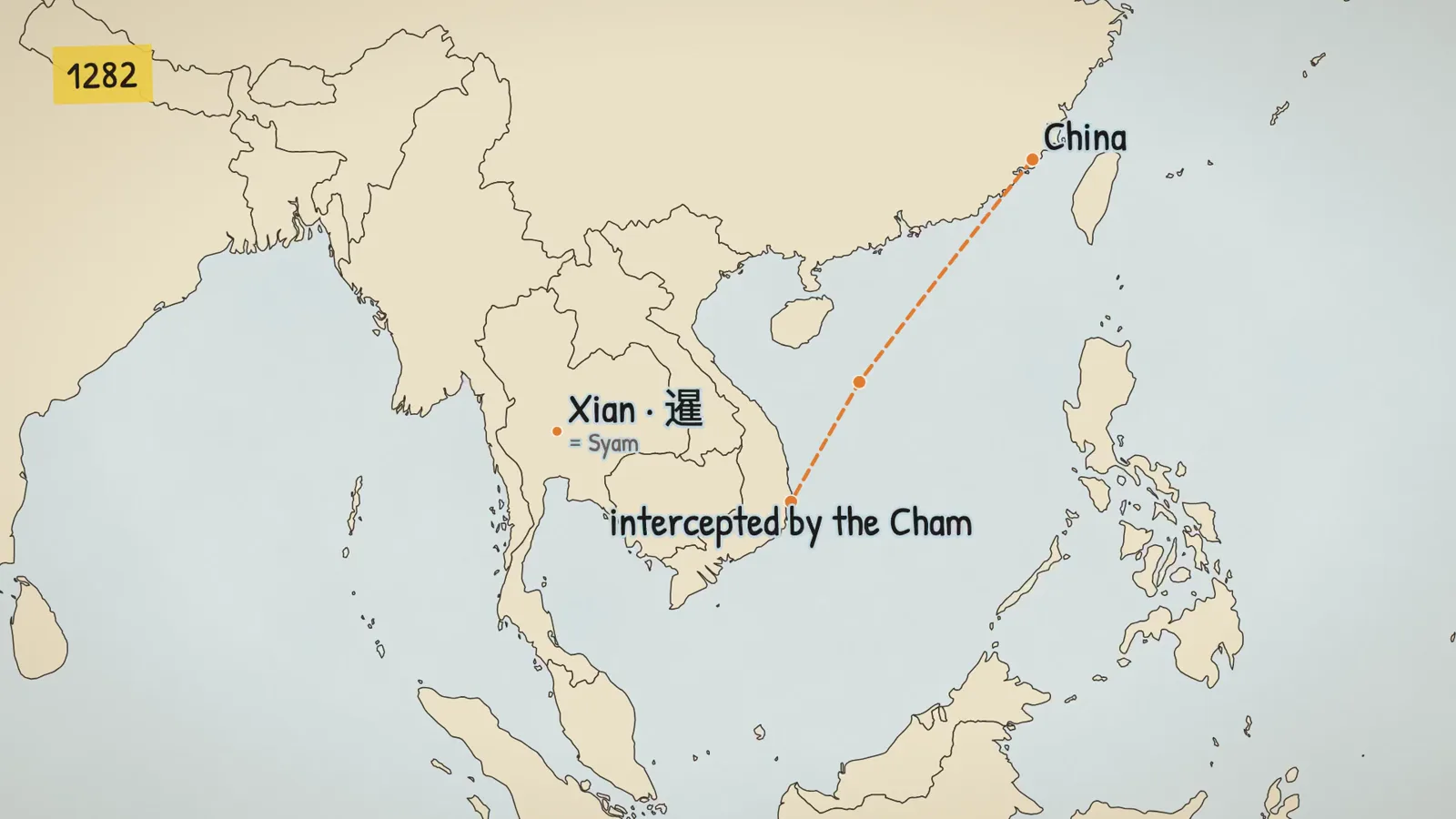
Part of the answer runs through China. In 1282, Kublai Khan, the Mongol emperor of China, sent an envoy by sea to a kingdom the Chinese called Xian (暹). Xian was simply the Chinese way of writing Syam, and it meant a Tai kingdom in what is now Thailand. The envoy never made it. The Cham, those same seafarers from the coast of Vietnam, intercepted his ship, and the envoys were killed.
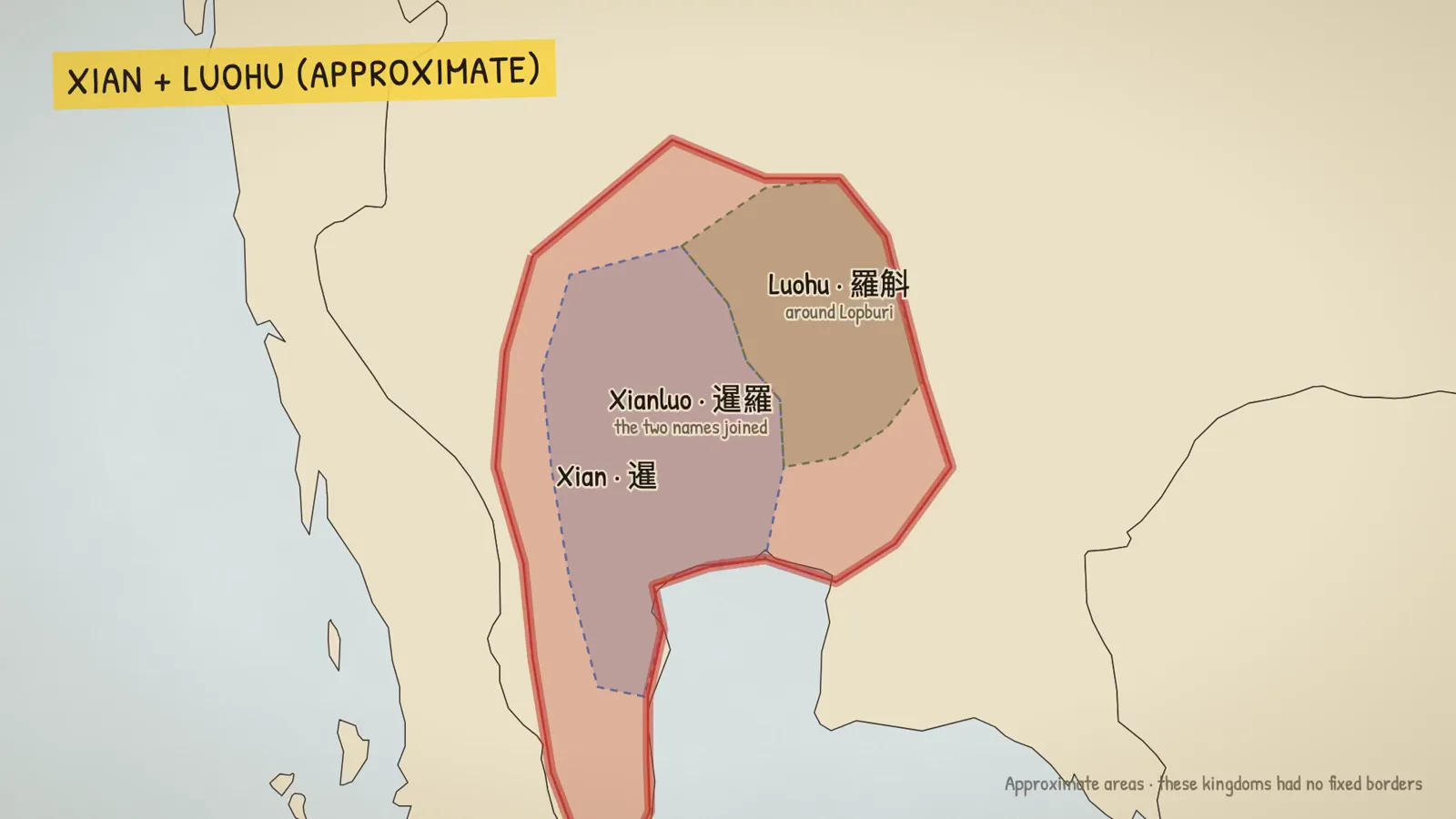
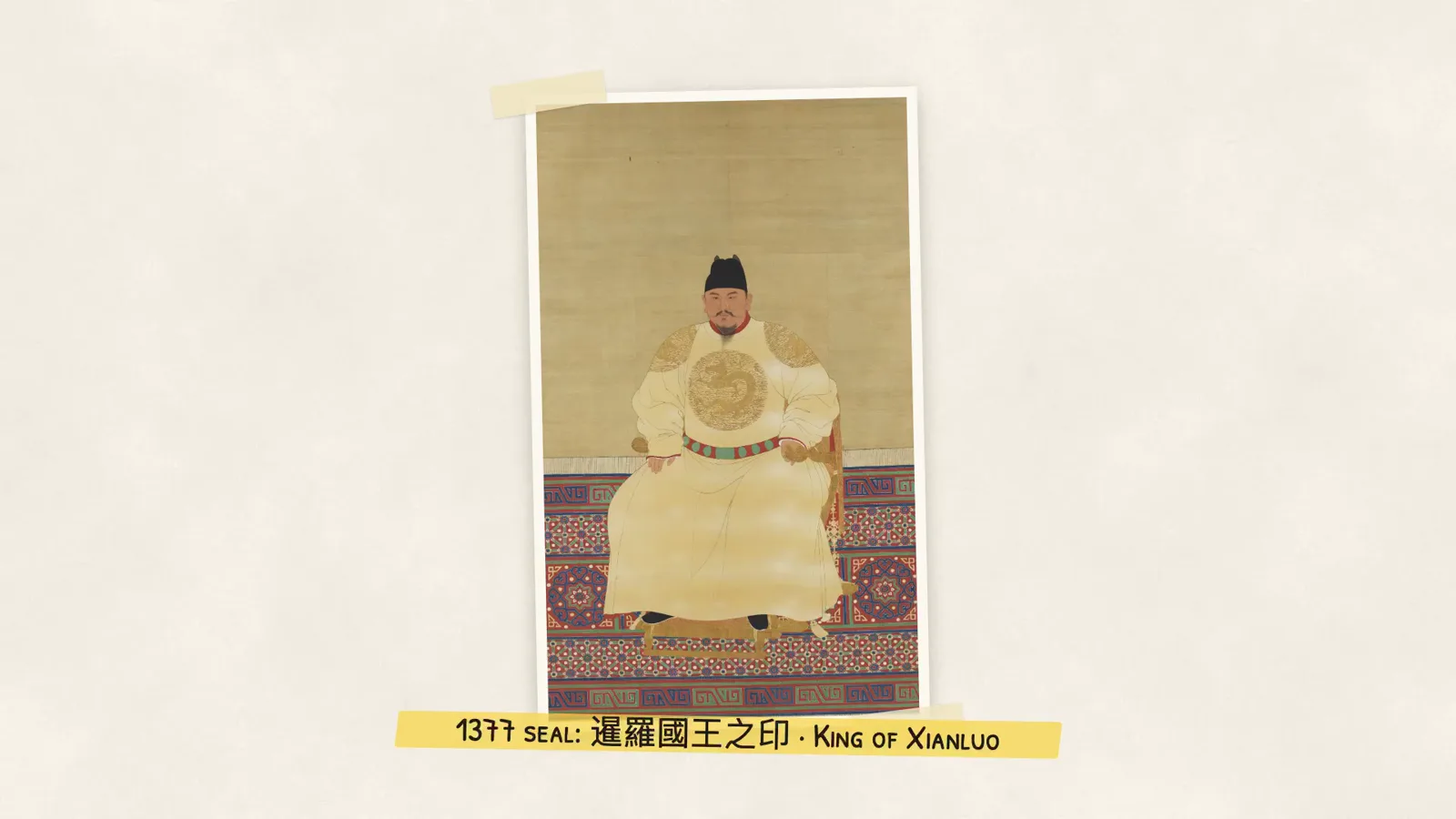
Ten years later, envoys from Xian did reach China. Later, Xian merged with its neighbour Luohu, the kingdom around the city of Lopburi, and the Chinese stitched the two names together: Xianluo (暹羅). In 1377, the Ming emperor sent its king a seal naming him King of Xianluo. From then on, according to the official history of the Ming dynasty, that was the country's name.
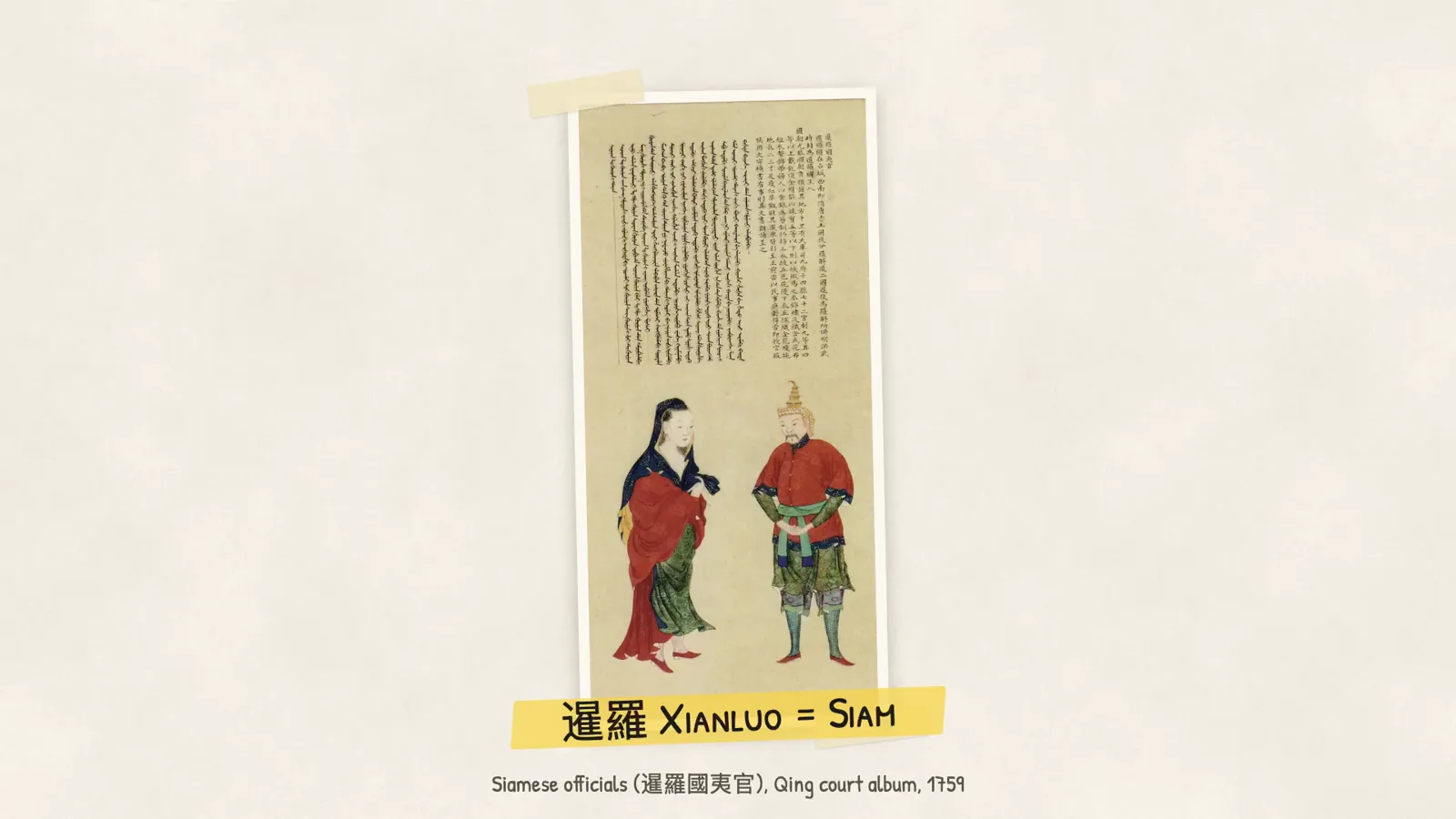
So Xianluo is simply Siam, in Chinese. And China kept using that name for more than five centuries, until the country became Thailand.
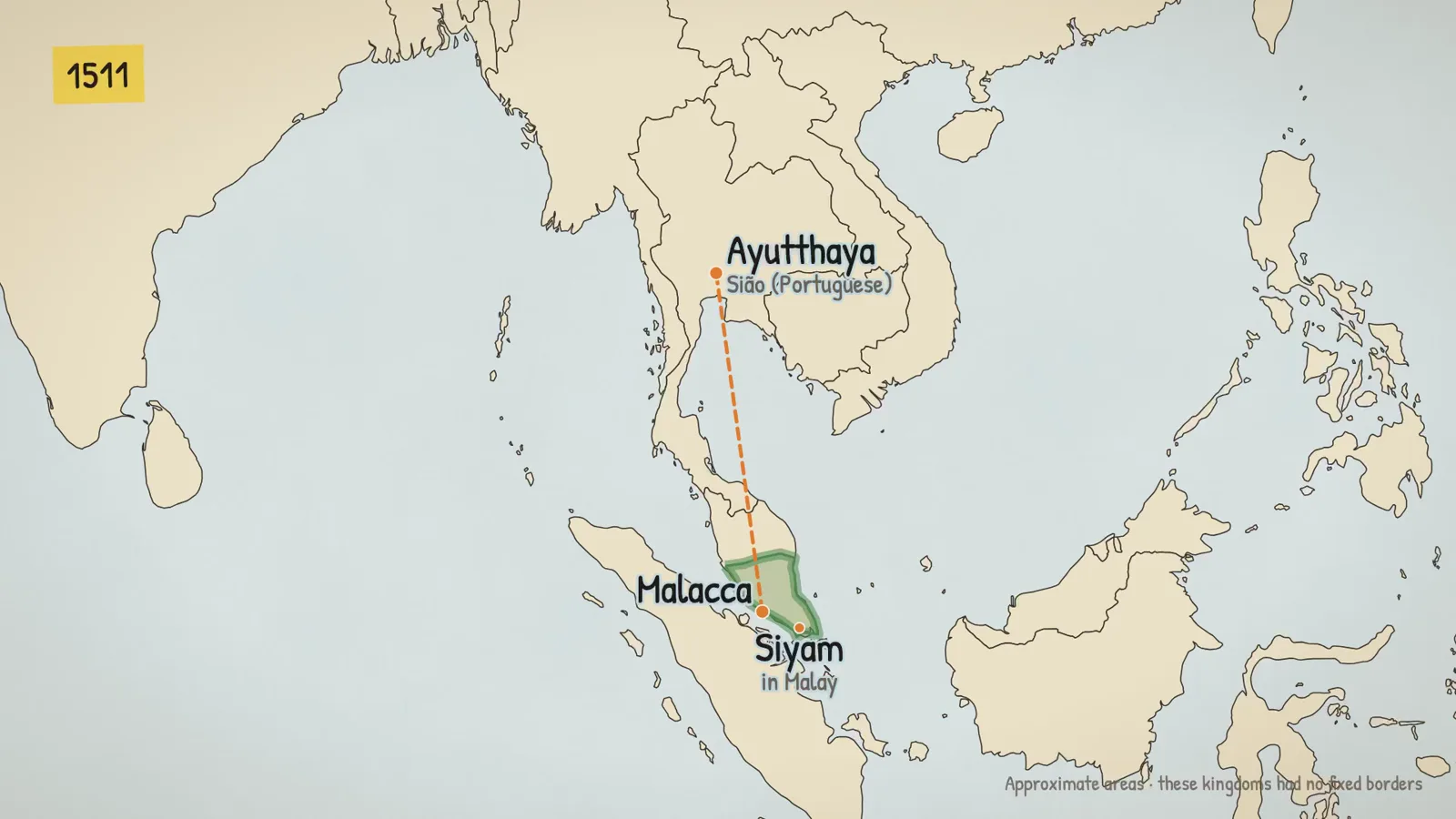
Further south, in the busy ports of the Malay world, traders said Siyam. And that's where Europe comes in. In 1511, the Portuguese captured Malacca, the greatest of those ports, and that same year they sent their first envoy north to Ayutthaya. Surrounded by Malay speakers, they most likely learned the kingdom's name from them, and wrote it the Portuguese way: Sião.
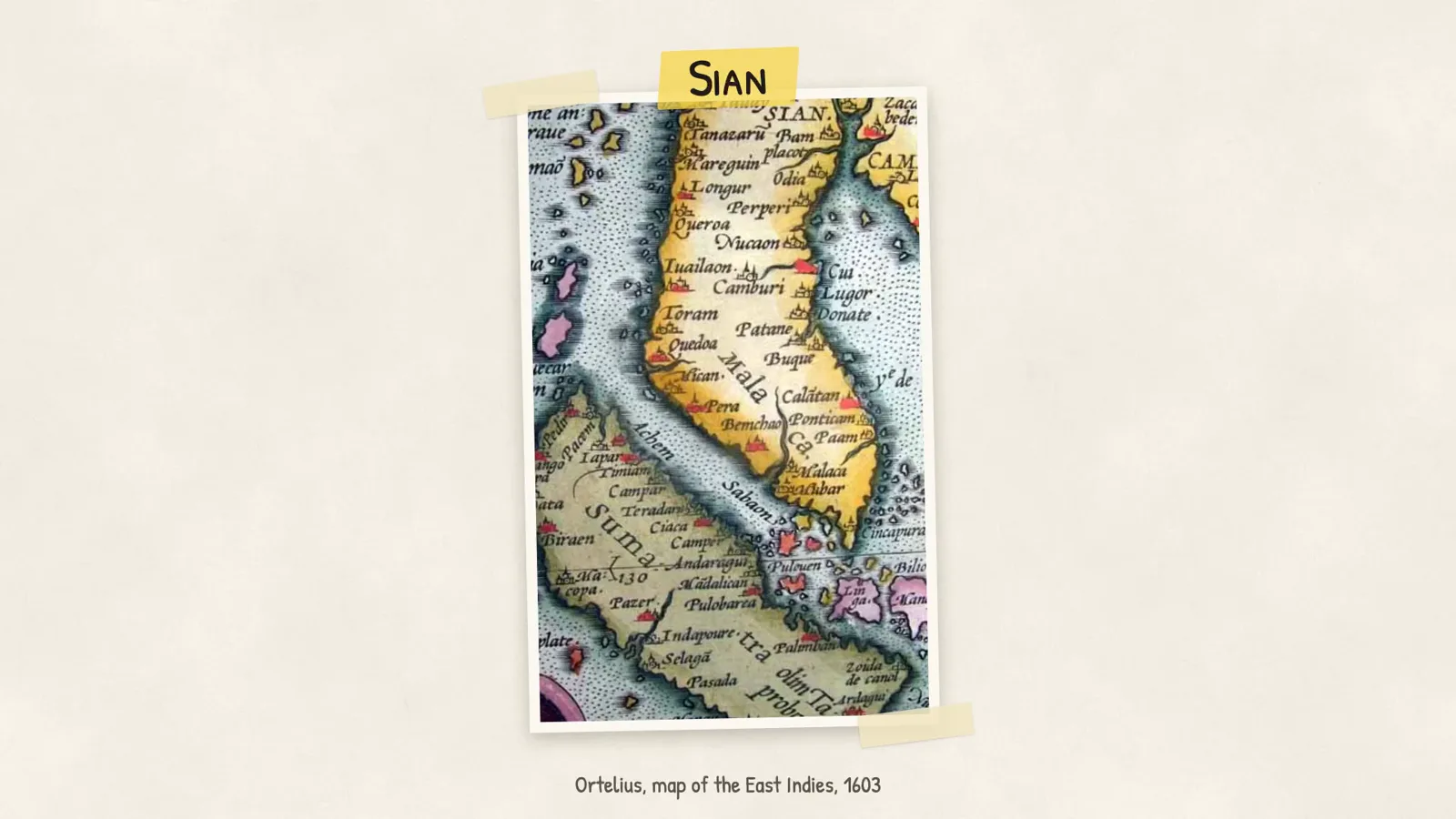
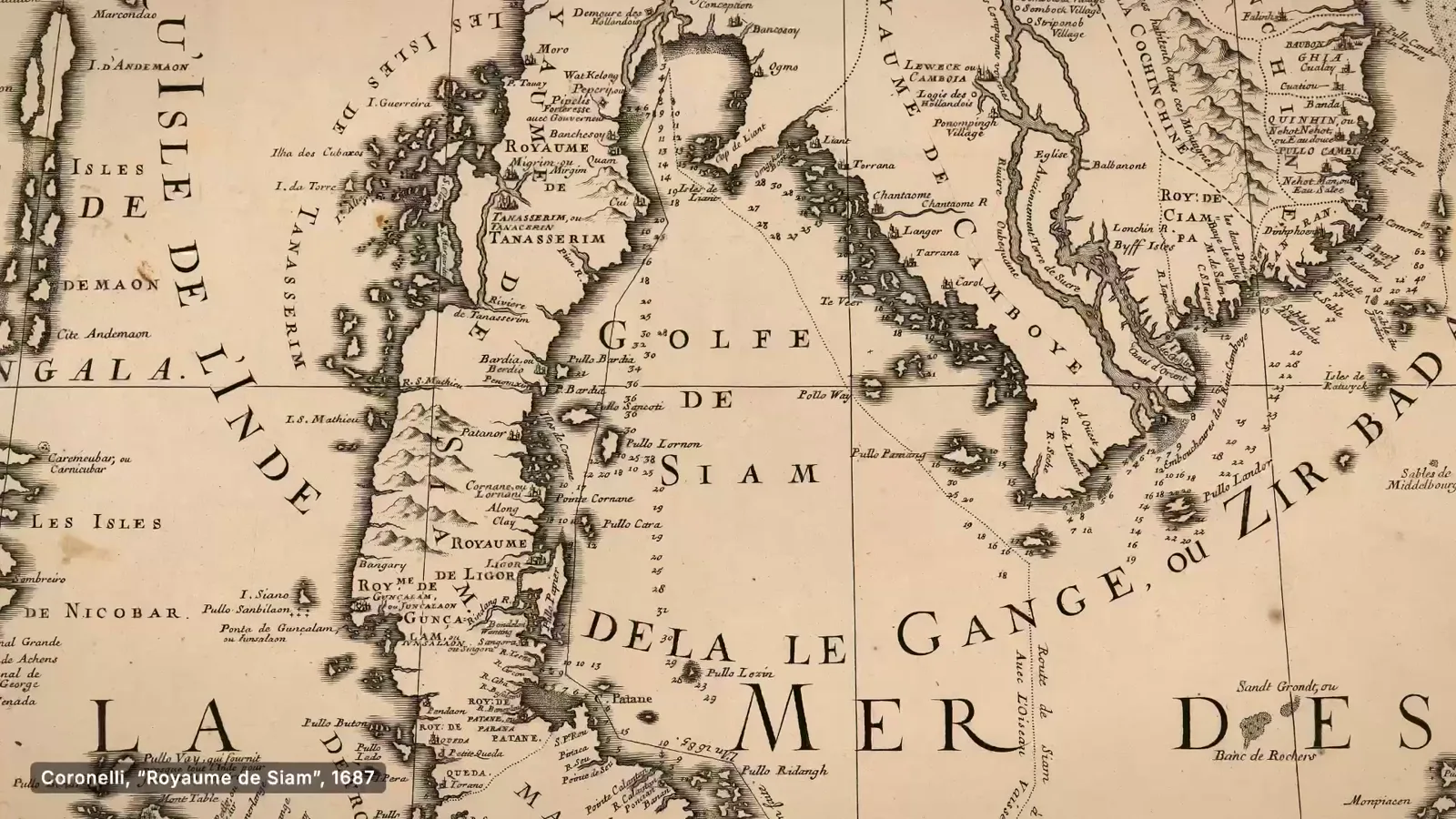
From there, it slipped onto Europe's maps of Asia: Sião, Sian, Siam. So by the time La Loubère arrived, Europeans had been using a name borrowed from the Thais' neighbours for almost two centuries. No wonder it sounded foreign to the Siamese.
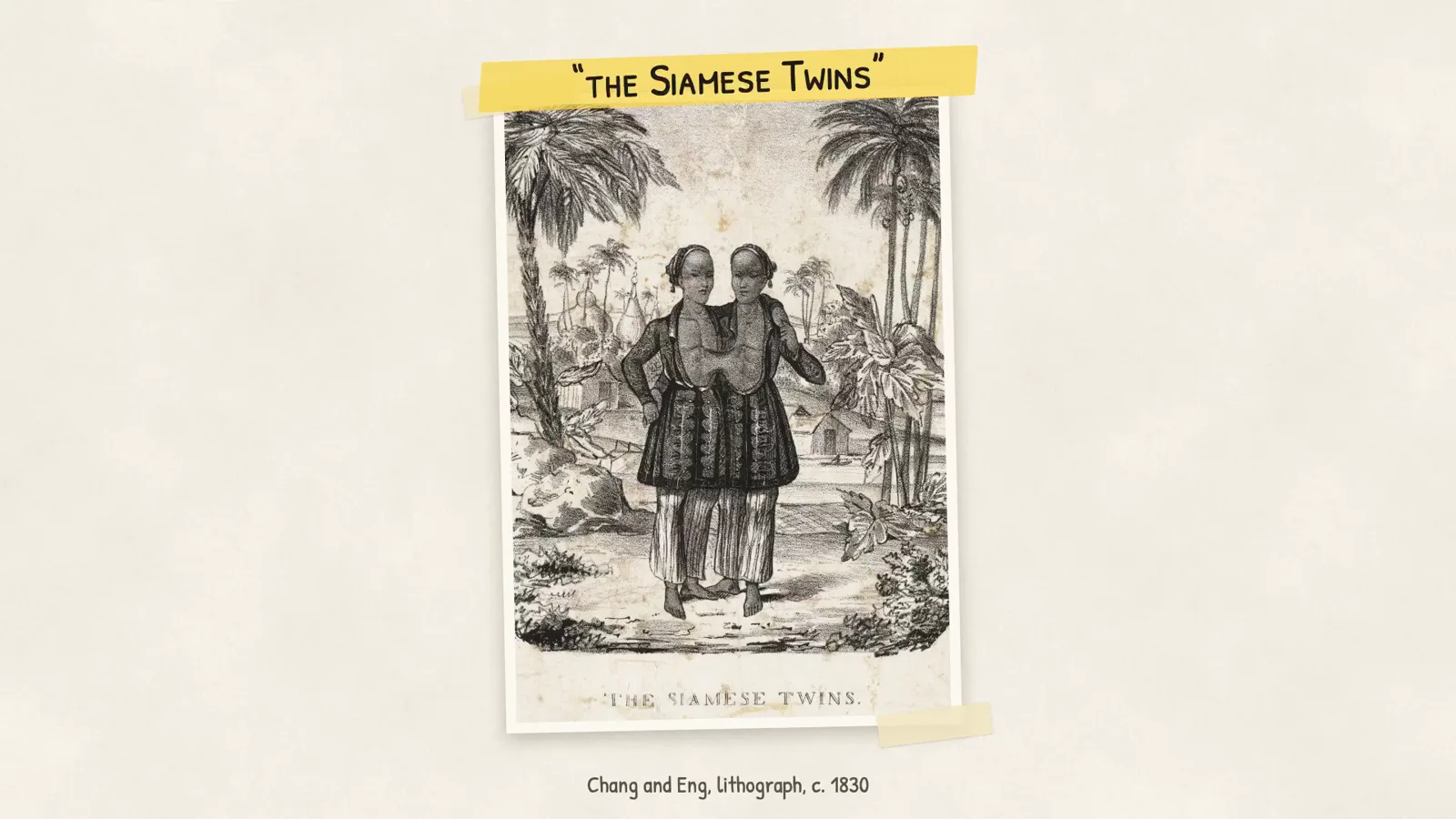
And in the 1800s, that borrowed name became famous. In 1829, two brothers from a fishing town in Siam, Chang and Eng, sailed to Boston. They had been born joined at the chest. Within months, the American papers had a name for them: the Siamese Twins.
Siam becomes official ▶ 8:39
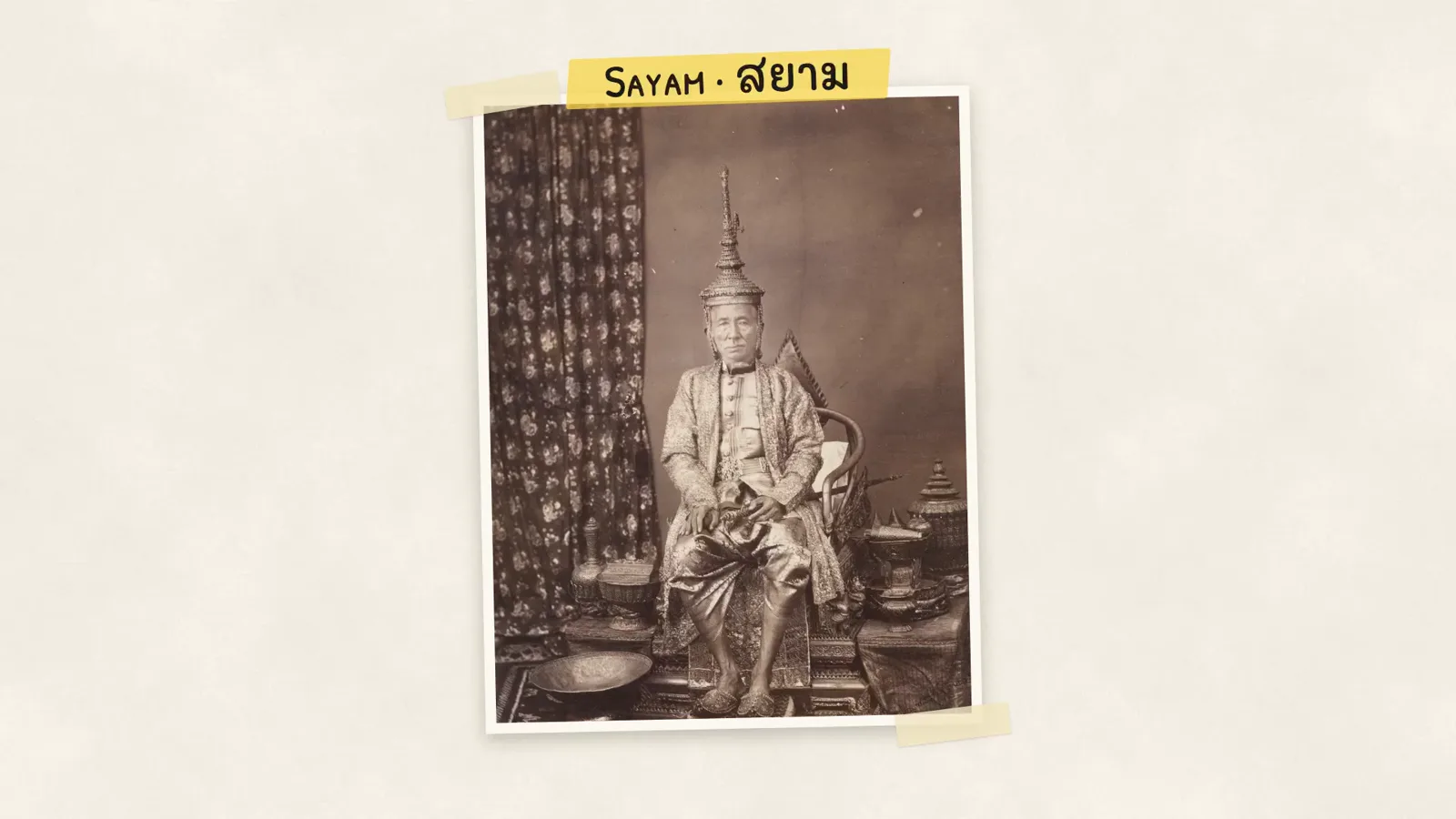
Then the story turns around. The name foreigners had used for centuries was taken up by the kings of Siam themselves. Sayam (สยาม) already existed in Thai, as a learned word in old poems and Buddhist chronicles. But it was under King Mongkut, who ruled from 1851 to 1868, that it became an official name for the state.
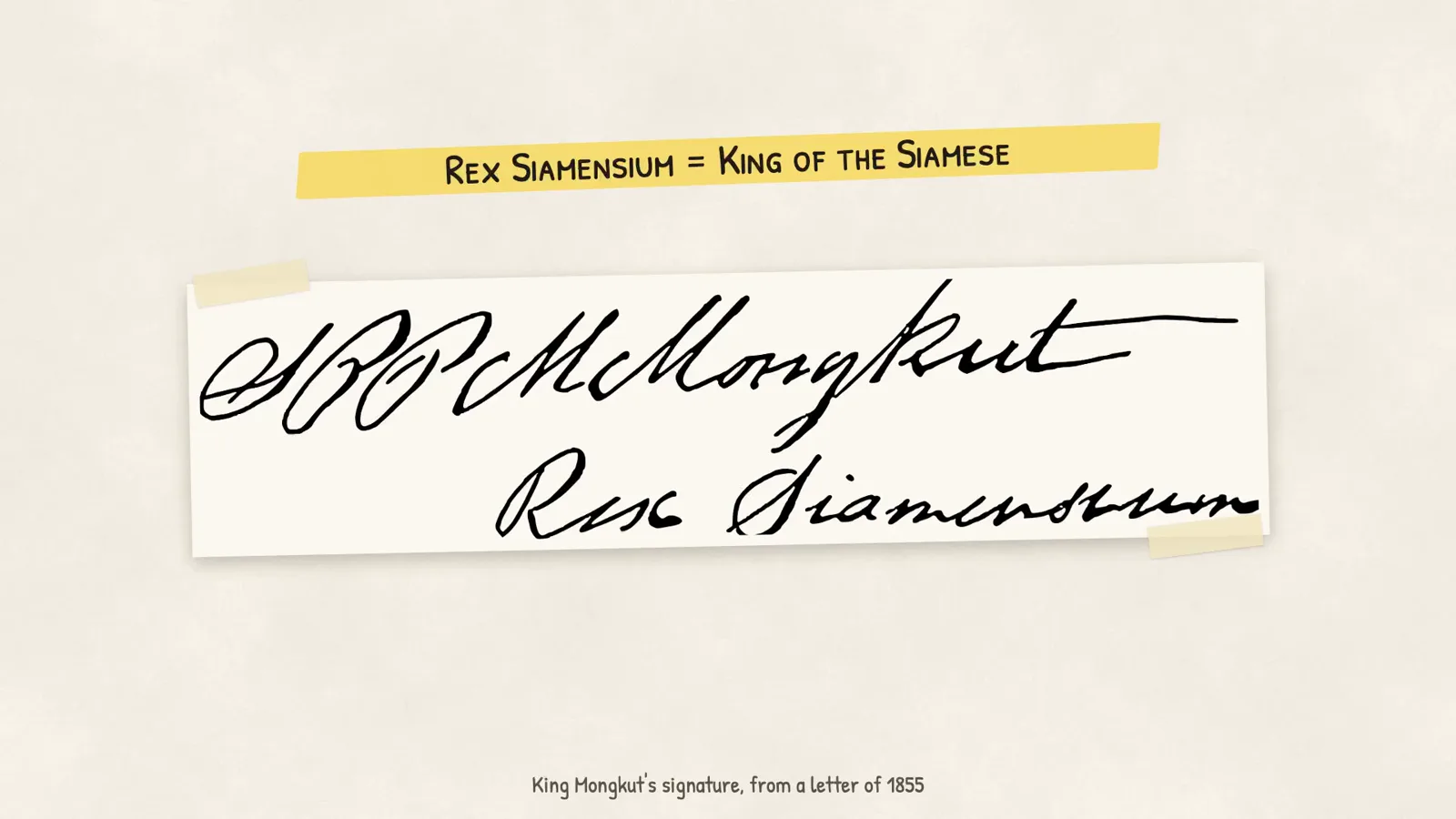
It made sense. Mongkut was opening his kingdom to Western trade, signing treaties with Britain, and writing to Western diplomats in English. Siam was the name they already knew. And that's how he signed his English letters, in Latin: Rex Siamensium. King of the Siamese.
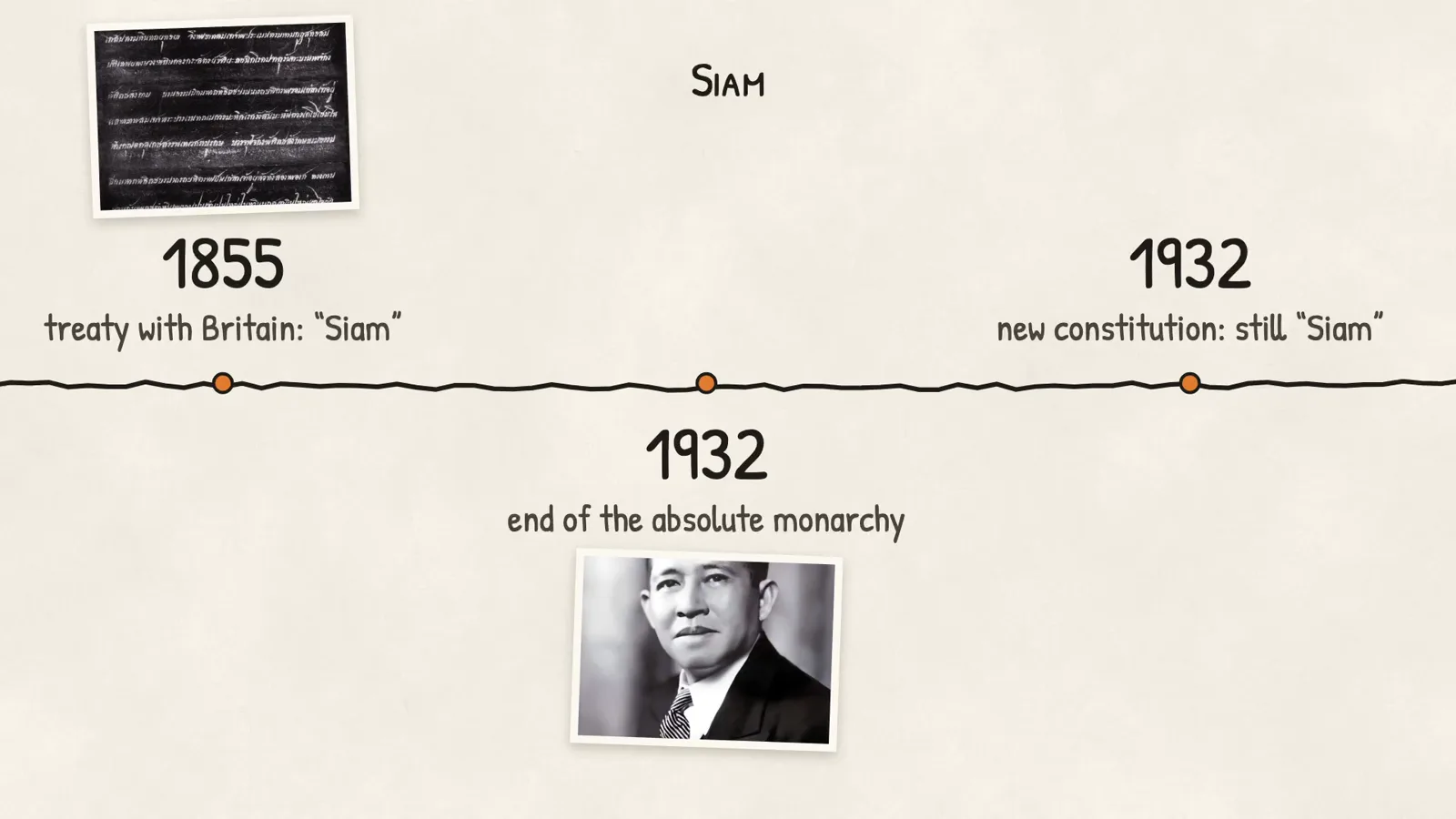
And the name stuck. It was still the country's official name in 1932. That year, a group of army officers and civil servants ended the absolute monarchy and wrote a new constitution. That constitution said Siam too.
How Siam became Thailand ▶ 9:37
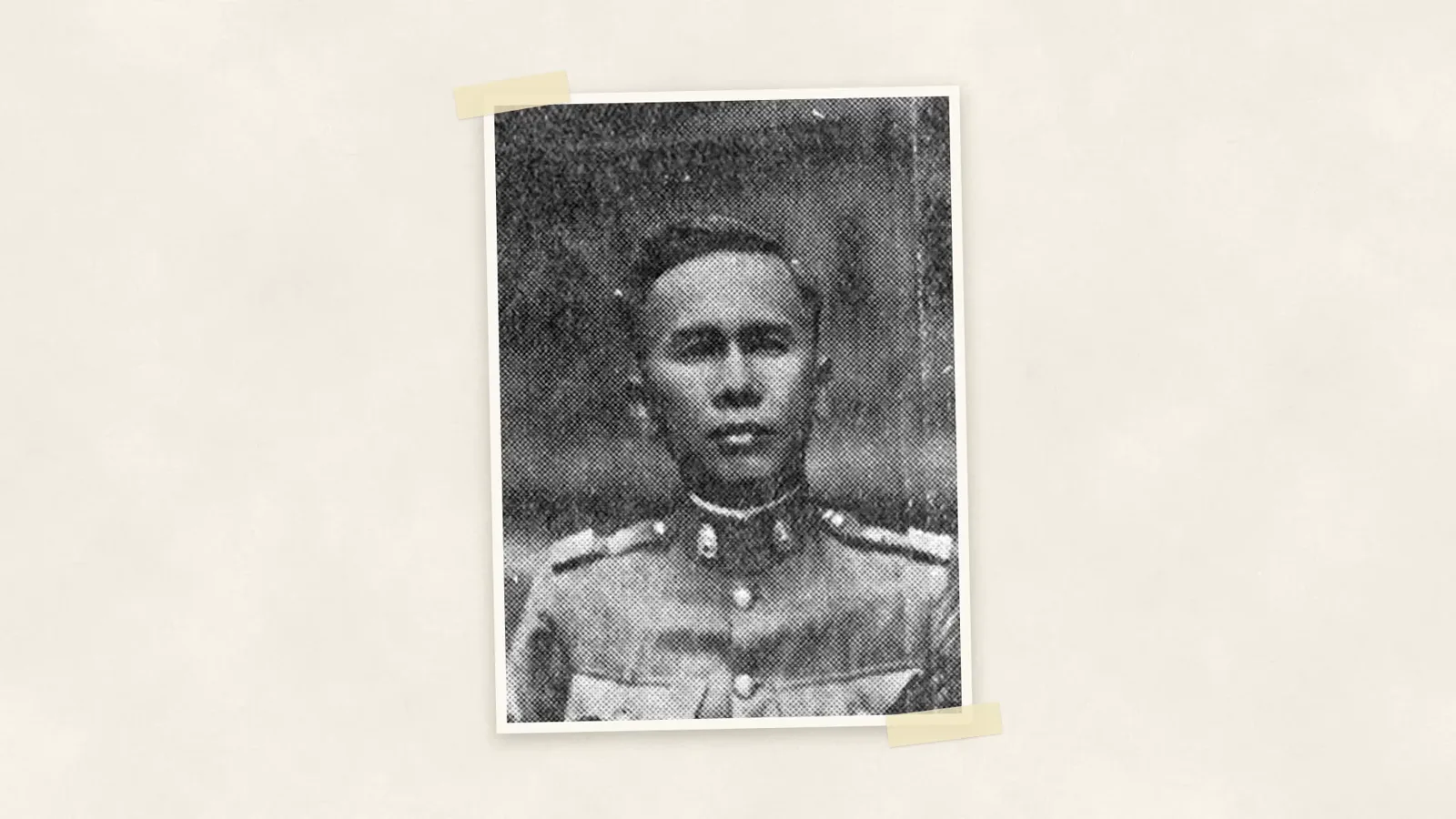
One of those officers was named Plaek Phibunsongkhram. History remembers him as Phibun. Six years later, in December 1938, he became prime minister. He wanted a modern, united, proud nation. And he started with its name.
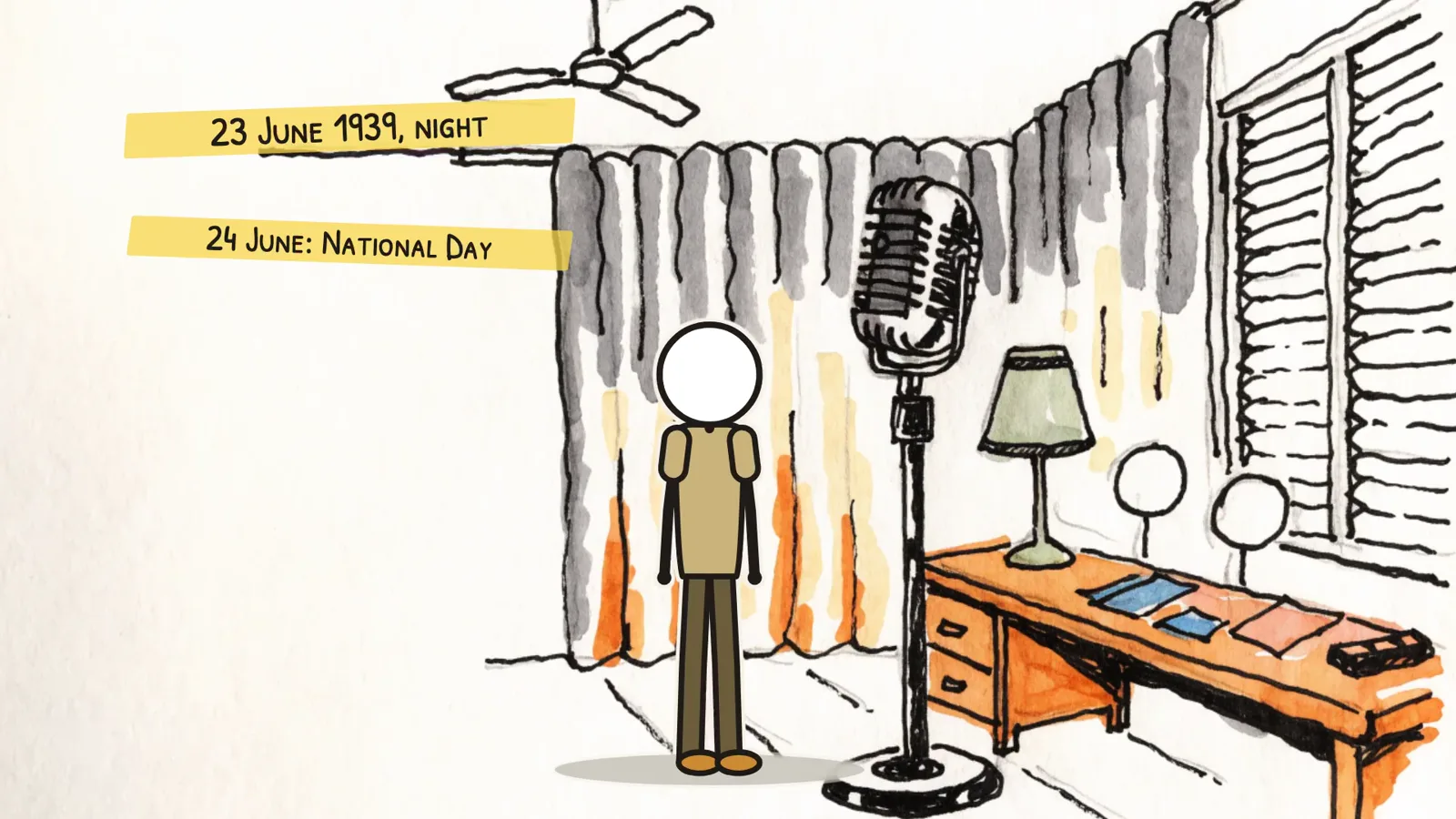
On the night of 23 June 1939, Phibun spoke on national radio for fifty minutes. The next day was no ordinary day. It was National Day, the anniversary of the revolution of 1932.
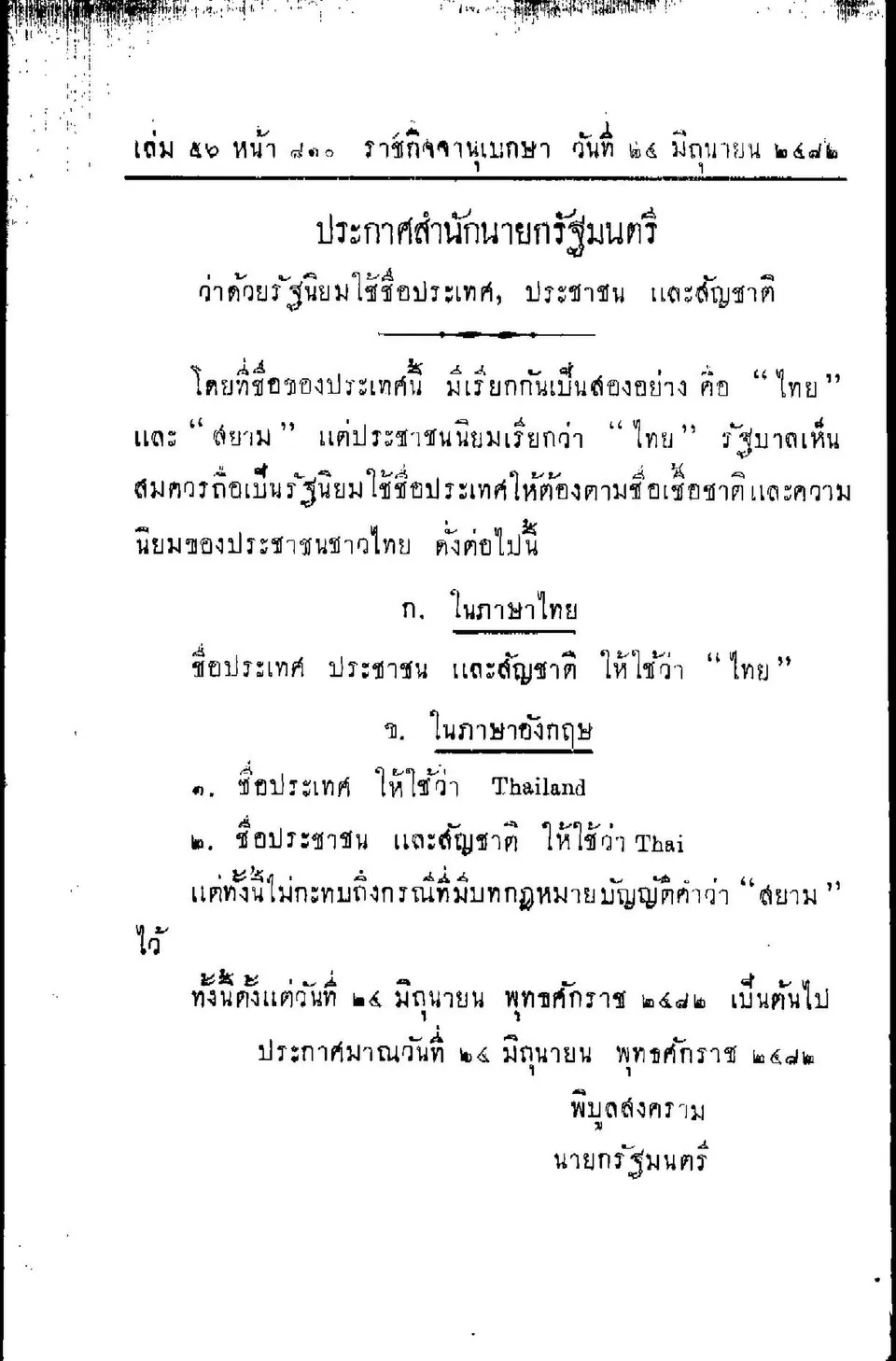
And on that day, the government published a decree that fits on a single page. This country, it said, is called by two names, Thai and Siam, but the people prefer Thai. So from now on, in Thai, the country, its people and their nationality would all be Thai. And in English, the country would be called Thailand.
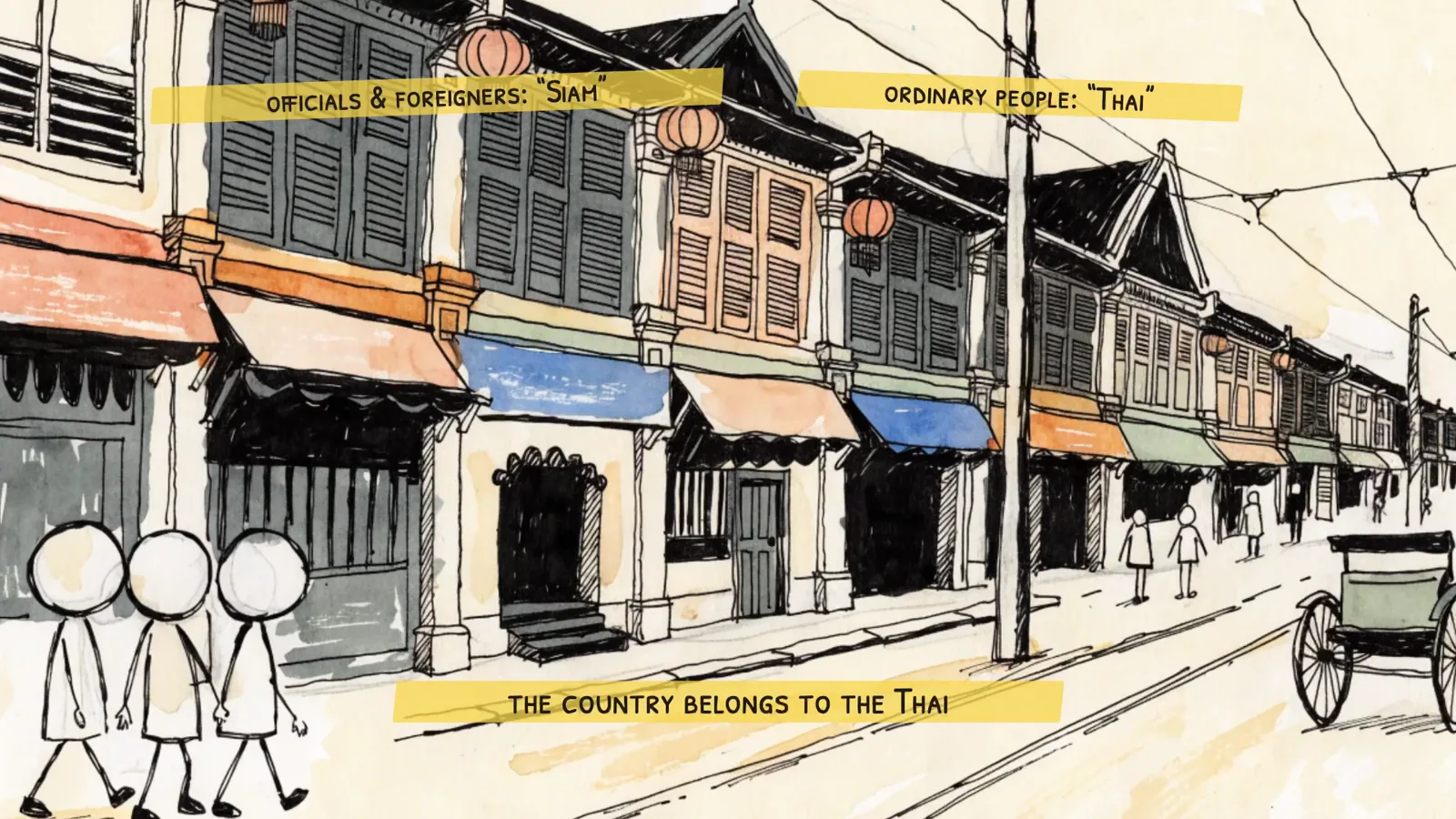
The official reason sounded simple. Siam, the government said, was a name for officials and foreigners, while ordinary people said Thai. But there was more to it. Phibun told parliament that the new name would make clear that the country belonged to the Thai. The historian Benjamin Batson believed that message was aimed above all at the country's large Chinese minority. That same year, many Chinese schools and newspapers were shut down.
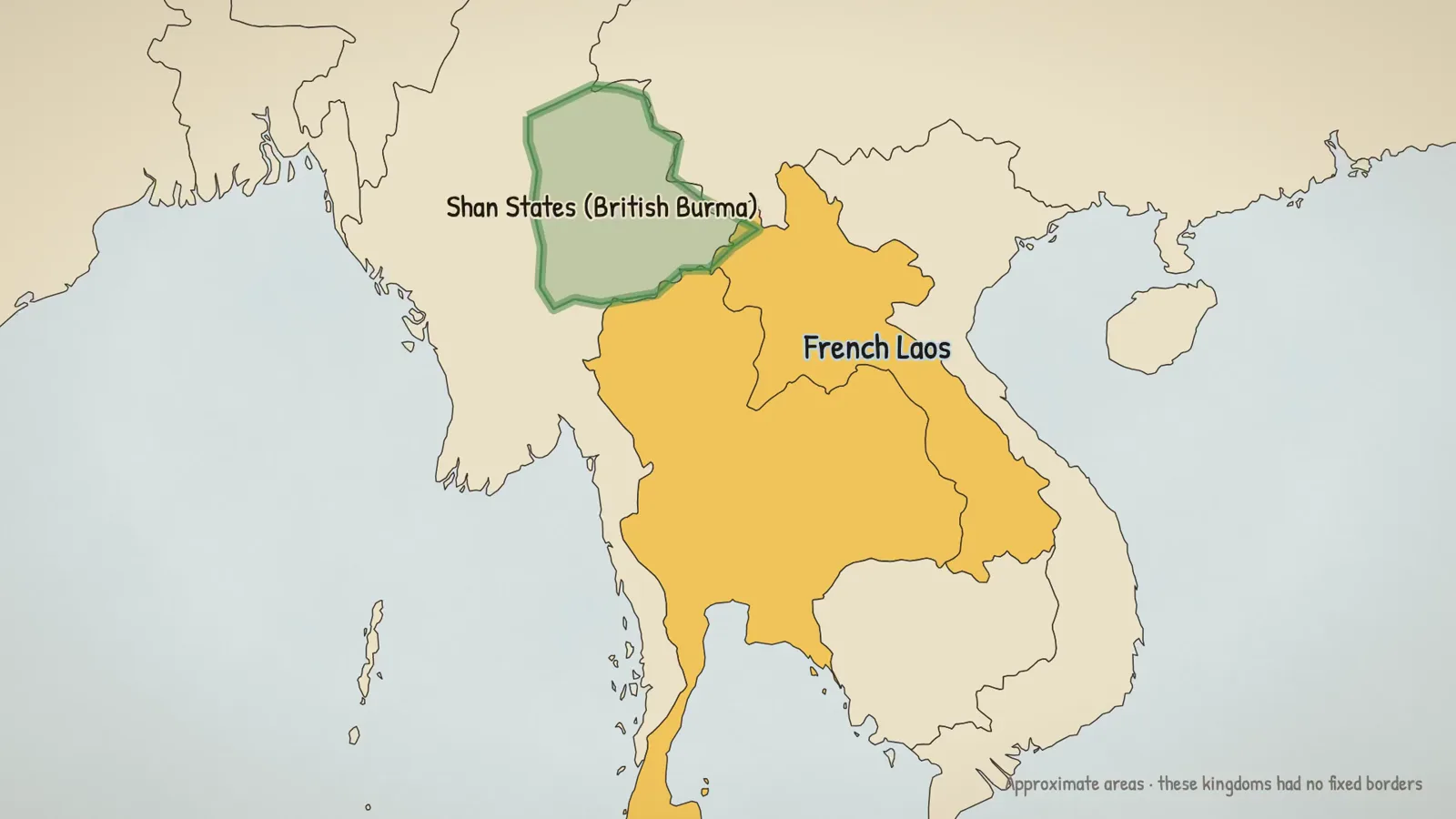
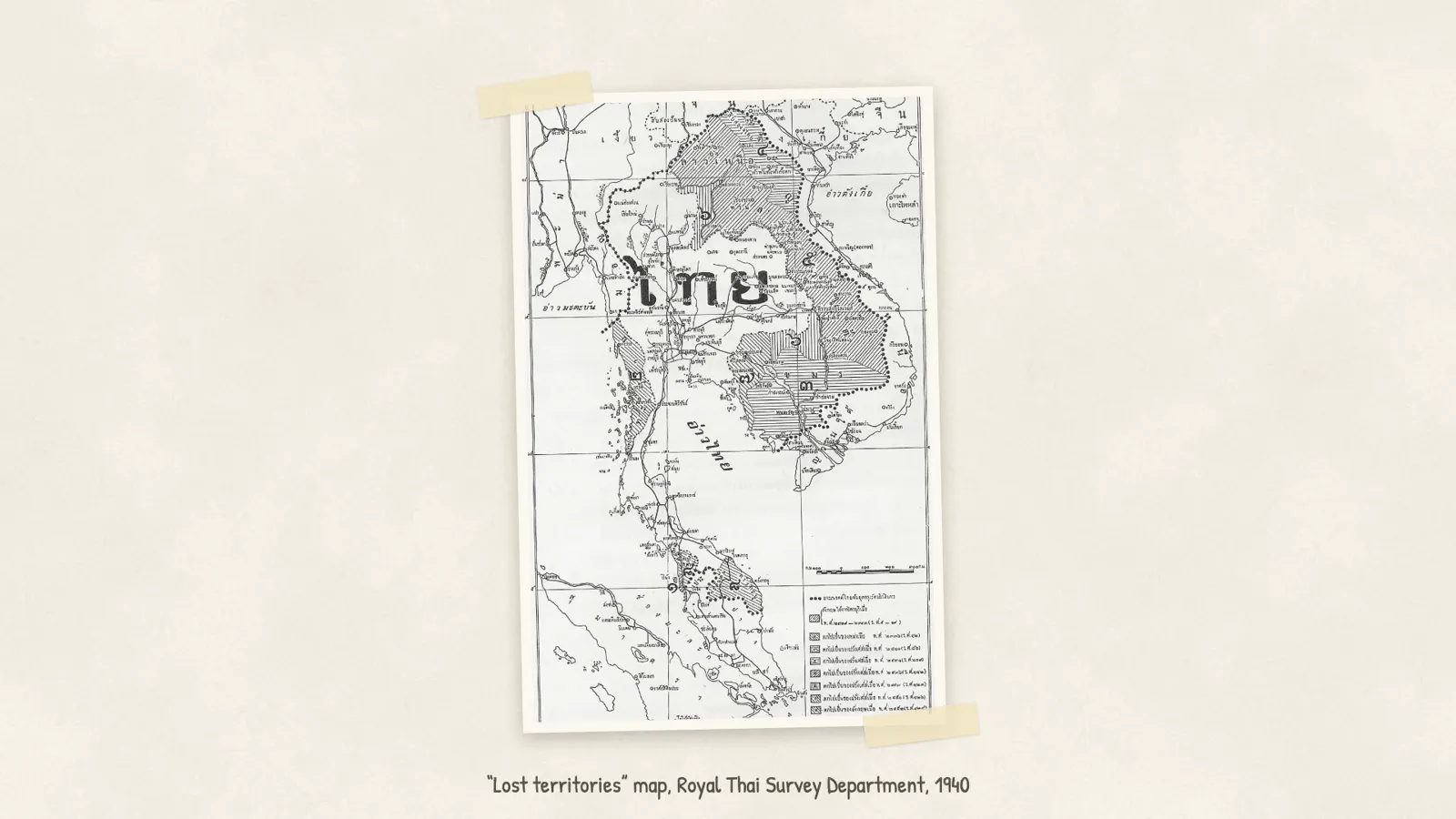
Others heard something bigger in the name. Tai-speaking peoples also lived beyond the border, in French Laos, and in the Shan States of Burma. Yes, the same Shan, whose name came from Syam. A year later, Thailand went to war with French Indochina, to take back lands it had lost decades before.
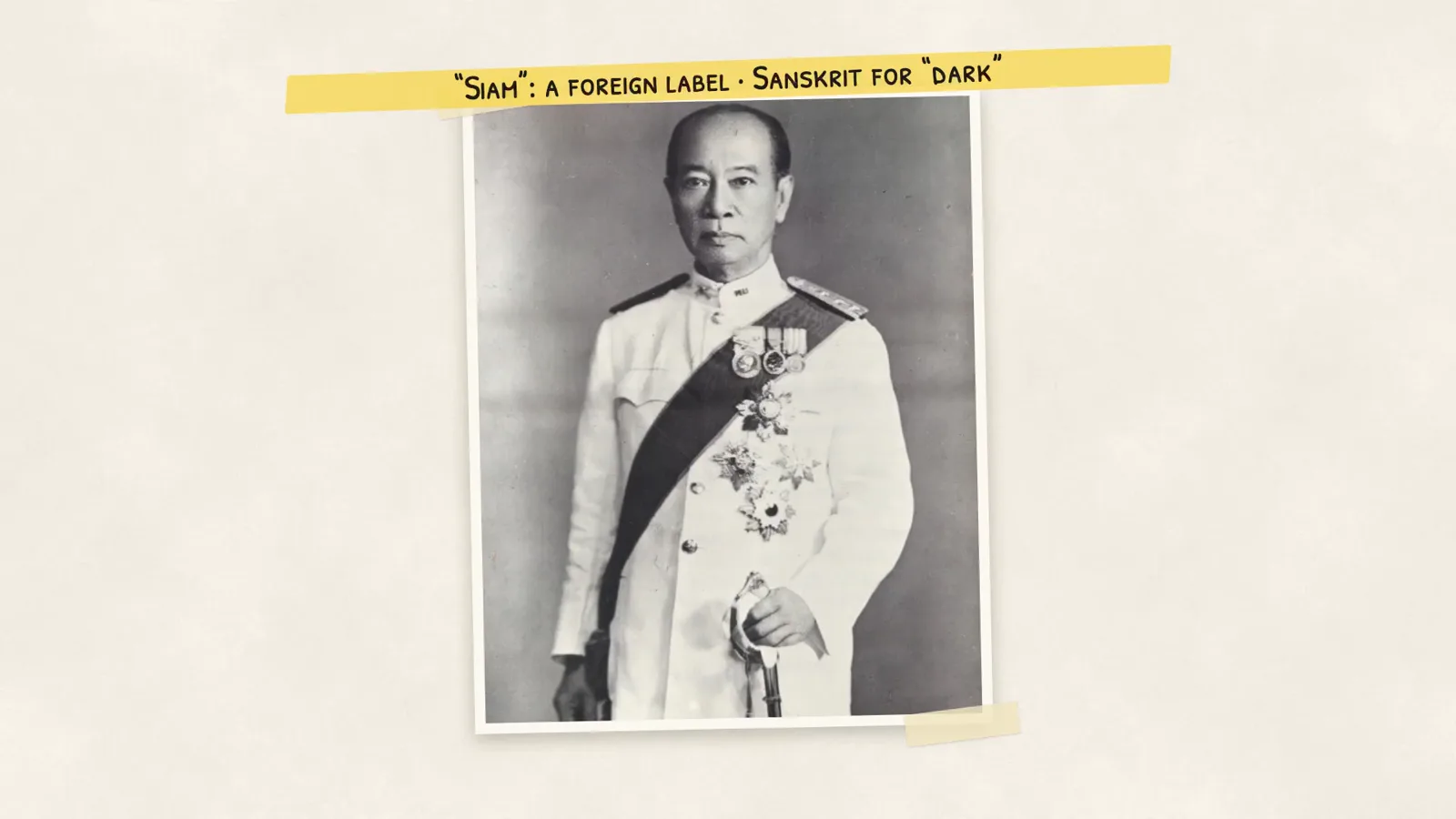
Not everyone in the government agreed. Pridi Banomyong, another leader of the 1932 revolution, was then the minister of finance. Decades later, writing his memoirs in exile, he gave his side of the story. Phibun's chief ideologist, Luang Wichitwathakan, had argued that Siam was a foreign label, and that in Sanskrit it meant dark. That old guess about the brown race had become an argument in a cabinet meeting.
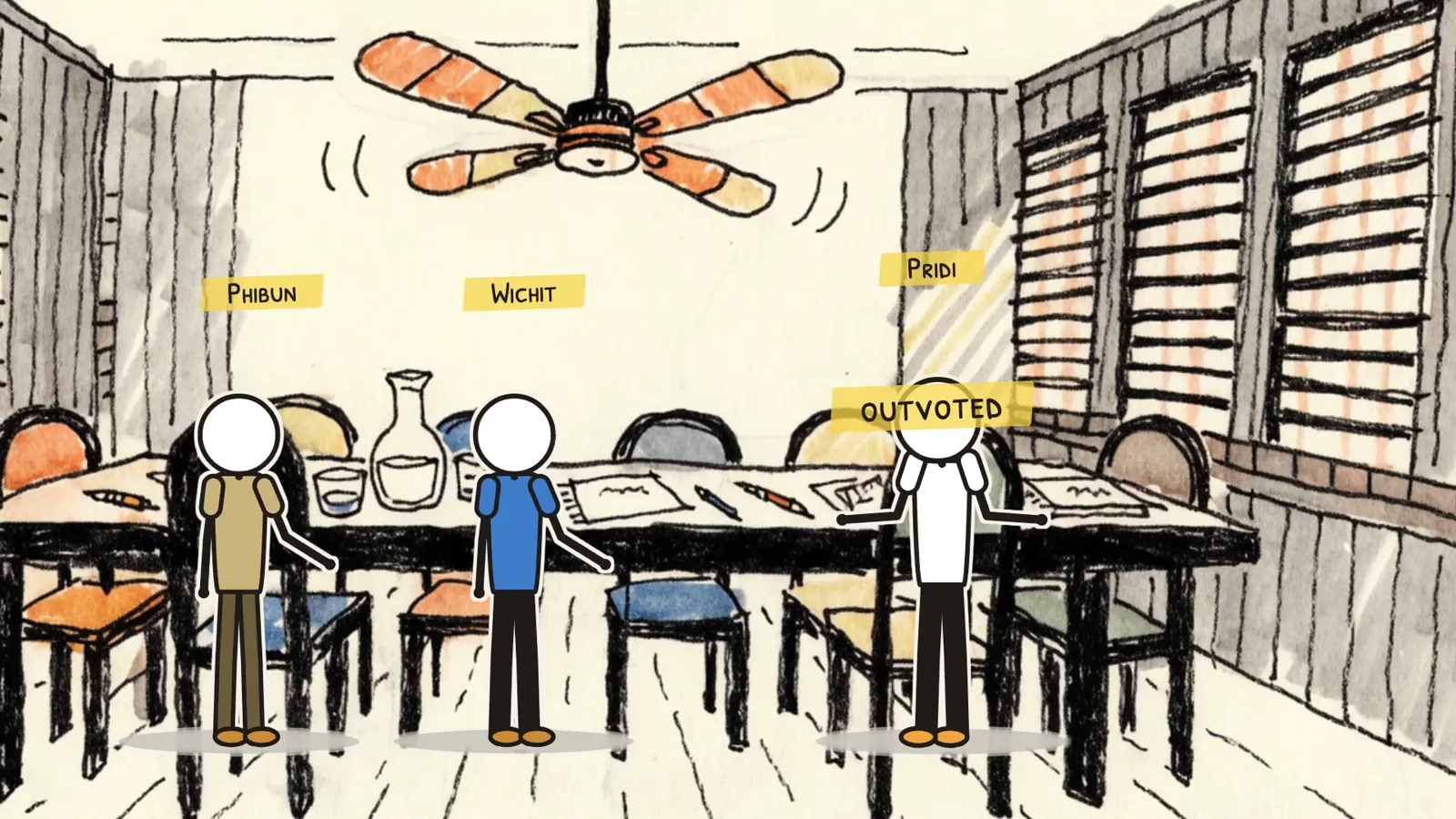
Pridi says he pushed back. Adding land to the end of the name, he warned, would make the country sound like a British colony, like Zululand or Somaliland. He suggested Muang Thai (เมืองไทย) instead. He was outvoted.
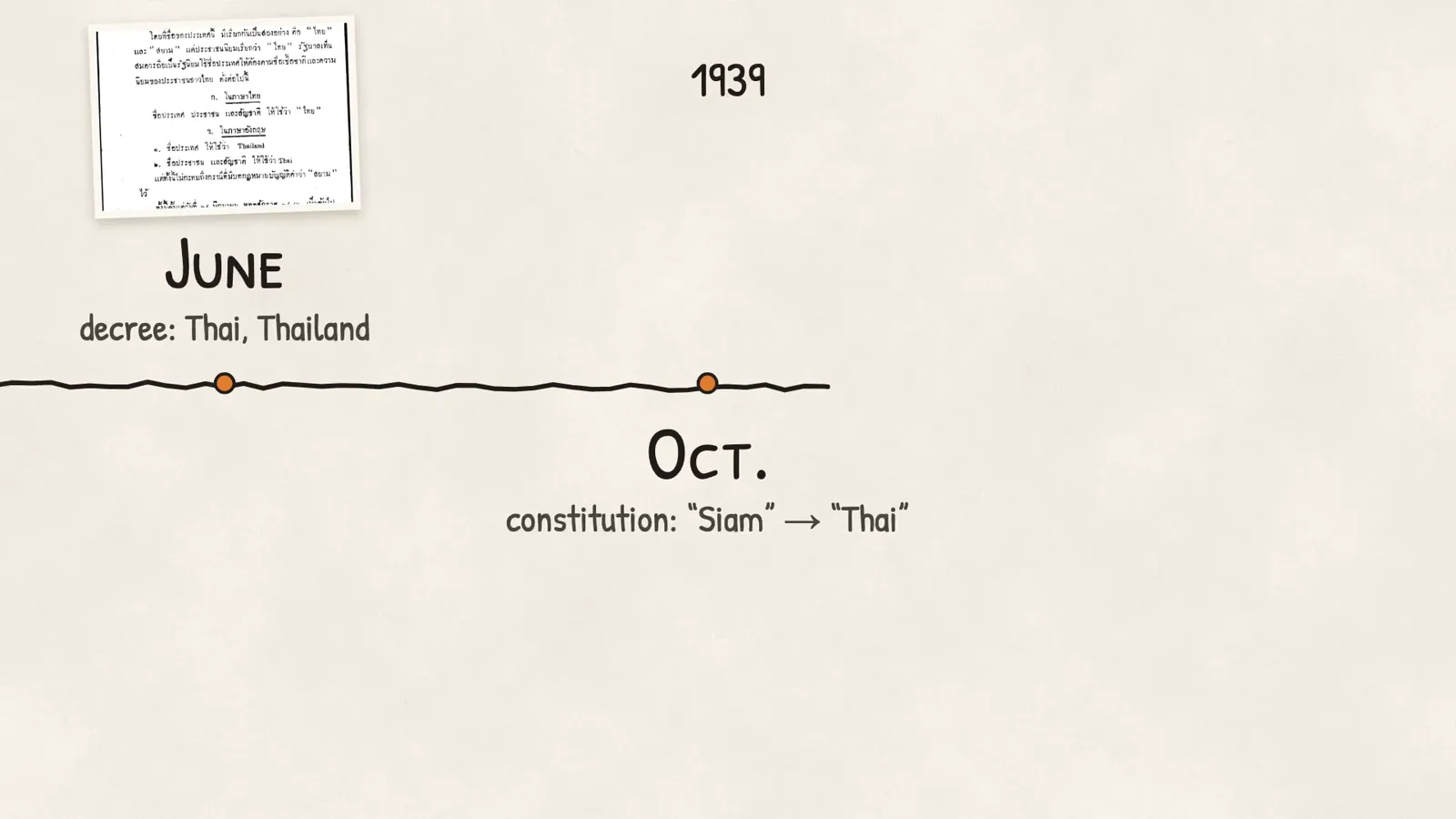
In October, the constitution was amended: wherever the law said Siam, it would now say Thai. And the national anthem, the one that began with the land of Siam, the Golden Land? In December, it was rewritten too. The new words, still sung today, begin with Thailand.
Siam comes back ▶ 12:36
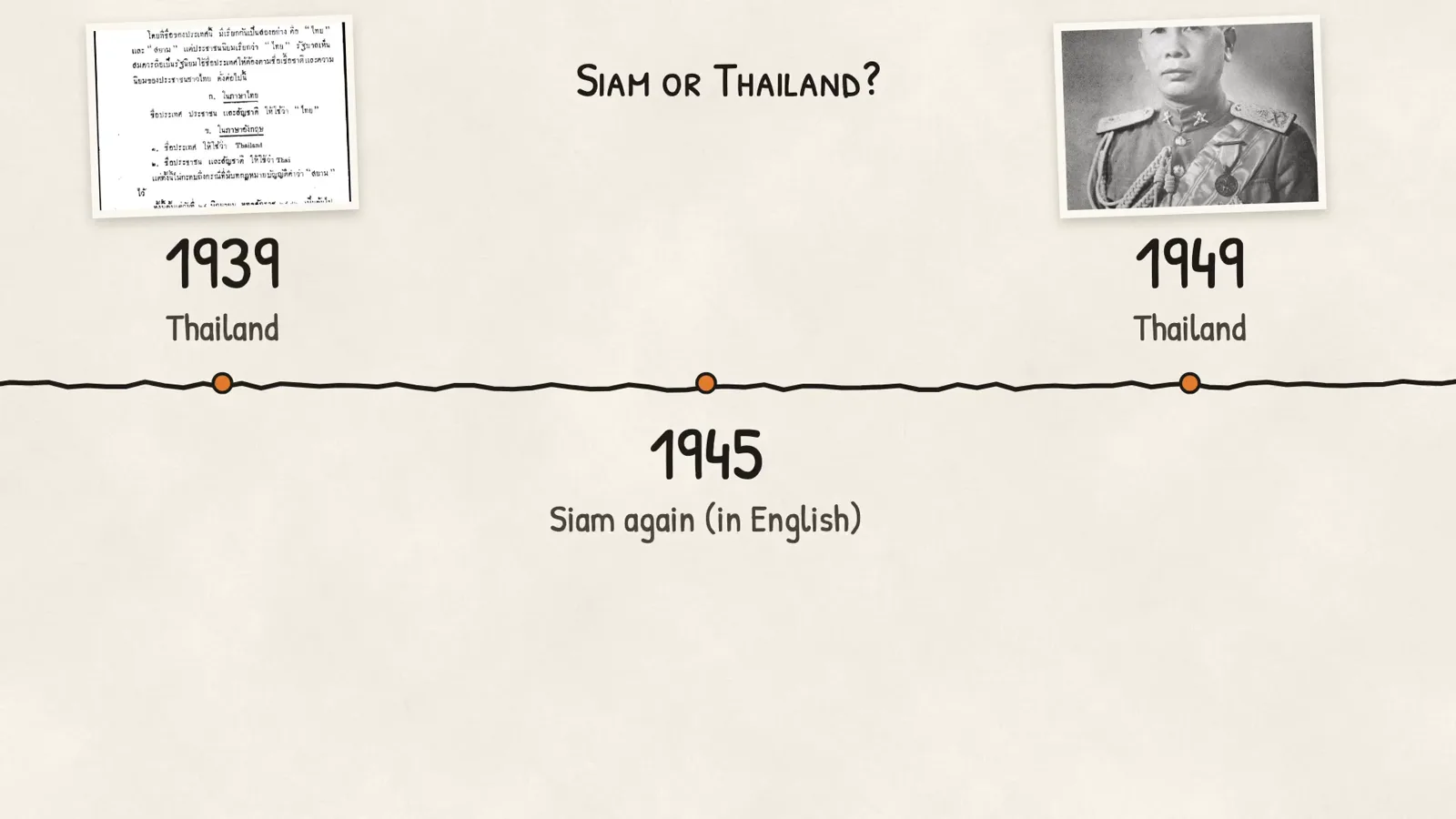
But Siam had one more act. In September 1945, just after the Second World War, Phibun was out of power. The new government brought Siam back, in English at least. It lasted less than four years. On 11 May 1949, Phibun, back in power, made it Thailand again. This time, for good.
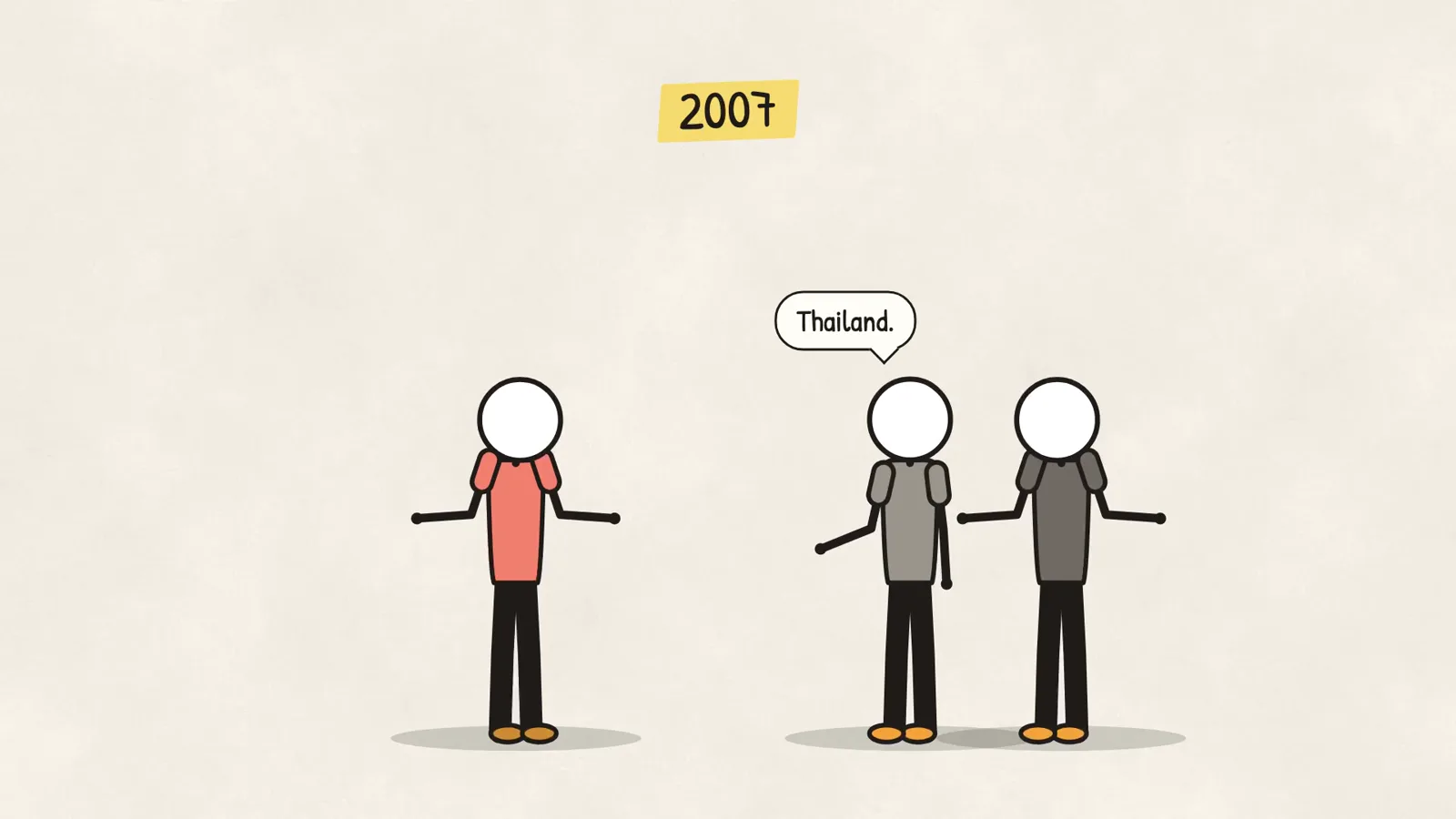
Not everyone has accepted that. In 2007, the historian Charnvit Kasetsiri, of Thammasat University in Bangkok, petitioned to bring Siam back. His point was that the country is home to more than forty ethnic groups, and Thai is the name of just one of them. The drafters of the new constitution kept Thailand.
Does Thai mean free? ▶ 13:20
Which brings us back to La Loubère, and the name he heard in Ayutthaya: "Tai, or Free". It's a lovely idea, and you'll still hear it today. Thailand, the land of the free. But is it true?

Partly. In Thai, the word thai (ไทย) can mean free, as in not a slave. But linguists think that meaning came later. Most likely, Tai began simply as the name of a people.
And if you read La Loubère closely, he seems to have sensed it. Tai meant free, he wrote, "as the word now signifies in their Language". Now.
He couldn't resist a compliment for his French readers, either. The Siamese, he wrote, flattered themselves with bearing the same name as the Franks, the ancestors of the French. In French, too, franc had come to mean free. Those are the same Franks who gave Thai the word farang.
Siam today ▶ 14:18
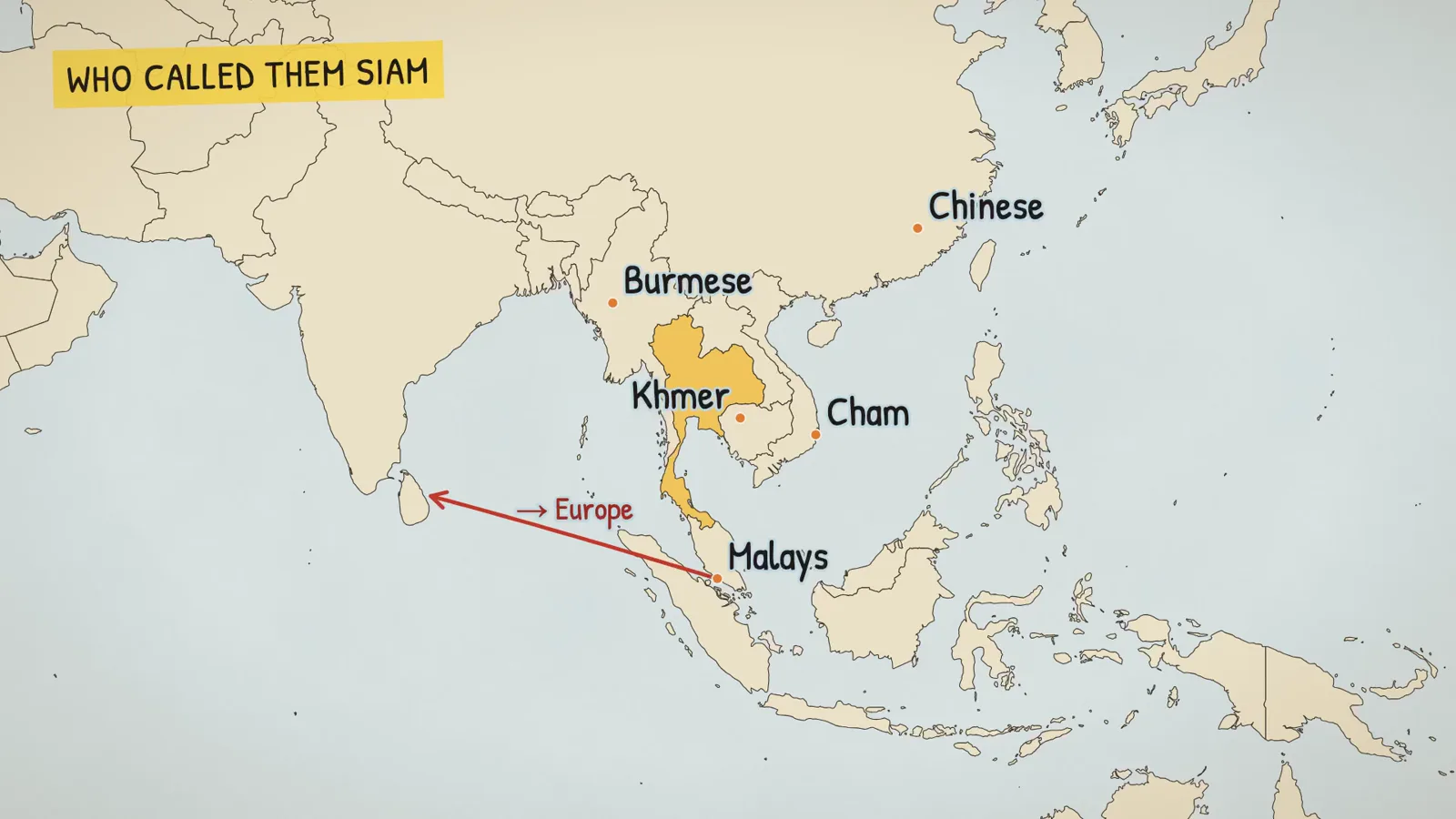
So why was Thailand called Siam? Because for more than a thousand years, that's what its neighbours called it: the Khmer, the Burmese, the Cham, the Chinese and the Malays. Europe borrowed the name from them. Thai kings made it official. And in 1939, a nationalist government swapped it for the name the people had been using all along.



_in_1693_by_Loubere.jpg)
_by_Jodocus_Hondius.jpg)


.svg)
_001.jpg)

.jpg)


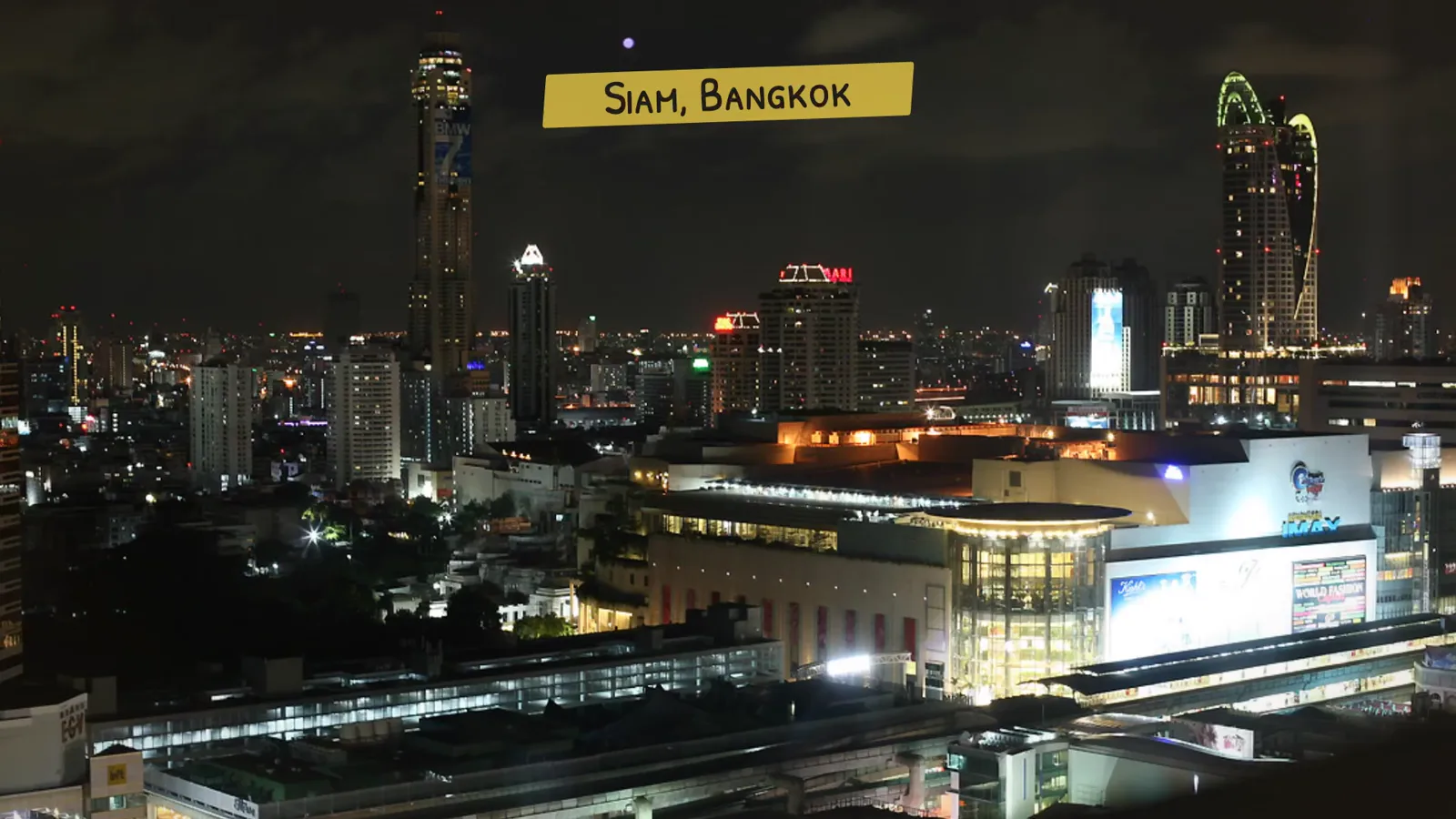
But the name never quite left. In the middle of Bangkok, one of the busiest shopping districts is called Siam. And Siam Commercial Bank is still Siam in English, even though in Thai, since 1939, it has been the Thai Commercial Bank.
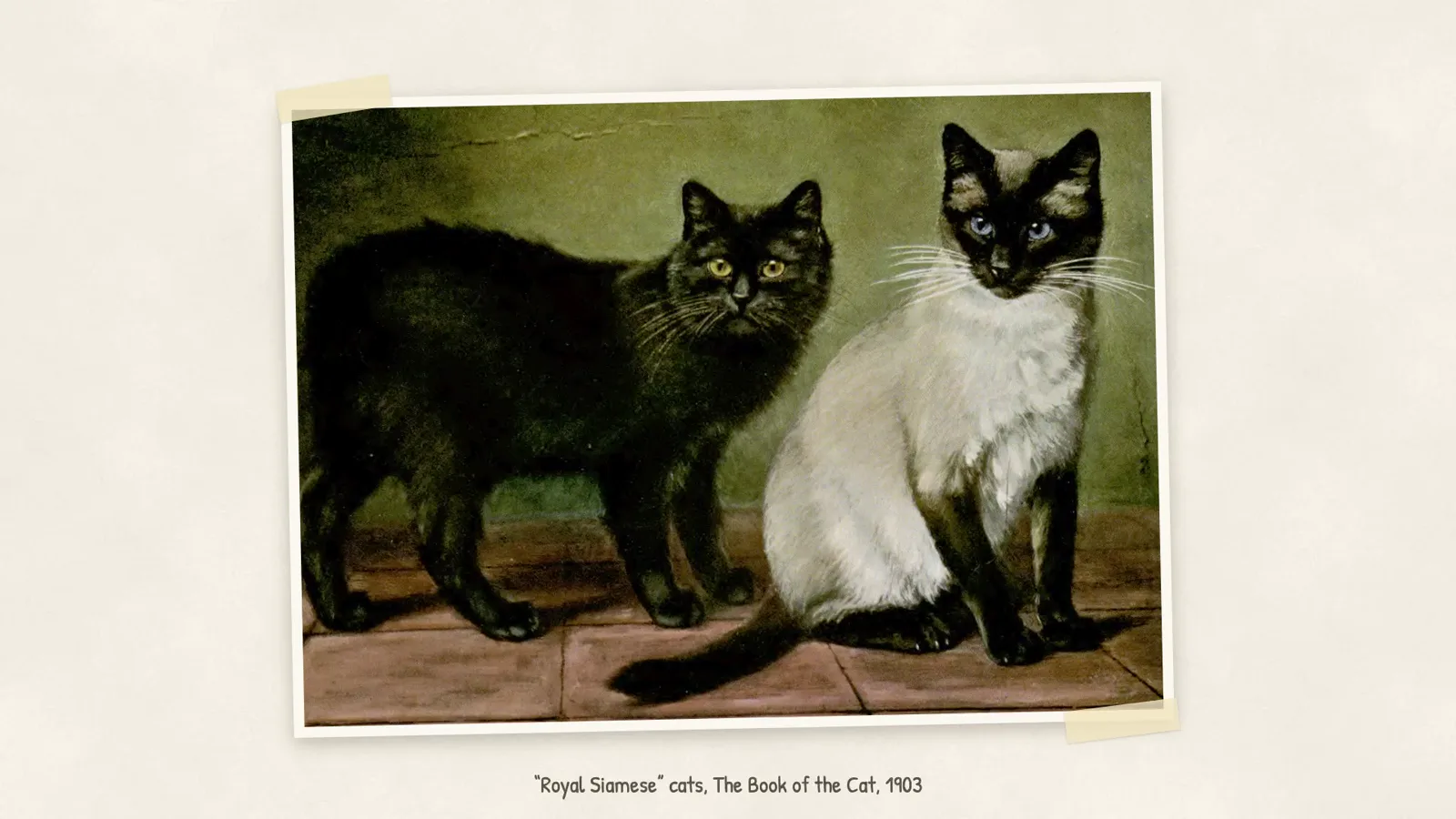

And the rest of the world never let it go. Every time someone calls a cat Siamese, they're using a name the Khmer carved into Angkor Wat almost nine hundred years ago. A name that, as a French diplomat found out in 1687, was never really the Siamese people's own.