
· 6 min read · ▶ 8 min video
Why Are Foreigners Called “Farang” in Thailand?
Why are foreigners called "farang" in Thailand? And why is the guava called farang too? Here is the meaning and the origin of the Thai word ฝรั่ง, and which came first: the fruit or the foreigner.
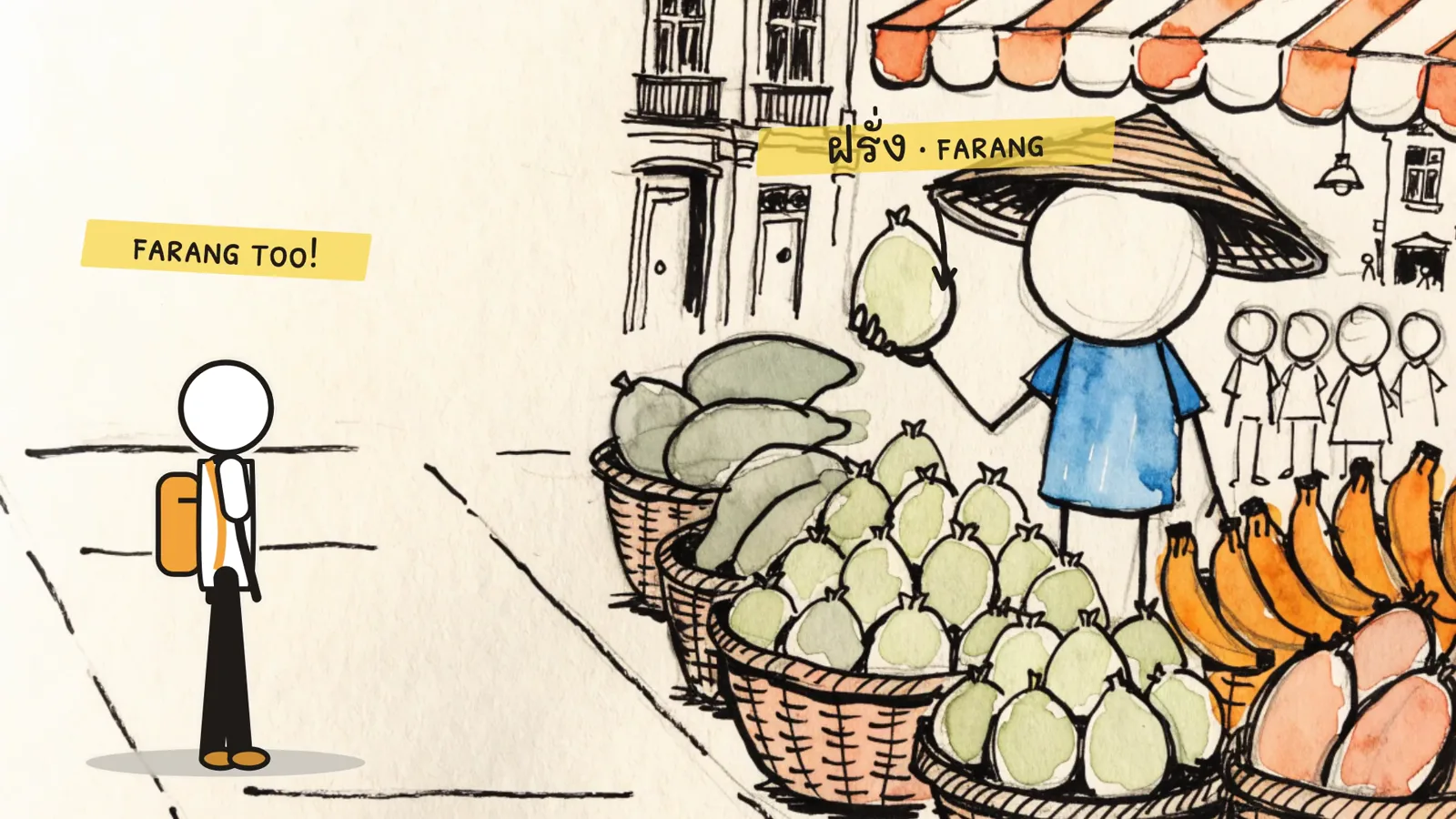
In a fruit market in Bangkok, a vendor holds up a small, hard, green fruit, a guava, and calls it farang (ฝรั่ง). A tourist walks past the stall. In Thai, he's a farang too.
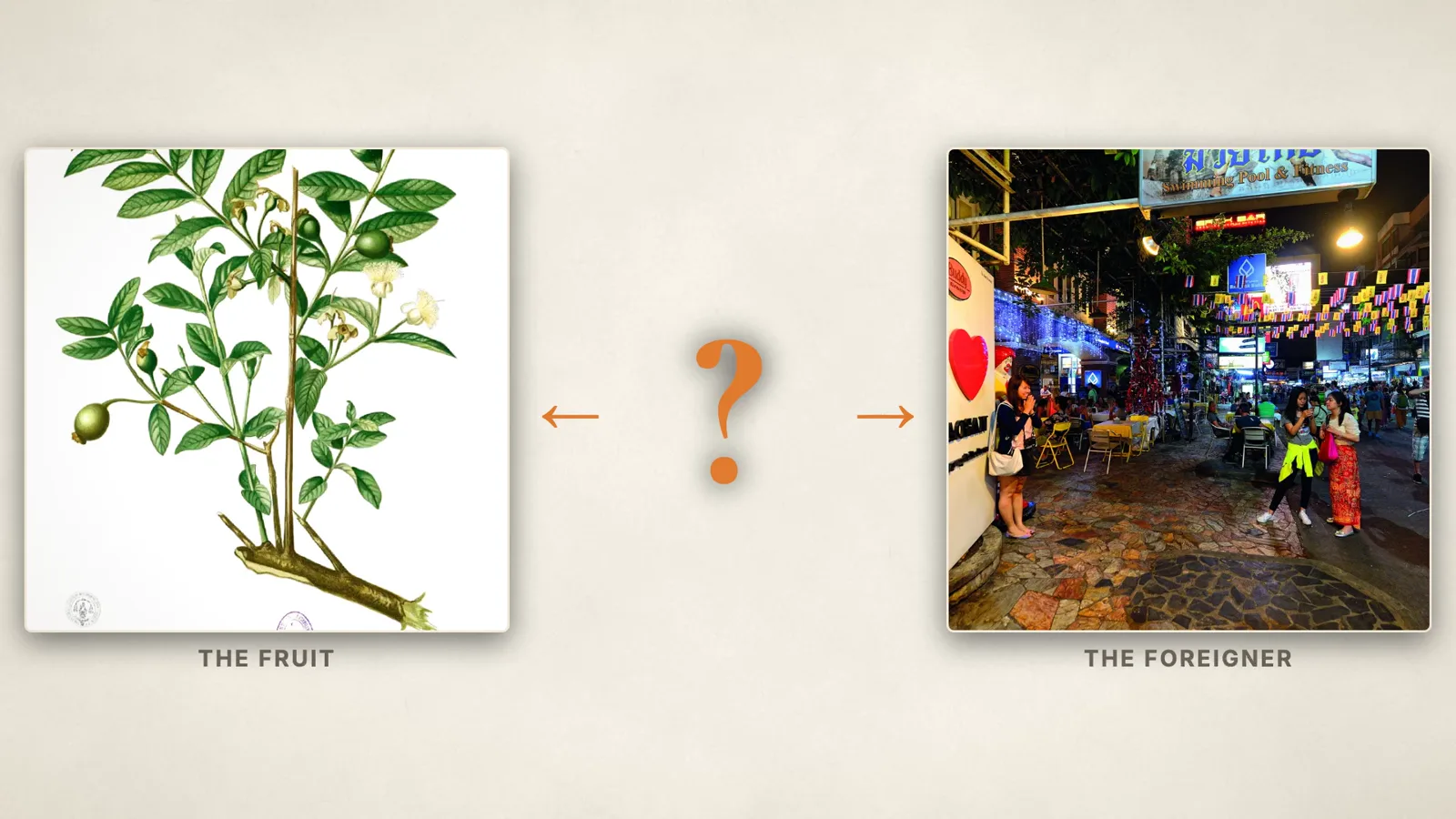


So which came first? Was the foreigner named after the fruit? Or was the fruit named after the foreigner? To answer that, we have to leave Thailand, and go a very long way back.
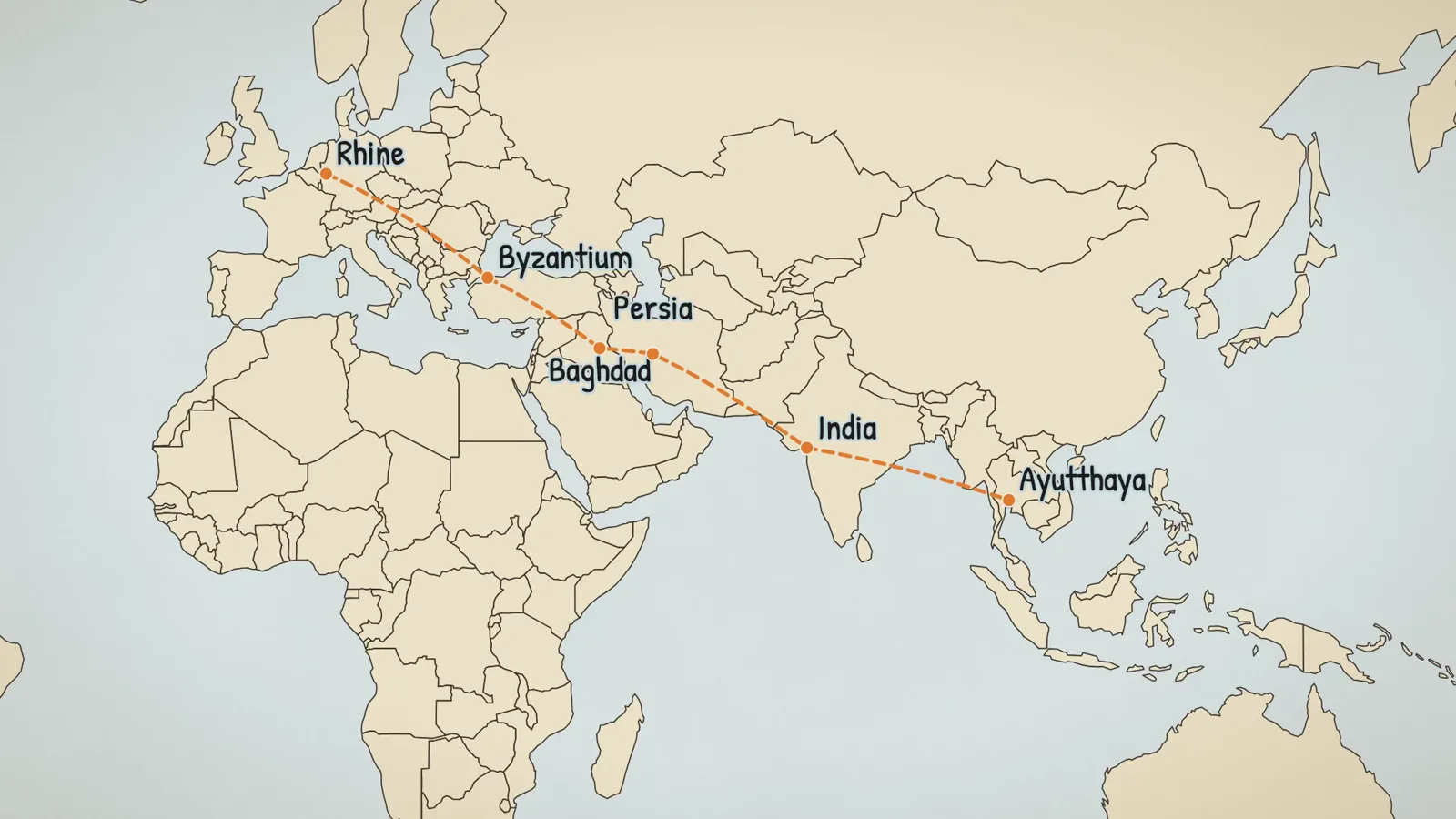
The word's journey starts with a Germanic tribe in what is now Germany. From there it runs through the Byzantine Empire, the Arab world and Persia, across the Indian Ocean, all the way to Ayutthaya, the old capital of Thailand.
This is the story of one word. Farang.
What does farang mean in Thai? ▶ 0:42
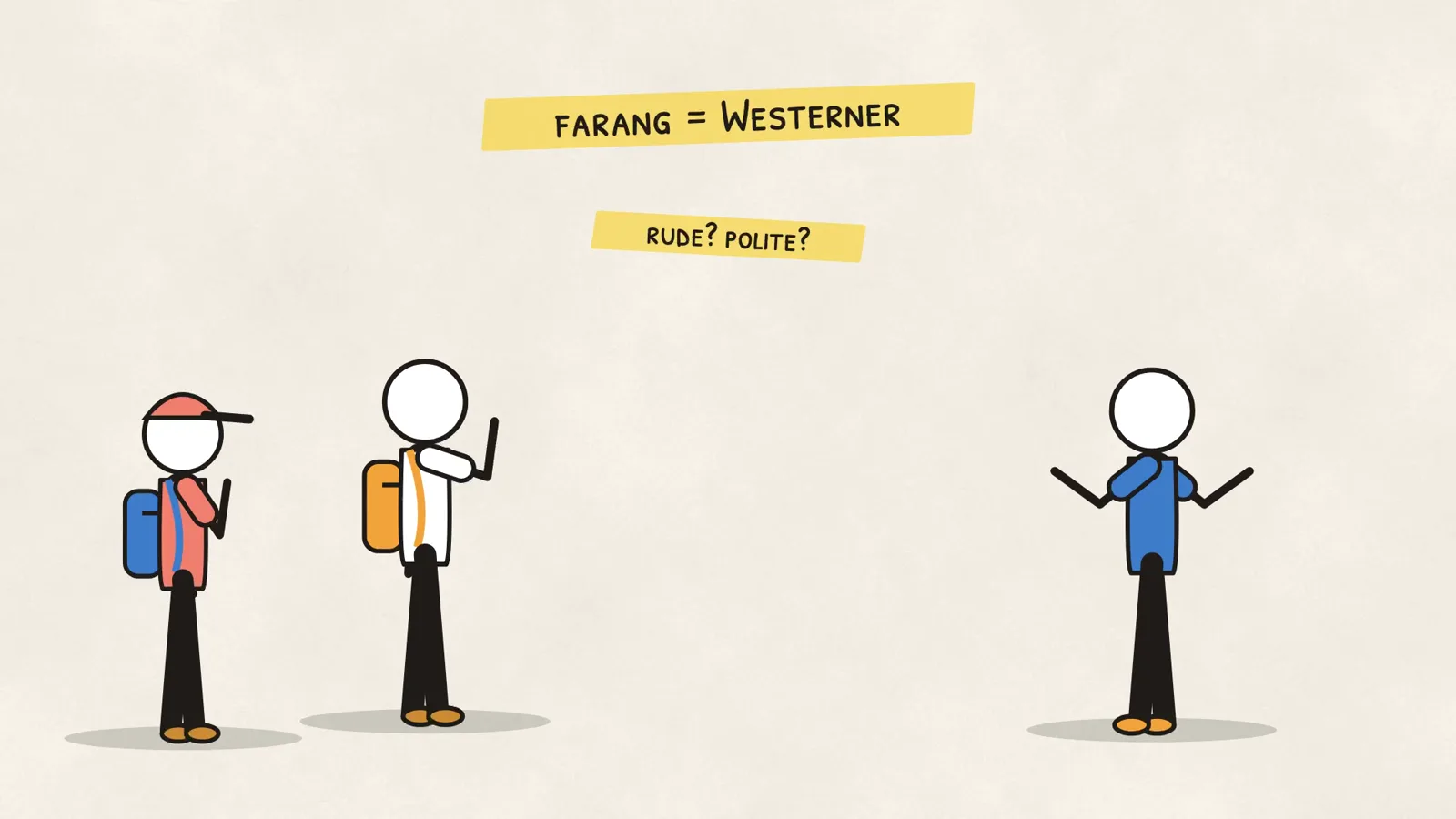
Let's start with what the word means today. In modern Thai, a farang is a Westerner, usually a white European or American. It isn't really an insult, and it isn't especially polite either. It depends on who says it, and how.
Farang is also a label for things that came from abroad. A potato is man farang (มันฝรั่ง): the foreigners' tuber. Asparagus is nor mai farang (หน่อไม้ฝรั่ง), the foreigners' bamboo shoot. Chewing gum is mak farang (หมากฝรั่ง).
So there's a pattern: foreign things get the foreigners' name. But where does the word itself come from?
Farang origin: the Franks and the Crusades ▶ 1:17
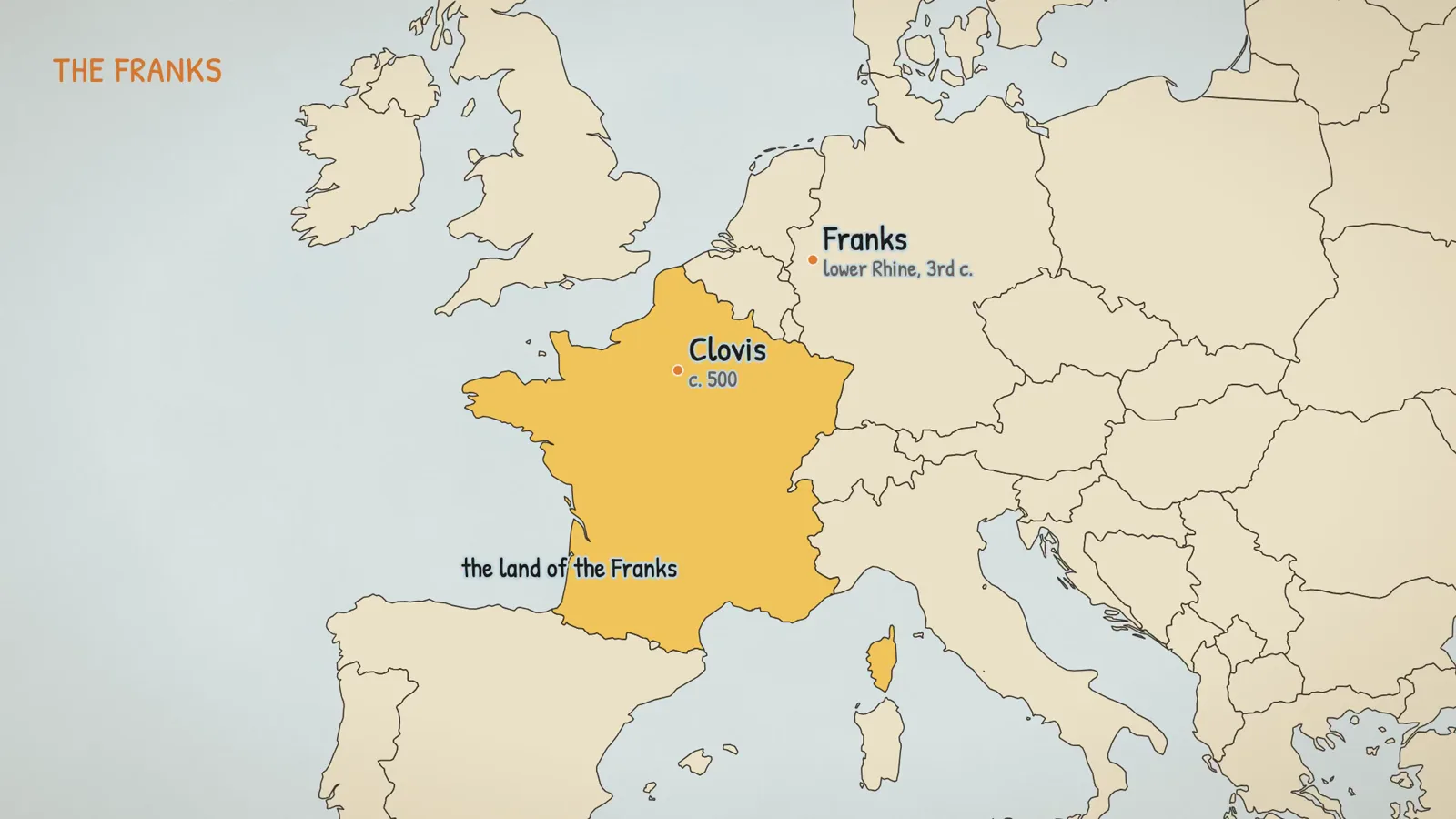

The story begins about 1,700 years ago, on the lower Rhine, the river that runs through Germany and the Netherlands. The Romans called the Germanic peoples who lived there the Franks. Around the year 500, a Frankish king named Clovis conquered most of Gaul, the Roman name for the land that is mostly France today. France is even named after them: it means the land of the Franks.
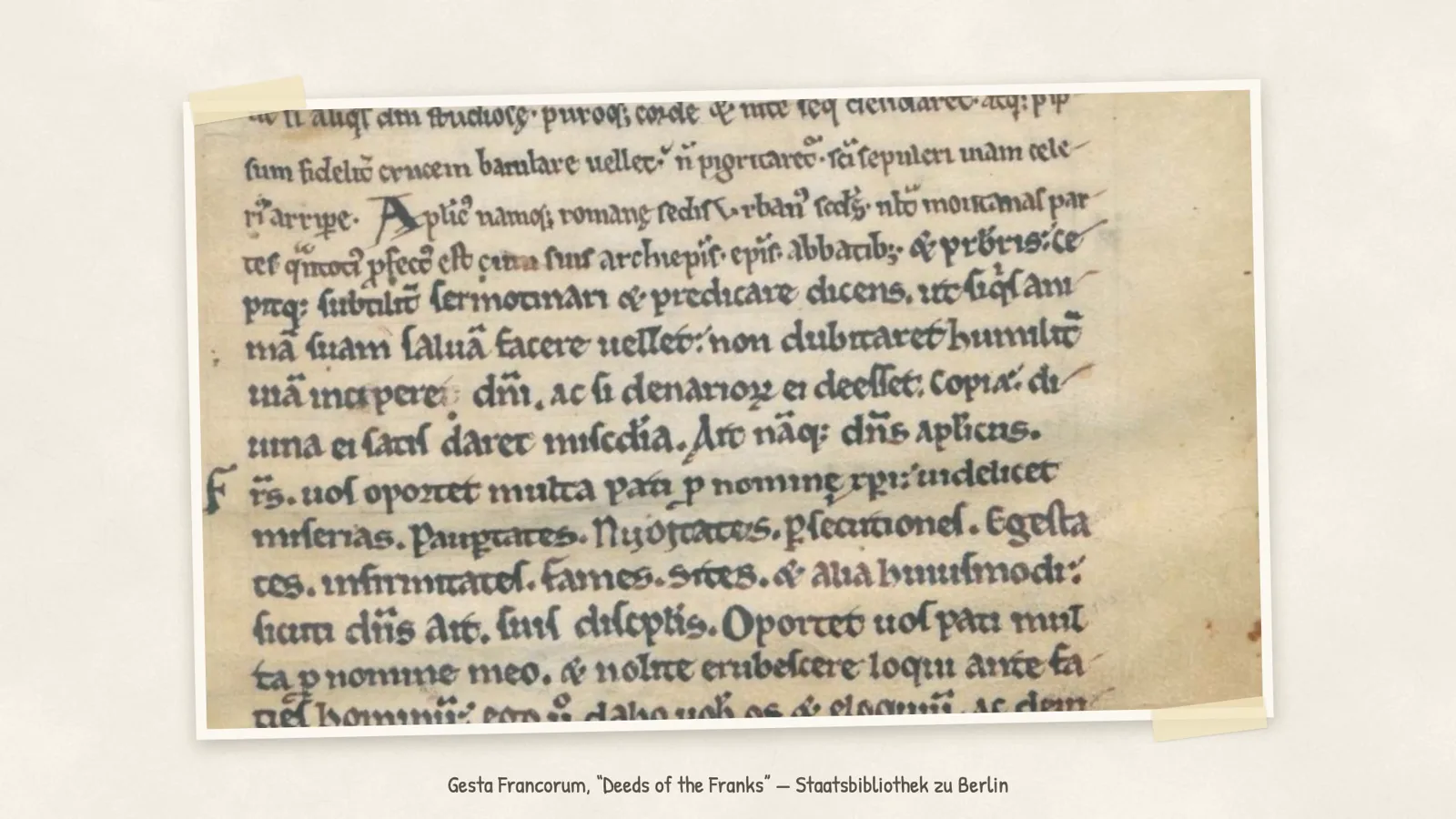
.jpg)
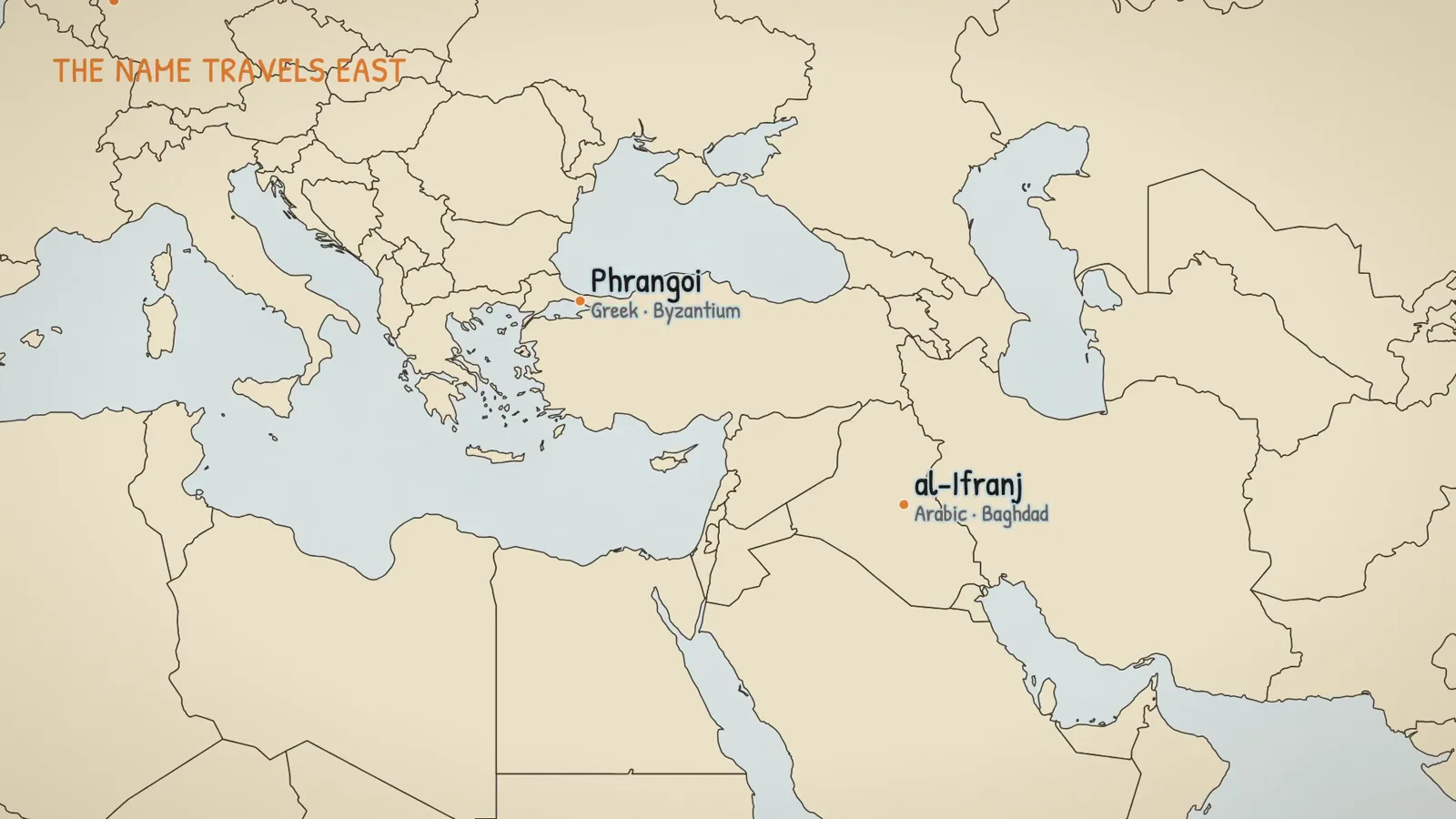
To their neighbours in the east, the name stuck. In the Byzantine Empire, the Greek-speaking continuation of the Roman Empire, writers called them Phrangoi (Φράγγοι). And by the ninth century, Arabic writers were calling them al-Ifranj (الإفرنج).
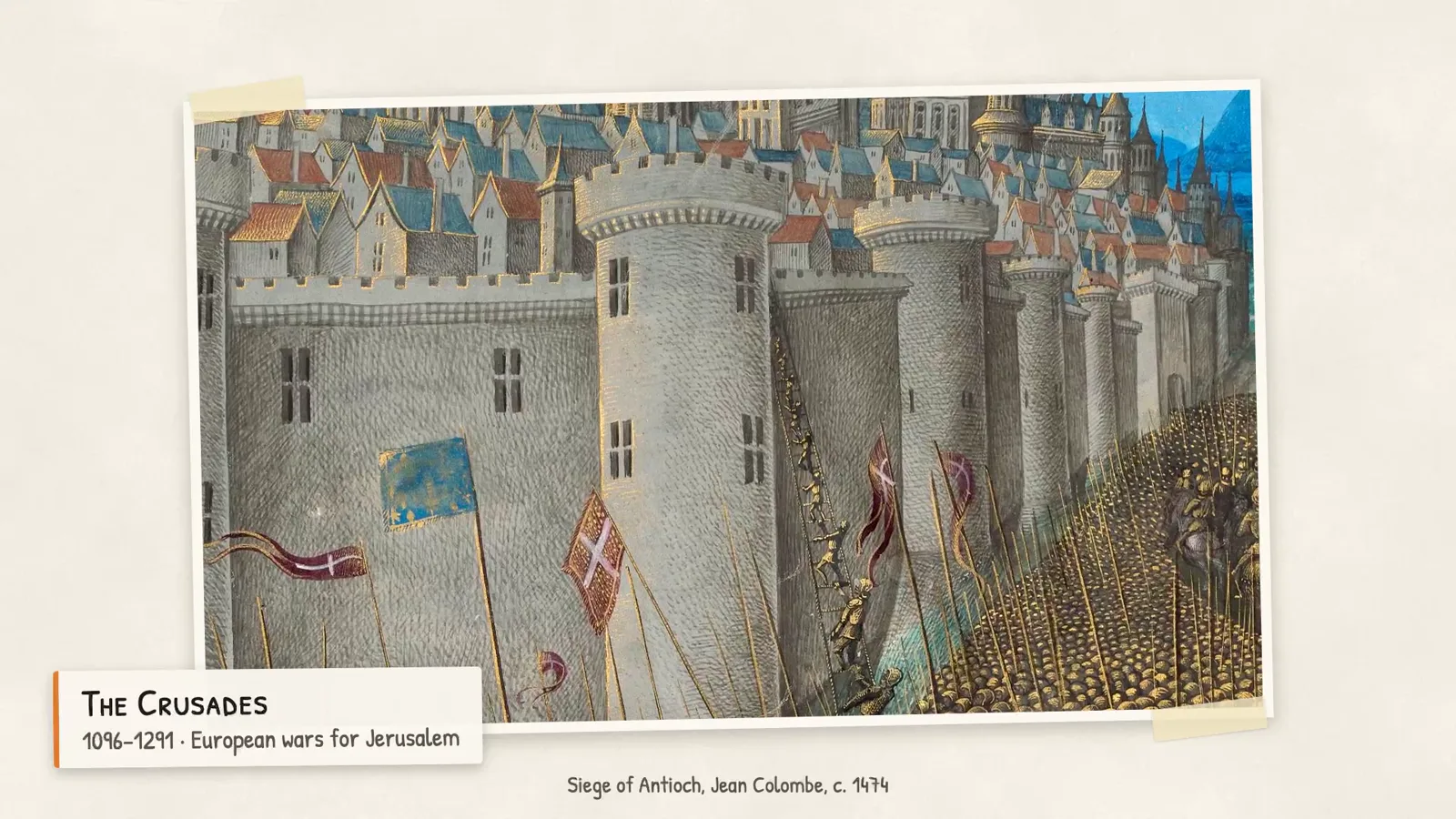

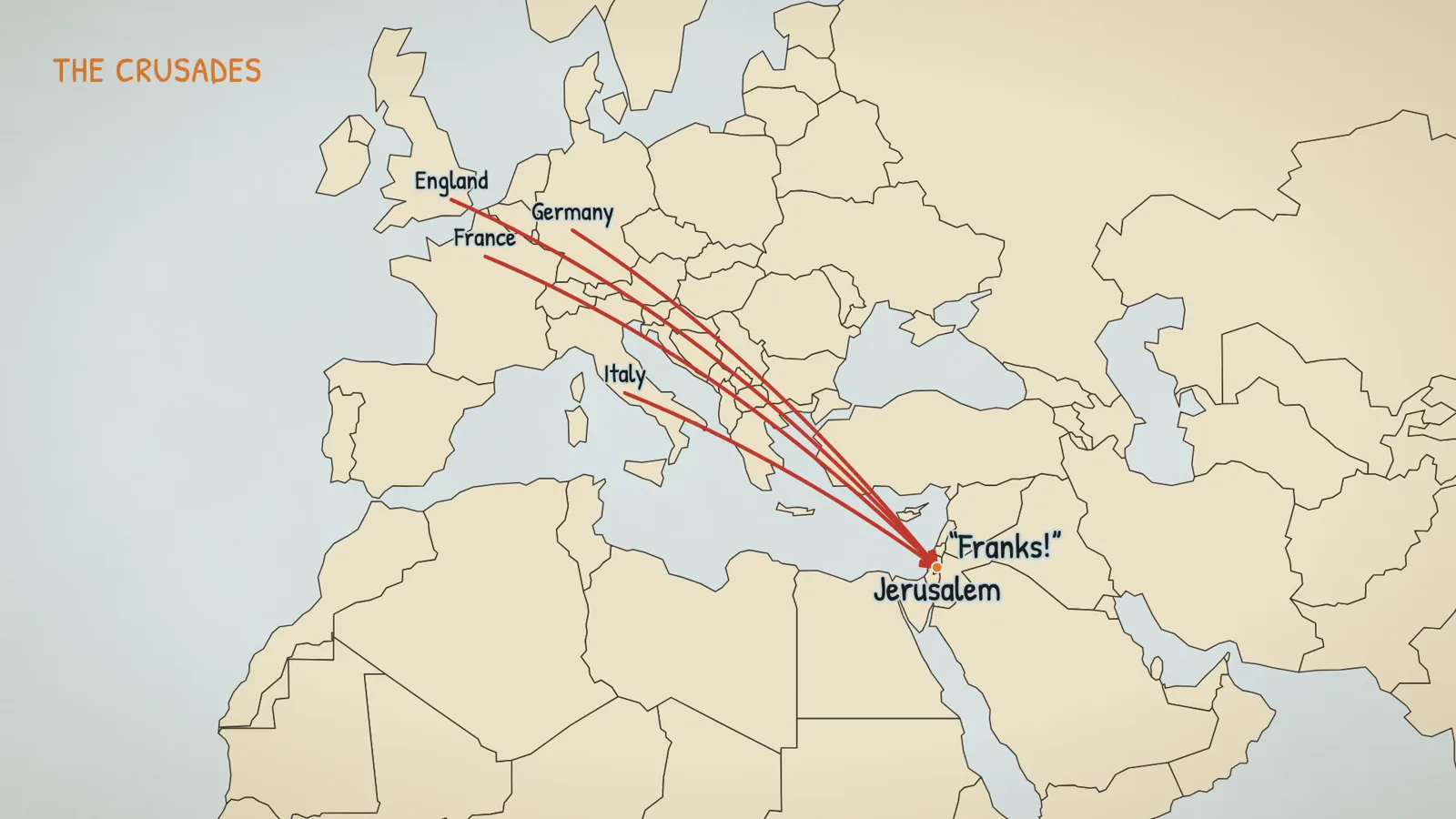
Then came the Crusades. From 1096, armies from all over Western Europe, from France but also from Germany, Italy and England, travelled to the Middle East to fight for Jerusalem. The people there didn't make the distinction. To them, every one of these Europeans was a Frank.
And in Persian, the language of Iran, the Franks became farang (فرنگ).
How farang reached Asia and Siam ▶ 2:14
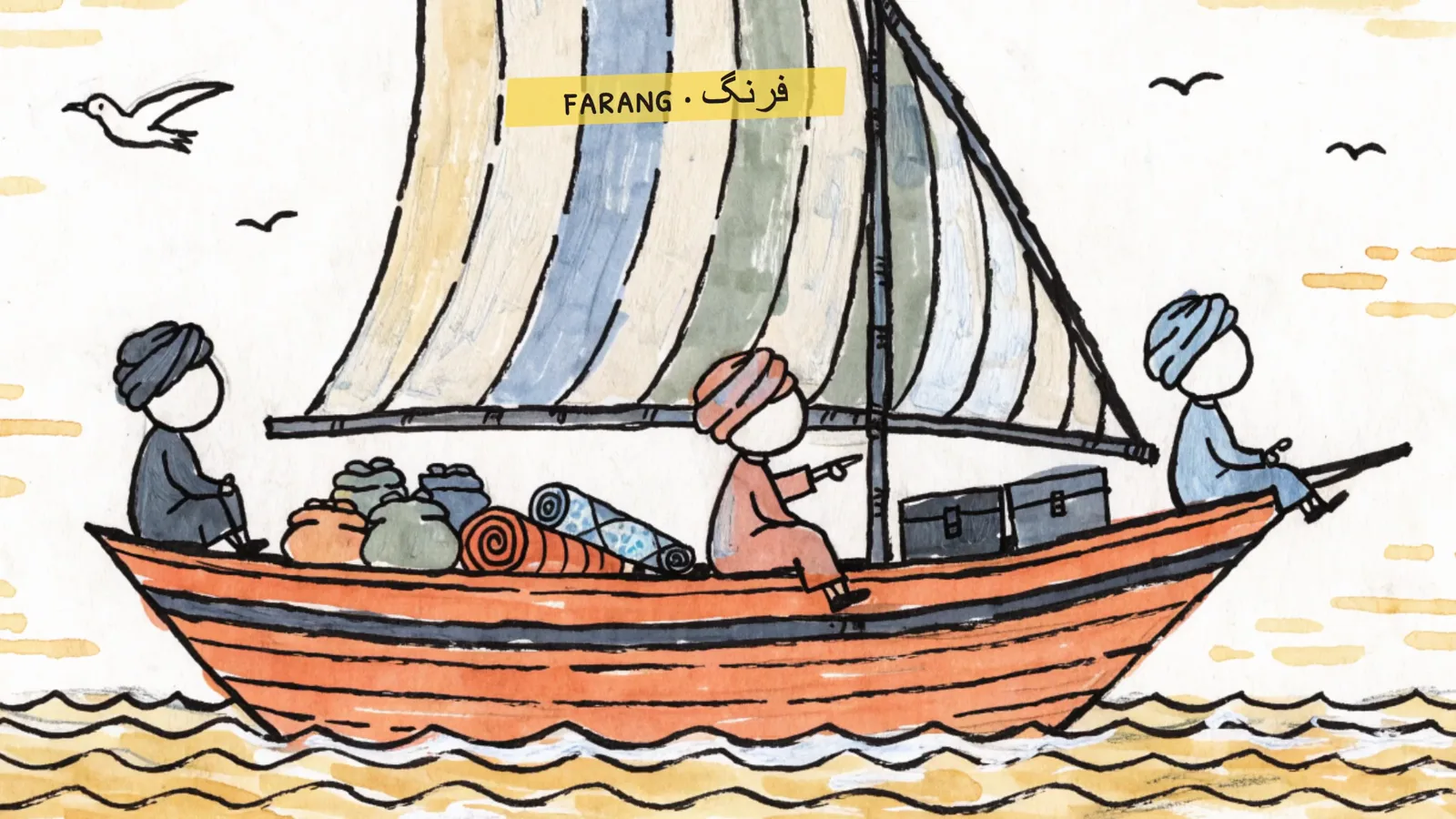
Persian matters here, because for centuries it was a language of trade and diplomacy far beyond Iran: in the ports of the Indian Ocean, and at the courts of India.
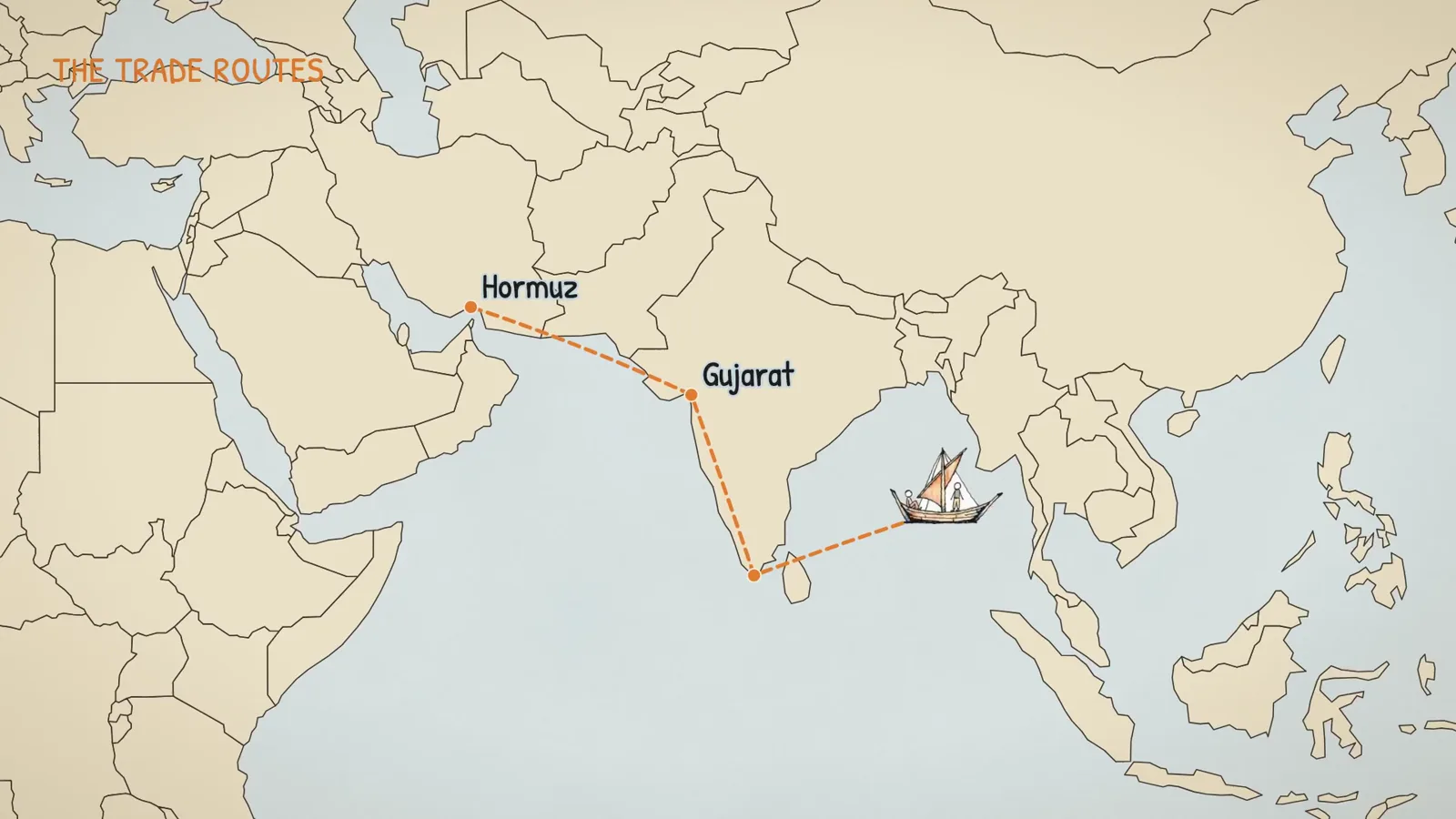
The merchants' routes ran from the Persian Gulf to the ports of western India, around the Indian coast, and across the Bay of Bengal towards Southeast Asia. So the word reached these ports long before most Europeans did.
.jpg)
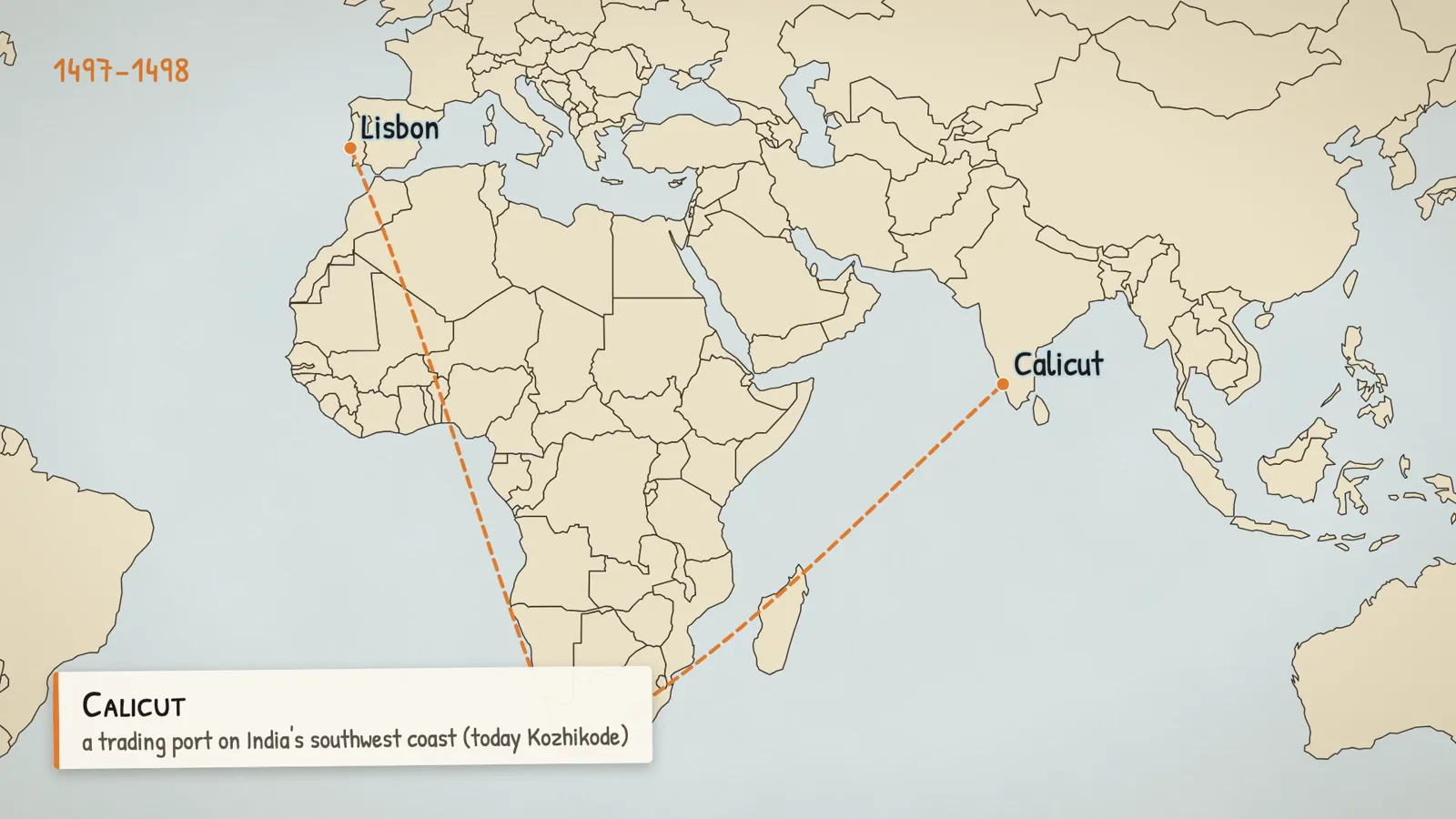
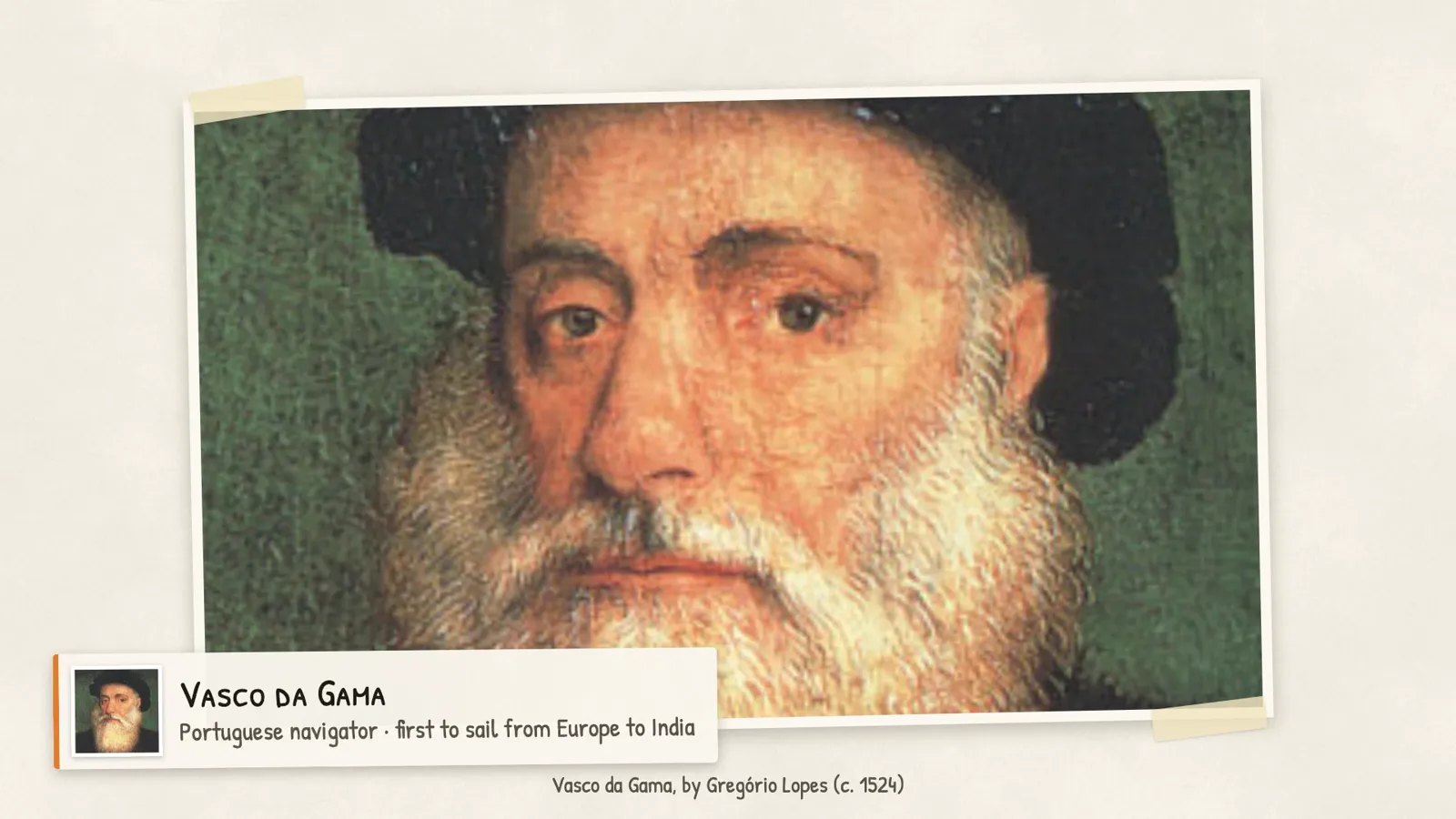
We even have a witness to that. In 1498, the Portuguese navigator Vasco da Gama became the first European to sail from Europe, around Africa, all the way to India. His ships reached Calicut, a busy trading port on India's southwest coast.
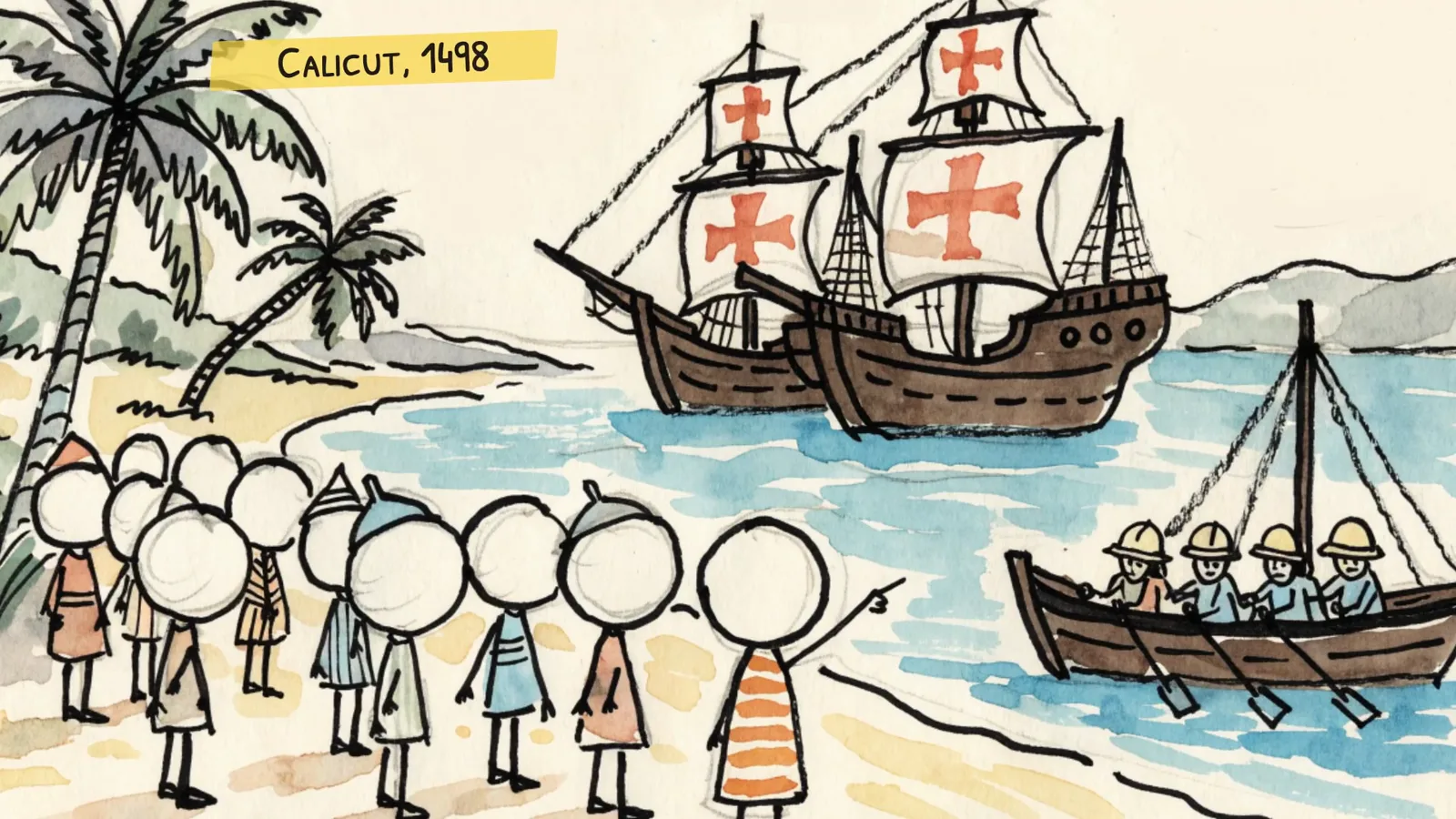
In Calicut, nobody could understand the newcomers' language. But news of these strange ships travelled quickly along the coast.
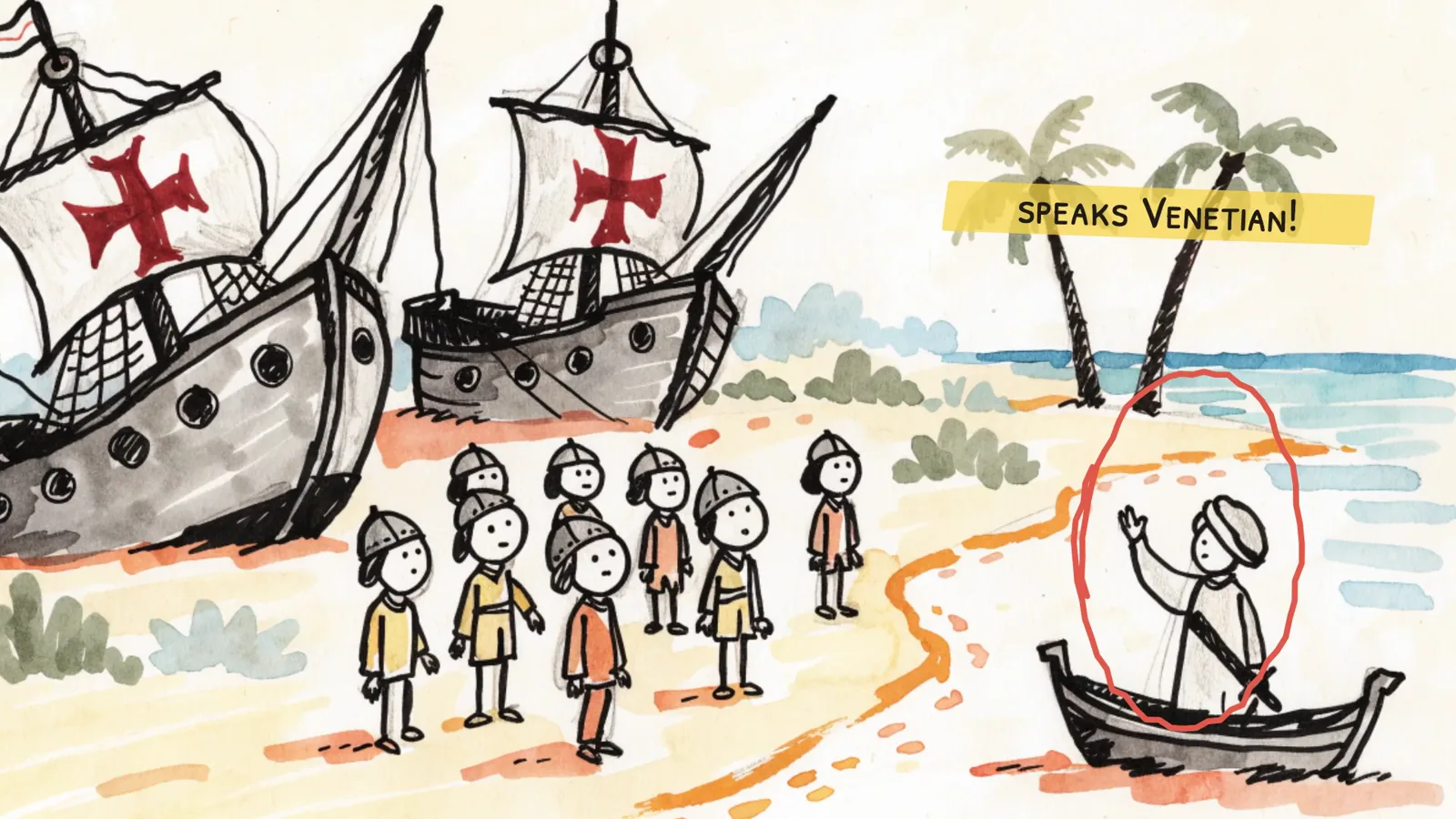
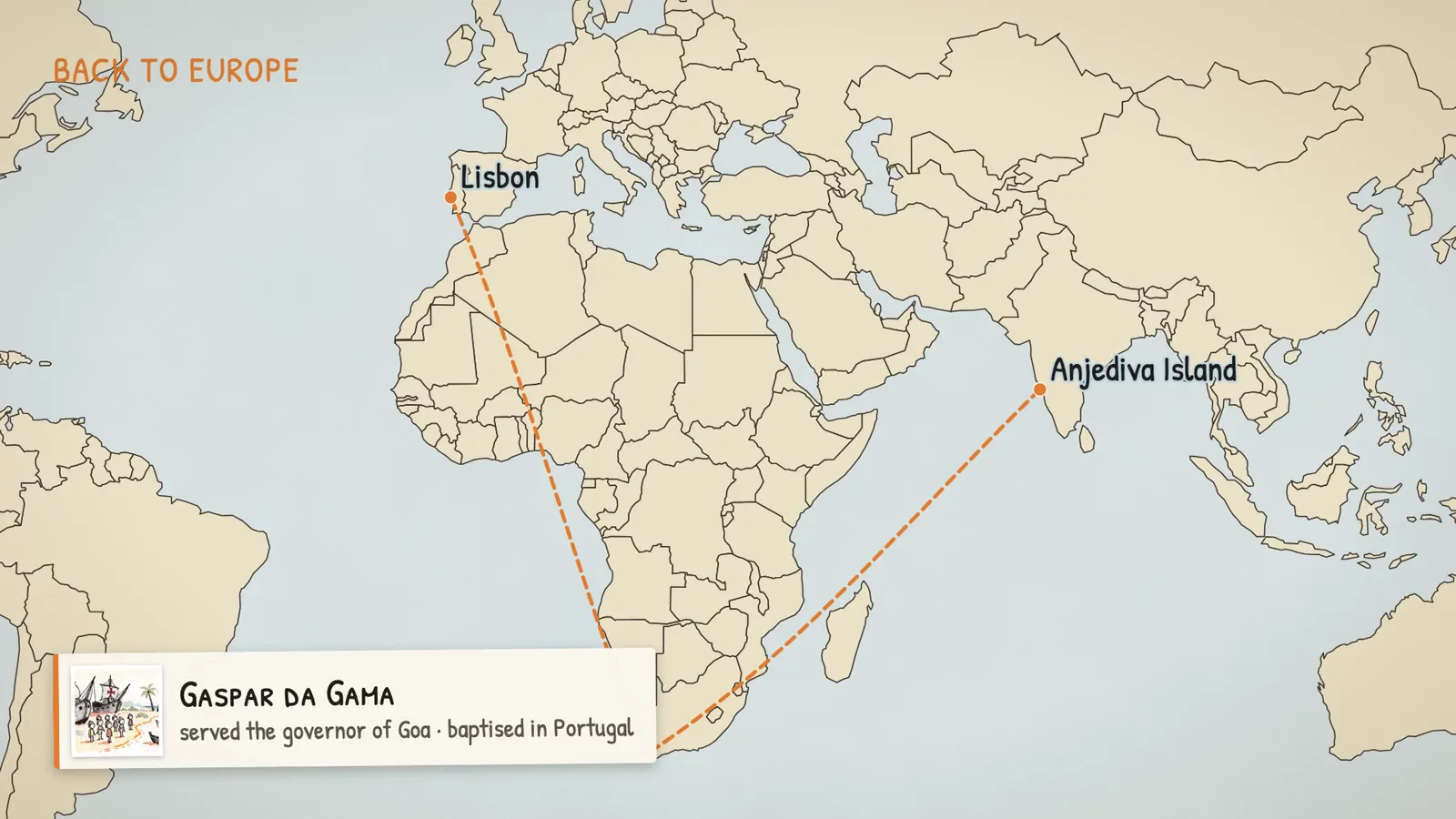
A few months later, while the Portuguese were repairing their ships on a small island further north, a stranger came to meet them. He was about forty years old, wore a turban and a sword, and, to their surprise, he spoke Venetian. The Portuguese took him back to Europe, where he was baptised Gaspar da Gama.

One of the crew kept a journal of the voyage, and it records what this man told them. When he had heard about the strange men at Calicut, he knew at once who they must be:
“These strangers must be Franks.”
— Gaspar da Gama, 1498, as recorded in the journal of Vasco da Gama's voyage
Franks: the name by which Europeans were known in those parts.
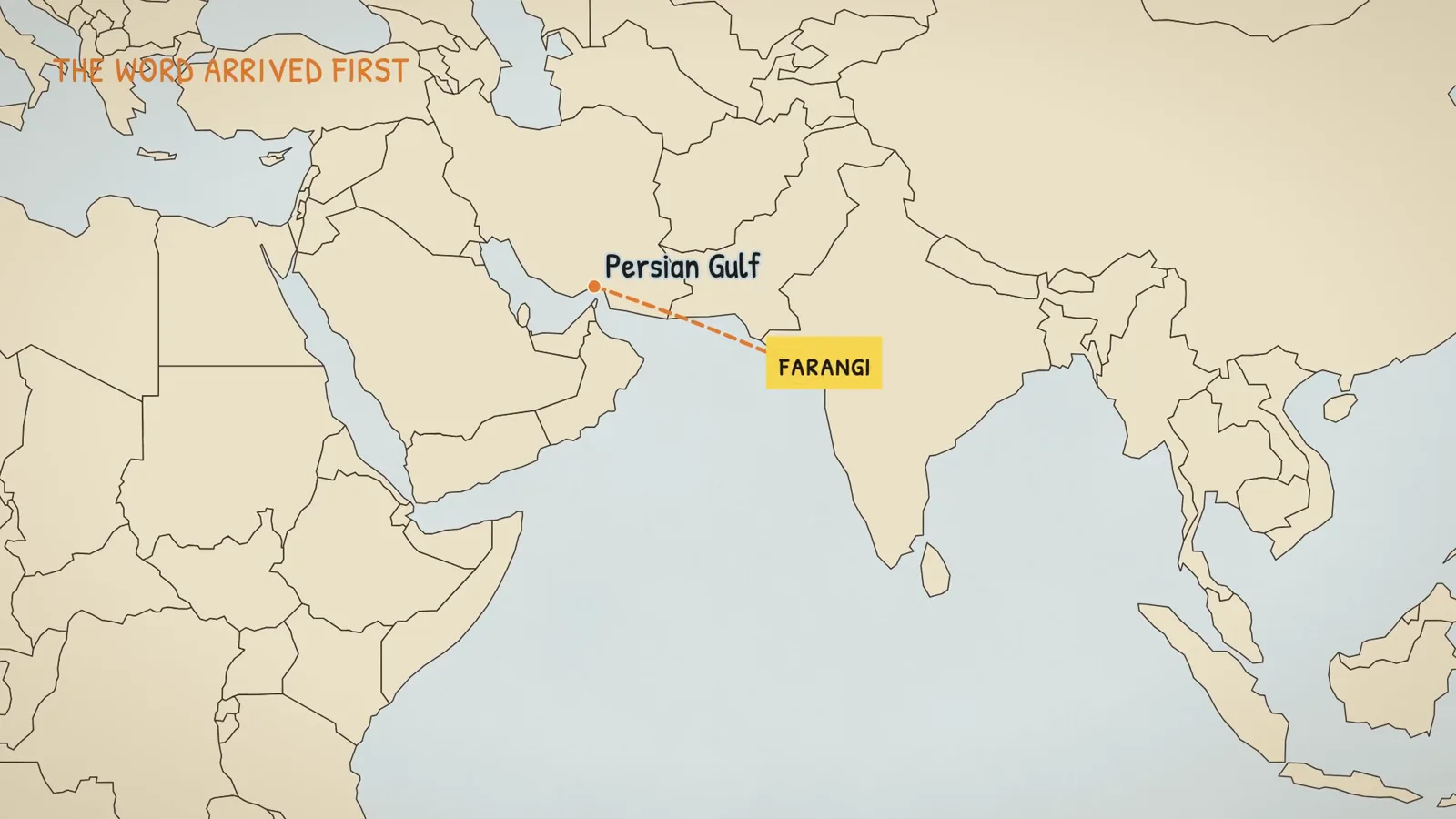
What's interesting here is that even though the Portuguese had only just arrived in India, that name was already waiting for them. Because the word had travelled ahead of them, from port to port.
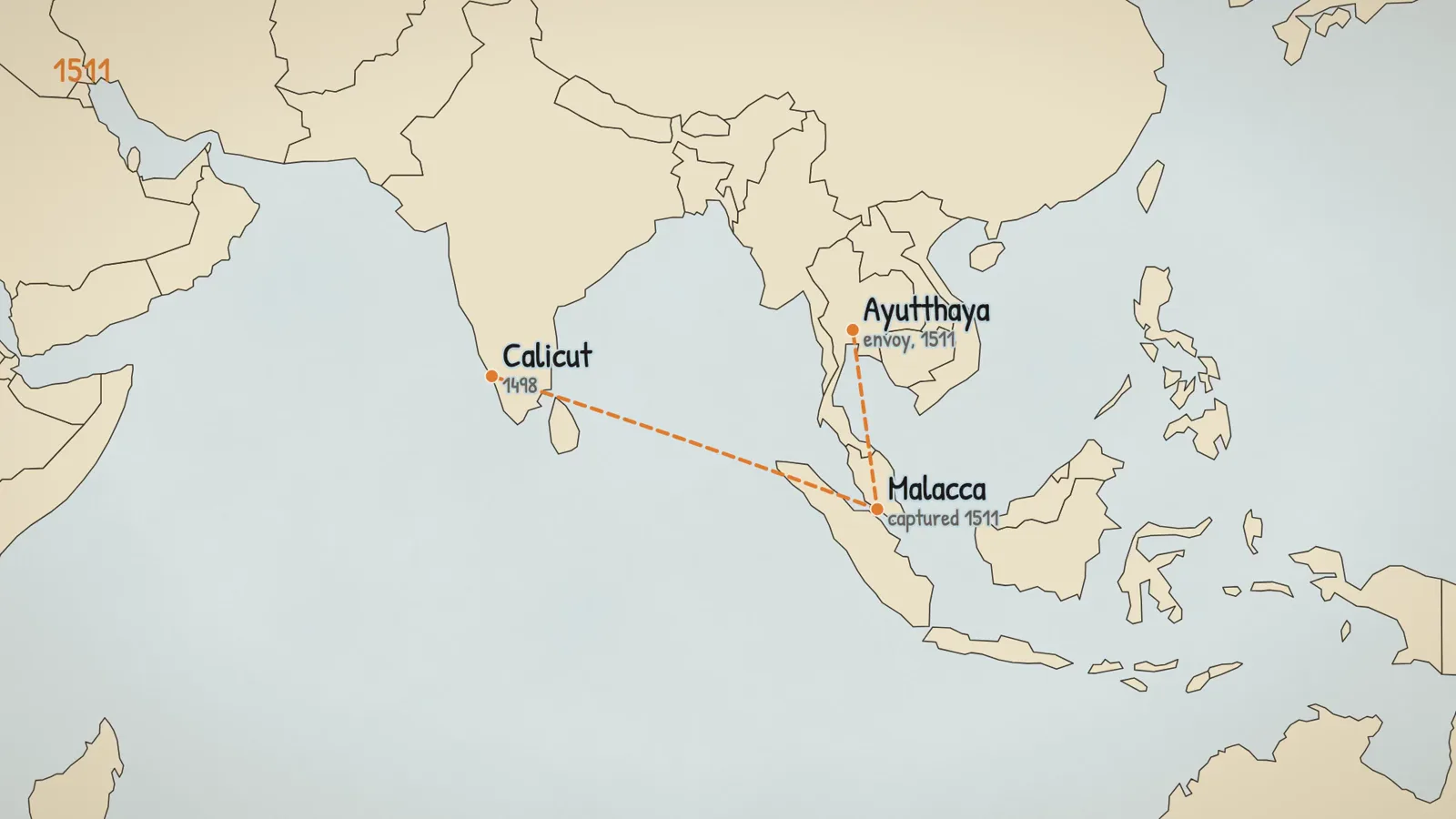
And the Portuguese kept sailing east. In 1511 they captured Malacca, a great trading port in what is now Malaysia. That same year, they sent an envoy north, to the kingdom of Siam, the old name of Thailand, and to its capital, Ayutthaya. His name was Duarte Fernandes. He was the first European envoy known to reach Siam.
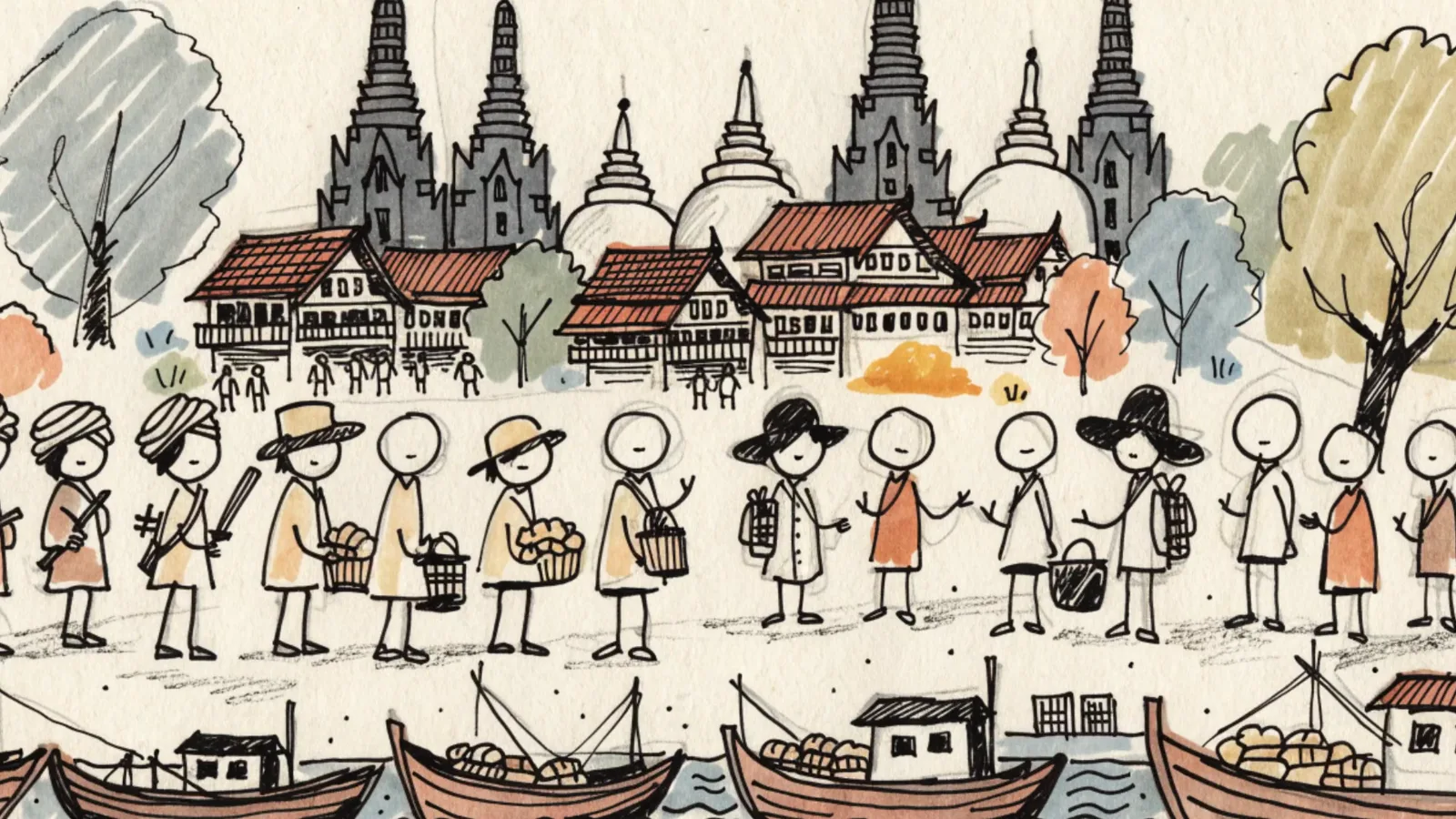
Ayutthaya was one of the great cities of Asia, with whole neighbourhoods of foreign merchants: Chinese, Malay, Indian and Persian. For about ninety years, until Dutch traders arrived in the early 1600s, the only Europeans the Siamese knew were the Portuguese. So they were the first people in Siam to be called farang.
But the word itself almost certainly didn't come from them.
Who brought farang to Thailand: Persia or India? ▶ 4:30
So who passed the word on to the Thais? There are two explanations. The one most linguists favour is Persian-speaking merchants, who were already trading in Siam in the 1500s. The other comes from the Thai court itself.
_Portrait.jpg)
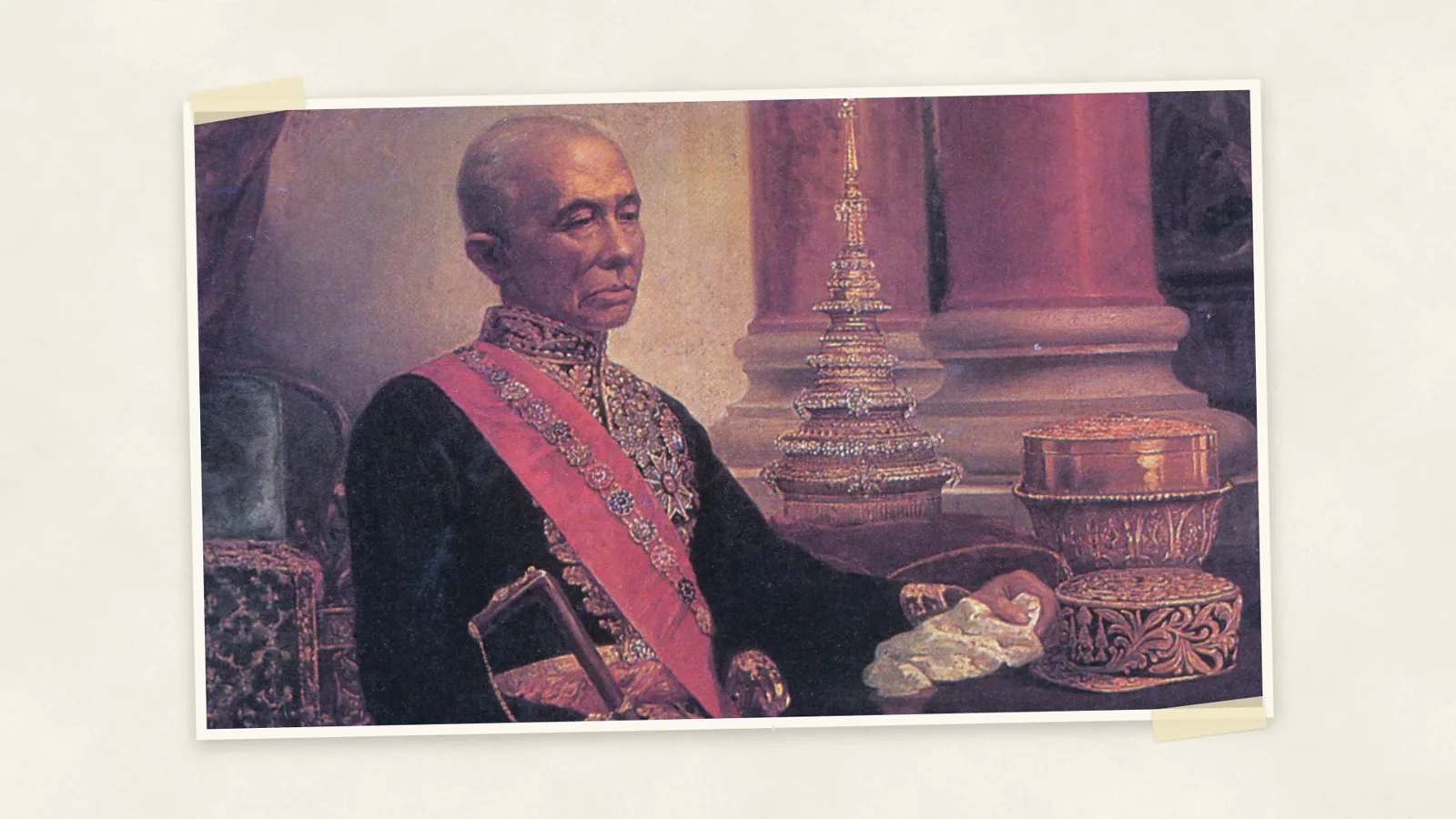
In the 1800s, the government of King Mongkut wrote that Siam had borrowed the word from India, where it was first used for the Portuguese.
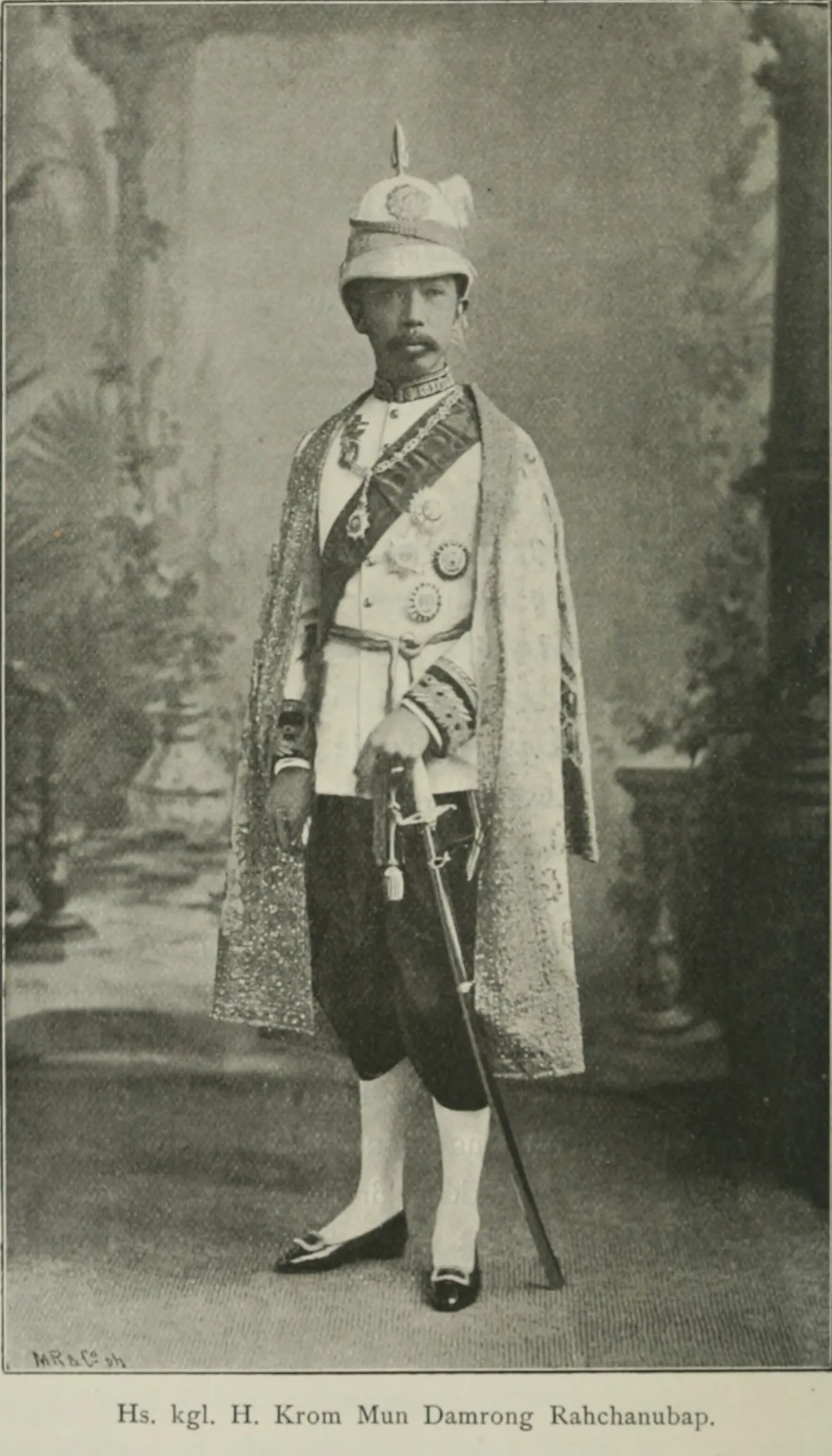

Almost a century later, Prince Damrong, one of King Mongkut's sons, often called the father of Thai history, agreed. In 1942, he wrote:
“We the Thais follow the Indians in using the term farang.”
— Prince Damrong, 1942
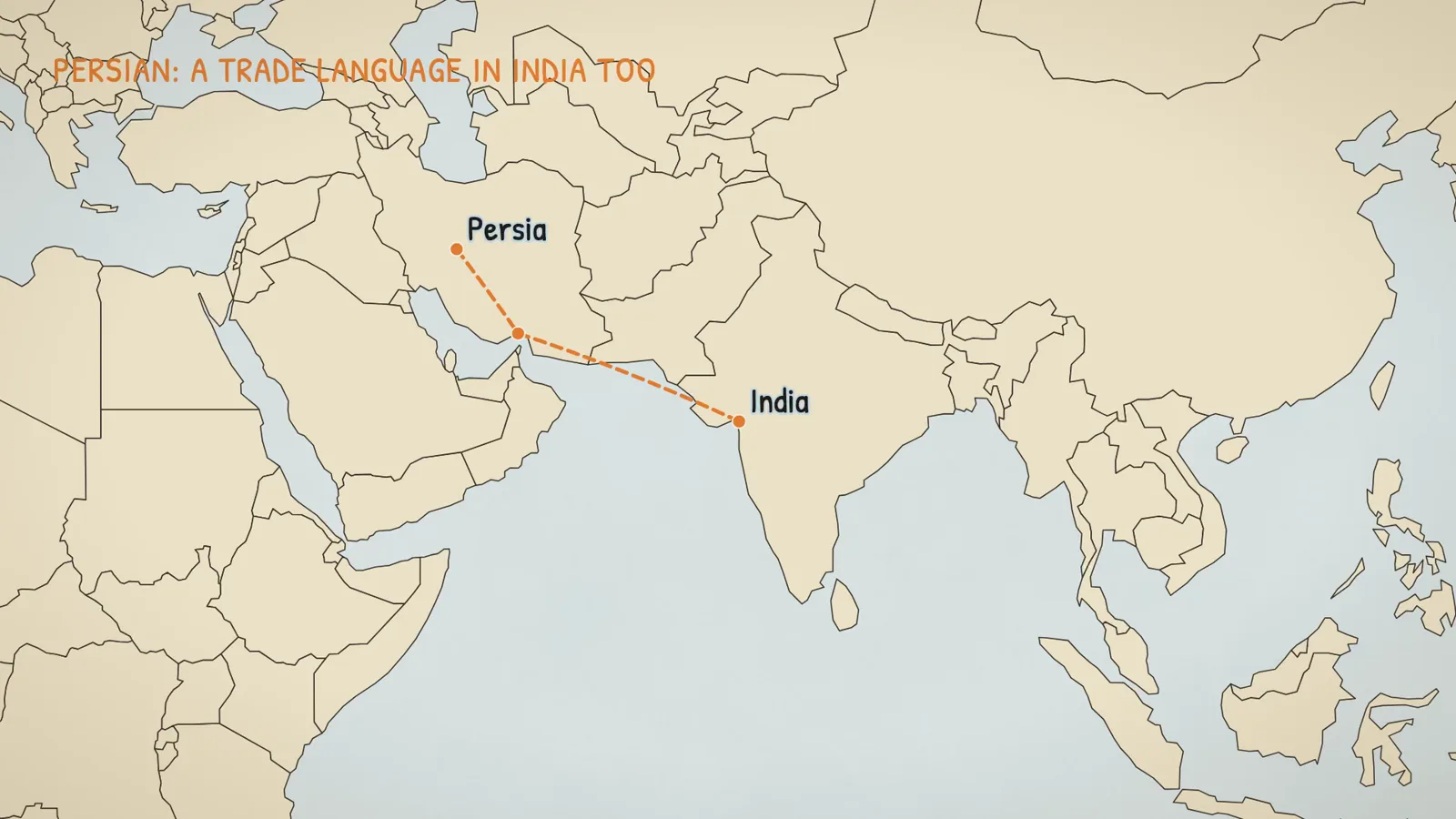
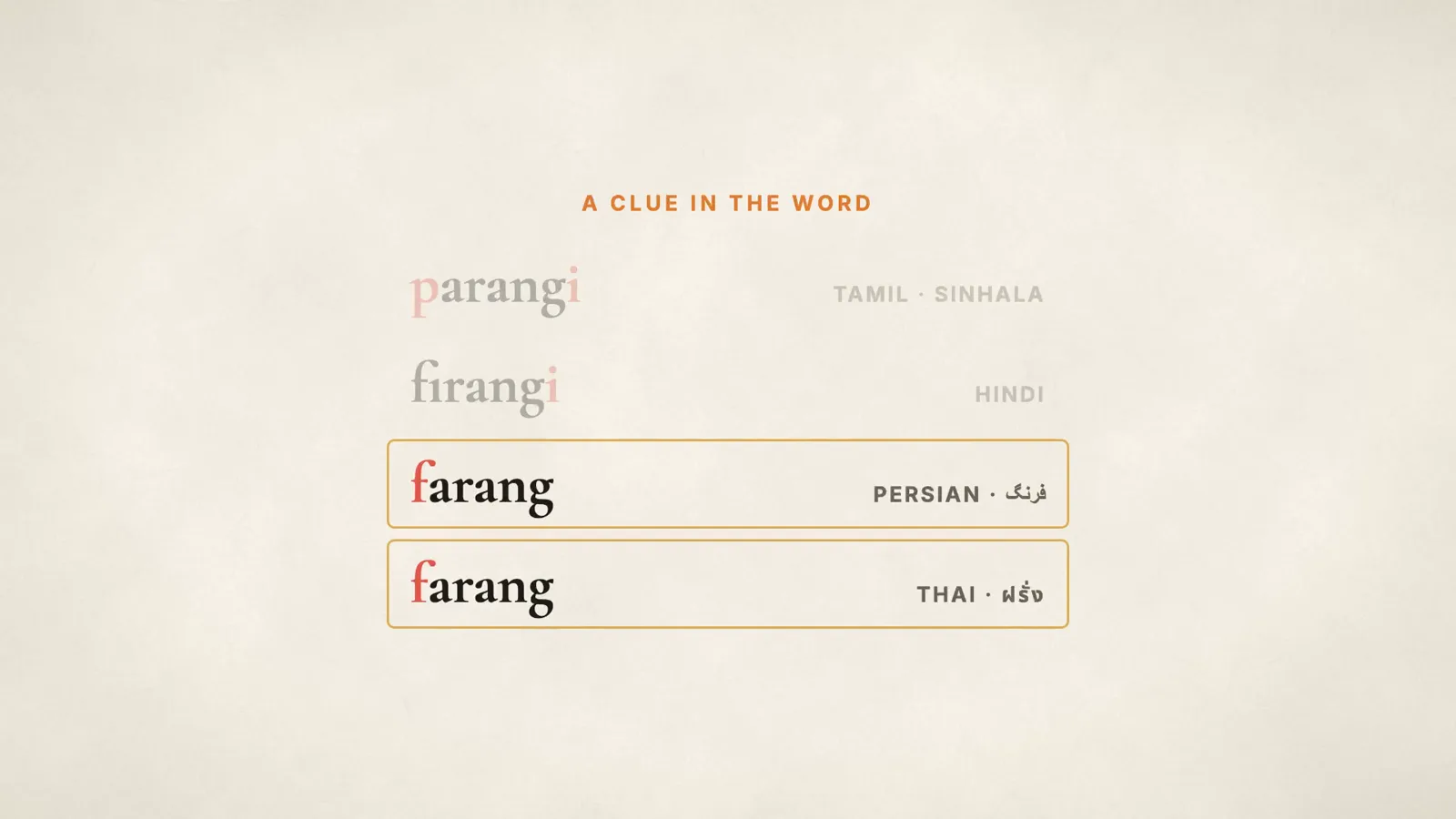
These two stories don't really contradict each other, because Persian was also a language of trade in India. But there is one small clue in the word itself. In Tamil and Sinhala, the languages of southern India and Sri Lanka, the word became parangi, with a P, and an i at the end. Hindi has firangi, also with an i. The Thai word, ฝรั่ง, starts with an F and has no i at the end, just like the Persian farang. It's not proof. But it fits the Persian route.
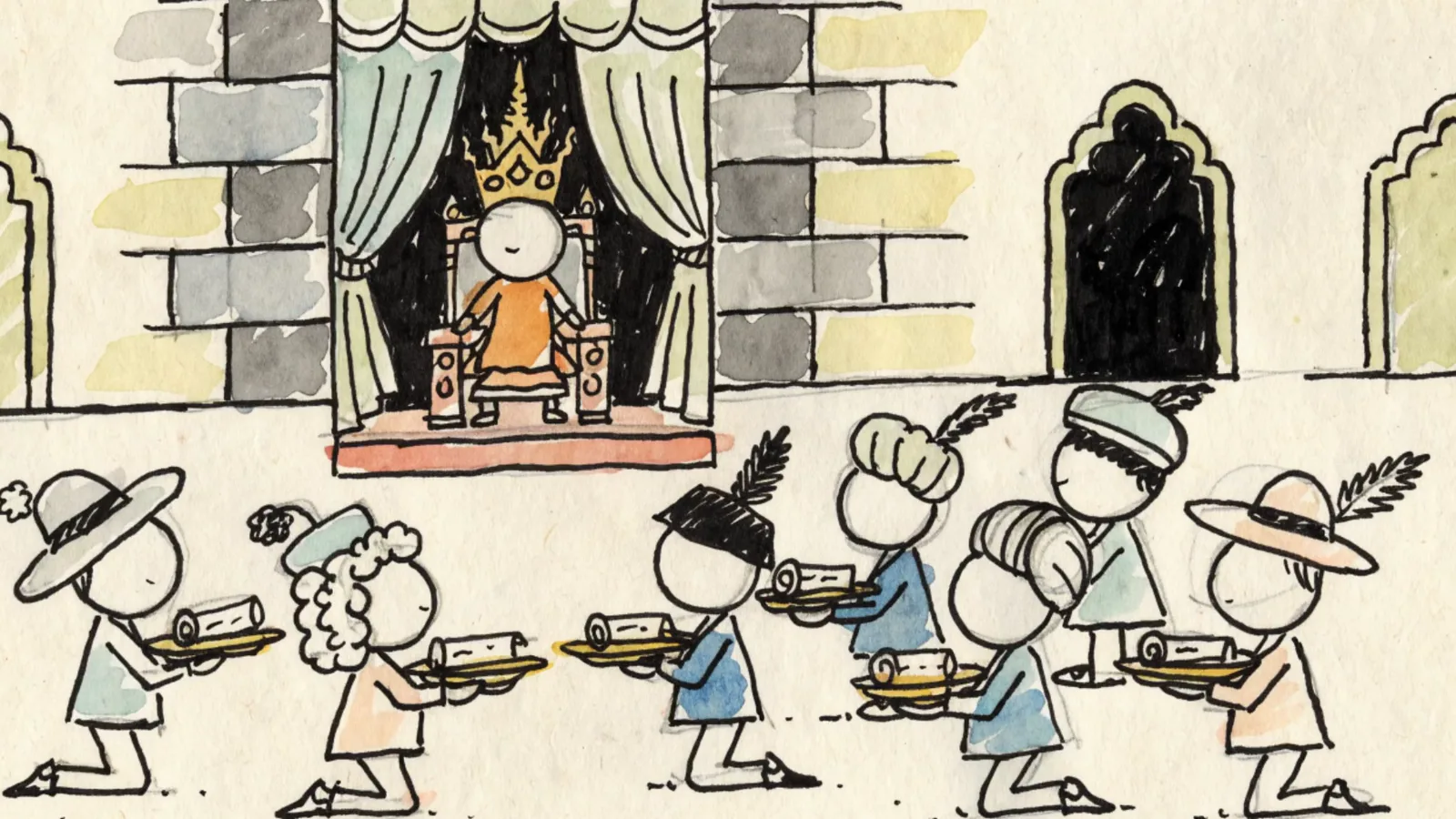

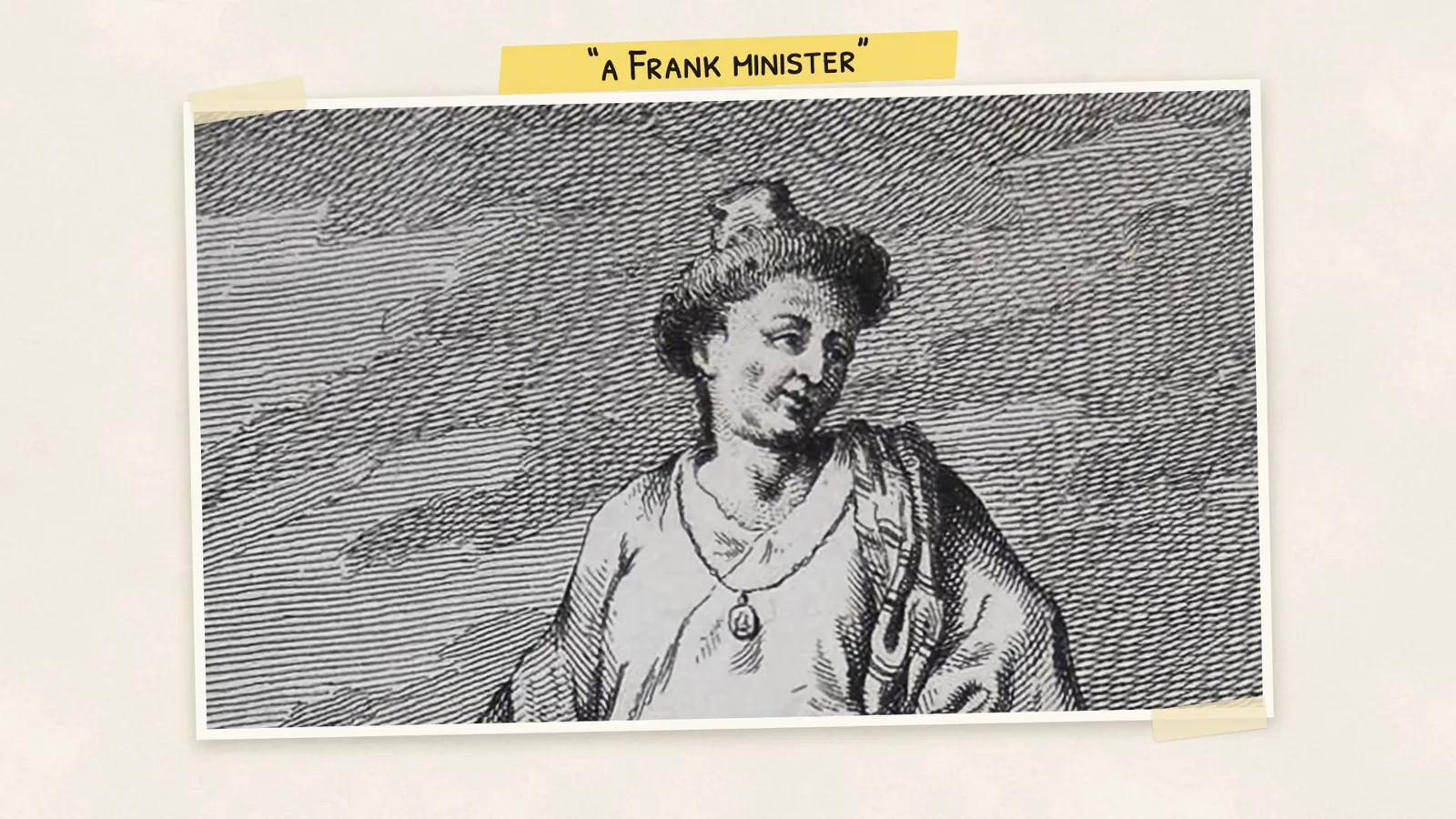

There's a second clue. In 1685, the Shah of Persia sent an embassy to Siam, to the court of King Narai, who ruled Siam from 1656 to 1688. One of the envoys wrote an account of the journey. In it, he calls King Narai's most powerful minister, a Greek adventurer named Constantine Phaulkon, a "Frank minister". A Greek, called a Frank, and that is exactly how Thai uses farang today.
Is farang short for Farangset (France)? ▶ 6:11
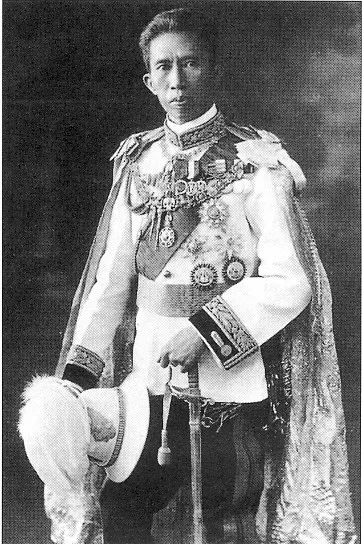

Common mistake: many people think farang is simply short for Farangset (ฝรั่งเศส), which is the Thai word for France, as if all Westerners were named after the French. But Farangset most likely comes from the French word Français, fitted into the familiar shape of farang. So it's the other way around. Farang was used in Siam long before the French arrived, and the French name was built on top of it. In 1942, the Thai scholar Prince Naris, another of King Mongkut's sons and a celebrated artist, put it bluntly:
“It would be nonsensical to think that Farang comes from Farangset or France.”
— Prince Naris, 1942
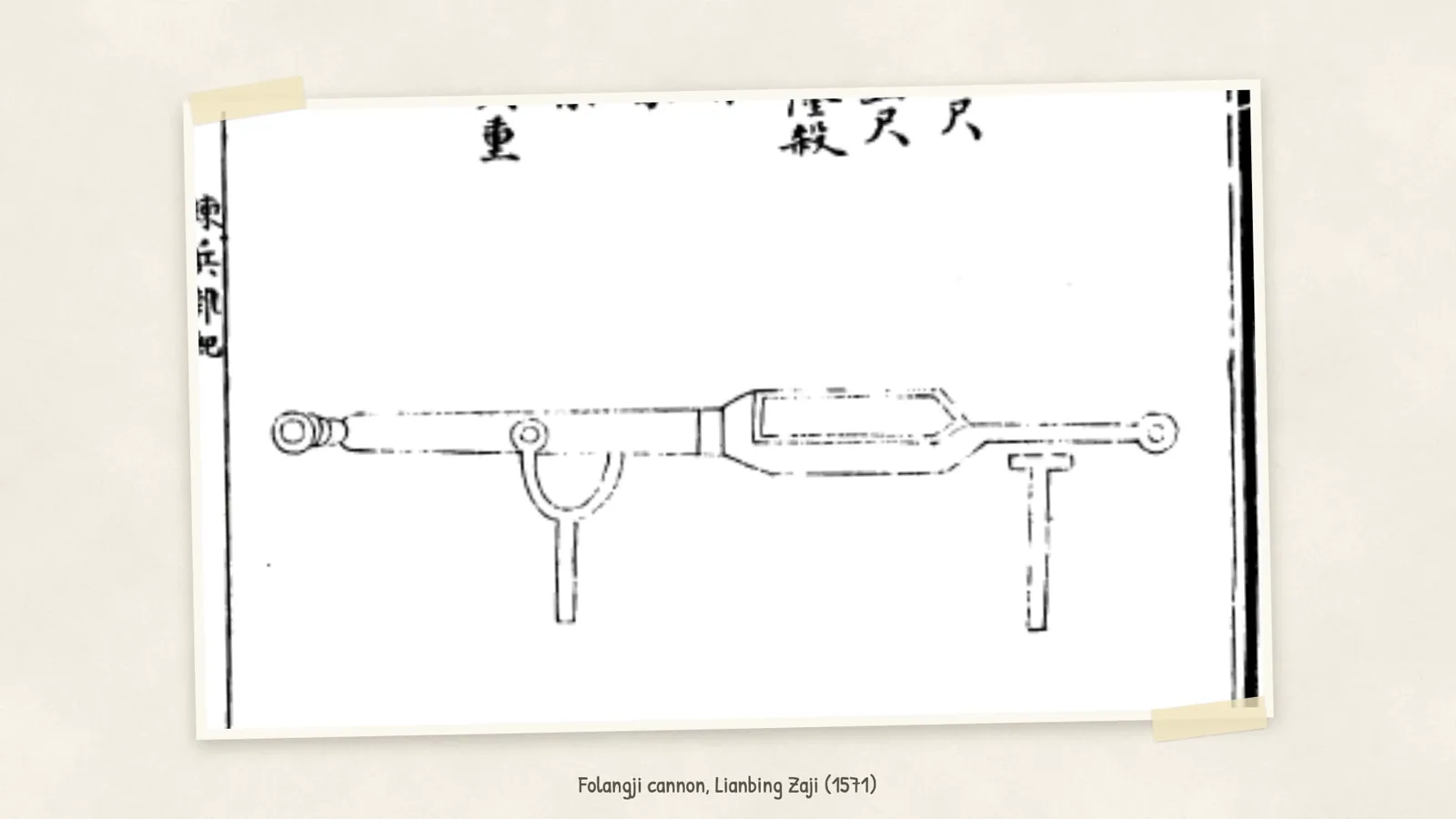

In other parts of the world, the word stuck to things rather than people. In China, the Portuguese were called Folangji (佛郎機), and so were the cannons they brought. And in Ottoman Turkish, frengi became the name of a disease: syphilis.
A word for strangers easily becomes a word for whatever strangers bring.
Why is guava called farang? ▶ 7:14
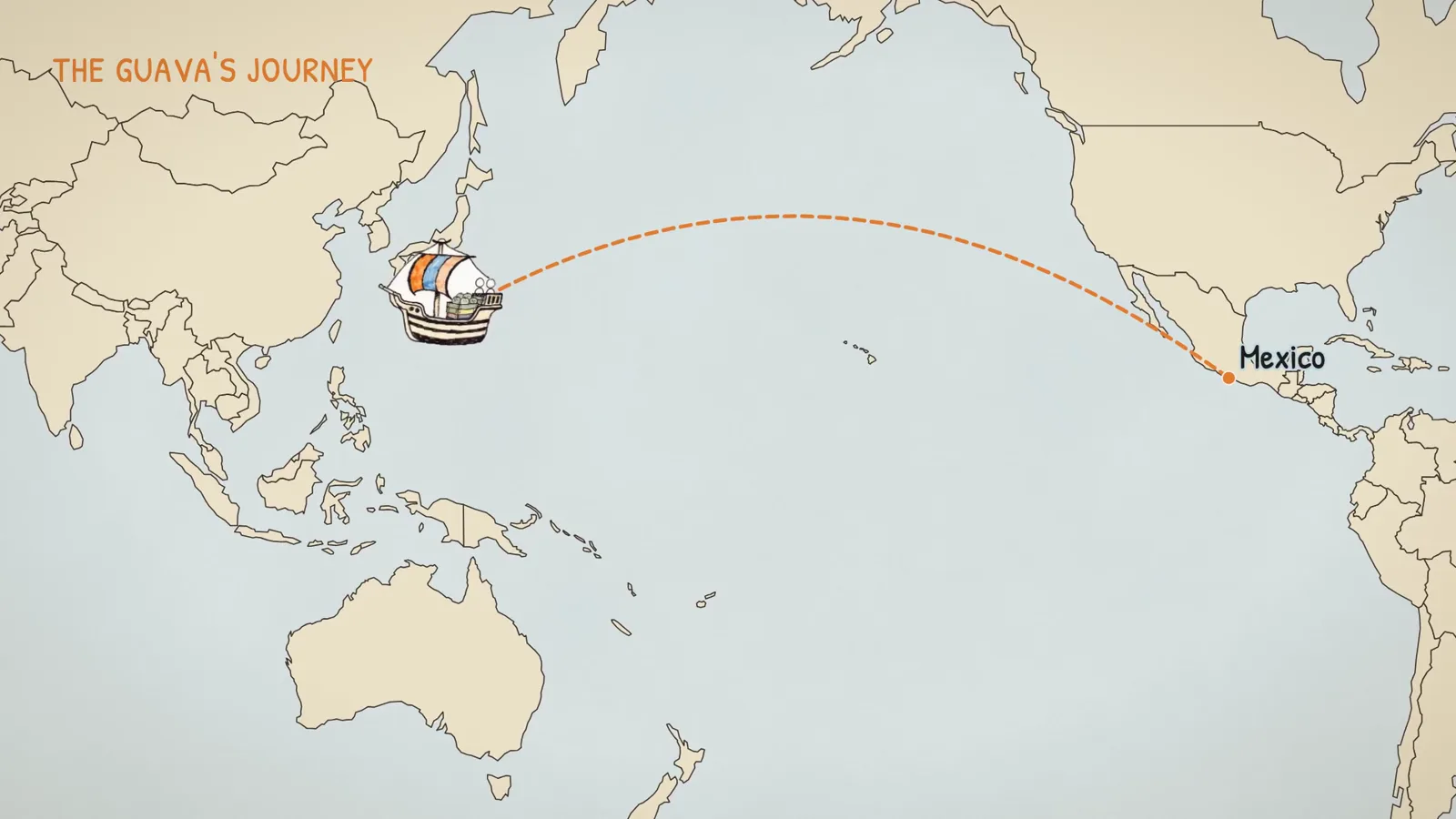
Which brings us back to the market, and the fruit. The guava isn't from Asia at all. It comes from tropical America. After 1500, Spanish and Portuguese ships carried it across the oceans to Asia. To the Thais of the central plains, this new fruit was simply the foreigners' fruit. Farang.
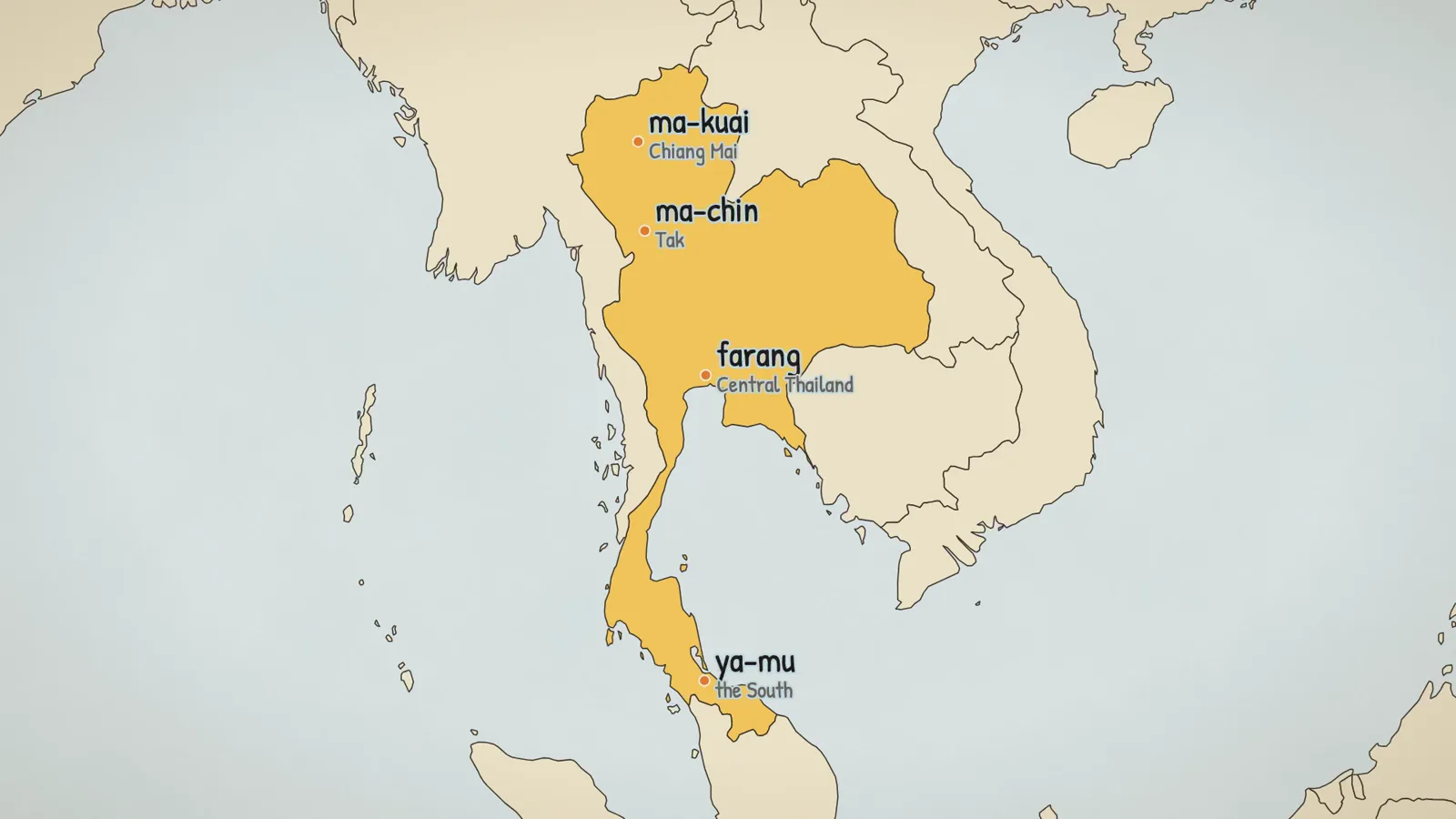
In other parts of Thailand, the guava has completely different names. In Chiang Mai, in the north, it's ma-kuai. In the south, it's ya-mu. And in Tak province, it's ma-chin, the Chinese fruit.
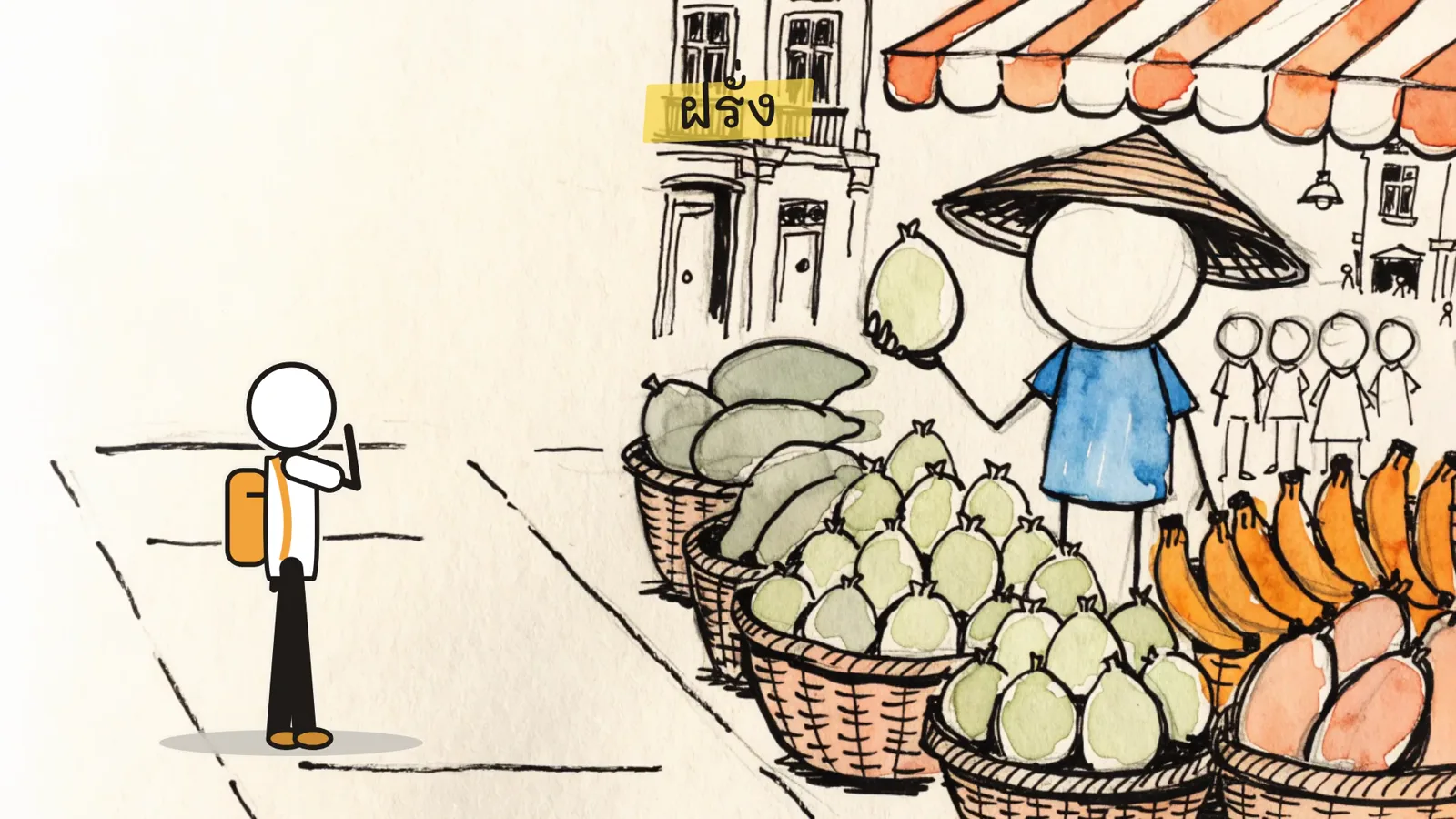
So, back to that market in Bangkok. When the vendors call their guava farang, they're using the name of a tribe from the Rhine, passed along by Greeks, Arabs and Persians. The people came first, and the guava just picked up the name along the way.